
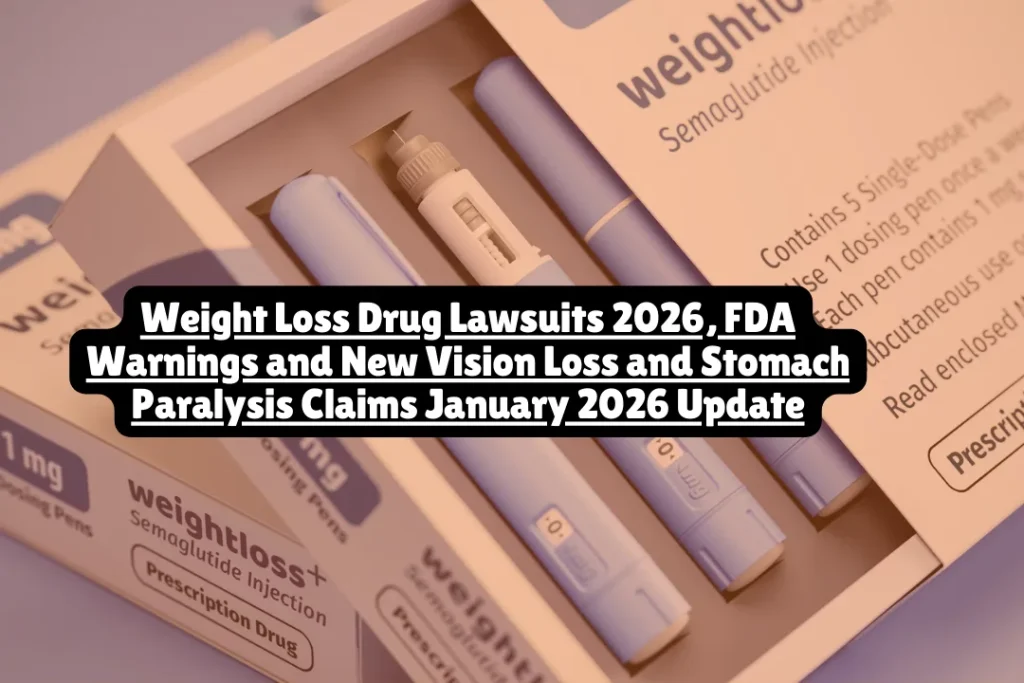
Weight Loss Drug Lawsuits 2026, FDA Warnings and New Vision Loss and Stomach Paralysis Claims January 2026 Update
As of January 2026, thousands of lawsuits are actively moving through U.S. courts against the manufacturers of popular GLP-1 weight loss medications like Ozempic, Wegovy, and Mounjaro. Plaintiffs allege that companies failed to warn about severe risks, including gastroparesis (stomach paralysis) and a newly emerging litigation focus on permanent vision loss (NAION).
Current Status of Weight Loss Drug Litigation
The legal landscape for weight loss medications is currently divided into two primary federal multidistrict litigations (MDLs) in the Eastern District of Pennsylvania, both overseen by Judge Karen Spencer Marston:
- MDL 3094 (Gastrointestinal Injuries): As of January 5, 2026, there are 3,063 pending lawsuits in this central litigation. This group focuses on injuries like gastroparesis, ileus (bowel blockage), and severe gallbladder disease.
- MDL 3163 (Vision Loss/NAION): A new, separate federal docket was established in December 2025 specifically for claims involving Non-Arteritic Anterior Ischemic Optic Neuropathy (NAION)—a condition often described as a “stroke of the eye.” As of mid-January 2026, 29 cases are already pending in this specialized group.
Key Developments in January 2026
Several critical legal and regulatory shifts occurred this month that directly impact current and future claimants:
- Motion to Dismiss Denied: In a significant win for plaintiffs, the court recently allowed central “failure to warn” claims to proceed, rejecting the manufacturers’ attempts to argue that these claims were preempted by FDA labeling rules.
- FDA Counterfeit Warning: On January 15, 2026, the FDA issued a high-priority warning regarding counterfeit Ozempic (Lot No. PAR1229) found in the U.S. supply chain. This has added a layer of complexity to litigation, as defendants may argue that injuries were caused by unregulated products rather than the authentic medication.
- Suicide Warning Review: On January 23, 2026, legal experts noted a “rollback” in regulatory scrutiny regarding suicidal ideation, though plaintiffs’ attorneys continue to argue that the drugs’ effect on the central nervous system makes mental health monitoring a foreseeable necessity.
Who Is Affected? Drugs and Defendants
Litigation currently targets the primary manufacturers of GLP-1 receptor agonists. These include:
- Novo Nordisk: Manufacturer of Ozempic, Wegovy, and Rybelsus.
- Eli Lilly: Manufacturer of Mounjaro, Zepbound, and Trulicity.
Plaintiffs typically include individuals who used these medications for either Type 2 diabetes or chronic weight management and subsequently required hospitalization for severe digestive or visual complications.
What You Must Know: Eligibility and Deadlines
Who Can File a Weight Loss Drug Claim?
As of January 2026, eligibility requirements for joining the ongoing MDLs have become more stringent based on recent court orders. To qualify for a weight loss drug lawsuit, most legal teams now require:
- Confirmed Diagnosis: A diagnosis of gastroparesis must be supported by objective testing, such as a gastric emptying study (scintigraphy) or a wireless motility capsule test. Clinical impressions alone may no longer be sufficient for the federal MDL.
- Hospitalization: For gastrointestinal claims, many firms require at least one overnight hospital stay or emergency room visit while using the drug or within six months of cessation.
- Vision Loss: For the NAION MDL, claimants must show a sudden loss of vision in one or both eyes following the use of semaglutide or tirzepatide.
Important 2026 Deadlines
The court has established a rigorous schedule for 2026 that will determine if these cases ever reach a jury:
- February 12, 2026: Deadline for defendants (Novo Nordisk and Eli Lilly) to serve their expert reports on causation.
- April 10, 2026: All expert depositions must be completed. This is the “Science Phase” of the litigation, where the court will decide if there is enough scientific evidence to link these drugs to the alleged injuries.
- Late 2026: The court is expected to select “bellwether” cases—initial test trials that help both sides determine potential settlement values.
What to Do Next
Action Steps for Potential Claimants
If you suspect you have been injured by a weight loss medication, follow these steps to preserve your legal rights:
- Request Medical Records: Specifically, look for your prescription history and any records of diagnostic imaging or gastric studies.
- Check Your Lot Numbers: Verify if your medication matches the lot numbers mentioned in the January 2026 FDA counterfeit warning.
- Consult Legal Counsel: Because these cases are being handled in an MDL, you do not necessarily need a lawyer in Pennsylvania. A local lawsuit attorney can help you file directly into the federal docket.
Official Resources
- FDA Adverse Event Reporting System (FAERS): [Official Portal]
- U.S. District Court (Eastern District of PA): [MDL 3094 Case Home]
FAQs
Is there an Ozempic or Wegovy settlement in 2026?
No. As of January 29, 2026, no global settlement has been reached. The litigation is currently in the discovery and expert witness phase.
What is the average payout for a weight loss drug lawsuit?
Payouts are currently speculative as no cases have gone to trial. However, legal experts predict that cases involving permanent vision loss (NAION) or long-term feeding tube dependency due to gastroparesis will carry the highest value.
Can I sue if I used a compounded version of the drug?
This is legally difficult. Most current lawsuits target the branded manufacturers. On January 15, 2026, a new antitrust lawsuit was filed by compounding pharmacies against Big Pharma, but personal injury claims for compounded drugs are usually handled separately.
What is NAION?
NAION is a condition that occurs when blood flow to the optic nerve is blocked, leading to sudden, permanent vision loss. Recent studies in 2025 and 2026 have suggested a higher incidence of this “eye stroke” in semaglutide users.
Does the “suicide warning” removal affect my case?
While the FDA suggested removing these warnings in January 2026, plaintiffs argue that the manufacturers still have a duty to warn about any foreseeable neurological side effects.
Last Updated: January 29, 2026 Disclaimer: This article is for informational purposes only and does not constitute legal advice.
Find out if you qualify for current litigation by reviewing our weight loss drug lawsuit eligibility guide.
Stay informed, stay protected. — AllAboutLawyer.com
About the Author

Sarah Klein, JD, is a licensed attorney and legal content strategist with over 12 years of experience across civil, criminal, family, and regulatory law. At All About Lawyer, she covers a wide range of legal topics — from high-profile lawsuits and courtroom stories to state traffic laws and everyday legal questions — all with a focus on accuracy, clarity, and public understanding.
Her writing blends real legal insight with plain-English explanations, helping readers stay informed and legally aware.
Read more about Sarah