
Vioxx Lawsuit Scandal Merck Paid $4.85 Billion After Hiding Heart Attack Risks From Millions
Merck withdrew the blockbuster painkiller Vioxx in 2004 after studies confirmed it doubled the risk of heart attacks and strokes—but not before 20 million Americans took the drug. The pharmaceutical giant faced 60,000 lawsuits and ultimately paid $4.85 billion to settle claims that it hid cardiovascular dangers for years. Individual victims who suffered heart attacks or strokes received an estimated $150,000 to $200,000 on average, though exact amounts varied based on injury severity and documentation. The deadline to file new Vioxx lawsuits has passed—statutes of limitations expired, and no new claims are being accepted as of December 2025.
What Was Vioxx and Why Did Millions Take It?
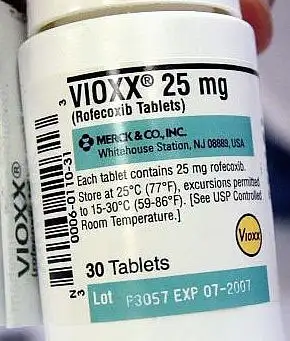
Vioxx (rofecoxib) was a prescription painkiller approved by the FDA in May 1999 for arthritis, acute pain, migraines, and menstrual cramps. Merck marketed it as safer than traditional NSAIDs like ibuprofen because it caused fewer stomach problems.
The drug became a massive commercial success. By 2004, approximately 20 million Americans and 84 million people worldwide had taken Vioxx. Annual sales exceeded $2.5 billion—Merck spent $67 million advertising Vioxx in just the first four months of 2000, more than any company had ever spent promoting a single drug.
The Deadly Truth: How Cardiovascular Risks Were Hidden
Warning signs appeared before FDA approval. The agency’s medical officer noted cardiovascular concerns in 1999—patients taking 12.5 mg or more daily experienced cardiovascular events at three times the rate of placebo patients (0.74% vs. 0.24%).
The VIGOR study found patients taking Vioxx faced 4.25 times the relative risk of heart attacks compared to those taking naproxen. Despite this alarming data published in November 2000, Merck continued aggressive marketing without adequate warnings.
Research published in The Lancet estimated 88,000 Americans suffered heart attacks from Vioxx, with 38,000 deaths. Merck voluntarily withdrew the drug on September 30, 2004, when the APPROVe study confirmed it doubled heart attack and stroke risk after 18 months.
Internal documents later revealed executives knew about cardiovascular dangers as early as May 2000 but continued selling Vioxx. Scientists removed evidence of three heart attacks from study data, and the company used flawed methodologies to minimize reported risks.
Related Article: Jennifer Castro Lawsuit, Woman Sues Airline After Refusing Window Seat Swap Goes Viral, The Jennifer Castro Case
How Much Money Did Victims Actually Receive?
Individual settlement awards were estimated at $150,000 to $200,000 on average, calculated through a complex point system based on injury severity. However, actual payouts varied dramatically after deductions.
The Point System Breakdown:
Settlements used a three-step eligibility process. Claimants needed:
- A qualifying injury (heart attack, ischemic stroke, or sudden cardiac death)
- Proof of taking at least 30 Vioxx pills
- Evidence of taking at least one pill within 14 days of the injury
A point calculator determined payment amounts based on factors like age, smoking status, pre-existing conditions, and duration of Vioxx use. Points converted to dollar amounts, but the exact conversion rate remained uncertain until final distribution—ranging from under $1,000 to over $2,500 per point.
Deductions That Reduced Payments:
- Attorney fees: Capped at 32% of the settlement
- Medical liens: Health insurers could claim reimbursement for Vioxx-related treatment costs (automatically reduced by 50%, then capped at 15% of settlement)
- Government liens: Medicare, Medicaid, and other government programs recovered payments
- Common benefit fees: 8% assessment to compensate attorneys who worked on behalf of all plaintiffs
A non-smoker in his late fifties who had his first heart attack after taking Vioxx for one year might score 74 points, translating to anywhere from less than $74,000 to more than $185,000 before attorney fees.
Many claimants received significantly less—or nothing. Out of 30,499 heart attack claims, 32.4% (9,888 claimants) failed to satisfy basic eligibility requirements. For stroke claims, 30.2% (5,399 of 17,863) couldn’t provide adequate documentation.
Timeline: From Blockbuster Drug to Billion-Dollar Scandal
1999: FDA approves Vioxx in May; Merck launches VIGOR study in January
2000: VIGOR study reveals 4.25 times higher heart attack risk (published November)
2001: FDA advisory committee discusses cardiovascular concerns (February); FDA requires cardiovascular warnings on labels (April 2002)
2004: Merck withdraws Vioxx on September 30 after APPROVe study confirms doubled risk
2005: First bellwether trial awards $253 million to Carol Ernst, widow of Robert Ernst (later overturned); Judicial Panel consolidates cases into MDL 1657 (February)
2007: Merck announces $4.85 billion settlement (November 9)
2008: Settlement enrollment closes with 99.9% participation—44,000 of 47,000 claimants enrolled; 85% minimum required
2011: Merck pays $950 million for criminal charges and illegal marketing violations (November)
2014: Separate consumer class action settlement pays $50-$75 to Vioxx purchasers (claims deadline May 6)
2016: Merck settles shareholder lawsuit for $830 million (June)
Key Court Battles: What Actually Happened in the Lawsuits
The Judicial Panel on Multidistrict Litigation consolidated federal cases into MDL 1657 in the Eastern District of Louisiana under Judge Eldon Fallon. The court conducted six bellwether trials to test legal theories—Merck won five, plaintiffs won one.
Carol Ernst v. Merck (2005): The landmark first trial resulted in a $253 million verdict after Robert Ernst, a 59-year-old marathon runner, died of heart arrhythmia eight months after starting Vioxx. Texas damage caps reduced the award to $26.1 million, and an appeals court later overturned it, ruling insufficient evidence proved Vioxx directly caused the death.
John McDarby Case (New Jersey): A jury awarded $4.5 million in compensatory damages plus $9 million in punitive damages after finding Merck “built a wall of deception and lies.” The court also found Merck committed fraud.
Approximately 13 additional cases went to trial in state courts across Texas, New Jersey, California, Alabama, Illinois, and Florida, producing mixed results. Merck’s trial record gave it better than 3-to-1 odds of winning individual cases—yet the company chose to settle rather than face years of ongoing litigation.
Can You Still File a Vioxx Lawsuit in 2025?
No. The statute of limitations has expired for all Vioxx claims. Most states have a two-year statute of limitations for product liability cases, measured from either the date of injury or the date of discovery.
Since Vioxx was withdrawn in September 2004, and the settlement was finalized by November 2007, deadlines for filing new lawsuits passed between 2006-2009 in most jurisdictions. The settlement agreement required claimants to enroll by February 29, 2008, to receive compensation.
As of December 2025, legal experts confirm no new Vioxx cases are being accepted. Even if you took Vioxx and suffered a heart attack or stroke, the window to pursue legal claims closed over 15 years ago.
Consumer Class Action Exception: A separate class action for consumers who simply purchased Vioxx (not injury claims) had a claim deadline of May 6, 2014. That settlement paid $50 in cash or up to $75 for documented out-of-pocket costs.
Beyond Injury Claims: Criminal Charges and Other Settlements
$950 Million Criminal and Civil Penalties (2011)
Merck pleaded guilty to a misdemeanor violation of the Food, Drug and Cosmetic Act for illegally promoting Vioxx to treat rheumatoid arthritis before FDA approval. The company paid:
- $321.6 million in criminal fines
- $628.4 million in civil settlements ($426.4 million to federal government, $202 million to state Medicaid programs)
The charges included making false statements about cardiovascular safety and marketing the drug for unapproved uses.
$830 Million Securities Settlement (2016)
Shareholders sued Merck for misleading statements about Vioxx’s safety that artificially inflated stock prices. After years of litigation, Merck settled for approximately $830 million ($680 million after insurance). The lawsuit alleged executives made false statements about VIGOR study results and concealed known cardiovascular risks.
$58 Million Consumer Protection Settlement (2008)
Twenty-nine state attorneys general and the District of Columbia secured a settlement for deceptive advertising—the largest multistate consumer protection settlement in pharmaceutical industry history at that time. Washington State received $1.6 million. Merck agreed to submit all consumer television commercials to the FDA for pre-approval.
What Changed: FDA Reforms and Pharmaceutical Regulation
The Vioxx scandal exposed fatal weaknesses in drug safety oversight:
Enhanced Post-Market Surveillance: The case revealed neither the FDA nor Health Canada had adequate systems to monitor approved drugs. Basic cumulative analysis would have detected statistically significant cardiovascular risks by December 2000—four years before withdrawal.
Mandatory COX-2 Inhibitor Warnings: All COX-2 inhibitors now carry black box warnings about cardiovascular risks. The FDA and EU regulators issued contraindications stating these drugs should not be used by patients with established cardiovascular disease.
Pre-Approval Advertising Restrictions: As part of settlements, Merck must submit consumer-targeted TV commercials for FDA approval before airing and comply with FDA recommendations to delay advertising new pain relievers.
Ongoing Debates: Despite reforms, experts argue fundamental flaws persist. FDA approval still requires only that drugs be more effective than placebo, not existing treatments. Pre-marketing trials remain too small to identify all risks, and post-approval surveillance relies on voluntary physician reporting.
Corporate Accountability: What Merck Knew and When
Internal documents revealed systematic efforts to downplay risks:
- In 16 of 20 published papers on Vioxx trials, Merck employees were listed as lead authors initially but outside academics appeared as primary authors in published versions
- Scientists removed evidence of three heart attacks from datasets
- The company threatened “consequences for Stanford” when a professor’s employee publicly criticized Vioxx
- Merck used flawed methodologies in the ADVANTAGE study to exaggerate benefits
- The company spent unprecedented amounts on advertising ($67 million in four months) while downplaying known dangers
Dr. Eric Topol of Cleveland Clinic testified that Merck’s commercial interest in Vioxx sales exceeded concern about cardiovascular toxicity. Despite executives becoming aware of cardiovascular risks by May 2000, aggressive marketing continued for four more years.
Lessons From the Vioxx Litigation
For Consumers: Always research prescription medications, ask doctors about potential risks, and report adverse effects immediately. Be skeptical of heavily advertised drugs—aggressive marketing may signal profit motives overriding safety concerns.
For the Legal System: The case demonstrated that bellwether trial strategies work in complex pharmaceutical litigation. Mixed trial results (5 wins for Merck, 1 for plaintiffs) provided critical information for settlement negotiations. MDL consolidation allowed efficient case management while individual trials tested theories.
For Pharmaceutical Companies: Hiding safety data leads to catastrophic financial and reputational consequences. Merck’s total liability exceeded $6.8 billion when combining personal injury settlements, criminal fines, civil penalties, and securities litigation. No executives faced criminal prosecution, but the company’s reputation suffered lasting damage.
For Regulators: The FDA approval process needs reform. Pre-marketing trials must be larger and longer to detect serious risks. Post-approval surveillance cannot rely solely on voluntary reporting. Meta-analysis of accumulating data should be mandatory.
How Vioxx Compares to Other Pharmaceutical Scandals
The Vioxx settlement ranks among the largest pharmaceutical litigation resolutions, but it’s not unique:
- Opioid litigation has resulted in tens of billions in settlements, with Purdue Pharma facing bankruptcy
- Celebrex and Bextra (similar COX-2 inhibitors) faced lawsuits and regulatory action for cardiovascular risks
- Fen-Phen diet drugs resulted in a massive settlement trust that continues operating decades later
- Zantac cancer litigation is ongoing as of 2025, with mixed trial results similar to Vioxx’s pattern
The Vioxx case established precedents for handling mass pharmaceutical torts: use MDL consolidation, conduct bellwether trials, negotiate global settlements with high participation requirements, and implement point systems for claim valuation.
Frequently Asked Questions
Can I still file a Vioxx lawsuit in 2025?
No. Statutes of limitations expired years ago. The settlement agreement closed to new enrollments on February 29, 2008. As of December 2025, no attorneys are accepting new Vioxx cases because legal deadlines passed over 15 years ago.
How much did each person receive from the Vioxx settlement?
Average payments were estimated at $150,000 to $200,000, but actual amounts varied significantly. Payments depended on injury severity, age, pre-existing conditions, Vioxx usage duration, and documentation quality. After deducting attorney fees (up to 32%), medical liens, and government reimbursements, many claimants received substantially less. Nearly one-third of claimants failed to satisfy basic eligibility requirements and received nothing.
What injuries qualified for Vioxx settlement compensation?
Only three injury types qualified: heart attacks (myocardial infarction), ischemic strokes, and sudden cardiac death. Claimants needed medical documentation proving the injury, proof of taking at least 30 Vioxx pills, and evidence of taking at least one pill within 14 days of the cardiovascular event.
Is Vioxx still on the market?
No. Merck voluntarily withdrew Vioxx worldwide on September 30, 2004. The drug has not been available by prescription since that date and will not return to market.
What happened to Merck executives?
No Merck executives faced criminal prosecution or jail time. The company pleaded guilty to corporate misdemeanor charges and paid nearly $1 billion in criminal and civil fines, but individual executives were not criminally charged. Some executives testified in civil trials but faced no personal criminal liability.
How long was Vioxx on the market?
Vioxx was approved in May 1999 and withdrawn in September 2004—approximately five years and four months.
What should I do if I took Vioxx and had a heart attack?
Since statutes of limitations have expired, you cannot file a new lawsuit. If you believe Vioxx caused cardiovascular problems, consult your physician about ongoing cardiac care and monitoring. Document your Vioxx use in your medical records for future reference.
Were there other settlements besides the $4.85 billion?
Yes. Merck paid an additional $950 million for criminal charges and illegal marketing (2011), $830 million to shareholders (2016), and $58 million to state attorneys general (2008). A separate consumer class action paid up to $75 per person to Vioxx purchasers (claims deadline 2014).
Sources: British Medical Journal/PMC, Drugwatch, U.S. Department of Justice, FDA official records, SEC filings (Form EX-10.1), MDL 1657 court documents (Eastern District of Louisiana), The Lancet, Cleveland Clinic research, NPR reporting, and authoritative legal databases.
This article provides educational information about the Vioxx litigation and does not constitute legal advice. Statutes of limitations for new Vioxx claims have expired. Consult an attorney for specific legal questions.
About the Author

Sarah Klein, JD, is a licensed attorney and legal content strategist with over 12 years of experience across civil, criminal, family, and regulatory law. At All About Lawyer, she covers a wide range of legal topics — from high-profile lawsuits and courtroom stories to state traffic laws and everyday legal questions — all with a focus on accuracy, clarity, and public understanding.
Her writing blends real legal insight with plain-English explanations, helping readers stay informed and legally aware.
Read more about Sarah