
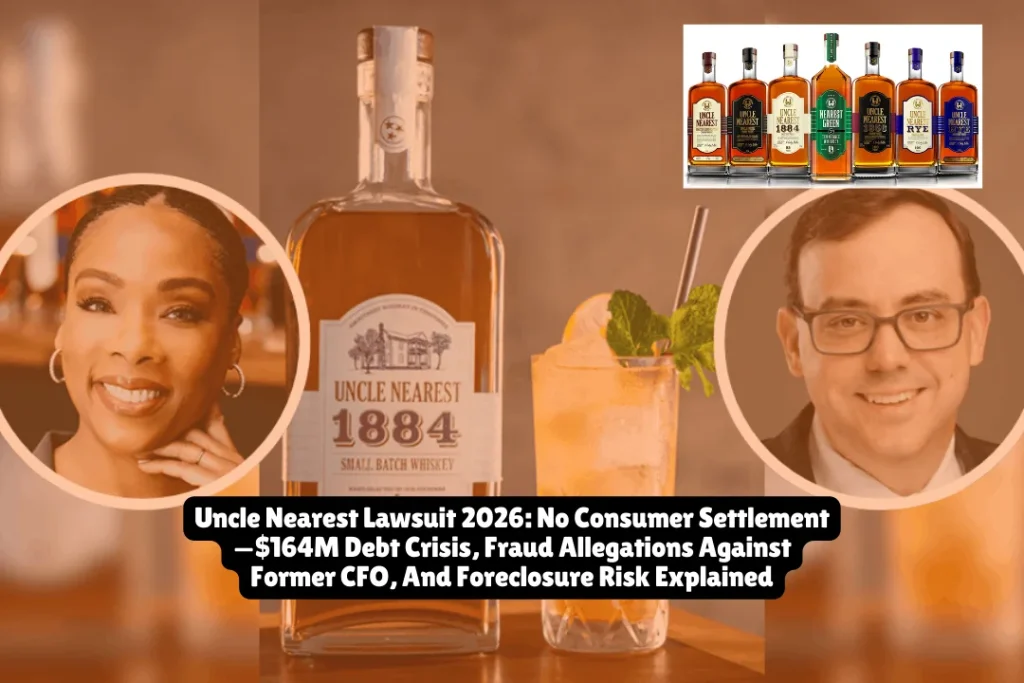
Uncle Nearest Lawsuit 2026, No Consumer Settlement—$164M Debt Crisis, Fraud Allegations Against Former CFO, And Foreclosure Risk Explained
Uncle Nearest Premium Whiskey faces a complex web of litigation as of February 2026, but there is no consumer class action settlement or public claim form. Farm Credit Mid-America filed a lawsuit against Uncle Nearest Inc. and its founders Fawn and Keith Weaver in July 2025 claiming it was owed $108 million, alleging the company has been in default on its loans as early as January 2024. This is a business dispute between a lender and a whiskey company—not a consumer product liability case with settlement eligibility.
What Is The Uncle Nearest Lawsuit About?
The Uncle Nearest litigation involves three separate but interconnected legal battles. Farm Credit Mid-America, the company’s main lender, sued Uncle Nearest for defaulting on over $108 million in loans. The lender alleged the company overstated whiskey barrel inventory used as collateral, which allegedly contributed to the company’s financial troubles.
In January 2026, Fawn and Keith Weaver filed a civil lawsuit against the company’s former chief financial officer Michael Senzaki in Bedford County Chancery Court. The complaint alleges breach of fiduciary duty, fraud, defamation, and conversion. The Weavers claim Senzaki manipulated financial systems to hide vendor debts and forged stock transfer documents using Fawn Weaver’s equity without her knowledge.
A federal court appointed receiver Phillip G. Young Jr. to manage Uncle Nearest’s operations after determining the company was in financial distress. The receivership removed day-to-day control from the founders and placed it under court supervision.
Current Status As Of February 2026
Uncle Nearest is at risk of financial insolvency and owes millions of dollars to external parties according to claims from the company’s receiver in an affidavit filed on February 2, 2026 in the U.S. District Court for the Eastern District of Tennessee. Young warned that if the receivership ends, “I believe that Farm Credit would immediately cease covering these operational losses and move to foreclose on and repossess its collateral”.
On January 20, 2026, Fawn and Keith Weaver filed an emergency motion asking the court to immediately reconsider and terminate the receivership. The Weavers dispute the receiver’s characterization of the company’s financial health and seek to regain control of their business.
Uncle Nearest faces $164 million in total debt according to court filings, far exceeding the original $108 million claimed by Farm Credit Mid-America. This includes approximately $22 million in vendor obligations and over $10 million owed to Advanced Spirits for barrel repurchase agreements.
The Fraud Lawsuit Against Former CFO Michael Senzaki
The Weavers allege that Senzaki abused his position to alter invoices to make vendor payments look settled while redirecting money to entities he controlled, and allegedly forged stock transfer documents using Fawn Weaver’s equity without her knowledge or consent. The lawsuit seeks both compensatory and punitive damages.
According to the complaint, Senzaki had exclusive control over Uncle Nearest’s financial systems during a critical growth period. The Weavers claim he used this access to hide large vendor debts and make the company’s finances appear healthier than reality. A substantial portion of pre-2024 financial information was no longer accessible according to the receiver, with efforts to recover those records ongoing.
The Weavers also allege Senzaki created a “false narrative” blaming them personally for Uncle Nearest’s corporate debt, despite neither founder personally guaranteeing loans with Farm Credit Mid-America. They claim this damaged their reputations and cost Fawn Weaver over $1 million in canceled speaking engagements and froze nearly $9.75 million tied to Keith Weaver’s separate business ventures.
Is There A Consumer Settlement Or Claim Form?
No. These lawsuits involve business disputes between Uncle Nearest, its lender, its founders, and a former executive. There is no consumer class action, no claim forms for customers who purchased Uncle Nearest whiskey, and no eligibility requirements for the general public.
Customers who purchased Uncle Nearest products are not parties to this litigation and cannot file claims for compensation. The legal battles focus on corporate debt, alleged financial fraud, and business management—not product defects or consumer harm.
Who Are The Parties Involved?
Farm Credit Lawsuit:
- Plaintiff: Farm Credit Mid-America (lender)
- Defendants: Uncle Nearest Inc., Nearest Green Distillery Inc., Uncle Nearest Real Estate Holdings LLC, Fawn Weaver, Keith Weaver
- Court: U.S. District Court for the Eastern District of Tennessee
- Receiver: Phillip G. Young Jr.
Fraud Lawsuit:
- Plaintiffs: Fawn Weaver, Keith Weaver, Grant Sidney Inc.
- Defendants: Michael Senzaki, ZMS Strategies Inc.
- Court: Bedford County Chancery Court
What Assets Are Being Sold?
Uncle Nearest Inc. is preparing to sell off non-core assets including French vineyards, a Cognac château, and other real estate as part of efforts to stabilize the Shelbyville whiskey company under court-appointed receivership. The receiver has indicated the core whiskey brand remains viable despite the financial crisis.
An investor group called NexGen2780 LP filed a letter with the court on January 8, 2026 expressing formal interest in buying Uncle Nearest and paying off its $108 million debt to Farm Credit Mid-America. However, no sale has been completed or approved by the court as of February 2026.
Common Misconceptions About Uncle Nearest Litigation
Misconception: Uncle Nearest recalled products or faces safety issues.
Reality: This is a financial and corporate governance dispute, not a product safety case.
Misconception: Customers can file claims for refunds or compensation.
Reality: Only the business entities, lender, and executives are parties to these lawsuits.
Misconception: The company is bankrupt.
Reality: Uncle Nearest operates under receivership, not bankruptcy. The receiver manages operations to avoid insolvency while parties litigate.
What Happens Next?
The receivership will continue while the court determines whether to return control to the founders or maintain third-party oversight. The receiver expressed in his first quarterly report that the opportunity for the company’s successful emergence from receivership is very good if properly managed.
The fraud lawsuit against Senzaki proceeds separately in state court. The defendants have yet to file a formal response to the Weavers’ allegations as of February 2026.
Farm Credit Mid-America’s forbearance agreement provides temporary funding to cover operational expenses while the receivership resolves. If this funding ends without a resolution, the company faces immediate foreclosure risk.
Industry observers expect the litigation to extend throughout 2026 and potentially beyond as multiple parties fight over control, liability, and the company’s financial future.
FAQs
What is the Uncle Nearest lawsuit about?
Uncle Nearest faces three interconnected lawsuits: Farm Credit Mid-America’s $108 million debt collection case, a court-ordered receivership managing the company’s operations, and the founders’ fraud lawsuit against former CFO Michael Senzaki alleging financial misconduct and forgery. These are business disputes—not consumer product cases.
Can I file a claim if I purchased Uncle Nearest whiskey?
No. These lawsuits involve corporate debt, lender disputes, and alleged executive fraud. Customers who purchased Uncle Nearest products are not eligible to file claims or receive any settlement compensation. No consumer class action exists.
Is Uncle Nearest still making whiskey?
Yes. Uncle Nearest continues operating under court-appointed receivership. The receiver manages day-to-day operations while the legal battles proceed. The core brand remains viable despite the financial crisis, and the company still produces and sells whiskey.
What is a receivership and what does it mean for Uncle Nearest?
A receivership is a legal arrangement where a court-appointed third party (receiver) manages a troubled company’s operations to protect creditors’ interests. For Uncle Nearest, this means Phillip G. Young Jr. controls operations instead of founders Fawn and Keith Weaver until the court resolves the financial disputes.
Will Uncle Nearest be sold or shut down?
Unknown. The receiver is exploring multiple options including selling non-core assets, refinancing debt, or potentially selling the entire company. Investor group NexGen2780 LP expressed interest in acquiring Uncle Nearest, but no deal has been completed. Foreclosure remains a risk if funding stops.
What did the former CFO allegedly do?
The Weavers’ lawsuit claims Michael Senzaki altered invoices, redirected company payments to entities he controlled, forged stock transfer documents, and concealed millions in vendor debts while making finances appear healthier than reality. Senzaki has not yet filed a formal response to these allegations in court.
How much debt does Uncle Nearest actually owe?
Court filings reveal approximately $164 million in total debt, including the $108 million owed to Farm Credit Mid-America, roughly $22 million in vendor obligations, over $10 million to Advanced Spirits for barrel repurchases, and additional liens filed by multiple creditors against equipment and trademarks.
Last Updated: February 11, 2026
Disclaimer: This article provides general information about Uncle Nearest lawsuits and is not legal advice. These are business disputes with no consumer claim process.
Concerned About Business Fraud? Learn more about Northern Trust Lawsuit 2026, $35M Elder Fraud Case to understand how corporate fraud cases unfold.
Stay informed, stay protected. — AllAboutLawyer.com
About the Author

Sarah Klein, JD, is a licensed attorney and legal content strategist with over 12 years of experience across civil, criminal, family, and regulatory law. At All About Lawyer, she covers a wide range of legal topics — from high-profile lawsuits and courtroom stories to state traffic laws and everyday legal questions — all with a focus on accuracy, clarity, and public understanding.
Her writing blends real legal insight with plain-English explanations, helping readers stay informed and legally aware.
Read more about Sarah