
Trump HHS Deadnames Transgender Admiral Rachel Levine on Official Portrait, Legal Analysis and Civil Rights Implications
Breaking: Department of Health and Human Services under Robert F. Kennedy Jr. removes Admiral Rachel Levine’s legal name from official portrait, sparking outrage over federal employment discrimination and transgender rights violations
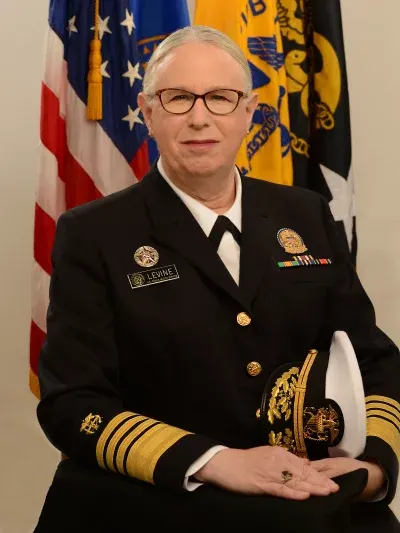
The U.S. Department of Health and Human Services (HHS) removed Admiral Rachel Levine’s legal name from her official portrait displayed at HHS headquarters, replacing it with her deadname—the practice of using a transgender person’s birth name without permission. The change occurred during the recent federal shutdown, when HHS leadership altered the nameplate beneath the glass of Levine’s portrait in the Humphrey Building. Legal experts and civil rights organizations are calling this an act of institutional discrimination that may violate federal employment law.
What Happened: The Portrait Alteration
Admiral Rachel Levine was the first transgender person confirmed by the Senate to serve in the federal government, holding a four-star admiral position in charge of the Commissioned Corps of the U.S. Public Health Service during the Biden administration.
The modification appears to have occurred during the recent federal shutdown, shortly after Assistant Secretary Robert F. Kennedy Jr. took leadership at HHS. Adrian Shanker, who served as Levine’s deputy assistant secretary for health policy, confirmed the change occurred when current HHS leadership physically removed the frame’s glass and replaced the nameplate.
The timing raises significant legal questions. Shutdown rules restrict employees to duties tied to public safety or health emergencies—altering a portrait does not appear to fall into that category.
Who Is Admiral Rachel Levine?
Admiral Rachel Levine made history in 2021 as the nation’s highest-ranking openly transgender official when confirmed as assistant secretary for health at HHS. Her distinguished career includes:
- Serving as Pennsylvania’s Secretary of Health (2017-2021)
- Leading Pennsylvania’s Physician General office (2015-2017)
- Working as a pediatrician specializing in adolescent medicine
- Guiding public health initiatives including pandemic response, HIV epidemic response, addressing syphilis surges, and improving mental health programs
Levine resigned from her HHS role in January 2025, on the day Trump was sworn in for a second term.
Related Article: SHRM Hit with $11.5 Million Verdict in Racial Discrimination Lawsuit: Egyptian Employee Wins After Alleging Systemic Favoritism and Retaliation
HHS’s Official Justification
HHS spokesperson Andrew Nixon stated that the agency’s priority “is ensuring that the information presented internally and externally by HHS reflects gold standard science,” and that the department remains “committed to reversing harmful policies enacted by Levine and ensuring that biological reality guides our approach to public health”.
The statement reflects broader Trump administration policies targeting transgender individuals across federal agencies.
What Federal Laws Apply?
Title VII of the Civil Rights Act of 1964
The Supreme Court held in Bostock v. Clayton County (2020) that Title VII of the Civil Rights Act of 1964 protects employees against discrimination on the basis of sexual orientation or gender identity. The Court reasoned that it is impossible to discriminate against a person for being transgender without discriminating against that individual based on sex.
Key Title VII protections include:
- Protection from adverse employment actions based on transgender status
- Protection from sex-based harassment in the workplace
- Application to all employers with 15 or more employees
- Application to federal government agencies and employees
Federal Employment Discrimination Framework
Federal courts and the Equal Employment Opportunity Commission have agreed that discrimination because an employee is transgender constitutes sex discrimination under Title VII.
For federal employees specifically:
- Discrimination in federal employment based on gender identity is prohibited by Executive Order and Title VII
- Federal employees can file EEO complaints through their agency’s EEO office
- Federal employees must contact an EEO Counselor within 45 days of any discriminatory act
What Are the Potential Legal Claims?
Sex Discrimination Under Title VII
The portrait alteration could constitute sex discrimination if it creates a hostile work environment or represents retaliation. Sex-based harassment is unlawful when it is severe or widespread and an employer does not take steps to stop it, including repeated and intentional use of the wrong name.
Hostile Work Environment
Legal elements that could apply:
- Intentional use of a transgender person’s deadname may constitute harassment
- The public nature of the display (official government building) amplifies the impact
- Pattern of targeting transgender individuals across the administration
Constitutional Equal Protection Arguments
Federal employment discrimination may also implicate constitutional equal protection if it demonstrates animus toward a protected class. Courts have increasingly recognized that government actions specifically targeting transgender individuals may violate equal protection principles.
Civil Rights Organizations Respond
Adrian Shanker stated the action reflects “small acts of pettiness and bigotry” and is “unfair to Admiral Levine” and “unfair to the American people”.
An unnamed HHS staffer called the change “disrespectful” and said it shows “the erasure of transgender individuals by this administration”.
Admiral Levine’s response demonstrated dignity: “It was my great honor to serve in the United States Public Health Service Commissioned Corps. My focus has been and continues to be on how we can advance health equity and public health for everyone. I’m not going to comment on this type of petty action”.

Current Legal Status: Has a Lawsuit Been Filed?
As of December 7, 2025, no lawsuit has been publicly filed by Admiral Levine specifically regarding the portrait alteration. However, the action fits within a broader pattern of discrimination:
Some transgender service members filed a lawsuit against the administration last month, arguing that they were illegally stripped of their retirement benefits when they were forced out of the military.
Admiral Levine is no longer a federal employee, having resigned in January 2025, which affects her standing to bring certain employment discrimination claims. However, potential legal avenues could include:
- Claims based on harm to reputation
- First Amendment violations if the action constitutes compelled speech
- Equal protection violations demonstrating government animus
Broader Context: Trump Administration Actions Against Transgender Rights
The portrait alteration occurs within a systematic rollback of transgender protections:
Military Ban Shortly after taking office in January, Trump signed an executive order banning transgender people from the military, which the Supreme Court ruled could be enforced as legal challenges play out.
Healthcare Restrictions Trump signed an executive order targeting gender-affirming healthcare.
Identity Documents The administration has blocked citizens from choosing a sex marker on their passports that aligns with their gender identity.
EEOC Enforcement Changes Recent court decisions and administrative actions have complicated transgender workplace protections. In May 2025, a federal court in Texas vacated gender identity portions of EEOC harassment guidance, creating uncertainty about protections for pronouns, bathroom access, and dress codes.
What This Means for Federal Employees
Current Protections
Despite administrative hostility, core legal protections remain:
- Bostock v. Clayton County continues to be the law of the land—employers have an obligation to prevent employment discrimination based on sexual orientation and gender identity under Title VII
- Only Congress or the Supreme Court can change Bostock’s holding
- Transgender federal employees are explicitly protected by Title VII and Executive Orders
Filing an EEO Complaint
Federal employees facing discrimination should know:
- Contact an EEO Counselor within 45 days of any discriminatory act
- File complaints under the category of “sex discrimination” to preserve appeal rights to the EEOC
- The agency has 180 days to investigate after filing a formal complaint
- Appeals to EEOC are available if the agency dismisses or denies the claim
Practical Risks
Levine has been targeted by anti-transgender rhetoric throughout her time in federal government, with her image appearing in anti-transgender GOP advertisements during the 2024 election. Current federal employees face similar risks of public targeting.
What Happens Next?
Immediate Questions
Will Admiral Levine file a legal challenge? Given her statement declining to comment on “petty action,” a lawsuit appears unlikely, though civil rights organizations might pursue action on broader grounds.
Could other officials be targeted? Shanker stated the portrait alteration “fits into the broader pattern of the administration seeking to erase transgender people from public life”, suggesting systematic targeting may continue.
What about current transgender federal employees? Legal protections remain in force, but enforcement may be inconsistent. Documentation of all discriminatory incidents is critical.
Broader Legal Battles
The portrait incident represents one action in widespread litigation over transgender rights:
- Multiple lawsuits challenge the military transgender ban
- Cases address passport policy changes
- Challenges to healthcare restrictions are pending
- EEOC enforcement authority faces ongoing litigation
Implications for Workplace Rights and Government Accountability
Precedent Concerns
The HHS action raises troubling questions about government employer accountability:
- Can agencies unilaterally decide to disrespect former employees’ identities?
- What limits exist on symbolic erasure of historically significant officials?
- Does the government’s role as employer insulate it from discrimination claims by former employees?
Chilling Effect on Transgender Federal Service
The action sends a message that transgender visibility in federal leadership “remains politically contested”. This could:
- Discourage qualified transgender individuals from federal service
- Create hostile work environments for current transgender federal employees
- Signal tolerance for harassment and discrimination by supervisors
Symbolic vs. Material Discrimination
While HHS characterized this as merely updating a nameplate, legal experts recognize the action’s broader significance. Intentional deadnaming of a transgender person, especially in an official government display, communicates:
- Denial of the person’s identity
- Institutional erasure of transgender history
- Potential license for similar disrespectful treatment throughout the agency
What You Need to Know
For Transgender Federal Employees:
- Document all incidents of discrimination immediately
- Contact your agency’s EEO Counselor within 45 days of any discriminatory act
- File complaints under “sex discrimination” category
- Seek legal counsel if facing adverse actions
- Know that Bostock protections remain law despite administrative hostility
For Civil Rights Advocates:
- Monitor federal agencies for similar erasure actions
- Support litigation challenging systematic discrimination
- Document patterns of anti-transgender government actions
- Advocate for Congressional action to strengthen protections
For Legal Professionals:
- Advise clients that Title VII protections remain despite EEOC guidance changes
- Monitor evolving case law on scope of Bostock protections
- Prepare for increased discrimination complaints from federal sector
- Consider novel legal theories for symbolic discrimination claims
Frequently Asked Questions
Is deadnaming illegal under federal law?
Repeated and intentional use of the wrong name for a transgender employee may constitute harassment under Title VII when it is severe or widespread and the employer does not take steps to stop it. Whether a single instance of deadnaming on an official portrait constitutes unlawful discrimination would depend on context, including whether it contributes to a hostile work environment.
Can Admiral Levine sue for this action?
Admiral Levine resigned from federal service in January 2025, which complicates employment discrimination claims. However, potential legal theories could include reputational harm, First Amendment violations, or equal protection claims. The action occurred after her resignation, limiting traditional employment law remedies.
What protections do transgender federal employees currently have?
Bostock v. Clayton County continues to be the law of the land—discrimination based on transgender status violates Title VII. Federal employees also have protections under Executive Orders, though enforcement may vary by administration. Federal employees can file EEO complaints through their agency’s EEO office and appeal to the EEOC.
How long do federal employees have to file discrimination complaints?
Federal employees must contact an EEO Counselor within 45 days of any discriminatory act to preserve their rights. After counseling, employees have 15 days to file a formal complaint if the issue is not resolved.
Has the Trump administration’s “two sexes” executive order changed Title VII?
No. Only Congress or the Supreme Court can change the contours of the Bostock decision. Executive orders cannot override Supreme Court interpretations of federal statutes. However, executive actions may affect enforcement priorities and create practical barriers to pursuing discrimination claims.
What is the EEOC’s current position on transgender discrimination?
The EEOC’s position has become complicated. A federal court in Texas vacated gender identity portions of EEOC’s 2024 harassment guidance in May 2025, creating uncertainty about specific protections for pronouns, bathroom access, and dress codes. However, the core Bostock holding that firing someone for being transgender violates Title VII remains binding law.
Could this happen to portraits of other LGBTQ+ officials?
The HHS action sets a troubling precedent. Shanker stated the alteration “fits into the broader pattern of the administration seeking to erase transgender people from public life”, suggesting systematic targeting may extend to other symbolic representations of LGBTQ+ achievement in government.
About This Article: This analysis covers developments through December 7, 2025. Federal employment discrimination law continues to evolve through litigation and administrative action. Transgender federal employees facing discrimination should consult with employment law attorneys experienced in federal sector EEO matters.
Legal Disclaimer: This article provides legal information, not legal advice. Individuals facing discrimination should consult qualified employment law attorneys about their specific situations.
Additional Resources:
- EEOC Federal Sector EEO Complaint Process
- National Center for Transgender Equality: Know Your Rights – Federal Employees
- Bostock v. Clayton County Supreme Court Opinion
- Title VII of the Civil Rights Act of 1964 – Text and Analysis
About the Author

Sarah Klein, JD, is a licensed attorney and legal content strategist with over 12 years of experience across civil, criminal, family, and regulatory law. At All About Lawyer, she covers a wide range of legal topics — from high-profile lawsuits and courtroom stories to state traffic laws and everyday legal questions — all with a focus on accuracy, clarity, and public understanding.
Her writing blends real legal insight with plain-English explanations, helping readers stay informed and legally aware.
Read more about Sarah