Trader Joe’s Lawsuits, Union Trademark Fight, 401(k) Fee Claims, and Product Disputes Explained
Trader Joe’s faces multiple active lawsuits in 2025, including a revived trademark case against its union workers after the Ninth Circuit overturned a dismissal in September 2025, a $2.7 billion 401(k) mismanagement lawsuit filed in January 2025 alleging excessive fees and improper forfeiture handling affecting 38,000 employees, an October 2025 probiotic class action claiming products contain 70% fewer colony-forming units than advertised, and a trademark infringement suit from J.M. Smucker over copycat crustless sandwiches. The grocery chain also reached a $3.4 million settlement in early 2025 for falsely labeling products as “All Natural.”
What Is the Trader Joe’s Union Trademark Lawsuit About?
The Ninth Circuit Court of Appeals revived Trader Joe’s trademark infringement lawsuit against Trader Joe’s United in September 2025, reversing a scathing district court dismissal from January 2024. The appeals court found the union’s merchandise uses marks “strikingly similar” to Trader Joe’s trademarks, sending the case back to trial.
U.S. District Judge Hernán Vera originally dismissed the suit in January 2024, characterizing it as an attempt to “weaponize the legal system to gain advantage in an ongoing labor dispute” with the union. Vera noted the attorneys who filed it risked Rule 11 sanctions for submitting pleadings for an improper purpose.
What Are the Most Recent Legal Developments in the Union Case?
On September 8, 2025, the Ninth Circuit reversed Judge Vera’s dismissal in a unanimous decision. U.S. Circuit Judge Gabriel Sanchez wrote that “Trader Joe’s and TJU’s marks are strikingly similar,” noting both use “capitalized lettering, the same red color and similarly stylized fonts, and both marks are found within concentric circles.”
The Biden appointee added that determining how a reasonable consumer might interpret the union’s raised fist holding a boxcutter “is a question of fact that cannot be resolved at the pleading stage.” U.S. Circuit Judge Holly Thomas and U.S. District Judge James Donato concurred with the ruling.
The case now proceeds to trial in district court, where Trader Joe’s will attempt to prove consumer confusion and trademark infringement.
What Does Trader Joe’s Allege About the Union’s Merchandise?
Trader Joe’s sued Trader Joe’s United in 2023, claiming the union sells tote bags, mugs, buttons, T-shirts and hooded sweatshirts featuring graphics that violate the supermarket’s registered and common law trademarks. The grocery chain argues the union’s merchandise uses “the typed word mark and stylized word mark, the unique Trader Joe’s typeface and red coloring, and/or the concentric circle design and general composition of the registered Trader Joe’s logo.”
The company claims this “unauthorized use of Trader Joe’s valuable trademarks on merchandise sold to the general public is irreparably harming and, unless enjoined, will continue to irreparably harm, Trader Joe’s and its trademarks, business, reputation, and goodwill.” Trader Joe’s seeks an injunction stopping the union from selling the merchandise, plus damages.
Related article: Mielle Hair Oil Lawsuit, Claims Consolidated After Alleged Hair Loss From Rosemary Mint Products — Case Remains Active
What Is Trader Joe’s United and Why Does It Sell Merchandise?
Trader Joe’s United formed in 2022 when crew members unionized in Hadley, Massachusetts. Crews in three other stores have since followed suit, including Oakland, California. The union sells merchandise on its website to fund worker-organizing efforts.
The union’s logo features a fist holding a box cutter with “Trader Joe’s United” written in a stylized font. Judge Vera’s original dismissal noted the union sells its merchandise only on its website and found “no likelihood of confusion posed by the union’s campaign-related products” with Trader Joe’s legally held marks.
What Is the National Labor Relations Board’s Role?
The National Labor Relations Board has accused Trader Joe’s of illegally retaliating against workers, firing a union supporter and attempting to undermine the organizing campaign. The NLRB allegations surfaced during the same period as the trademark lawsuit, reinforcing Judge Vera’s original conclusion that the suit was related to an ongoing labor dispute.
What Is the Trader Joe’s 401(k) Lawsuit About?
Six former Trader Joe’s employees filed a class action lawsuit on January 28, 2025, in U.S. District Court for the District of Massachusetts, alleging the company mismanaged its $2.7 billion retirement plan. The suit, Stephan et al. v. Trader Joe’s Co. et al. (case number 1:25-cv-10212), represents approximately 38,000 plan participants.
Key Allegations:
Overconcentration in Single Fund: Approximately 70% of plan assets—nearly $2 billion—were invested in the American Funds American Balanced Fund R4 during 2019 and 2020. The plaintiffs claim significantly cheaper versions of this investment were available but not offered.
Excessive Fees: The R4 share class charged “needlessly high fees” compared to alternatives. Starting in 2021, assets transferred to the Capital Group American Balanced Trust collective investment trust, which was available “at all times relevant” with lower fees. The lawsuit alleges fiduciaries should have replaced the R4 share class with the CIT version years earlier.
Excessive Recordkeeping Charges: Capital Group charged $48 per participant for recordkeeping services, which the lawsuit alleges is “grossly excessive” for a plan with more than $2.7 billion in assets and 44,218 participants with account balances at the end of 2023.
Misuse of Forfeited Funds: The company allegedly used millions of dollars in participant forfeited funds for its own benefit by reducing future company contributions, rather than using the funds to pay plan expenses, reduce participant fees, or for other permitted purposes under IRS rules.
Lack of Diversification: The suit claims fiduciaries failed to include target date funds in the plan, an imprudent decision that limited diversification options for participants.
Who Filed the 401(k) Lawsuit and What Relief Is Sought?
Plaintiffs Beau Stephan, George Stray, Leonard Kirschling, George Phiripes, Rhonda Habell, Cameron Bass and Stephen Bubniak are represented by Capozzi Adler PC, Law Offices of Jeffrey Hellman LLC, and Muhic Law LLC. The lawsuit seeks class-action status on behalf of all 38,000 participants.
The plaintiffs allege Trader Joe’s violated the Employee Retirement Income Security Act (ERISA) by breaching fiduciary duties of prudence and loyalty. The suit seeks damages for losses to the plan and a restructuring of investment options available to retirement plan participants.
What Is Trader Joe’s Response to the 401(k) Allegations?
Trader Joe’s has not publicly commented on the lawsuit. The case remains in early stages as of December 2025.
More than 30 other employers have been sued over the last year for using forfeiture funds to reduce future employer contributions, part of a wave of ERISA litigation targeting 401(k) plan management.
What Is the Trader Joe’s Probiotic Lawsuit About?
A class action lawsuit filed October 3, 2025, in U.S. District Court (case number 3:25-cv-08473) claims Trader Joe’s Advanced Strength Probiotic supplement does not contain 30 billion colony-forming units (CFUs) as advertised. Independent testing revealed the product contains at most about 8.7 billion CFUs—approximately 70% less than the label claims.
What Are the Specific Probiotic Allegations?
The 31-page lawsuit, Bibey Et al. v. Trader Joe’s Company, contends the grocer misled consumers by overstating the efficacy and benefits of its probiotic supplement for digestive and immune health. The number of live and active microorganisms in a probiotic directly correlates with its viability and ability to support digestive and overall wellness.
Plaintiffs purchased the supplements multiple times throughout 2023 and 2024, relying on label claims. Independent analytical testing on 12 samples across three separate lots showed CFU counts ranging from 118 million at worst to 8.7 billion at best—dramatically below the promised 30 billion CFU label claim.
What Legal Standards Apply to the Probiotic Case?
The lawsuit quotes the Food and Drug Administration’s Dietary Supplement Labeling Guide, which explicitly states all supplements “must contain 100% of the volume or weight that [the manufacturer] declared on the label.” Supplements must consistently meet composition, strength, and purity specifications stated on product labels before their expiration to be sold in the United States.
The class action looks to cover any individual who purchased the Advanced Strength Probiotic in New York and California during the applicable statute of limitations period. The plaintiffs allege violations of California Business and Professions Code, New York General Business Law, and California Consumers Legal Remedies Act.
What Is the J.M. Smucker Uncrustables Lawsuit?
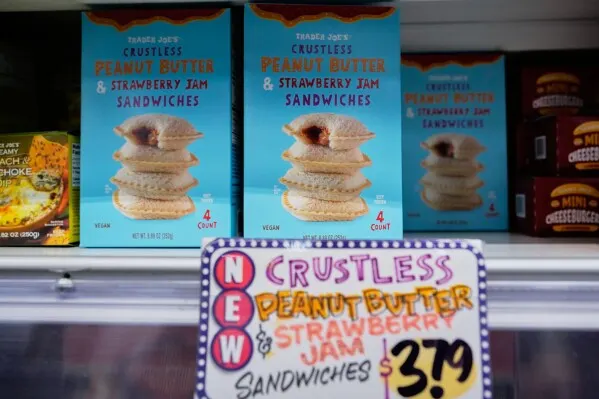
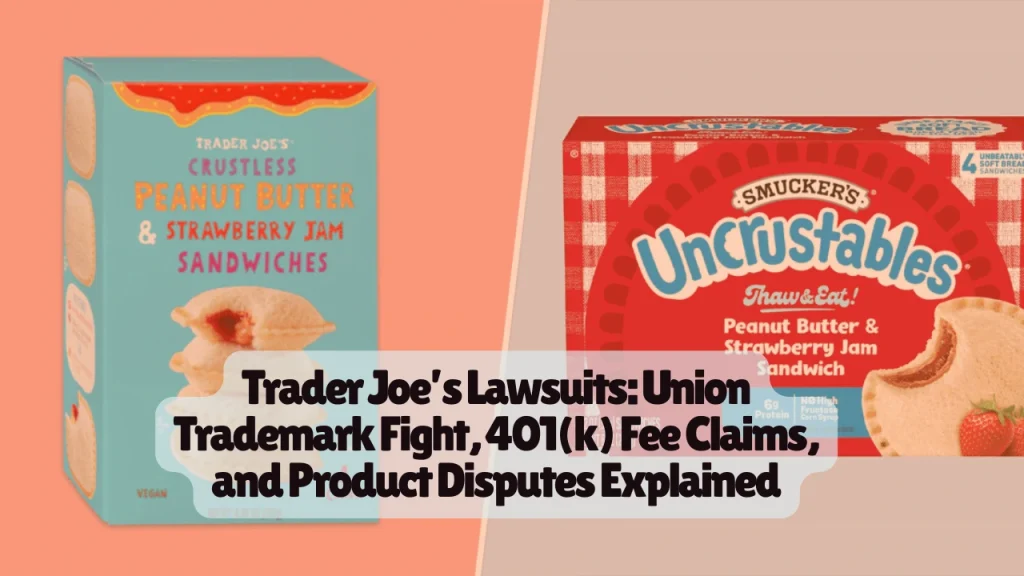
The J.M. Smucker Company filed a federal trademark and trade dress infringement lawsuit against Trader Joe’s in October 2025 in U.S. District Court for the Northern District of Ohio. Smucker claims Trader Joe’s new “Crustless Peanut Butter and Jelly Sandwiches” unlawfully mimic its Uncrustables product design and branding.
Alleged Similarities:
- Round, crimped-edge sandwich shape with no visible crust
- Blue-toned packaging
- Overall product appearance and presentation
Smucker asserts these overlapping design cues could cause consumer confusion, leading customers to mistakenly believe Trader Joe’s sandwiches are made, endorsed, or authorized by Smucker.
What Is at Stake in the Smucker Lawsuit?
Smucker has aggressively defended the Uncrustables brand since its debut over two decades ago. The product line has grown into a $920 million annual business—more than 10% of J.M. Smucker’s total revenue. The company recently opened a $1.1 billion production facility in Alabama to meet rising demand.
If Smucker wins, the ruling could set a precedent reshaping how far private-label retailers can go in making copycat products. If Trader Joe’s prevails, it may embolden other grocers to push creative boundaries further. Legal analysts say the case underscores an evolving dynamic in the U.S. grocery market: as private labels expand, the distinction between innovation and infringement becomes less clear.
What Was the “All Natural” Labeling Settlement?
Trader Joe’s agreed to a proposed $3.375 million settlement in early 2025 to resolve a class action lawsuit over alleged misuse of “natural” claims. The suit claimed Trader Joe’s mislabeled products as “All Natural” or “100% Natural” that contained allegedly synthetic ingredients.
Ingredients at Issue:
- Ascorbic acid
- Cocoa processed with alkali
- Sodium acid pyrophosphate
- Sodium citrate
- Xanthan gum
- Vegetable mono- and diglycerides
Covered Products:
- Joe-Joe’s Chocolate Vanilla Creme Cookies
- Joe-Joe’s Chocolate Sandwich Creme Cookies
- Trader Joe’s Jumbo Cinnamon Rolls
- Trader Joe’s Buttermilk Biscuits (and other products)
Customers who purchased these items between 2010 and 2024 may be eligible for compensation. The settlement agreement was announced by court-appointed settlement administrator Rust Consulting in March 2025.
What Other Recent Trader Joe’s Lawsuits Exist?
Heavy Metals in Chocolate – DISMISSED: A federal judge in San Diego dismissed a class action lawsuit in March 2025 over allegations that Trader Joe’s dark chocolate contained high levels of lead, cadmium, and arsenic. U.S. District Judge Ruth Bermudez Montenegro ruled plaintiffs should have been aware of heavy metals’ presence in dark chocolate based on widely publicized scientific studies and consumer advocacy reports.
Proposition 65 Case – PENDING: A lawsuit filed in April 2025 in California alleges Trader Joe’s violated Proposition 65 by failing to disclose harmful chemicals in products that may cause cancer or reproductive harm. The case remains pending with no public response from Trader Joe’s.
Tennessee Slip and Fall – APPELLATE DECISION: The Tennessee Supreme Court ruled in 2024 that Trader Joe’s could not dismiss direct negligence claims (negligent training and supervision) alongside a premises liability claim in a slip and fall case. The court rejected Trader Joe’s argument that admitting vicarious liability should preempt direct negligence claims.
Who Is Affected by These Lawsuits?
Union Trademark Case: Trader Joe’s United members and the broader labor organizing effort at Trader Joe’s stores nationwide. A ruling for Trader Joe’s could limit the union’s ability to fund organizing through merchandise sales.
401(k) Lawsuit: Approximately 38,000 current and former Trader Joe’s employees who participated in the company’s retirement plan during the class period (specific dates to be determined).
Probiotic Lawsuit: Consumers in New York and California who purchased Trader Joe’s Advanced Strength Probiotic supplements during the applicable statute of limitations period.
Uncrustables Lawsuit: This case primarily affects Trader Joe’s business operations rather than consumers directly, though it could impact product availability.
“All Natural” Settlement: Customers who purchased covered products labeled “All Natural” or “100% Natural” between 2010 and 2024 may be eligible for settlement payments.
What Are the Potential Outcomes?
Union Trademark Case: The case proceeds to trial following the Ninth Circuit’s September 2025 reversal. Potential outcomes include an injunction prohibiting the union from selling merchandise with allegedly infringing marks, monetary damages, or a finding of no infringement allowing the union to continue sales.
401(k) Lawsuit: If plaintiffs prevail, Trader Joe’s could face substantial damages for plan losses, be required to restructure investment options, reduce fees, and implement proper oversight procedures. The case could also result in settlement negotiations before trial.
Probiotic Lawsuit: Potential outcomes include class certification, settlement payments to affected consumers, product reformulation or relabeling, and injunctive relief requiring accurate CFU labeling.
Uncrustables Lawsuit: Smucker seeks an injunction stopping Trader Joe’s from selling the allegedly infringing product, plus damages. The case could set precedent for private-label product development industry-wide.
What Should Affected Parties Do?
Current or Former Employees: If you participated in Trader Joe’s retirement plan during the relevant period, monitor the 401(k) lawsuit for class certification notices. You may receive direct notice if the court certifies the class. No action is required immediately—class members are typically automatically included unless they opt out.
Probiotic Purchasers: If you purchased Trader Joe’s Advanced Strength Probiotic in New York or California, retain receipts and product information. Watch for class certification and settlement notices. You may be required to submit a claim form to receive compensation.
“All Natural” Product Purchasers: Check the official class action settlement website or contact Rust Consulting for information about filing claims for products purchased between 2010 and 2024. Settlement deadlines apply.
Union Members: Follow updates from Trader Joe’s United regarding the trademark case. The outcome could affect the union’s funding and organizing capabilities.
What Rights Do Class Members Have?
Right to Participate: Once a class is certified, members automatically receive benefits from any settlement or judgment unless they opt out. You don’t need to “join” or “sign up” for most class actions.
Right to Opt Out: Class members can typically exclude themselves from the class and pursue individual claims, though this forfeits settlement benefits.
Right to Object: Class members can object to proposed settlements they believe are unfair, typically by filing written objections with the court before a deadline.
Right to Legal Representation: Class counsel represents all class members, but individual members can hire separate attorneys if they opt out and pursue independent claims.
What Is the Timeline for These Cases?
Union Trademark Case: Remanded to district court in September 2025 for trial proceedings. Discovery, motions practice, and trial preparation will likely extend into 2026.
401(k) Lawsuit: Filed January 28, 2025. Currently in early stages with Trader Joe’s response pending. Class certification motions typically follow discovery, potentially in mid-to-late 2026.
Probiotic Lawsuit: Filed October 3, 2025. Early-stage litigation with class certification likely sought in 2026.
Uncrustables Lawsuit: Filed October 2025. Discovery and motion practice expected throughout 2026.
“All Natural” Settlement: Reached early 2025 with settlement administrator appointed. Check settlement website for claim deadlines and payment timelines.
Frequently Asked Questions
Q: Can I still file a claim for the “All Natural” settlement if I don’t have receipts?
Check the settlement website for alternative proof requirements. Many settlements accept affidavits or declarations under penalty of perjury for smaller claims when receipts are unavailable.
Q: Will the union trademark case affect my ability to support Trader Joe’s United?
The case challenges the union’s merchandise sales, not membership or organizing activities. Even if Trader Joe’s prevails on trademark claims, employees can still join and support the union through other means.
Q: How do I know if I’m included in the 401(k) class action?
The class includes participants in the Trader Joe’s Company Retirement Plan during the relevant period (specific dates to be determined through litigation). If you contributed to or received employer contributions in the plan, you’re likely included once the class is certified.
Q: What if I purchased Trader Joe’s probiotics outside New York and California?
The current lawsuit covers only New York and California purchasers due to state-specific consumer protection laws. Additional lawsuits may be filed in other jurisdictions.
Q: Can Trader Joe’s retaliate against employees for participating in the 401(k) class action?
No. Federal law prohibits retaliation against employees for participating in ERISA litigation. Any retaliation could result in additional legal claims.
Q: Does the Uncrustables lawsuit mean Trader Joe’s will stop selling the product?
Not necessarily. The product will likely remain available during litigation unless Smucker obtains a preliminary injunction, which requires proving likelihood of success and irreparable harm.
Q: Are there other active Trader Joe’s lawsuits not covered here?
Yes. Trader Joe’s faces multiple smaller lawsuits over product labeling, employment practices, and premises liability. This article covers the most significant recent cases with broad impact.
What This Means for Trader Joe’s
The convergence of multiple high-profile lawsuits in 2025 creates significant legal and financial exposure for the grocery chain. The 401(k) case alone involves $2.7 billion in plan assets and 38,000 participants. Combined with trademark disputes, product liability claims, and employment law challenges, Trader Joe’s faces a complex legal landscape requiring substantial resources and potentially significant settlements or judgments.
The union trademark case, now revived after appellate review, tests the boundaries of trademark law in labor disputes. The outcome could influence how employers and unions navigate intellectual property issues during organizing campaigns nationwide.
The 401(k) litigation reflects broader trends in ERISA enforcement, with plan fiduciaries facing heightened scrutiny over fees, investment selection, and forfeiture handling. A plaintiff victory could prompt retirement plan restructuring across the company.
The product liability cases—particularly the probiotic and “All Natural” labeling claims—underscore consumer protection enforcement in food retail. As private-label products dominate Trader Joe’s business model, accurate labeling and quality control become critical legal compliance issues.
This article provides general information about Trader Joe’s lawsuits. For specific legal advice about your situation, consult with a qualified attorney. All information is current as of December 2025.
About the Author

Sarah Klein, JD, is a licensed attorney and legal content strategist with over 12 years of experience across civil, criminal, family, and regulatory law. At All About Lawyer, she covers a wide range of legal topics — from high-profile lawsuits and courtroom stories to state traffic laws and everyday legal questions — all with a focus on accuracy, clarity, and public understanding.
Her writing blends real legal insight with plain-English explanations, helping readers stay informed and legally aware.
Read more about Sarah