
Tracy Chapman Nicki Minaj Lawsuit, Singer Wins $450K from Nicki Minaj Over Unauthorized Song Use
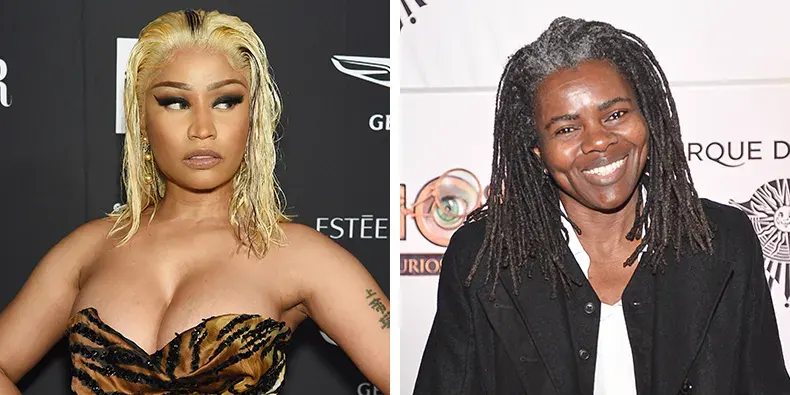
Tracy Chapman won her copyright infringement lawsuit against Nicki Minaj in January 2021, receiving $450,000 after Minaj used Chapman’s 1988 song “Baby Can I Hold You” without permission. The case settled before trial after Chapman repeatedly denied Minaj’s requests to interpolate the track for her song “Sorry” featuring Nas.
What Is the Tracy Chapman Lawsuit About?
Chapman filed the copyright infringement lawsuit in October 2018 against rapper Nicki Minaj for unauthorized use of Chapman’s composition “Baby Can I Hold You” in Minaj’s unreleased track “Sorry.”
The case centered on two key allegations:
- Creating an illegal derivative work: Minaj recorded “Sorry” using the lyrics and vocal melody from Chapman’s song without obtaining permission
- Distributing the unauthorized work: The song leaked to radio and online despite Chapman’s denial of licensing requests
Who Is Involved in the Case?
Plaintiff:
- Tracy Chapman: Singer-songwriter known for hits like “Fast Car” and “Talkin’ ’bout a Revolution”
- Legal Counsel: Attorney Lee Phillips represented Chapman
Defendant:
- Nicki Minaj: Rapper whose song “Sorry” featuring Nas interpolated Chapman’s composition
- Legal Team: Minaj’s attorneys argued fair use defenses
Related Parties:
- DJ Funkmaster Flex: New York radio DJ who played “Sorry” on Hot 97 the day after Minaj’s album release
- Nas: Featured artist on “Sorry”
Related article: Is It Legal to Own an Otter? What US Laws Say About Pet Otter Ownership
Timeline of the Tracy Chapman Legal Case
June 2018: Music clearance company DMG sent Chapman’s representatives an exploratory note asking if an “A list artist” wanted to use “Baby Can I Hold You” and whether Chapman remained on an unofficial “do not sample or interpolate” list
July 2018: Minaj’s team formally requested permission to interpolate Chapman’s song for “Sorry”
Days Later: Chapman’s publishing representatives rejected the request
Late July 2018: Minaj tweeted asking Chapman for clearance and asking fans whether she should keep her album release date and lose the record or vice versa
August 10, 2018: Minaj released her album Queen without “Sorry”
August 11, 2018: DJ Funkmaster Flex played “Sorry” on Hot 97 radio; the song leaked online
August 2018: Chapman issued DMCA takedown notices for copyright infringement
October 2018: Chapman filed copyright infringement lawsuit in U.S. District Court for the Central District of California
February 2019: Minaj formally denied copyright infringement, claiming fair use
September 2020: Judge Virginia A. Phillips ruled Minaj’s creation of “Sorry” constituted fair use for experimental purposes, but left the distribution question for trial
December 17, 2020: Minaj offered $450,000 judgment to Chapman
December 30, 2020: Chapman accepted the settlement offer
January 7, 2021: Court documents filed confirming the settlement
What Were the Legal Claims?
Chapman’s lawsuit alleged two counts of copyright infringement:
Count 1: Creating an Unauthorized Derivative Work
Chapman claimed Minaj violated her copyright by rerecording the lyrics and vocal melody of “Baby Can I Hold You” without permission, creating an illegal derivative work called “Sorry.”
Count 2: Distributing the Unauthorized Work
The lawsuit alleged Minaj or her team distributed “Sorry” to radio DJ Funkmaster Flex, who played it on Hot 97, and allowed it to leak online despite Chapman’s denial of licensing.
The “Do Not Sample” List
According to court documents, Chapman maintains a policy of declining all requests for permission to sample or interpolate her songs.
The clearance company allegedly knew Chapman was on this unofficial “do not sample list”—a designation for artists known for not allowing their work to be used in samples. Despite this knowledge, Minaj’s team pursued licensing anyway.
Chapman stated she has “never authorized” the use of her songs for samples and emphasized being “protective” of her work as a songwriter and independent publisher.
What Is the Legal Basis for the Claims?
The case centered on fundamental copyright law principles:
Copyright Ownership
Chapman owns the copyright to “Baby Can I Hold You,” giving her exclusive rights to:
- Reproduce the work
- Create derivative works
- Distribute copies
- Authorize others to use the composition
Unauthorized Use
Using copyrighted material without permission from the copyright holder constitutes infringement unless protected by fair use or other exceptions.
Derivative Works
A derivative work is based on or incorporates a pre-existing copyrighted work. Creating such works without authorization violates copyright law.
Nicki Minaj’s Defense
Minaj raised several defenses in her February 2019 response:
Fair Use Doctrine
Minaj argued that creating “Sorry” in the studio for experimental purposes constituted fair use under copyright law. Fair use allows limited use of copyrighted material without permission for purposes like criticism, commentary, or transformative works.
Lack of Standing
Minaj initially claimed Chapman had not properly registered her copyright claim and therefore lacked standing to sue. This argument did not prevail.
Denial of Distribution
Both Minaj and DJ Funkmaster Flex denied that Minaj or her team gave “Sorry” to the radio DJ for broadcast.
The Fair Use Ruling
In September 2020, Judge Virginia Phillips issued a significant ruling that split the case in two:
Creating the Song: Fair Use
The judge ruled that Minaj’s creation of “Sorry” in the studio constituted fair use. The court found that artists need freedom to experiment with musical ideas before seeking formal licensing.
“Chapman has requested samples of proposed works before approving licensing requests herself because she wanted ‘to see how [her work] will be used’ before approving the license, yet Chapman argues against the very practice she maintains,” Judge Phillips wrote.
The court noted: “A ruling uprooting these common practices would limit creativity and stifle innovation within the music industry. This is contrary to Copyright Law’s primary goal of promoting the arts for the public good.”
Distributing the Song: Not Fair Use
However, the judge set the distribution question for trial. While creating the song for experimental purposes was protected, allowing it to reach radio and the public was potentially actionable copyright infringement.
The $450,000 Settlement
Rather than proceed to trial on the distribution question, Minaj offered Chapman $450,000 in December 2020.
Settlement Terms
The judgment amount was “inclusive of all costs and attorney fees incurred to date,” meaning Chapman did not have to pay any legal costs from the settlement.
By accepting the offer, Chapman avoided:
- The risk of losing at trial
- Potential responsibility for costs if a jury awarded less than $450,000
- Additional months or years of litigation
Minaj avoided:
- A public trial
- Potential for higher damages
- Continued negative publicity
Tracy Chapman’s Statement
Chapman issued a statement after the settlement:
“As a songwriter and an independent publisher I have been known to be protective of my work. I have never authorized the use of my songs for samples or requested a sample. This lawsuit was a last resort.”
She added: “I am glad to have this matter resolved and grateful for this legal outcome which affirms that artists’ rights are protected by law and should be respected by other artists.”
Chapman emphasized the lawsuit was necessary “to defend myself and my work and to protect the creative enterprise and expression of songwriters and independent publishers like myself.”
What This Means for Copyright Law
The case established important precedents:
Experimental Fair Use
Artists can create experimental versions of copyrighted works in the studio to determine if they want to pursue licensing—but cannot distribute those works without permission.
Copyright Holder Control
Copyright owners maintain absolute control over whether to license their works. Artists on “do not sample” lists have no obligation to allow their music to be used.
Distribution Liability
The key infringement occurs when unauthorized derivative works reach the public, not necessarily in their creation for private experimentation.
Settlement as Industry Practice
Even with partial victories in court, parties often settle to avoid trial uncertainty and costs.
Impact on the Music Industry
The lawsuit highlighted tensions between artistic experimentation and copyright protection:
For Sampling Artists
- Must obtain clearance before releasing songs with samples or interpolations
- Can experiment privately but face liability if unauthorized works leak
- Should respect artists’ “do not sample” preferences
For Copyright Holders
- Maintain control over how their works are used
- Can refuse licensing requests without explanation
- Have legal recourse when their rights are violated
Industry Protocols
The case reinforced standard music industry practices where artists experiment, then seek clearance before public release—not the reverse.
Similar Music Copyright Cases
The Chapman-Minaj case fits within a broader landscape of sampling disputes:
Major Sampling Lawsuits
- Robin Thicke/Pharrell Williams vs. Marvin Gaye Estate (“Blurred Lines”): $5.3 million judgment for copyright infringement
- Katy Perry vs. Flame (“Dark Horse”): Initially $2.8 million judgment, later overturned
- Led Zeppelin vs. Spirit (“Stairway to Heaven”): Led Zeppelin prevailed on appeal
Common Themes
Most sampling disputes involve:
- Failure to obtain clearance before release
- Disagreement over whether use constitutes fair use
- Questions about substantial similarity
- Battles over damages amounts
Current Status of the Case
The case is closed. The $450,000 judgment was entered in January 2021, and both parties have moved on.
The settlement resolved all claims, ending the litigation without trial on the distribution question.
Frequently Asked Questions
Q: Did Nicki Minaj win or lose the lawsuit?
Minaj won a partial victory when the judge ruled creating the song was fair use, but ultimately paid $450,000 to settle before trial on whether distributing it was infringement.
Q: Why did Tracy Chapman sue Nicki Minaj?
Chapman sued because Minaj used Chapman’s song “Baby Can I Hold You” without permission in “Sorry,” and the song leaked to radio and online despite Chapman repeatedly denying licensing requests.
Q: What is a “do not sample” list?
An unofficial industry designation for artists known for declining requests to have their work sampled or interpolated. Chapman maintains a policy of never authorizing samples.
Q: Can artists create sample-based songs without permission?
The court ruled artists can experiment privately under fair use, but must obtain permission before publicly releasing songs with samples or interpolations.
Q: How much did Tracy Chapman receive in the settlement?
Chapman received $450,000, inclusive of all costs and attorney fees.
Q: Was “Sorry” ever officially released?
No. Minaj kept “Sorry” off her album Queen after Chapman denied clearance. The song only leaked through radio play and online distribution.
Q: Did DJ Funkmaster Flex face legal consequences?
The lawsuit focused on Minaj, though questions about how Flex obtained the song remained. Both denied Minaj’s team provided it to him.
Q: Can copyright holders refuse to license their songs?
Yes. Copyright owners have complete discretion to approve or deny licensing requests for any reason or no reason.
Q: What is the difference between sampling and interpolation?
Sampling uses the actual recording of a song. Interpolation re-records the melody and/or lyrics. Both require permission from copyright holders.
Conclusion
The Tracy Chapman lawsuit against Nicki Minaj concluded with a $450,000 settlement in January 2021, affirming that copyright holders maintain control over how their works are used—even by superstar artists.
While the court recognized artists’ need to experiment with musical ideas, it drew a clear line: creating unauthorized derivative works privately may be fair use, but distributing them publicly without permission is copyright infringement.
Chapman’s victory reinforced that artists on the “do not sample” list mean what they say. Her protective approach to her catalog is legally sound and must be respected by other artists seeking to use her compositions.
For Minaj, the case served as an expensive lesson about the importance of securing clearances before allowing experimental tracks to reach the public. The $450,000 settlement, while avoiding potentially higher damages at trial, demonstrated the financial consequences of copyright violations.
The lawsuit’s legacy continues to influence how artists approach sampling and interpolation, reminding the music industry that copyright law protects creators’ rights to control their work—regardless of other artists’ commercial interests or creative visions.
This article provides general information about the concluded Tracy Chapman vs. Nicki Minaj lawsuit and should not be construed as legal advice.
About the Author

Sarah Klein, JD, is a licensed attorney and legal content strategist with over 12 years of experience across civil, criminal, family, and regulatory law. At All About Lawyer, she covers a wide range of legal topics — from high-profile lawsuits and courtroom stories to state traffic laws and everyday legal questions — all with a focus on accuracy, clarity, and public understanding.
Her writing blends real legal insight with plain-English explanations, helping readers stay informed and legally aware.
Read more about Sarah