
Toyota UA80 Transmission Lawsuit: Lawsuit Over Alleged Automatic Gearbox Defects Leave Owners With $7,000+ Repairs
Two class action lawsuits filed in December 2025 allege Toyota knowingly sold vehicles with defective UA80 8-speed transmissions that overheat, burn fluid, and fail prematurely—leaving owners with $7,000+ repair bills after warranty expires. Texas plaintiff James LeBoutheller (2020 Camry) filed December 20, while California plaintiff Neil Pallaya ($5M lawsuit, 2020 Highlander) filed December 1. Both claim Toyota issued quiet Technical Service Bulletins since 2016 but never recalled affected vehicles or covered out-of-warranty repairs.
If you own a 2017-2024 Toyota/Lexus with UA80 transmission and hear whining noises, document everything now—these cases are seeking nationwide class certification and full transmission replacements.
What’s Breaking Right Now: Two Lawsuits Filed This Month
Texas lawsuit (LeBoutheller v. Toyota, Case No. 4:25-cv-01389) was filed December 20, 2025 in U.S. District Court for the Eastern District of Texas.
California lawsuit (Pallaya v. Toyota) was filed December 1, 2025 seeking over $5 million in damages.
Both plaintiffs purchased 2020 Toyota vehicles equipped with the UA80E 8-speed automatic transmission. Both experienced identical problems: high-pitched whining noises, transmission failure requiring replacement, and Toyota refusing to cover repair costs after warranty expiration.
Case status as of December 23, 2025: Both lawsuits are in early stages. No settlement has been reached. No class certification has been granted yet. Toyota has not filed public responses. Attorneys are currently gathering evidence and additional plaintiffs.
The Defect That’s Costing Owners Thousands
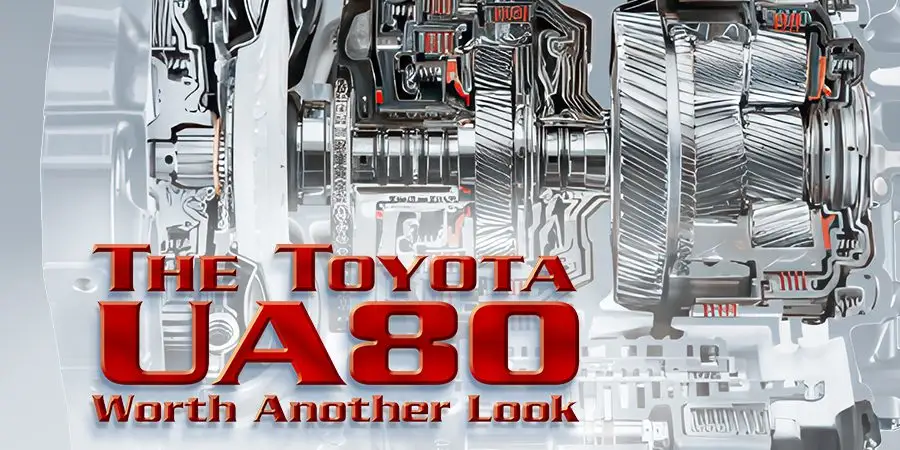
The UA80 8-speed automatic transmission has two alleged defects working together to cause premature failure.
Mechanical defect: Excess heat builds up inside the transmission, burning transmission fluid and causing premature wear. The root cause traces to a factory assembly error where a locking tab securing a counter drive gear support nut wasn’t properly bent during manufacturing. This allows the nut to loosen over time, causing gear movement and internal damage.
Software defect: Toyota programmed the transmission control module to prioritize fuel efficiency over durability. The software forces premature upshifts and early torque converter clutch engagement, placing excessive stress on components already weakened by the mechanical flaw.
Combined, these defects cause: high-pitched whining or grinding noises, erratic shifting and hesitation, sudden loss of power while driving, complete transmission failure requiring full replacement, and aluminum particles contaminating transmission fluid.
Related article: HGTV’s No Demo Reno Lawsuit: Homeowners Allege $1.5M in Dangerous Renovation Defects
What Happened to the Two Plaintiffs
James LeBoutheller (Texas, 2020 Camry XSE):
His transmission started making noise around 80,000 miles. By 125,000 miles in November 2025, the noise worsened. First Toyota dealer kept his car 30 days, then claimed nothing was wrong. Second Toyota dealer found aluminum particles in transmission fluid, confirming failure. Toyota agreed to provide a replacement transmission but refused to cover labor costs. Total cost: “several thousand dollars” for labor alone. The replacement transmission has the same defect.
Neil Pallaya (California, 2020 Highlander):
His vehicle came with 5-year/60,000-mile warranty. In September 2025 at 67,200 miles, the transmission began making persistent high-pitched whining. Dealer inspection confirmed transmission failure requiring complete replacement. Estimated cost: $7,451.33. Warranty had just expired by 7,200 miles. Pallaya was stuck with the full bill.
Both owners paid premium prices for vehicles marketed as reliable, only to face catastrophic transmission failures shortly after warranty expiration.
Which Toyota and Lexus Vehicles Are Affected
The lawsuits list these models with UA80 8-speed transmissions:
Toyota models: 2018-2024 Camry (4-cylinder), 2017-2023 Highlander, 2018-2020 Sienna, 2019-2023 RAV4 (gas models with 8-speed), 2019-2023 Avalon
Lexus models: 2018-2024 ES 350, 2016-2022 RX 350, 2019-2021 UX 250h
The lawsuits claim hundreds of thousands of vehicles are affected. The California lawsuit specifically mentions 2017-present model years.
Important distinction: The 2019-2025 RAV4 uses the UB80 transmission, a lower-torque version. Current evidence suggests the UA80 (used in Highlander, Camry, Sienna) has more widespread problems. The high-torque UA80 uses a four-pinion gear final drive where the assembly defect occurs. The lower-torque UB80 in RAV4s has fewer reported failures.
Toyota Knew Since 2016 But Never Issued Recall
The lawsuits allege Toyota has known about UA80 defects since August 2016 through pre-sale durability testing.
Evidence of Toyota’s knowledge:
NHTSA complaints started in 2017, just months after UA80 introduction. Technical Service Bulletins (TSBs) issued for transmission whining: T-SB-0160-18 (2018), T-SB-0008-21 (2021). Customer Support Program (CSP ZJC) created for limited VIN ranges but excluded most affected vehicles. Dealership reports of failures and aluminum contamination. Internal durability testing showing premature wear patterns.
What Toyota didn’t do:
Issue a safety recall despite stalling risks. Extend warranties to cover known defect. Reimburse owners for out-of-warranty repairs. Publicly acknowledge widespread transmission problems. Redesign the defective transmission components.
Instead, Toyota allegedly told owners their transmissions were “operating normally” or denied warranty coverage based on mileage limits—even when problems were documented earlier.
The Technical Service Bulletins Toyota Quietly Issued
TSB T-SB-0160-18 (issued 2018): Addressed whining noise in UA80 transmissions. Provided diagnostic procedures for dealers. Did not offer permanent fix or customer reimbursement. Limited to specific VIN ranges.
TSB T-SB-0008-21 (issued 2021): Acknowledged front carrier assembly pinion shaft defects causing whining/grinding. Again limited to narrow VIN ranges. Many vehicles with identical symptoms excluded from coverage.
Customer Support Program (CSP ZJC): Created to provide limited repairs for select vehicles. Required specific VIN numbers to qualify. Thousands of affected owners excluded despite having same symptoms. No public notification to all UA80 owners.
Owners only discovered these TSBs after their transmissions failed, when dealerships mentioned them or through online forums. Toyota never proactively contacted affected owners.
What the Lawsuits Are Demanding
Texas lawsuit demands: Jury trial, damages for all affected owners, restitution for diminished vehicle values, injunctive relief requiring Toyota to repair/recall/replace defective transmissions, reimbursement for all out-of-warranty repair costs, attorney’s fees and costs, and nationwide class certification.
California lawsuit demands: Over $5 million in damages, similar remedies including recalls and warranty extensions, and compensation for owners forced to pay for repairs.
Both lawsuits seek to represent all U.S. owners who purchased or leased vehicles with UA80 transmissions and either experienced transmission problems or own vehicles with the latent defect that will eventually fail.
Legal Claims Being Made Against Toyota
Breach of implied warranty of merchantability: Vehicles weren’t fit for ordinary use—transmissions failed prematurely despite being marketed as reliable.
Breach of express warranty: Toyota’s warranty promises were violated when they refused to cover defective transmissions.
Violation of Magnuson-Moss Warranty Act: Federal law prohibiting unfair warranty practices. Toyota allegedly failed to remedy defects within reasonable attempts.
Fraud by omission: Toyota knew about defects but failed to disclose them to buyers before purchase.
Negligent misrepresentation: Toyota made false statements about vehicle reliability and transmission durability.
Unjust enrichment: Toyota profited by selling defective vehicles at premium prices while knowing they would fail.
Violation of state consumer protection laws: Both lawsuits cite state-specific consumer fraud statutes.
What Similar Transmission Lawsuits Show
Honda 9-speed transmission settlement (2020): Honda paid $168 million to settle claims over defective 9-speed transmissions in Acura and Honda vehicles. Settlement included transmission replacements and cash compensation for diminished value.
Ford PowerShift settlement (2019): Ford paid $35 million to resolve claims about defective dual-clutch transmissions. Included warranty extensions and repairs.
Nissan CVT settlements (multiple): Nissan has settled multiple class actions over CVT transmission failures, providing warranty extensions and buyback programs.
These precedents establish that: manufacturers can’t hide behind warranty expiration when defects exist at time of sale, Technical Service Bulletins prove manufacturer knowledge of defects, and courts award substantial compensation when manufacturers fail to recall known dangerous defects.
How to Know If Your Transmission Is Failing
Early warning signs:
High-pitched whining noise when accelerating, especially noticeable at highway speeds. Grinding or buzzing sounds from transmission area. Hesitation when shifting gears. Rough or jerky gear changes. Delay when accelerating from a stop.
Advanced symptoms:
Erratic shifting between gears. Sudden loss of power while driving. Transmission slipping out of gear. Check engine light with transmission-related codes. Burning smell from transmission fluid. Complete loss of drive in all gears.
If you experience any of these symptoms, document them immediately with: date and mileage when symptoms started, video/audio recordings of unusual noises, written descriptions of problems, and immediate service appointment with detailed records.
What To Do Right Now If You Own An Affected Vehicle
Document everything immediately:
Take your vehicle to a Toyota dealer for inspection. Request written documentation of any transmission issues. Ask specifically about aluminum particles in transmission fluid. Get copies of all service records and repair estimates. Document all conversations with dealers and Toyota corporate.
File complaints:
Submit complaint to NHTSA at nhtsa.gov/report-a-safety-problem. This creates official government record of your issue. File complaint with your state Attorney General’s consumer protection division. Contact Consumer Financial Protection Bureau if financing issues arise.
Preserve evidence:
Save all maintenance records showing proper transmission fluid changes. Keep purchase documents showing vehicle price and warranty terms. Take photos/videos of transmission condition if accessible. Record all repair estimates and costs.
Monitor the lawsuits:
Check TopClassActions.com and ClassAction.org for updates on both cases. Watch for class certification notices that may be mailed to owners. Consider contacting the plaintiff attorneys if you experienced similar problems.
Can You Join The Class Action Right Now?
Not yet. Neither lawsuit has been certified as a class action yet. This is the early filing stage.
What happens next:
Plaintiffs will petition court for class certification. If granted, all owners who meet class definition are automatically included. Court will mail notices to all potential class members. You’ll have option to stay in the class or opt out to pursue individual claims.
Expected timeline: Class certification typically takes 6-18 months from filing. Discovery process will reveal internal Toyota documents. Settlement negotiations may begin once class is certified. Final resolution typically takes 2-4 years from initial filing.
How to stay informed: Monitor court dockets for Case No. 4:25-cv-01389 (Texas case). Sign up for notifications at class action tracking websites. Follow automotive news sources covering the litigation.
Your Legal Options Right Now
If your vehicle is still under warranty:
Demand Toyota repair or replace the transmission at no cost. Get written denial if Toyota refuses. This denial is critical evidence for future claims. Document that symptoms appeared before warranty expiration even if repairs happen after.
If warranty expired but you documented problems earlier:
Toyota may still be liable if you reported symptoms during warranty period. Gather all service records showing when problems started. Consider filing lemon law claim if your state allows post-warranty claims for defects present during warranty.
If you already paid for transmission replacement:
Keep all receipts and repair documentation. You may qualify for reimbursement if lawsuits succeed. File NHTSA complaint to create official record. Consider consulting attorney about individual claim if damages exceed $10,000.
Lemon law options:
Most states allow lemon law claims if defect substantially impairs vehicle value/safety within warranty period. Toyota must be given reasonable attempts to repair. If repairs fail, you may qualify for buyback or replacement. Consult lemon law attorney in your state—many offer free consultations.
What Your Warranty Actually Covers (And Doesn’t)
Toyota’s standard powertrain warranty: 5 years/60,000 miles covers transmission defects if they occur during warranty period.
What Toyota is allegedly doing: Denying coverage by claiming transmissions are “operating normally” despite obvious problems. Refusing coverage once mileage exceeds 60,000 even if problem started earlier. Requiring owners to pay labor costs even when providing free replacement transmission. Failing to honor warranty terms when owners report problems within coverage period.
Your rights under federal law: Magnuson-Moss Warranty Act requires manufacturers to honor warranty terms. Manufacturers can’t disclaim implied warranties if they offer express warranties. You’re entitled to consequential damages like towing, rental cars, and lost vehicle value. Winning warranty claims entitle you to attorney’s fees.
What Legal Experts Say About These Cases
Automotive product liability attorneys note these lawsuits have strong factual support: clear evidence Toyota knew about defects through TSBs and internal testing, documented pattern of failures across multiple model years and vehicle lines, and specific mechanical explanation for why failures occur.
Challenges Toyota faces: Hard to argue transmissions are working properly when aluminum particles appear in fluid. TSBs prove Toyota acknowledged problems existed. Timing of failures (60,000-125,000 miles) suggests design defect not wear-and-tear. Refusing to cover labor while providing free parts undermines “goodwill” defense.
Likely outcomes: Settlement more probable than trial given strong evidence. Toyota may offer warranty extension to all UA80 vehicles. Owners who already paid for repairs likely qualify for reimbursement. Recall possible if NHTSA investigates stalling risks.
The Bigger Picture: Toyota’s Legal Troubles
These transmission lawsuits come as Toyota faces other major legal challenges.
November 2025: $5.7 billion lawsuit over hydrogen Mirai claiming Toyota knew refueling infrastructure didn’t exist. Multiple lawsuits over hybrid battery cable corrosion affecting millions of vehicles. Ongoing scrutiny over unintended acceleration issues in various models.
The pattern suggests Toyota may be prioritizing cost-cutting and fuel efficiency over durability and customer satisfaction. UA80 transmission appears designed to hit EPA fuel economy targets but fails to deliver real-world reliability.
When You Need A Lawyer
Consider individual attorney consultation if:
Your damages exceed $10,000. You experienced accident or injury due to transmission failure. Your state’s lemon law deadline is approaching. Toyota offered inadequate buyback amount. You want to opt out of class action to pursue larger individual claim.
Most affected owners should:
Wait for class certification and join the class action. Individual litigation is expensive and risky. Class actions provide compensation without upfront costs. Attorneys work on contingency—you pay nothing unless class wins.
Free resources: Most lemon law attorneys offer free case evaluations. State bar associations provide lawyer referral services. Legal aid organizations help low-income consumers. State Attorney General offices handle consumer complaints.
FAQ: Toyota UA80 Transmission Lawsuit
Is there a settlement yet?
No. Both lawsuits were just filed in December 2025. Settlement negotiations typically don’t begin until after class certification, which takes 6-18 months.
How do I file a claim?
You can’t file claims yet because no settlement exists. Once class is certified, you’ll receive notice by mail with instructions. Meanwhile, document your issues and file NHTSA complaints.
Which exact models are affected?
The lawsuits list 2017-2024 Toyota Highlander, 2018-2024 Camry 4-cylinder, 2018-2020 Sienna, 2019-2023 Avalon, 2019-2023 gas RAV4, and various Lexus models with UA80 8-speed transmissions.
What if my RAV4 has the 8-speed?
RAV4s use the UB80 transmission, a different lower-torque variant. Current evidence suggests fewer problems with UB80, but the lawsuits’ broad language may still cover it. Monitor case developments.
Can I still join if I already fixed my transmission?
Yes. Class members typically include anyone who paid for repairs related to the defect. Keep all receipts—you may qualify for reimbursement if lawsuits succeed.
What if I sold my affected vehicle?
You may still have claims for diminished value and repair costs you paid while you owned it. Past owners are often included in class definitions.
Will Toyota recall these transmissions?
No recall has been issued yet. The lawsuits request injunctive relief requiring recall, but that’s up to the court. NHTSA could also order recall if they open investigation.
How much compensation might I get?
Impossible to predict. Similar transmission settlements have ranged from free repairs/replacements to thousands in cash payments per vehicle depending on damages suffered.
Should I keep driving my vehicle if it’s whining?
Document the problem immediately but continuing to drive may worsen damage. Get dealer inspection to document condition. If transmission fails completely, you could be stranded or have accident.
Does extended warranty cover this?
Maybe, depending on your extended warranty terms. Review your contract. Toyota is allegedly denying even factory warranty coverage, so extended warranty companies may also deny claims for “pre-existing conditions.”
Can Toyota force me into arbitration?
Purchase contracts often contain arbitration clauses. However, class actions may proceed regardless. Consult attorney about whether arbitration clause is enforceable in your situation.
What’s the statute of limitations?
Varies by state and claim type. Generally 2-4 years from when you discovered or should have discovered the defect. Don’t delay documenting issues or filing NHTSA complaints.
Bottom line: Two December 2025 class actions expose what hundreds of owners already knew—Toyota’s UA80 transmission has serious defects Toyota has known about since 2016. With repair costs exceeding $7,000 and Toyota refusing coverage after warranty expires, owners are left holding the bag. Document everything now, file NHTSA complaints, and monitor these lawsuits for class certification. This isn’t just about noisy transmissions—it’s about safety, reliability, and holding manufacturers accountable when they sell defective products while issuing quiet fixes and leaving customers to pay.
About the Author

Sarah Klein, JD, is a licensed attorney and legal content strategist with over 12 years of experience across civil, criminal, family, and regulatory law. At All About Lawyer, she covers a wide range of legal topics — from high-profile lawsuits and courtroom stories to state traffic laws and everyday legal questions — all with a focus on accuracy, clarity, and public understanding.
Her writing blends real legal insight with plain-English explanations, helping readers stay informed and legally aware.
Read more about Sarah
You might as well add 2018-2019 Toyota C-hr’s to the list of time-bomb transmissions