
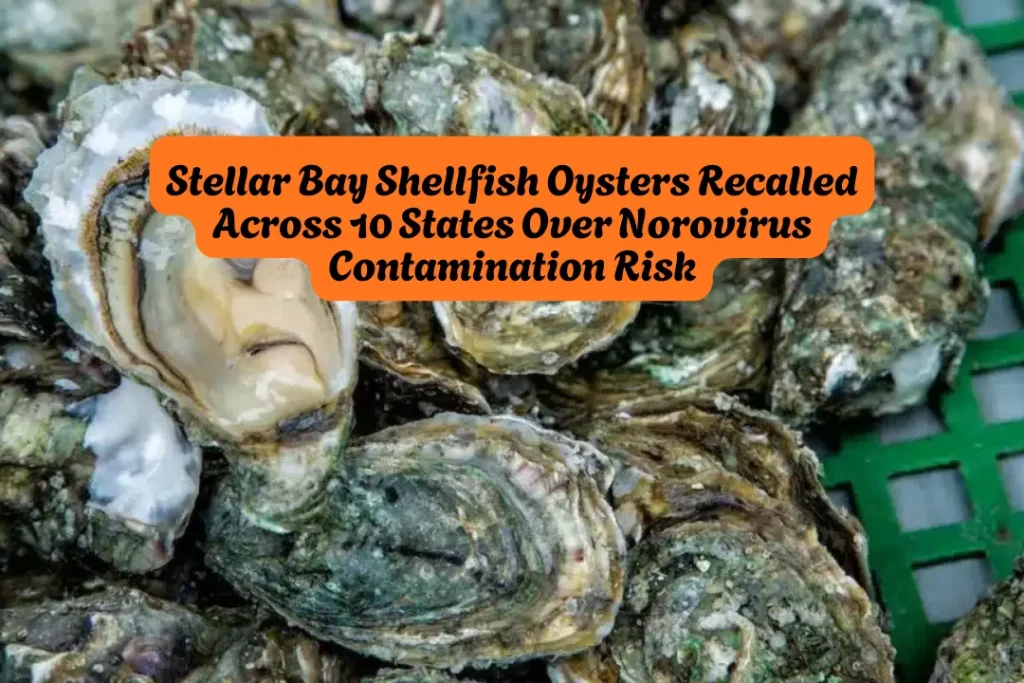
Stellar Bay Shellfish Oysters Recalled Across 10 States Over Norovirus Contamination Risk
The FDA is advising restaurants and retailers not to serve or sell — and consumers not to eat — certain raw oysters from Stellar Bay Shellfish Ltd. of British Columbia, Canada, due to possible norovirus contamination. The recall covers oysters harvested between December 22, 2025 and February 4, 2026 from British Columbia harvest area BC 17-20 (Nanoose Bay), CLF #1401656. The affected oysters were shipped to distributors across ten U.S. states and are sold under four brand names, prompting dual recalls by both American and Canadian food safety authorities.
Quick Facts
| Field | Details |
| Company/Brand | Stellar Bay Shellfish Ltd., British Columbia, Canada |
| Brand Names Affected | Kusshi, Chrome Point, Stellar Bay, Stellar Bay Gold |
| Product | Raw oysters (fresh shellfish) |
| Harvest Area | BC 17-20, Nanoose Bay, British Columbia — CLF #1401656 |
| Affected Harvest Dates | December 22, 2025 – February 4, 2026 |
| Recall Reason | Potential norovirus contamination |
| Date of FDA Alert | February 2026 (expanded February 18, 2026) |
| Canadian Recall Date | February 12, 2026 |
| Geographic Scope (U.S.) | CA, CO, FL, HI, IL, MD, NV, NY, PA, WA — may have reached other states |
| Consumer Action | Do not eat; discard immediately or return to place of purchase |
| Regulatory Authority | U.S. FDA; Canadian Food Inspection Agency (CFIA) |
| FDA Safety Alert | fda.gov |
| CFIA Recall Notice | recalls-rappels.canada.ca |
Detailed Recall Information
How the Hazard Was Discovered
Between January 18, 2026 and February 2, 2026, eleven people from five different meal parties in Washington State reported norovirus-like illness symptoms after consuming raw oysters harvested from a specific growing area in British Columbia, Canada. Washington State health officials alerted the FDA, which issued its initial safety advisory. Shortly after, the California Department of Public Health reported additional norovirus-like illness cases and initiated a local recall. A parallel recall was issued in Canada by the Canadian Food Inspection Agency (CFIA) after the recall was triggered by a CFIA inspection, with distribution confirmed in British Columbia and possibly other provinces and territories.
How the FDA Alert Expanded
Initially, the FDA warned only against oysters harvested on specific dates: December 30, 2025 and January 20, 2026. The agency later expanded the warning to cover all oysters harvested between December 22, 2025 and February 4, 2026 from British Columbia harvest area BC 17-20 (Nanoose Bay), CLF #1401656. As new illness reports emerged linked to additional harvest dates, the FDA broadened the scope to protect the widest possible population of consumers who may have purchased these products.
Which Products Are Affected
The recalled oysters were sold under the following brand names: Kusshi, Chrome Point, Stellar Bay, and Stellar Bay Gold. All four brands source from the same harvest area and are included regardless of which specific brand name appears on the packaging or menu. The affected harvest dates span from December 22, 2025 through February 4, 2026.
Where They Were Distributed
The oysters were shipped from British Columbia to restaurants and retailers in California, Colorado, Florida, Hawaii, Illinois, Maryland, Nevada, New York, Pennsylvania, and Washington, and may have been distributed to other states as well. Consumers in any state who purchased oysters under the Kusshi, Chrome Point, Stellar Bay, or Stellar Bay Gold brand names should verify harvest origin and dates before consuming them.
The Health Risk: Norovirus Explained
Oysters contaminated with norovirus can cause illness if eaten, and potentially severe illness in people with compromised immune systems. Food containing norovirus may look, smell, and taste normal. This is what makes this recall particularly dangerous — there is no way to identify a contaminated oyster by sight or smell.
Norovirus is a viral infection spread through direct contact with an infected person, eating food or drinking liquid contaminated with norovirus, or touching objects or surfaces contaminated with norovirus. Shellfish can be contaminated with norovirus if they are grown in contaminated water. Symptoms typically appear 12 to 48 hours after exposure and can include vomiting, diarrhea, abdominal cramps, muscle aches, headache, fever, and chills.
Most people feel better within one or two days, with symptoms resolving on their own, and experience no long-term health effects. However, even after recovering from the illness, a person can become re-infected by norovirus.
Incidents and Injuries on Record
At minimum, eleven confirmed cases across five separate meal parties in Washington State have been linked to this outbreak, with additional cases reported in California prompting the state-level recall. The exact total number of illnesses linked to this batch across all ten affected states has not been publicly confirmed by the FDA at the time of publication.
What Consumers Should Do
- Do not eat the oysters. If you have purchased raw oysters under the Kusshi, Chrome Point, Stellar Bay, or Stellar Bay Gold brand names, do not consume them regardless of how fresh they appear or smell.
- Check the harvest information. Verify the harvest area (BC 17-20, Nanoose Bay) and harvest date (December 22, 2025 – February 4, 2026) on the product label or packaging. If you cannot verify origin or date, discard the product out of caution.
- Discard or return immediately. Recalled products should be thrown out or returned to the location where they were purchased. If returning to a retailer, bring the original packaging.
- Restaurants and retailers must dispose of stock. Any food service establishment that purchased these oysters must stop serving them immediately, remove them from all menus, and dispose of any remaining inventory.
- Monitor for symptoms. Consumers of these products who are experiencing symptoms of illness should contact their healthcare provider and report their symptoms to their local Health Department. Diarrhea, abdominal cramps, nausea, vomiting, and fever may be associated with gastroenteritis infections caused by norovirus.
- Seek medical attention when necessary. If you or a family member develop severe dehydration symptoms — including inability to keep fluids down, dizziness, or extremely reduced urination — seek medical care. Those with compromised immune systems, elderly individuals, and young children are at higher risk and should consult a healthcare provider promptly.
- Report your illness. Contact your local or state Health Department to report your illness. This helps regulators track the outbreak and protect other consumers.
Regulatory & Legal Context
This recall is jointly overseen by two federal food safety agencies: the U.S. Food and Drug Administration (FDA) on the American side, and the Canadian Food Inspection Agency (CFIA) in Canada. The FDA’s involvement — including its expanded February 18 advisory — signals the seriousness with which regulators are treating this outbreak.
Foodborne illness cases like this one can give rise to personal injury claims, particularly where a consumer suffers documented medical harm after eating a recalled product sold by a restaurant or retailer that failed to act on a known advisory. Understanding your rights as a consumer starts with knowing what protections exist under U.S. law. Our guide on which government bodies make consumer protection laws explains the roles of the FDA, CPSC, FTC, and state-level agencies in protecting you from unsafe products.
If you suffered illness and believe a restaurant, retailer, or distributor continued to serve these oysters after the FDA advisory was issued, you may have grounds for a negligence claim. A personal injury attorney can help you evaluate whether your situation warrants legal action and what compensation may be available for medical bills, lost wages, and related damages.
No class action lawsuits related to this specific outbreak have been publicly confirmed at the time of publication. However, multi-party foodborne illness cases with documented victims across multiple states frequently attract litigation.
Frequently Asked Questions
Which oyster brands are included in this recall?
The four brand names affected are Kusshi, Chrome Point, Stellar Bay, and Stellar Bay Gold. All four are products of Stellar Bay Shellfish Ltd. and were harvested from BC 17-20 (Nanoose Bay), British Columbia, between December 22, 2025 and February 4, 2026.
How do I know if my oysters are from the affected harvest area and dates?
Check the product label or packaging for the harvest area (BC 17-20, Nanoose Bay, CLF #1401656) and harvest date. If you purchased oysters at a restaurant, ask the establishment for sourcing information. If you cannot confirm the harvest area or date, do not eat the oysters.
What should I do if I already ate these oysters?
Monitor yourself for symptoms including nausea, vomiting, diarrhea, abdominal cramps, fever, muscle aches, headache, and chills. Symptoms typically begin 12 to 48 hours after exposure. If symptoms develop, contact your healthcare provider, stay hydrated, and report your illness to your local Health Department. Seek emergency care if symptoms are severe or if dehydration sets in.
How do I get a refund?
Return the product — with original packaging if possible — to the retailer where it was purchased for a refund. Contact the retailer’s customer service if you experience difficulty. This is a food product recall, so refund processes are handled at the retail level rather than through a manufacturer hotline.
Who is overseeing this recall, and where can I find the official information?
In the United States, the recall is overseen by the FDA. The official safety alert is published at fda.gov. In Canada, the recall is administered by the CFIA, with the official notice at recalls-rappels.canada.ca.
Is norovirus dangerous, and who is most at risk?
For most healthy adults, norovirus causes a 1–2 day gastrointestinal illness that resolves without treatment. However, it can cause severe dehydration — particularly in elderly individuals, infants, young children, and people with weakened immune systems. These groups should consult a healthcare provider immediately if symptoms develop after consuming any recalled oysters.
I live in a state not listed — am I at risk?
The FDA has confirmed distribution to California, Colorado, Florida, Hawaii, Illinois, Maryland, Nevada, New York, Pennsylvania, and Washington. However, the FDA also noted the oysters may have been distributed to additional states. If you consumed oysters under any of the four affected brand names during the relevant harvest date window, treat them as potentially affected regardless of your state.
Can restaurants be held liable for serving these oysters after the FDA advisory?
Potentially, yes. If a restaurant continued to serve oysters from the recalled batch after the FDA safety alert was publicly issued and a customer became ill as a result, that establishment may face negligence liability. Document your illness, preserve any receipts, and consult a personal injury attorney to evaluate your options.
Last Updated: March 12, 2026. This article is for informational purposes only. Always follow official recall guidance from the FDA at fda.gov and the CFIA at recalls-rappels.canada.ca for the most current instructions and updates.
About the Author

Sarah Klein, JD, is a licensed attorney and legal content strategist with over 12 years of experience across civil, criminal, family, and regulatory law. At All About Lawyer, she covers a wide range of legal topics — from high-profile lawsuits and courtroom stories to state traffic laws and everyday legal questions — all with a focus on accuracy, clarity, and public understanding.
Her writing blends real legal insight with plain-English explanations, helping readers stay informed and legally aware.
Read more about Sarah