
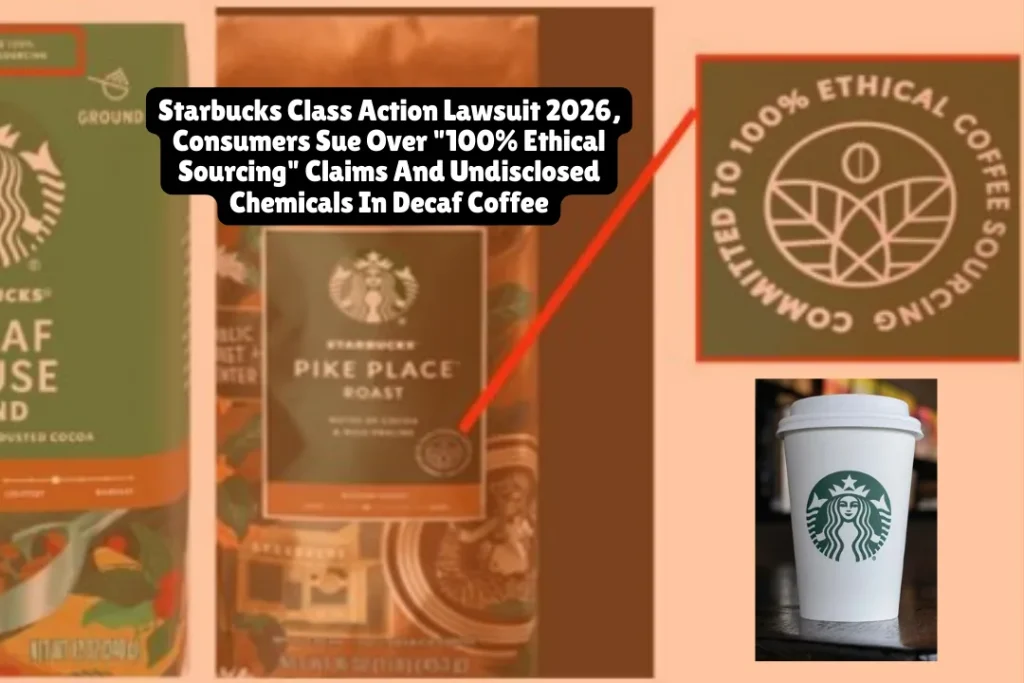
Starbucks Class Action Lawsuit 2026, Consumers Sue Over “100% Ethical Sourcing” Claims And Undisclosed Chemicals In Decaf Coffee
Two consumers filed a federal class action lawsuit against Starbucks on January 13, 2026, alleging the coffee giant misleads customers with false “100% Ethical Coffee Sourcing” claims and fails to disclose harmful industrial chemicals in its decaf coffee. The lawsuit seeks compensation for Washington and New York residents who purchased Starbucks coffee products since January 2016.
The case, filed in the U.S. District Court for the Western District of Washington (Case No. 2:26-cv-00112), accuses Starbucks of violating state consumer protection laws. Plaintiffs Jennifer Williams and David Strauss claim Starbucks builds consumer trust through ethical sourcing promises while knowingly sourcing from farms with documented human rights violations.
Lawsuit Claims Starbucks Hides Farm Labor Abuses
The lawsuit alleges Starbucks certified farms under its Coffee and Farmer Equity (C.A.F.E.) Practices program despite extensive evidence of labor law violations. Court documents detail allegations against Brazilian coffee farms that maintained C.A.F.E. certification for years despite serious violations.
In 2018, workers at one certified farm allegedly lived in housing infested with mold, insects, and rats, with dead bats found in their water tank. That farm had held C.A.F.E. certification since 2016.
Other allegations include unsafe working conditions cited in 2015, complaints about 17-hour shifts in 2018, and evidence of illegal underage workers in 2022. Investigative journalists from outlets including Mongabay, Repórter Brasil, and Channel 4 exposed these conditions.
The lawsuit argues Starbucks knew about these violations but continued sourcing from implicated farms while keeping customers in the dark. In 2022, the Brazilian government filed a complaint against Cooxupé, Starbucks’ largest Brazilian supplier, which maintained C.A.F.E. certification despite documented labor abuses.
Similar consumer protection cases like the Temu Lawsuits Explode In 2025, Multiple States Lawsuits Over “Data-Theft Business” Allegations show how companies face mounting legal challenges when marketing claims don’t match reality.
Decaf Coffee Contains Industrial Solvents, Testing Shows
The second major allegation involves undisclosed volatile organic compounds (VOCs) in Starbucks’ decaffeinated coffee. Independent testing facilitated by plaintiffs’ attorneys detected three industrial chemicals in Starbucks’ decaf house blend medium roast.
Testing found methylene chloride at 22 parts per billion. The EPA considers methylene chloride unsafe for consumption at any level. This chemical is commonly used in paint strippers and pharmaceutical manufacturing.
Benzene was detected at 28 parts per billion, exceeding EPA safe consumption levels by 23 parts per billion. Benzene is typically found in cigarette smoke and gasoline fumes.
Toluene tested at 87 parts per billion. This chemical appears in paints and metal cleaners and is not authorized for use as a food ingredient or processing aid.
The lawsuit claims these compounds entered the coffee during decaffeination, manufacturing, and packaging processes within Starbucks’ control. Consumers purchasing decaf coffee for pregnancy, health, or sensitivity reasons would reasonably expect disclosure of non-coffee chemical substances.
Who Qualifies And What The Lawsuit Seeks
The proposed class includes all Washington and New York residents who purchased Starbucks coffee products on or after January 1, 2016. This covers both packaged coffee sold in stores and coffee purchased at Starbucks locations.
The lawsuit demands class certification and seeks unspecified monetary damages for consumer protection law violations. Plaintiffs claim they paid premium prices based on false impressions that Starbucks coffee was ethically sourced and contained only coffee.
Cases like the Lexington Law Lawsuit, CFPB To Distribute $1.8 Billion In Historic Credit Repair Settlement demonstrate how consumer protection lawsuits can result in significant compensation when companies engage in deceptive practices.
Starbucks Denies All Allegations
Starbucks issued a statement denying the lawsuit’s claims. The company maintains it takes allegations seriously but believes they are inaccurate and misrepresent both its sourcing practices and the integrity of its C.A.F.E. Practices program.
Starbucks stated it maintains visibility into its supply chain, audits farms regularly, and takes swift action when violations are reported, including terminating supplier relationships when necessary. The company also confirmed its coffee products meet or exceed applicable safety standards.
Similar Lawsuits Against Starbucks Continue
This isn’t Starbucks’ first legal battle over ethical sourcing claims. The National Consumers League sued Starbucks in January 2024 in D.C. Superior Court, alleging its “100% ethical” sourcing claims were deceptive.
That case survived a motion to dismiss in August 2025 and remains active. In 2025, eight Brazilian farmworkers filed a separate federal lawsuit against Starbucks claiming they were trafficked and forced to work in slavery-like conditions on farms within the company’s supply chain.
The 2026 lawsuit also references YouTuber Lindsay Ellis, who created viral videos analyzing omegaverse copyright disputes in 2020. When Ellis created content about Starbucks’ labor practices, the company’s attorneys sent legal threat letters, though the Electronic Frontier Foundation defended her commentary as fair use.
What You Should Know About The Case
No settlement exists yet. This lawsuit is in early stages and could take years to resolve. Similar corporate accountability cases like the Shein Class Action Lawsuits show consumer protection litigation often settles before trial.
If you purchased Starbucks coffee in Washington or New York since 2016, monitor the case at the settlement administrator website once established. Class members typically don’t need to take action until a settlement is reached.
The case raises broader questions about corporate social responsibility claims and whether companies can be held accountable when marketing doesn’t match documented realities.
Last Updated: January 30, 2026
Disclaimer: This article provides general information only and does not constitute legal advice.
Stay Informed: Monitor court filings at the U.S. District Court for the Western District of Washington website.
Stay informed, stay protected. — AllAboutLawyer.com
About the Author

Sarah Klein, JD, is a licensed attorney and legal content strategist with over 12 years of experience across civil, criminal, family, and regulatory law. At All About Lawyer, she covers a wide range of legal topics — from high-profile lawsuits and courtroom stories to state traffic laws and everyday legal questions — all with a focus on accuracy, clarity, and public understanding.
Her writing blends real legal insight with plain-English explanations, helping readers stay informed and legally aware.
Read more about Sarah