
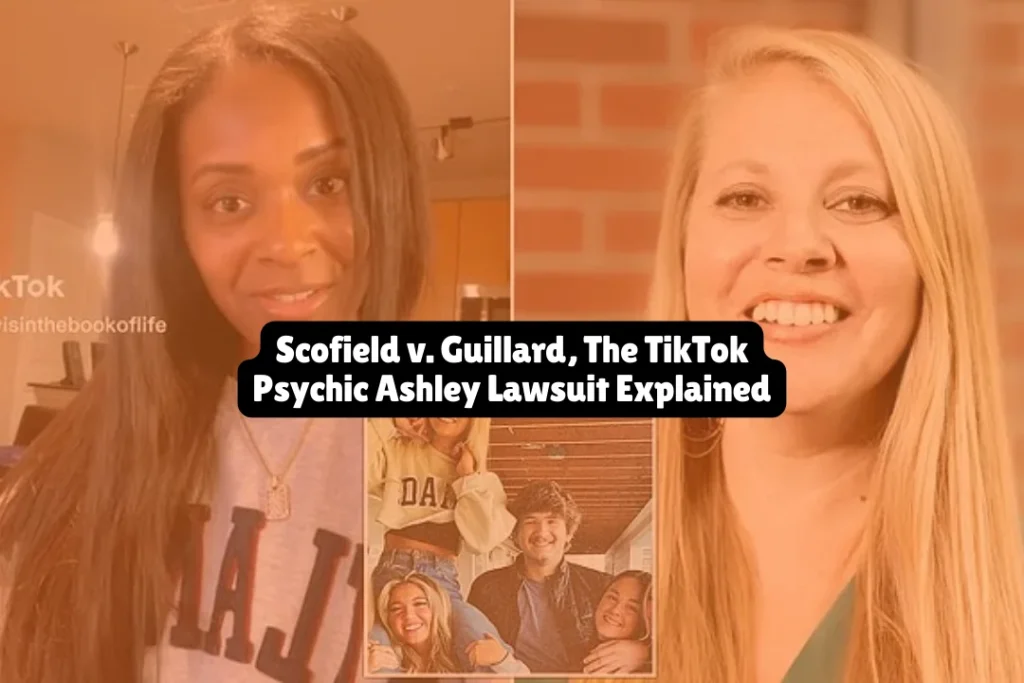
Scofield v. Guillard, The TikTok Psychic Ashley Lawsuit Explained
University of Idaho history professor Rebecca Scofield sued TikTok tarot card reader Ashley Guillard in federal court in December 2022. Scofield alleged that Guillard defamed her by posting over 100 videos falsely claiming Scofield ordered the murders of four students. A federal judge ruled in Scofield’s favor on liability in June 2024. In February 2026, a jury awarded Scofield $10 million in damages.
Case Overview
The Parties
The plaintiff is Rebecca Scofield, a tenured history professor and department chair at the University of Idaho. The defendant is Ashley Guillard, a 41-year-old tarot card reader and self-described psychic from Texas who built a following on TikTok under the handle @ashleyisinthebookoflife.
Court and Jurisdiction
Scofield sued Guillard in the U.S. District Court for the District of Idaho. The case was assigned to Chief U.S. Magistrate Judge Raymond E. Patricco Jr.
Background
In November 2022, four University of Idaho students — Ethan Chapin, Xana Kernodle, Kaylee Goncalves, and Maddie Mogen — were stabbed to death. In the weeks that followed, Guillard posted dozens of TikTok videos in which she falsely accused Scofield of involvement in the killings and alleged the professor had an inappropriate relationship with one of the students.
Guillard’s TikTok account had more than 100,000 followers, and some of her videos claiming Scofield was responsible for the killings received 2.5 million likes.
Scofield sent cease-and-desist letters and contacted police, but Guillard continued with her claims. Even after Bryan Kohberger — a Washington State University graduate student — was arrested and charged with the killings, Guillard doubled down.
Scofield filed the defamation lawsuit in December 2022. Bryan Kohberger later pleaded guilty in June 2025 and is now serving four life sentences with no chance of parole.
Legal Claims Explained
Defamation — False Statements About the Murders
The first claim alleges Guillard falsely stated, in over 100 TikTok videos, that Scofield ordered the murders of four students. To prove defamation, a plaintiff must show the defendant made a false statement of fact, published it to others, and caused harm. Scofield alleged that, despite never meeting any of the students or being involved in their murders in any way, Guillard posted videos falsely claiming Scofield had an extramarital, same-sex, romantic affair with one of the victims and then ordered the four murders to prevent the affair from coming to light.
Defamation — False Statements About a Romantic Relationship
The second claim focused specifically on Guillard’s allegation that Scofield had a romantic relationship with a student victim. Scofield asserted two separate defamation claims: one premised on the false statements regarding her involvement with the murders, and the other premised on the false statements regarding her romantic relationship with one of the murdered students.
Harm Alleged
The lawsuit alleged Scofield’s name became linked to “murder” in basic internet searches, tarnishing her reputation and making her the subject of online ridicule and threats. Scofield also alleged she feared for her life and the safety of her family and incurred costs to install a security system and cameras at her home.
Scofield testified that she experienced severe grief and depression that manifested as chronic headaches and nerve damage throughout her body.
Defendant’s Response
Guillard represented herself throughout the proceedings. Her primary defense was that her statements were “substantially true” — meaning she believed her tarot card readings revealed accurate information.
Guillard argued that newly discovered evidence from the parallel criminal proceeding validated her earlier TikTok videos. She contended the perceived connection between her psychic intuition and the newly discovered evidence showed her theories about the murders had never been proven false, establishing an absolute defense of truth.
The court rejected this argument. The court concluded that Guillard’s psychic intuition, without more, could not establish a genuine dispute of material fact to oppose Scofield’s summary judgment efforts.
Guillard also attempted counterclaims against Scofield. The judge dismissed the counterclaims, writing that Guillard’s claims were “not only conclusory and unverifiable, but arguably so outrageous as to be clearly baseless.”
Guillard also argued that Scofield’s lawsuit was essentially an attack on her religious or spiritual beliefs. Judge Patricco rejected this argument, noting that Scofield’s lawsuit “cannot be read as an attack on Guillard’s spirituality, but on her false claim that Scofield murdered four people.”
Current Status of the Case
The case has now reached final judgment on damages.
On June 6, 2024, Magistrate Judge Patricco granted Scofield’s motion for partial summary judgment, ruling that Guillard was liable for defamation. That ruling resolved the question of liability entirely, leaving only the amount of damages to be determined.
A jury trial began at the federal courthouse in Boise in late February 2026. It was held solely to decide how much money Scofield would be awarded in economic and non-economic damages.
The jury returned its verdict on February 28, 2026, ordering Guillard to pay Scofield $10 million. Guillard represented herself at trial.
Possible Outcomes (Educational Only)
Now that a jury has returned a damages verdict, several post-verdict paths remain possible in any civil case of this type. Guillard may file post-trial motions asking the judge to reduce or set aside the award. She may also file an appeal with the Ninth Circuit Court of Appeals, arguing legal errors occurred at trial or at the summary judgment stage.
If no appeal is filed or if appeals fail, the judgment becomes final. Scofield could then seek to collect the $10 million award through legal enforcement mechanisms. It is important to note that collecting on a large civil judgment can be a separate legal challenge from winning the judgment itself.
Outcomes in civil litigation always vary based on specific facts, applicable law, and the decisions of individual judges and juries.
What This Lawsuit Means for Others
This case reflects a broader pattern of defamation lawsuits arising from social media posts made during high-profile criminal investigations. During the University of Idaho murder investigation, multiple individuals were falsely accused online by amateur sleuths and content creators. Scofield’s case is notable because it advanced to trial and produced a substantial damages award.
The case also raises wider questions about the legal accountability of social media creators for statements made to large audiences. The court’s ruling made clear that presenting false factual claims as the product of “psychic intuition” does not shield a creator from defamation liability.
No information is publicly available indicating that additional defamation lawsuits have been filed by others against Guillard in connection with her Idaho-related content.
Key Dates
November 2022 — Four University of Idaho students are murdered. Guillard begins posting TikTok videos accusing Scofield.
December 2022 — Scofield files the defamation lawsuit in U.S. District Court for the District of Idaho.
August 2023 — Judge Patricco dismisses Guillard’s counterclaims against Scofield.
June 6, 2024 — Judge Patricco grants partial summary judgment for Scofield on the issue of liability, ruling Guillard defamed Scofield as a matter of law.
June 2025 — Bryan Kohberger pleads guilty to the four murders and is sentenced to four life terms.
February 2026 — Jury trial held in Boise to determine damages.
February 28, 2026 — Jury awards Scofield $10 million in damages.
Frequently Asked Questions
Has the case been decided? Yes. A federal judge ruled in June 2024 that Guillard was liable for defamation. In February 2026, a jury awarded Scofield $10 million in damages. Post-trial motions or an appeal may still follow.
What claims are being alleged? Scofield brought two defamation claims. The first alleged Guillard falsely accused her of ordering the murders of four students. The second alleged Guillard falsely claimed Scofield had a romantic relationship with one of the victims.
What is Ashley Guillard’s response? Guillard argued her statements were substantially true based on her tarot card readings. She also filed counterclaims, which the court dismissed. She represented herself throughout the proceedings and continued to maintain her position at trial.
When is the next hearing? The damages trial concluded on or around February 28, 2026. Any further proceedings would involve post-trial motions or appellate filings, neither of which has been publicly announced as of this writing.
Why did the judge rule against Guillard before trial? The judge granted summary judgment on liability because Guillard could not point to any actual evidence — beyond her own psychic readings — to show that her statements about Scofield were true. Courts require factual evidence to create a genuine dispute for trial.
Did Guillard file counterclaims against Scofield? Yes. Guillard filed counterclaims, but Judge Patricco dismissed them entirely, describing her allegations as “clearly baseless” and “so outrageous as to be implausible.”
What happened to Bryan Kohberger, the actual perpetrator? Kohberger pleaded guilty in June 2025 and is serving four consecutive life sentences with no chance of parole. He also waived all appeal rights as part of his plea agreement.
Does this lawsuit affect how other TikTok creators can discuss crimes? This case does not create binding law across all U.S. jurisdictions, but it illustrates that making specific false factual allegations about an identifiable person — even framed as spiritual or intuitive claims — can result in defamation liability and substantial monetary damages.
Last Updated: February 28, 2026
This article is for informational purposes only and does not constitute legal advice. Legal claims and outcomes depend on specific facts and applicable law. For advice regarding a particular situation, consult a qualified attorney.
About the Author

Sarah Klein, JD, is a licensed attorney and legal content strategist with over 12 years of experience across civil, criminal, family, and regulatory law. At All About Lawyer, she covers a wide range of legal topics — from high-profile lawsuits and courtroom stories to state traffic laws and everyday legal questions — all with a focus on accuracy, clarity, and public understanding.
Her writing blends real legal insight with plain-English explanations, helping readers stay informed and legally aware.
Read more about Sarah