
Rusty Moore DWI Lawsuit Update, Minnesota Trucker Loses Appeal After 0.00 BAC Arrest
Rusty James Moore, 43, lost his Minnesota Court of Appeals challenge on August 25, 2025, upholding his DWI conviction despite registering 0.00 BAC. Trooper Megan Boser arrested Moore on May 31, 2024 for alleged impairment from prescribed Adderall. Moore’s commercial driver’s license was revoked for life, he missed his daughter’s graduation, and he lost his trucking job. The nonprecedential appeals court decision affirmed the district court’s finding that Boser’s observations of impairment justified the arrest, even with zero alcohol detected.
What Is the Rusty Moore Lawsuit About?
Moore filed a civil petition for judicial review (Case 49-CV-24-1067) on August 14, 2024 in Morrison County District Court challenging the Commissioner of Public Safety’s lifetime revocation of his commercial driver’s license following his May 31, 2024 DWI arrest.
The case centers on whether Minnesota’s implied consent laws allow CDL revocation based solely on officer observations when objective tests show 0.00 BAC and blood tests confirm therapeutic medication levels. Moore argues he was not impaired despite taking his prescribed 30mg Adderall that morning as directed.
The May 31, 2024 Traffic Stop
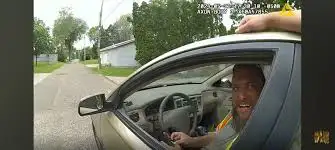
An anonymous caller reported to Minnesota State Patrol that a “tan sedan was driving all over the road” near Little Falls, Minnesota. A Little Falls police officer stopped Moore’s vehicle. Trooper Megan Boser arrived on scene.
According to Minnesota Court of Appeals documents (Case A24-1896), the following sequence occurred:
Initial Contact: Boser questioned Moore about medications. Moore immediately disclosed his 30mg daily Adderall prescription for ADHD.
Field Sobriety Tests: Boser administered field sobriety tests, including a one-legged stand test. Moore alleges Boser stopped the test “for her safety” claiming he was “so impaired”—Moore disputes this characterization.
Breathalyzer Result: Moore blew 0.00 BAC—absolutely zero alcohol detected.
Arrest: Despite zero alcohol, Boser arrested Moore for DWI under Minnesota Statute § 169A.20, Subd. 1(2), which prohibits driving “under the influence of a controlled substance” including legally prescribed medications.
Personal Consequences: Moore spent the night in jail and missed his daughter’s graduation the next morning—a milestone he had anticipated for years.
Related article: Stephen Lara Lawsuit, Marine Veteran Wins Key Ruling Challenging Nevada’s Civil Forfeiture Loophole
Criminal Charges Filed
Morrison County charged Moore with two counts of third-degree DWI (gross misdemeanor) in connection with the May 31, 2024 incident, according to Morrison County Record reporting from January 17, 2025.
Third-degree DWI under Minnesota Statute § 169A.26 applies when a driver has committed DWI and meets one aggravating factor, such as having a BAC of 0.16 or more, refusing chemical testing, or having a prior DWI within ten years.
August 25, 2025 Appeals Court Ruling
The Minnesota Court of Appeals issued a nonprecedential opinion on August 25, 2025 in Case A24-1896 (Rusty James Moore v. Commissioner of Public Safety) affirming the district court’s decision to uphold Moore’s DWI conviction and license revocation.
Court’s Key Findings:
Moore’s admission to taking Adderall combined with Boser’s observations of impairment justified the arrest under Minnesota law. The burden was on Moore to prove he wasn’t impaired—not on the state to prove impairment beyond reasonable doubt in administrative proceedings.
The district court’s finding that Moore was impaired was supported by sufficient evidence based on Trooper Boser’s testimony about Moore’s performance on field sobriety tests and physical observations.
Minnesota law allows DWI convictions for impairment from controlled substances, including legally prescribed medications taken as directed, if an officer determines the driver’s ability to operate a vehicle is impaired.
Nonprecedential Status: The court designated this opinion “nonprecedential,” meaning it cannot be cited as binding authority in future cases. This limits the ruling’s impact on similar prescription medication DWI cases.
Result: Moore’s license revocation stands. His CDL remains revoked for life under Minnesota’s administrative penalties for commercial drivers convicted of DWI.
What Moore Argued in His Defense
Moore’s legal position centers on four main arguments:
Objective Test Results: The breathalyzer showed 0.00 BAC, and blood tests confirmed therapeutic Adderall levels with no other impairing substances.
Prescribed Medication: He took his prescribed ADHD medication exactly as directed by his doctor for a condition he’s managed since 5th grade.
CDL Experience: Moore had driven “miles without incident” on the same and higher Adderall doses throughout his commercial driving career with no prior safety issues.
Incomplete Evidence: Eight minutes of released dashcam footage doesn’t show the complete interaction. Moore maintains the video was “cherry-picked” and argues the officer’s testimony claimed these clips were a “perfect representation,” which Moore disputes.
Legal Framework: Minnesota DWI and Implied Consent Laws
Minnesota Statute § 169A.20, Subd. 1: Makes it a crime to drive, operate, or be in physical control of a motor vehicle:
- While under the influence of alcohol
- While under the influence of a controlled substance
- While under the influence of any combination of substances
Critical Distinction: “Under the influence” does not require intoxication. Minnesota courts have held that any degree of impairment affecting driving ability can support a DWI conviction.
Minnesota Implied Consent Law (§ 169A.50-169A.53): Any person who drives in Minnesota consents to chemical testing. Refusal results in automatic license revocation. Commercial drivers face stricter standards and longer revocations.
CDL Holders’ Heightened Standards: Federal Motor Carrier Safety Administration (FMCSA) regulations impose stricter DWI penalties on commercial drivers. A single DWI conviction typically results in CDL revocation for life or a minimum of one year for first offense, with limited reinstatement options.
Burden of Proof in Administrative Proceedings: In civil license revocation proceedings (separate from criminal charges), the burden shifts to the driver to prove they were not impaired. The state only needs to show the officer had probable cause for the arrest.
Defense Arguments vs. Prosecution Position
Moore’s Defense:
Objective medical evidence (blood tests) showed therapeutic Adderall levels, not excessive or dangerous amounts. Prescription medications taken as directed should not constitute “impairment” under DWI statutes without evidence of misuse or excessive dosing.
Field sobriety tests are unreliable indicators of impairment for ADHD individuals taking prescribed stimulants, as the medication’s effects can mimic impairment signs. No evidence showed Moore’s driving was actually impaired—the traffic stop was based on an anonymous tip, not observed driving behavior by the arresting officer.
State’s Position:
Trooper Boser observed signs of impairment during field sobriety tests sufficient to establish probable cause for arrest. Minnesota law does not exempt prescribed medications from DWI statutes—drivers taking any substance that impairs driving ability can be convicted, regardless of prescription status.
The officer’s training and experience qualified her to assess impairment based on standardized field sobriety tests and physical observations. Moore’s voluntary disclosure of taking Adderall combined with observed impairment provided sufficient legal basis for arrest and conviction.
What Evidence Was Presented?
Dashcam Footage: Eight minutes of video showing the traffic stop, including field sobriety test administration. Moore disputes this represents the complete interaction.
Breathalyzer Results: 0.00 BAC confirmed no alcohol in Moore’s system.
Blood Test Results: Confirmed therapeutic Adderall levels consistent with prescribed dosing—no excessive amounts or other impairing substances detected.
Trooper Boser’s Testimony: Detailed observations of Moore’s performance on field sobriety tests, physical appearance, behavior, and statements during the stop.
Moore’s Medical Records: Documentation of ADHD diagnosis and ongoing Adderall prescription since childhood.
Anonymous Tip Call: Initial citizen report of “tan sedan driving all over the road” that triggered the traffic stop. This recording has not been publicly released.
The $250,000 Settlement Claim: Unverified
Social media posts claim Moore reached a $250,000 civil rights settlement against Trooper Boser in 2025. This has not been verified by court records or credible news sources.
Multiple news outlets including Presence News and AllAboutLawyer.com have been unable to confirm any settlement. No public court records document a separate civil lawsuit against Trooper Boser individually or Minnesota State Patrol.
If a settlement exists, it would likely be confidential under typical government settlement agreements. However, without verified documentation, readers should treat this claim skeptically.
Current Status: All Appeals Exhausted at State Level
Criminal Case: Moore was convicted of third-degree DWI (two counts) in Morrison County District Court. Conviction upheld.
Administrative License Revocation: Commissioner of Public Safety revoked Moore’s CDL for life. The August 14, 2024 civil petition challenging this revocation was denied by Morrison County District Court.
Minnesota Court of Appeals: On August 25, 2025, the Court of Appeals affirmed the district court’s ruling in a nonprecedential opinion (Case A24-1896).
Next Possible Steps:
Moore could petition the Minnesota Supreme Court for discretionary review, though acceptance is unlikely given the nonprecedential designation and fact-specific nature of the case.
Moore could file a federal civil rights lawsuit under 42 U.S.C. § 1983 alleging Fourth Amendment violations (unreasonable search and seizure) or due process violations. This would be a separate proceeding from the criminal and administrative cases.
Moore has mentioned pursuing “federal review” in social media updates and his GoFundMe campaign. As of December 2025, no federal court filings are publicly documented.
Community Response and GoFundMe Campaign
Moore launched a GoFundMe campaign titled “Help Rusty Fight Unjust Arrest & CDL Loss” that has raised over $55,000 from supporters. The fundraiser describes:
Financial Devastation: Loss of CDL means loss of livelihood. Moore cannot work as a commercial driver with a lifetime CDL revocation and DWI conviction.
Legal Expenses: Thousands of dollars in criminal defense attorney fees, administrative hearing costs, and appellate attorney fees.
Personal Impact: Five years of sobriety threatened by the stress of legal proceedings. Partnership with Tina (17 years together) strained by financial pressure.
Previous Police Brutality: Moore references a 2020 incident where he was “tased multiple times and beaten into a coma”—suggesting a pattern of negative law enforcement encounters.
The campaign emphasizes community solidarity against what Moore characterizes as government overreach and police misconduct.
Viral Social Media Impact
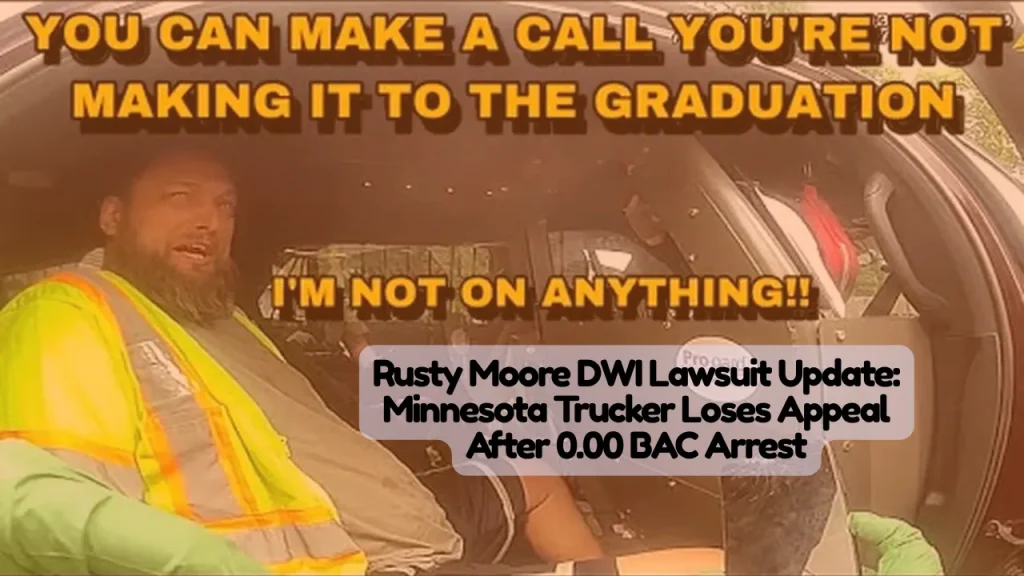
The traffic stop footage has generated over 2 million views across TikTok, YouTube, and other platforms. Public reaction has been sharply divided:
Supporters’ Arguments:
- 0.00 BAC should be dispositive evidence of no impairment
- Criminalizing prescribed medication use violates disability rights
- Field sobriety tests are subjective and unreliable
- Anonymous tips should require corroboration before arrests
Critics’ Arguments:
- Officers must rely on training and observations, not just breathalyzers
- Medication labels warn against operating machinery
- Moore admitted taking Adderall before driving
- CDL holders must maintain higher safety standards
The case has become a flashpoint in broader debates about police accountability, due process rights, and the practical limits of “driving while medicated” laws.
Who Is Trooper Megan Boser?
Megan Boser graduated from Bemidji State University in 2017 with a criminal justice degree and joined Minnesota State Patrol shortly after. In June 2023, she became the first female Minnesota State Trooper to receive the Minnesota Police and Peace Officers Association’s “Officer of the Year” award.
The award followed an April 28, 2022 incident in Morrison County where Boser and Deputy Dale Haberer shot and killed Charles Bangs, 59, during a drug task force operation. Morrison County Attorney Brian Middendorf ruled the shooting justified after body camera footage showed Bangs holding a gun.
The Moore case has generated public scrutiny of Boser’s “Officer of the Year” award, with social media users questioning whether the recognition reflects genuine excellence or institutional protection of controversial officers.
How This Compares to Similar CDL DWI Cases
Commercial Driver Heightened Scrutiny: Federal regulations subject CDL holders to stricter standards than passenger vehicle drivers. A 0.04 BAC (half the standard 0.08 limit) can result in CDL disqualification.
Prescription Medication DWI Precedents:
In State v. Benson, 306 N.W.2d 689 (Minn. 1981), Minnesota Supreme Court held that DWI statutes apply to any substance that impairs driving, including legal prescription medications.
In State v. Burris, 474 N.W.2d 601 (Minn. Ct. App. 1991), the court upheld a DWI conviction where the defendant took prescribed medication as directed, holding that lawful possession doesn’t prevent conviction if impairment is proven.
Truck drivers nationwide have faced similar DWI arrests for prescribed medications including opioid pain relievers, benzodiazepines, and ADHD medications. Courts consistently hold that prescription status is not a defense to impaired driving.
Moore’s Case Is Not Unique: Commercial drivers taking prescribed medications face a legal catch-22: they need medications to function (including to maintain employment), but taking those medications can be used as evidence of impairment even at therapeutic doses.
Implications for Commercial Drivers
“Driving While Medicated” Legal Risks:
Any prescription medication with warnings about “operating machinery” or “drowsiness” can support DWI charges if an officer observes impairment signs.
Common medications triggering DWI arrests include:
- ADHD medications (Adderall, Ritalin, Vyvanse)
- Benzodiazepines (Xanax, Valium, Klonopin)
- Opioid pain medications (OxyContin, Vicodin)
- Sleep aids (Ambien, Lunesta)
- Muscle relaxers (Flexeril, Soma)
- Certain antidepressants and antipsychotics
CDL Holder Recommendations:
Maintain detailed medical records documenting prescribed medications and dosing schedules. Carry doctor’s letters explaining medical necessity and confirming appropriate dosing.
Refuse voluntary field sobriety tests (though this may be used against you). Request blood tests rather than relying solely on officer observations—blood tests provide objective evidence of medication levels.
Understand that prescription status alone won’t prevent DWI charges—you must prove the medication didn’t impair your driving ability.
Constitutional Rights During Traffic Stops:
You must provide license, registration, and insurance. You have the right to remain silent beyond providing required documents. You can refuse voluntary field sobriety tests (different from chemical tests after arrest).
Once arrested, refusing chemical testing results in automatic license revocation under implied consent laws. Document everything and request dashcam/bodycam footage immediately.
Broader Implications for DWI Law
Subjective vs. Objective Standards:
Moore’s case highlights tension between objective chemical tests (0.00 BAC, therapeutic blood levels) and subjective officer observations (impairment assessment from field tests).
Courts consistently defer to officer judgment in impairment determinations, even when objective tests contradict those observations. This gives law enforcement broad discretion in prescription medication DWI cases.
Anonymous Tips and Probable Cause:
Moore’s stop originated from an anonymous tip. The caller’s identity and the tip recording have not been publicly released. Minnesota law § 609.505 criminalizes knowingly providing false information to authorities, but anonymous tipsters face little accountability.
Courts generally allow traffic stops based on anonymous tips if police can corroborate erratic driving—but in Moore’s case, the arresting trooper did not personally observe the driving behavior before the stop.
Field Sobriety Test Reliability:
The National Highway Traffic Safety Administration (NHTSA) standardized three field sobriety tests:
- Horizontal Gaze Nystagmus (HGN)
- Walk-and-Turn
- One-Leg Stand
These tests were validated for alcohol impairment, not medication effects. ADHD medications like Adderall can cause increased heart rate, nervousness, and jitteriness that may be misinterpreted as impairment signs even when the person is not functionally impaired.
What Happens Next?
Moore’s Options:
Minnesota Supreme Court Petition: Moore could request discretionary review, though the Court accepts only 5-10% of petitions and typically only on novel legal issues or conflicting precedent.
Federal Civil Rights Lawsuit: Moore could file under 42 U.S.C. § 1983 alleging Fourth Amendment violations (arrest without probable cause) or Fourteenth Amendment violations (due process). Federal litigation could seek damages for wrongful arrest, lost wages, and civil rights violations.
Regulatory Challenges: Moore has suggested pursuing “federal review”—this could mean petitioning federal agencies about CDL revocation standards or challenging Minnesota’s implied consent law as applied to prescription medication users.
Procedural Timeline:
If Moore pursues Minnesota Supreme Court review, he must file within 30 days of the Court of Appeals decision (deadline was September 24, 2025). If Moore files a federal civil rights lawsuit, the statute of limitations is typically 2-3 years from the violation date.
Any federal litigation would proceed independently of the criminal conviction and administrative license revocation, which are now final at the state level.
Precedent and Policy Concerns
Limited Precedential Value: The Court of Appeals designated Moore’s case “nonprecedential,” meaning future defendants cannot cite this ruling as binding authority. This protects the decision from establishing broad precedent allowing prescription medication DWI convictions based solely on officer observations.
Policy Questions Raised:
Should prescription medication users with therapeutic blood levels face the same legal standards as illegal drug users or alcohol-impaired drivers?
Do field sobriety tests reliably detect impairment from stimulant ADHD medications designed to improve focus and attention?
Should CDL holders face lifetime revocations for first-offense DWI when no accident or injury occurred?
Are anonymous tips sufficient basis for traffic stops that result in life-altering consequences?
Disability Rights Concerns: Advocates argue that DWI prosecution of individuals taking prescribed medications for diagnosed conditions (ADHD, anxiety, chronic pain) may violate Americans with Disabilities Act protections by criminalizing disability-related medication use.
Frequently Asked Questions
Did Rusty Moore win his appeal?
No. The Minnesota Court of Appeals affirmed his DWI conviction and CDL revocation on August 25, 2025. His license remains revoked for life.
Can you get a DWI with 0.00 BAC?
Yes. In all 50 states, you can be arrested and convicted for DWI if an officer determines you’re impaired by any substance—including legally prescribed medications taken as directed. The 0.08 BAC legal limit applies only to alcohol, not other substances.
Is the $250,000 settlement real?
Unverified. Social media claims suggest Moore received a settlement, but no court records or credible news sources confirm this. If a settlement exists, it would likely be confidential.
What is third-degree DWI in Minnesota?
Third-degree DWI is a gross misdemeanor (more serious than simple misdemeanor DWI) that applies when aggravating factors are present, such as BAC of 0.16+, test refusal, or prior DWI within 10 years. Penalties include up to one year in jail and $3,000 fine.
Can commercial drivers get their CDL back after DWI?
Federal regulations make CDL restoration extremely difficult after DWI conviction. First-offense DWI typically results in one-year disqualification (lifetime for hazmat endorsement). Second DWI results in lifetime disqualification with very limited reinstatement options after 10 years.
Should I refuse field sobriety tests?
Field sobriety tests are voluntary in Minnesota—you can refuse without automatic penalties (unlike chemical tests after arrest). However, refusal can be used as evidence of consciousness of guilt. Consult an attorney about your specific situation.
What should I do if arrested for prescription medication DWI?
Request blood testing to document medication levels. Remain silent except to provide required documents. Request dashcam/bodycam footage immediately. Contact a DWI defense attorney experienced in prescription medication cases. Document all medical records and prescriptions.
Can Rusty Moore still drive personal vehicles?
Moore’s CDL is revoked for life, but depending on criminal sentencing conditions, he may be able to drive personal vehicles after serving any license suspension and completing required programs. CDL revocation is separate from regular driver’s license status.
Legal Lessons for Drivers on Prescription Medications
Document Everything: Keep current prescriptions, doctor’s letters explaining medical necessity, and medication schedules in your vehicle.
Know Your Medication’s Effects: Understand how your medication affects you. If it causes drowsiness, dizziness, or impairment, do not drive.
Therapeutic Levels Aren’t a Defense: Taking medication as prescribed does not guarantee you won’t be convicted of DWI if an officer observes impairment.
Commercial Drivers Face Stricter Standards: CDL holders are held to higher standards than regular drivers. One DWI can end your trucking career permanently.
Anonymous Tips Can Trigger Stops: You can be pulled over based on anonymous reports even if the officer doesn’t personally observe traffic violations.
Field Sobriety Tests Are Subjective: Officer observations carry more weight in court than objective chemical tests in many cases.
Prepare for the Worst: If you’re a commercial driver taking prescription medications, understand the legal risks and have a backup career plan—one traffic stop could cost you everything.
Case: Moore v. Commissioner of Public Safety, No. A24-1896 (Minn. Ct. App. Aug. 25, 2025) (nonprecedential) | Civil Case: Case 49-CV-24-1067, Morrison County District Court | Criminal Charges: Third-Degree DWI (2 counts), Morrison County | Sources: Minnesota Court of Appeals, Morrison County Record, Presence News, GoFundMe, Minnesota Statute § 169A.20, § 169A.26
About the Author

Sarah Klein, JD, is a licensed attorney and legal content strategist with over 12 years of experience across civil, criminal, family, and regulatory law. At All About Lawyer, she covers a wide range of legal topics — from high-profile lawsuits and courtroom stories to state traffic laws and everyday legal questions — all with a focus on accuracy, clarity, and public understanding.
Her writing blends real legal insight with plain-English explanations, helping readers stay informed and legally aware.
Read more about Sarah