
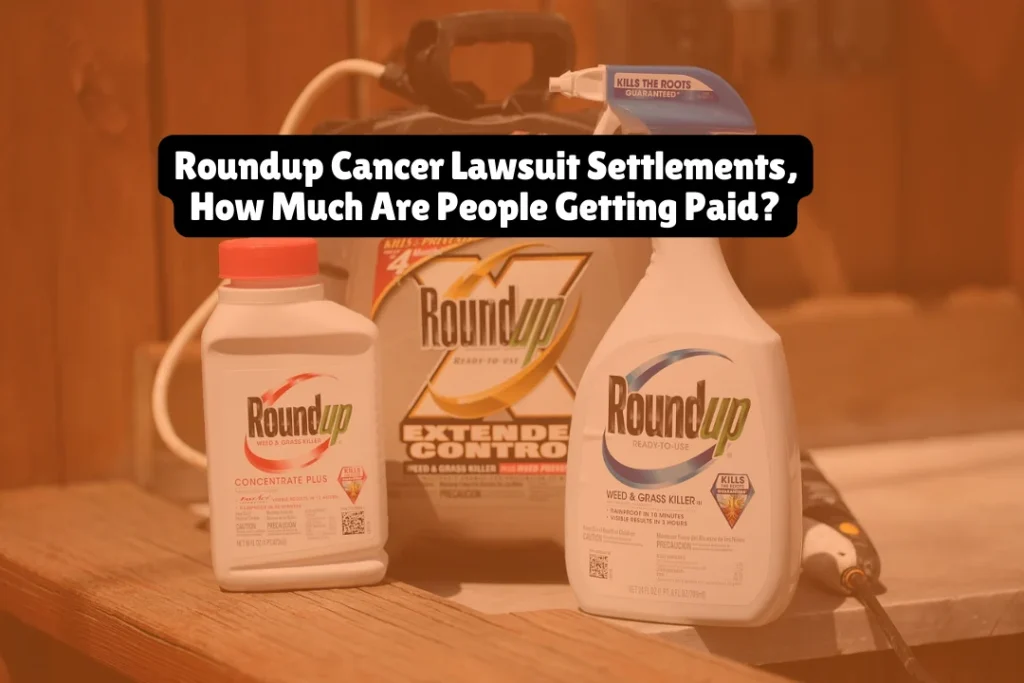
Roundup Cancer Lawsuit Settlements, How Much Are People Getting Paid?
If you were diagnosed with non-Hodgkin lymphoma or a related blood cancer after using Roundup, you may be eligible to file an individual lawsuit against Bayer and Monsanto. Bayer has paid nearly $11 billion to settle approximately 100,000 lawsuits, with individual payouts typically ranging from $5,000 to $250,000, and an average of around $150,000. New lawsuits are still being accepted in 2026. There is no single online claim form — you must retain an attorney, who works on a contingency fee basis, to file your case.
Key Facts at a Glance
| Defendant | Bayer AG (acquired Roundup maker Monsanto in 2018) |
| Litigation Type | Mass tort / MDL — individual lawsuits, not a class action |
| Total Paid by Bayer | ~$11 billion to ~100,000 plaintiffs |
| Typical Payout Range | $5,000 – $250,000+ per plaintiff |
| Reported Average | ~$150,000 per settled plaintiff |
| Cases Still Pending | ~61,000 active lawsuits (as of late 2025) |
| Federal MDL | In re: Roundup Products Liability Litigation, MDL No. 2741, N.D. Cal. |
| MDL Judge | Hon. Vince Chhabria |
| New Claims Accepted? | Yes — new lawsuits can still be filed |
| How to File | Hire a licensed attorney; no self-filing option in MDL |
| Attorney Fees | Typically 33–40% of recovery (contingency — no upfront cost) |
| U.S. Supreme Court | Agreed to hear Bayer’s appeal on Jan. 16, 2026 — decision pending |
What This Litigation Is About
Lawsuits argue that despite research linking glyphosate to non-Hodgkin lymphoma, Bayer and Monsanto continued to represent Roundup as safe for humans and the environment. Glyphosate is the active ingredient in Roundup, and the World Health Organization’s cancer research arm classified it as a “probable human carcinogen” in 2015. People who develop non-Hodgkin lymphoma after exposure to Roundup claim that Monsanto, now owned entirely by Bayer, failed to warn them that glyphosate could cause cancer.
Bayer and Monsanto have consistently denied that Roundup causes cancer, pointing to the EPA’s position that glyphosate is safe when used as directed. Despite settling around 100,000 claims for approximately $11 billion, Bayer still faces around 60,000 active lawsuits.
Important note about how this litigation works: The Roundup cases are mass torts, not a class action. Every plaintiff has an individual case valued by its own facts. This distinction means that all injured parties do not receive identical amounts — each plaintiff’s share is calculated using a ranking system based on their specific circumstances.
Who Qualifies to File a Roundup Lawsuit
You may qualify to file an individual Roundup lawsuit if you meet all of the following general criteria:
Exposure: Successful claimants must be able to show they sustained direct exposure to Roundup, had long-term exposure to the substance, and had used Roundup at least two years before their diagnosis, or been exposed to Roundup or glyphosate for at least 50 hours after 1974.
Diagnosis: Individuals must have been diagnosed with non-Hodgkin lymphoma or another qualifying cancer at least two years after first exposure.
Products covered: Roundup and other glyphosate-based herbicides including Ranger Pro, Honcho, and similar formulations. In July 2021, Bayer announced its intention to remove glyphosate from residential products, but commercial versions still contain it.
Who is typically filing: Many plaintiffs worked as gardeners, groundskeepers, farmers, or in other occupations where Roundup was regularly used. Individuals living in the vicinity of a home, farm, or other premises where Roundup was frequently used may also have a claim.
Statute of limitations: You must file before your state’s individual deadline expires. This varies by state, typically 2–4 years from diagnosis or discovery. Consult an attorney immediately to protect your rights.
What Cancers Qualify
Non-Hodgkin lymphoma is a group of blood cancers that all begin in lymphocytes, which are white blood cells that are part of the body’s immune system. NHL is not just one disease — it has many subtypes that are the subject of these lawsuits.
Qualifying subtypes linked to Roundup exposure include: diffuse large B-cell lymphoma (DLBCL), follicular lymphoma, chronic lymphocytic leukemia (CLL), small lymphocytic lymphoma (SLL), mantle cell lymphoma, marginal zone lymphoma, and Burkitt lymphoma. Chronic lymphocytic leukemia (CLL) is also a qualifying diagnosis in many cases.
Who Is NOT Eligible
You do not qualify to file a Roundup lawsuit if you have not been diagnosed with non-Hodgkin lymphoma, CLL, or a covered related cancer. General herbicide exposure without a cancer diagnosis is not sufficient.
Do not sign anything from Bayer if you receive communications regarding settlements without first consulting your own attorney, as you could inadvertently waive your right to a potentially much larger individual settlement.
You are also not eligible if the statute of limitations has expired in your state. Anyone who used Roundup casually without a qualifying cancer diagnosis cannot participate. People diagnosed with cancers not linked to glyphosate exposure — such as lung, breast, or prostate cancer — are generally not covered.
No prior release: You also cannot bring a new claim if you have already accepted a Roundup settlement and signed a release for that claim.
Settlement Payment Calculation: How Much Could You Get?
Step 1: The Payment System
The Roundup settlements use a complex point-scoring system designed to rank cases into settlement tiers based on the strength of claims and severity of injuries. This means no two settlements are identical. A neutral third-party administrator scores each plaintiff’s case.
Step 2: The Five Scoring Factors
Points are assigned based on: the type of cancer (whether it is directly linked to glyphosate); the severity and stage of the cancer; the plaintiff’s age at diagnosis; the duration of Roundup exposure; and the type of exposure (occupational use earns more points than occasional residential use).
Additional factors that can increase your score include: medical expenses, lost wages, pain and suffering, number of dependents, and quality of documentation.
Step 3: The Three Settlement Tiers with Real Payment Examples
Based on the tiered settlement ranges, many Roundup cases resolve in the low- to mid-six figures, typically between $50,000 and $250,000, with the most serious cancer cases often recovering around $200,000–$250,000 or more.
| Tier | Profile | Typical Settlement Range |
| Tier 1 | Terminal or severe NHL, high occupational exposure (e.g., landscaper or farmer with 10+ years), strong documentation, younger plaintiff with dependents | $200,000 – $250,000+ |
| Tier 2 | Non-terminal NHL, moderate exposure history, standard documentation, treatment ongoing | $100,000 – $200,000 |
| Tier 3 | Cancer in remission, lower exposure history, weaker documentation, residential use only | $50,000 – $100,000 |
The structured settlement program created payment tiers with most settled cases falling in the $100,000 to $160,000 range, and the reported average coming in at approximately $150,000 per plaintiff.
Step 4: What Remains Unknown
Individual case values are not fixed and cannot be guaranteed until settlement negotiations conclude. The potential for your individual payout and its probable timeline are subjective, based on a third-party scoring system, and should be reviewed with the law firm that represents you.
The U.S. Supreme Court accepted Bayer’s appeal on January 16, 2026, on the federal preemption question. A ruling in Bayer’s favor could affect the viability of state-law “failure to warn” claims — the core theory in most Roundup lawsuits. A ruling against Bayer would likely accelerate settlement pressure. The outcome is expected during the 2025–2026 Supreme Court term.
How to File a Roundup Cancer Lawsuit
There is no online claim form for Roundup. The process requires retaining an attorney who will handle all filings. Here is how the process works:
Step 1: Get a free case evaluation. Call a licensed mass tort attorney. Most Roundup attorneys offer free consultations and work on contingency — meaning you pay no upfront fees. The attorney only gets paid if you win or settle.
Step 2: Gather your records. Begin collecting: medical records confirming your cancer diagnosis and treatment history; records showing when and where you used Roundup (receipts, employer records, job descriptions, pay stubs); photos or documentation of Roundup products you used; witness statements from coworkers or family if available.
Step 3: Your attorney files your lawsuit. Your case will be filed either in the federal MDL (In re: Roundup Products Liability Litigation, MDL No. 2741, Northern District of California) or in an appropriate state court, depending on the facts of your case.
Step 4: Your case is scored. A neutral third-party administrator reviews your evidence and assigns a point score, which determines your settlement tier.
Step 5: Negotiation and payment. Payments typically arrive 4–12 months after a settlement agreement is reached, as multiple steps must take place between settlement and receiving a check, including payment amount determination through the scoring system.
What You Must Know
On attorney fees: Mass tort attorneys typically charge 33–40% of your recovery as a contingency fee. This is separate from and in addition to any litigation costs. Confirm the exact fee arrangement in writing before signing a retainer.
On taxes: Personal injury settlement proceeds for physical injuries are generally not taxable under federal law. However, punitive damages and lost wages may be taxable. This article does not provide tax advice — consult a tax professional.
On statute of limitations: It is not too late to file a claim in 2026 if you have recently been diagnosed with non-Hodgkin lymphoma and have a history of Roundup exposure. However, deadlines vary by state, and waiting can cost you your claim. Contact an attorney immediately.
On the Supreme Court: On January 16, 2026, the U.S. Supreme Court agreed to hear an appeal filed by Bayer to overturn a Roundup verdict, on the question of whether federal EPA approval shields Bayer from state-law failure-to-warn claims. Attorneys for Roundup victims believe they still have enough proof to show that their clients deserve compensation even while the appeal is underway.
Frequently Asked Questions
Q: How much money will I get from a Roundup settlement?
According to legal experts, the average Roundup settlement payout is around $150,000 per plaintiff. Individual settlements range from as low as $5,000 to $250,000 or more, depending on cancer severity, exposure history, age at diagnosis, and documentation quality. No specific amount can be guaranteed without an attorney reviewing your case.
Q: Can I still file a Roundup lawsuit in 2026?
Yes. Contrary to some rumors, it is not too late to file a claim in 2026. If you have recently been diagnosed with non-Hodgkin lymphoma and have a history of Roundup exposure, you are eligible to join the litigation. Act quickly, as state-specific statutes of limitations apply.
Q: What types of cancer are covered by Roundup lawsuits?
The primary cancer covered is non-Hodgkin lymphoma (NHL) and its subtypes, including diffuse large B-cell lymphoma, follicular lymphoma, mantle cell lymphoma, and marginal zone lymphoma. Chronic lymphocytic leukemia (CLL) is also a qualifying diagnosis.
Q: How do I prove Roundup exposure?
Some evidence people can use to prove exposure includes pay stubs and job descriptions, or receipts for purchases for their home or garden. Employment records, witness statements, photographs, and purchase history from stores or online retailers all help document your exposure history.
Q: Do I need medical records to file?
Yes. Complete medical records are key for establishing a diagnosis of non-Hodgkin lymphoma associated with Roundup. You will also need documentation linking your diagnosis to glyphosate exposure, which typically requires expert medical testimony arranged by your attorney.
Q: When will I get paid?
Payments typically arrive 4–12 months after settlement. Timeline depends on when your individual case settles and how quickly the scoring and review process is completed. Active litigation cases that go to trial take considerably longer.
Q: Is there a class action settlement I can join online?
No. The Roundup litigation is a mass tort, not a traditional class action. There is no common settlement fund or online claim form. Each plaintiff has an individual case valued by its own facts. You must retain an attorney to participate.
Q: What if a family member died from non-Hodgkin lymphoma caused by Roundup?
Surviving family members may be eligible to file a lawsuit on behalf of a deceased loved one, provided the date of death is within the last ten years in most jurisdictions. Contact an attorney immediately to determine whether the statute of limitations has passed in your state.
Q: Does the Supreme Court case affect my lawsuit?
The case pending before the Supreme Court addresses whether Bayer can be shielded from state-law warning claims because the EPA approved its label. Attorneys for Roundup victims believe they still have enough proof to show that clients deserve compensation. Filing now protects your legal rights regardless of the outcome, while waiting risks losing your claim if statutes of limitations expire.
Q: What is the MDL and should I join it?
The Roundup lawsuits have been consolidated into a multidistrict litigation — In re: Roundup Products Liability Litigation, MDL No. 2741 — in the U.S. District Court for the Northern District of California. Your attorney will determine whether to file your case in the federal MDL or in state court based on your location and case specifics. Either path gives you an individual right to a settlement or trial.
Last Updated: February 17, 2026
Disclaimer: This article is for informational purposes only and does not constitute legal or tax advice. Settlement terms, eligibility, and payment amounts are subject to court approval and may change. For official information, always refer to the settlement administrator or the official settlement website.
About the Author

Sarah Klein, JD, is a licensed attorney and legal content strategist with over 12 years of experience across civil, criminal, family, and regulatory law. At All About Lawyer, she covers a wide range of legal topics — from high-profile lawsuits and courtroom stories to state traffic laws and everyday legal questions — all with a focus on accuracy, clarity, and public understanding.
Her writing blends real legal insight with plain-English explanations, helping readers stay informed and legally aware.
Read more about Sarah