
Purdue Pharma Lawsuit, $7.4B Settlement Approved, Purdue Becomes Knoa Pharma What Victims Need to Know in 2026
The Purdue Pharma lawsuit is finally reaching its end after six years of bankruptcy proceedings, a Supreme Court intervention, and billions of dollars in negotiations. Here is a complete breakdown of where things stand right now, what victims can receive, and what happens next.
Latest Update: Bankruptcy Plan Confirmed — Spring 2026 Expected Effective Date
U.S. Bankruptcy Judge Sean Lane formally approved Purdue Pharma’s Chapter 11 plan of reorganization in November 2025, mandating the Sackler family to pay up to $7 billion over 15 years. Most of the money is to go to government entities to fight the opioid crisis, while a pool of about $850 million is designated for individual victims.
The plan is expected to become effective in spring 2026. It creates Knoa Pharma, a successor company that will continue manufacturing OxyContin under strict operating injunctions designed to prevent abuse.
With confirmation of the Plan secured, Purdue is working on the steps necessary for consummation. Those funds will flow once the effective date is reached.
How Much Is the Total Purdue Pharma Settlement Worth?
Assuming full creditor participation, the plan will deliver approximately $7.4 billion in cash to creditors, with a potential increase of up to $500 million based on the sale proceeds of the Sacklers’ international pharmaceutical businesses. Of the total cash recovery, the Sacklers will contribute up to $6.5 billion, beginning with a $1.5 billion payment on the plan’s effective date.
Purdue’s plan provides a pool of up to $865 million for individual victims.
Who Are Individual Victims and What Will They Receive?
Among those to be compensated are states, municipalities, school districts, hospitals, tribes, and nearly 150,000 personal injury victims and families of babies born with opioid withdrawal.
Those who qualify by showing they were prescribed OxyContin are expected to collect around $8,000 or $16,000 each, depending on how long they took the painkillers.
More than $100 million of that amount is carved out to help children born dealing with opioid withdrawal.
Individual victim payments are expected to be distributed in 2026, while funds going to government entities can be paid out over 15 years.
The Sackler Family — What the Deal Means for Them
The latest plan allows lawsuits against Sackler family members by those who don’t opt into the deal. That change was a key to getting the new version approved in the aftermath of the Supreme Court’s ruling.
Creditors had until March 1, 2026 to opt into the third-party releases in the plan. Those who opted in receive their share of the settlement. Those who did not opt in retain the right to pursue the Sacklers directly in civil court.
Sackler family members are barred from involvement in companies that sell opioids anywhere in the world, and they will not have their names added to institutions in exchange for charitable contributions — a practice that had already been unwound at museums and universities that previously accepted Sackler donations.
What Is Knoa Pharma?
Purdue’s Chapter 11 bankruptcy reorganization plan dissolves Purdue and transfers its assets to a newly formed company called Knoa Pharma. Knoa will be owned by an independent foundation and provide millions of doses of opioid use disorder treatments and overdose reversal medications, with no obligation to maximize profits.
Knoa Pharma will be subject to a strict operating injunction with oversight by a monitor to ensure that it provides its medicines in a safe manner that limits the risk of diversion.
The Sackler family will have no interest or role in Knoa Pharma going forward.
What Led to This Point — A Brief Timeline
2007: Purdue Pharma pleads guilty to federal charges for misbranding OxyContin and pays $600 million in fines.
2019: Facing thousands of opioid lawsuits, Purdue Pharma and 23 affiliated debtors filed voluntary petitions for Chapter 11 bankruptcy protection.
2021: Purdue proposes a plan that would have shielded the Sackler family from all future civil lawsuits in exchange for a $6 billion contribution.
June 2024: In a 5-4 ruling, the Supreme Court struck down that plan, finding the bankruptcy court did not have the authority to release Sackler family members from legal claims made by opioid victims who did not consent.
June 2025: All 55 attorneys general, representing all eligible states and U.S. territories, agreed to a $7.4 billion settlement with Purdue Pharma and the Sacklers under a new opt-in release structure.
November 2025: Judge Lane confirmed the 2025 plan, with third-party releases using an opt-in mechanism rather than forcing all creditors to give up claims against the Sacklers.
Spring 2026: Plan effective date expected. Knoa Pharma takes over. Individual victim payments begin flowing.
How Were Victims Mixed on the Outcome?
The settlement has been met with mixed emotions. Some who were personally impacted by the crisis feel disappointed with the minimal payouts for individual victims and the lack of criminal liability for the Sackler family. Others are relieved to see this case come to a close, with billions of dollars set to support opioid abatement efforts across the country.
The bankruptcy plan achieved remarkable consensus from voting creditors, with more than 99% support. However, a number of self-represented victims objected during the confirmation hearing, arguing that the $8,000–$16,000 individual payouts don’t come close to reflecting the true human cost of the opioid epidemic.
Frequently Asked Questions About the Purdue Pharma Lawsuit
Is Purdue Pharma still operating?
Yes, for now. The business continues uninterrupted while Purdue works toward the plan’s effective date, continuing to serve those who rely on its medicines. Once the plan becomes effective in spring 2026, Purdue will dissolve into Knoa Pharma.
Can individual victims still sue the Sacklers?
Yes, if they chose not to opt into the third-party releases before March 1, 2026. Those who opted in receive settlement compensation but release their individual claims against the Sacklers.
Will there be criminal charges against the Sackler family?
The bankruptcy settlement does not include or bar criminal prosecution. Judge Lane noted that criminal liability is beyond the scope of the bankruptcy court, and the settlement explicitly does not prevent prosecutors from pursuing criminal charges independently.
How much will states receive?
Washington state alone will receive up to $122.2 million payable over the next 15 years as part of settlements with Purdue and multiple generic opioid manufacturers. Every state in the country has signed on to the settlement.
What was OxyContin’s role in the opioid crisis?
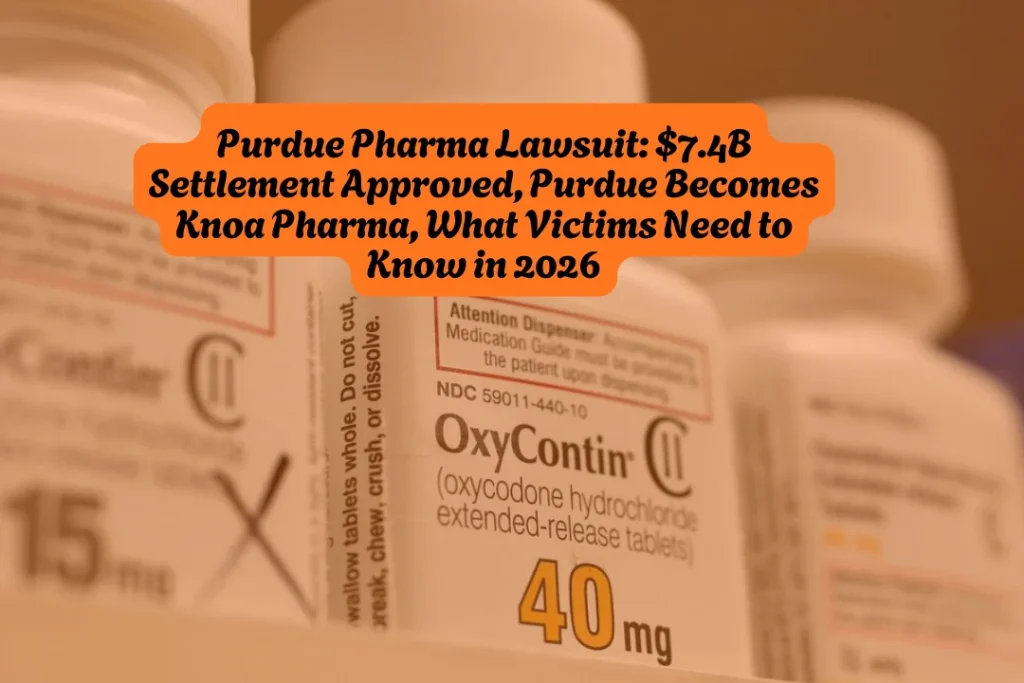
Purdue manufactured and heavily promoted OxyContin and profited from the dramatic rise in opioid prescribing. The company made false claims that minimized the addictive potential of prescription opioids while aggressively targeting and incentivizing providers to prescribe large quantities. The opioid crisis has been linked to approximately 900,000 deaths in the U.S. since 1999.
Where the Money Goes
The $7.4 billion+ settlement will be distributed across several categories:
- Individual victims (OxyContin patients and survivors): up to $865 million, with payments of ~$8,000–$16,000 per qualifying person
- Children born with opioid withdrawal: over $100 million set aside separately
- State and local governments: the bulk of remaining funds, paid over 15 years for opioid abatement programs
- Tribal governments, hospitals, school districts: included as creditors in the settlement
What Happens Next
The Purdue Pharma lawsuit is now in its final stretch. Appeals filed by a small number of creditors remain pending, but no stay has been granted. The plan is expected to become effective in spring 2026, at which point Purdue will dissolve, Knoa Pharma will take over its assets and mission, and payments to creditors — including individual victims — will begin flowing.
For anyone who has been waiting years for resolution to this case, spring 2026 marks the moment that compensation finally begins to move from legal documents to real people’s hands.
For more on major pharmaceutical and corporate lawsuits with active settlement payments, read our guide to the Lee Enterprises Data Breach Class Action Settlement — Employees Can Claim Up to $3,000 Before May 26, 2026 at allaboutlawyer.com.
Disclaimer: This article is for informational purposes only and does not constitute legal advice. For case documents and official updates, visit purduepharma.com/restructure or the Kroll restructuring administration site at restructuring.ra.kroll.com/purduepharma.
About the Author

Sarah Klein, JD, is a licensed attorney and legal content strategist with over 12 years of experience across civil, criminal, family, and regulatory law. At All About Lawyer, she covers a wide range of legal topics — from high-profile lawsuits and courtroom stories to state traffic laws and everyday legal questions — all with a focus on accuracy, clarity, and public understanding.
Her writing blends real legal insight with plain-English explanations, helping readers stay informed and legally aware.
Read more about Sarah