
PepsiCo vs Cierra Mistt Lawsuit, The Sierra Mist Story the Internet Got Wrong
A TikTok creator named Cierra Mistt told the world she took on a billion-dollar soda company — and won. The internet believed her. Millions shared her videos. Then the fact-checkers showed up. Here is the actual story behind the viral “Sierra Mist lawsuit,” what really happened, and what it accidentally taught everyone about trademark law.
How the Story Went Viral
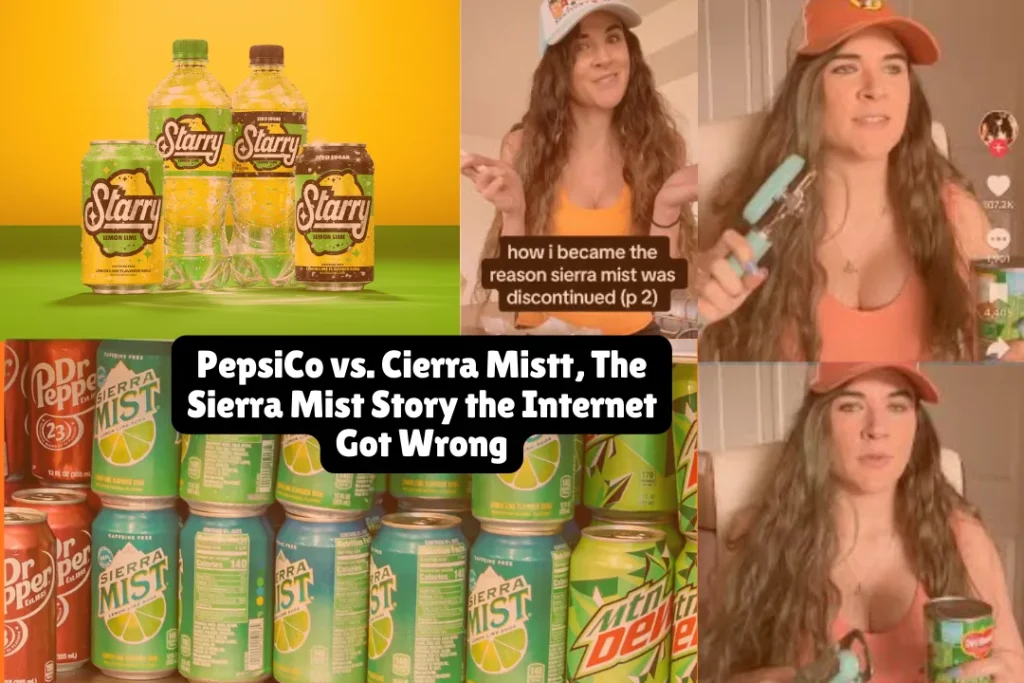
In a February 2023 TikTok post, Cierra Mistt — a flight attendant known for her travel and lifestyle content — claimed that PepsiCo tried to sue her and lost, adding in the video description that “the conflict was amicably resolved.”
She later elaborated in a July 2023 YouTube video, saying PepsiCo had accused her of trademark infringement and defamation over her online name, though she said she couldn’t share full details due to “legal reasons.”
The timing was everything. PepsiCo had just quietly retired Sierra Mist in January 2023 and replaced it with a new drink called Starry. A creator with a nearly identical name. A corporate giant going silent. A soda disappearing from shelves. The internet connected the dots — and the story exploded.
What Cierra Mistt Actually Claimed
According to her videos, PepsiCo sent her a cease-and-desist letter claiming her name was too similar to Sierra Mist. She then allegedly discovered that PepsiCo had let the Sierra Mist trademark lapse, purchased the rights herself, and used that to file claims against the company — which she says is the real reason Sierra Mist no longer exists.
She said she had been using the name “Cierra Mistt” since AOL Instant Messenger — long before she became a content creator — and that PepsiCo’s legal action was the reason she fought back.
It is a genuinely compelling story. A regular person stands up to a corporate giant, finds a legal loophole, and forces a name change. Social media loved it.
There is just one problem. Most of it does not hold up.
What the Facts Actually Show
Fact 1: PepsiCo still owns the Sierra Mist trademark.
The Sierra Mist name change was not the result of a trademark dispute. PepsiCo still holds valid trademark registrations for the original name, which any search of the USPTO database confirms.
Trademark rights do not automatically expire when a product is pulled from shelves. Even if a company stops selling a product, it can retain the trademark as long as it continues showing some level of business activity connected to the name. PepsiCo did exactly that.
Fact 2: A cease-and-desist letter is not a lawsuit.
Sending a cease-and-desist letter is a routine part of trademark policing — it is not a lawsuit, and receiving one does not mean the sender is losing or has lost any dispute. In this case, PepsiCo was proactively defending the Sierra Mist mark, not retreating from it.
Fact 3: No verified court case exists.
No case number, court record, or lawsuit confirmation has been published. No verified filings appear in federal or state courts. No USPTO opposition proceeding between the parties has been confirmed. No agency action is linked to this matter in any public database.
Fact 4: PepsiCo rebranded for business reasons — not legal ones.
The decision to discontinue Sierra Mist and replace it with Starry was driven by years of declining popularity. Sierra Mist, originally launched in 1999 to compete with Sprite, never gained dominant market share in the lemon-lime soda category.
PepsiCo’s Vice President of Research and Development stated that Starry was developed to have stronger citric acid flavors and a crisper, more aromatic taste compared to Sierra Mist, after extensive market research showing growing demand for lemon-lime soda. This was a planned product launch — not a panic rebrand forced by a TikToker.
Why So Many People Believed It
People love a David vs. Goliath story. The idea that a TikTok creator accidentally took down a billion-dollar soda brand was simply too good to resist. Combine that with real elements — a creator named Cierra Mistt and a real cease-and-desist letter — and the myth almost writes itself.
PepsiCo’s complete silence made things worse. The company chose not to comment on the situation at all, which left room for numerous interpretations and theories online. When a giant corporation goes quiet, people assume guilt. In this case, the most likely explanation is simpler: PepsiCo saw no reason to amplify a story that was doing them no legal harm.
What This Story Got Right (Accidentally)
Even though the viral version of events was largely inaccurate, the story accidentally raised real legal questions worth understanding.
Trademarks do not work the way people think. Many viewers assumed that once PepsiCo stopped selling Sierra Mist, the trademark was up for grabs. Although a trademark registration can lapse, it does not mean the original owner loses all rights to the name. A brand can retain protection under common law even without active registration, as long as the name has been used consistently in commerce and is recognized in the market.
Cease-and-desist letters are common, not criminal. Large brands send them constantly as a standard brand protection measure. Receiving one does not mean you are being sued. It means a company believes there is a potential conflict and wants you to stop a specific action before they escalate.
Copyright and trademark are not the same thing. One of the biggest misunderstandings in this controversy is the distinction between trademarks and copyrights. Trademarks protect brand names, logos, and slogans. Copyrights protect creative works like music, books, and art. Cierra Mistt herself described the dispute as a “copyright” issue in some videos — which is a different area of law entirely.
Where Things Stand
As of February 2026, no verified lawsuit between PepsiCo and Cierra Mistt has ever been confirmed in public court records. PepsiCo has never issued a public statement about the dispute. Cierra Mistt has not released any legal documents, court filings, or docket numbers to support her account.
The most likely scenario, based on available evidence, is that PepsiCo sent a cease-and-desist letter and the matter was resolved privately — if it moved beyond that initial letter at all. Cierra Mistt described the outcome as “amicably resolved,” which in legal terms typically means both sides agreed to something quietly, often without any formal admission or payment.
Sierra Mist is gone because it was losing to Sprite — not because a TikTok creator outsmarted PepsiCo’s legal team.
Frequently Asked Questions
Did Cierra Mistt actually sue PepsiCo?
No verified lawsuit has ever been confirmed. She claims PepsiCo sent her a cease-and-desist letter and that the dispute was resolved, but no court filing or docket number has been made public.
Did PepsiCo lose the Sierra Mist trademark?
No. PepsiCo still holds valid trademark registrations for Sierra Mist as of February 2026, confirmed through the USPTO database.
Why did Sierra Mist actually get discontinued?
PepsiCo discontinued Sierra Mist in January 2023 because of poor sales performance. Starry was developed and launched as a replacement targeting younger consumers.
What is a cease-and-desist letter?
It is a written demand that someone stop a specific action — in this case, using a name that a company believes conflicts with its trademark. It is not a lawsuit and does not mean any court case has been filed.
Could Cierra Mistt have purchased the Sierra Mist trademark?
No. PepsiCo still owns the trademark. Trademarks do not lapse simply because a product stops selling, as long as the company maintains some commercial activity connected to the name.
Did Cierra Mistt force PepsiCo to rename the drink Starry?
No evidence supports this claim. PepsiCo’s own statements describe Starry as a planned product developed through market research, not a legal workaround.
Is there anything real about this story?
Yes — a cease-and-desist letter appears to have been sent, and some private communication between the parties likely occurred. What Cierra Mistt did with that real starting point turned into a much larger viral story that facts do not support.
What is the difference between copyright and trademark?
A trademark protects brand names and logos used in commerce. A copyright protects original creative works like writing, music, and art. They are separate areas of law, and confusing them — as many social media posts in this story did — changes the legal analysis entirely.
Last Updated: February 18, 2026
Disclaimer: This article is for informational purposes only and does not constitute legal advice. Legal claims and outcomes depend on specific facts and applicable law. For advice regarding a particular situation, consult a qualified attorney.
About the Author

Sarah Klein, JD, is a licensed attorney and legal content strategist with over 12 years of experience across civil, criminal, family, and regulatory law. At All About Lawyer, she covers a wide range of legal topics — from high-profile lawsuits and courtroom stories to state traffic laws and everyday legal questions — all with a focus on accuracy, clarity, and public understanding.
Her writing blends real legal insight with plain-English explanations, helping readers stay informed and legally aware.
Read more about Sarah