
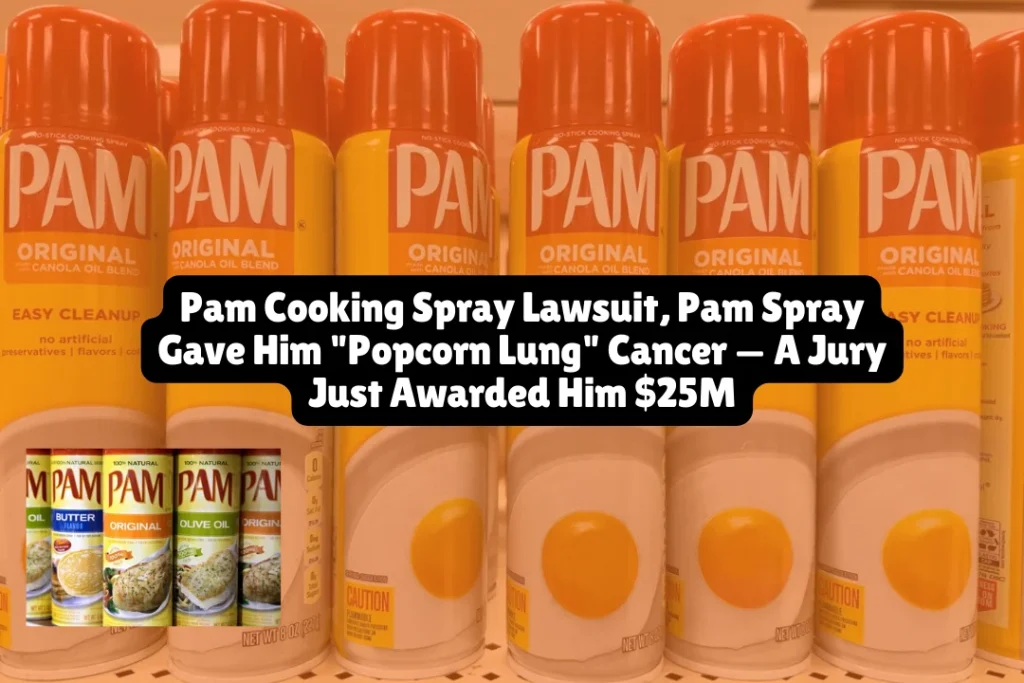
Pam Cooking Spray Lawsuit, Pam Spray Gave Him “Popcorn Lung” Cancer — A Jury Just Awarded Him $25M
A Los Angeles jury awarded Roland Esparza, 58, a unanimous $25 million verdict on February 4, 2026, after finding that Conagra Brands failed to warn consumers about the dangers of inhaling fumes from butter-flavored Pam cooking spray. Esparza now lives on a 24-hour oxygen supply and is awaiting a double lung transplant. Conagra says it will appeal.
Key Case Facts
| Detail | Information |
| Case Name | Esparza v. Conagra Brands, Inc. |
| Court | Superior Court of California, Los Angeles County |
| Verdict Date | February 4, 2026 |
| Verdict Amount | $25,000,000 |
| Jury Vote | Unanimous |
| Defendant | Conagra Brands, Inc. |
| Plaintiff’s Attorney | Jacob Plattenberger and Alan Holcomb |
| Current Status | Post-trial — Conagra plans to appeal |
What Is This Lawsuit About?
This is an individual personal injury product liability lawsuit — not a class action. Roland Esparza, a Los Angeles resident, sued Conagra Brands, the Chicago-based food company that makes Pam cooking spray, alleging that daily exposure to the spray’s fumes over decades caused him to develop a severe and irreversible lung disease.
The case centers on diacetyl — a synthetic chemical used to create the buttery aroma and flavor in butter-flavored Pam cooking spray. Esparza alleged that inhaling diacetyl fumes during normal cooking use destroyed the small airways in his lungs, leaving him with a condition called bronchiolitis obliterans — commonly known as “popcorn lung.”
Conagra acknowledged during trial that it removed diacetyl from its Pam formulation in 2009. But Esparza had been using butter-flavored Pam since the early 1990s — nearly two decades of daily exposure before the reformulation. The jury found Conagra liable for the harm caused during those years.
Who Is Roland Esparza — and What Happened to Him?
Esparza, 58, described himself as a health-conscious person — a bodybuilder and martial artist who watched what he ate. He was cooking a lot of protein-heavy meals, mainly eggs on a stovetop, and using butter-flavored Pam multiple times a day.
According to his attorneys, Esparza is now on a 24-hour oxygen supply while awaiting a double lung transplant, despite his previously healthy and active lifestyle.
Esparza was diagnosed with bronchiolitis obliterans, a severe and progressive respiratory disease better known as “popcorn lung.” The disease causes permanent scarring and narrowing of the smallest airways in the lungs, making it progressively harder to breathe. It has no cure. A double lung transplant is currently the only remaining medical option that could extend his life — and even that outcome is uncertain.
The $25 million award covers his medical costs, pain and suffering, and loss of quality of life.
What Is “Popcorn Lung” — and What Is Diacetyl?
Bronchiolitis obliterans — nicknamed “popcorn lung” — is a rare, chronic, and irreversible lung disease that causes inflammation and scar tissue to build up in the bronchioles, the smallest airways of the lungs. As the scarring progresses, airflow becomes severely restricted.
Diacetyl is a naturally occurring chemical compound that also gets synthesized as an artificial flavoring. It produces the distinctive butter aroma and taste found in microwave popcorn, cooking sprays, and certain other foods. When heated and inhaled as a vapor or aerosol, diacetyl has been linked to bronchiolitis obliterans.
The connection between diacetyl and lung disease was first identified not in home kitchens but in industrial settings. In the early 2000s, workers at several Midwest microwave popcorn factories began developing severe respiratory disease at alarming rates. Their daily exposure to large concentrations of diacetyl fumes on the factory floor was identified as the cause.
In 2004, Eric Peoples, who worked in a Missouri popcorn plant, won a $20 million judgment against the makers of the butter-flavored chemical he alleged caused his lung disease. That case — along with subsequent factory worker lawsuits — established diacetyl’s dangers in occupational settings. What made Esparza’s case different was the setting: a home kitchen, not a factory floor.
While there have been several successful consumer cases brought against microwave popcorn manufacturers, this is the first popcorn lung verdict against a cooking spray manufacturer.
What the Jury Found — The Legal Claims Explained
The jury found Conagra liable on two main legal theories:
1. Failure to Warn (Negligence)
This claim required Esparza to prove that Conagra knew — or should have known — that inhaling diacetyl fumes from its cooking spray posed a meaningful risk of lung disease to consumers, and that Conagra failed to include an adequate warning on the product label.
The jury found that Conagra did not adequately warn consumers about the potential dangers of inhaling fumes from Pam cooking spray containing diacetyl.
2. Product Defect (Strict Liability)
This claim required showing the product failed to perform as safely as an ordinary consumer would expect when used in a reasonably foreseeable way. The jury found that the cooking spray failed to perform as safely as customers would have expected, and assigned Conagra full responsibility for Esparza’s injuries.
Conagra’s defense argued that diacetyl had been removed from the Pam formula in 2009 — nearly two decades before trial — and that the current product is safe. But the jury determined this did not eliminate liability for the harm that occurred during the years the ingredient was present.
Conagra’s Response — What the Company Says
Conagra did not take the verdict quietly. Conagra said in a statement: “We disagree with and are disappointed with the jury’s verdict. PAM Butter Flavor cooking spray is safe and has been diacetyl-free for nearly two decades. We intend to pursue all available legal avenues to contest the verdict.”
The company has signaled it will pursue post-trial motions and a formal appeal. This means the $25 million verdict, while rendered by a unanimous jury, is not yet a final, collectible judgment. The case will now move into the appellate process, which could take years to resolve.
What Happens Next — The Post-Trial Road
The verdict was rendered on February 4, 2026. The case now enters post-trial proceedings, which typically involve:
Post-trial motions: Conagra can ask the trial court judge to reduce the damages, set aside the verdict entirely (a motion called “JNOV” — judgment notwithstanding the verdict), or grant a new trial. These motions are commonly filed in large verdict cases and occasionally succeed in reducing award amounts.
Appeal: If post-trial motions fail, Conagra can appeal to the California Court of Appeal and potentially the California Supreme Court. An appeal does not automatically stop enforcement of the judgment — Conagra would need to post a bond or obtain a stay.
Enforcement: If the verdict survives appeal, Esparza’s legal team can move to collect the judgment from Conagra, a publicly traded company with substantial assets.
None of these outcomes can be predicted at this stage. Verdicts of this size are frequently reduced on appeal or through post-trial motions, though they can also be affirmed in full.
Does This Affect Current Pam Users?
Conagra confirmed it removed diacetyl from all Pam formulations in 2009. Current butter-flavored Pam products on store shelves no longer contain diacetyl, according to Conagra’s own trial statements.
However, this verdict raises broader questions that the American Lung Association and medical experts have been flagging for years: aerosol cooking sprays, when heated, release fine particulates and chemical vapors that can be inhaled during normal cooking. Regardless of diacetyl specifically, proper kitchen ventilation — exhaust fans, open windows, avoiding direct inhalation of spray mists — is generally recommended by health professionals when using any aerosol cooking product.
Could This Lead to More Lawsuits?
This verdict is the first of its kind — no jury had previously found a cooking spray manufacturer liable for popcorn lung in a consumer setting. That distinction matters legally because it establishes that a consumer using a product in their home kitchen, not an industrial worker, can successfully connect diacetyl exposure to bronchiolitis obliterans.
Similar concerns have fueled prior litigation, including a 2015 class action lawsuit brought against a manufacturer of e-cigarette liquids, which indicated that the company’s solution exposed users to diacetyl. That same year, a worker from a microwave popcorn factory was awarded $2.6 million after exposure to diacetyl led to his bronchiolitis obliterans diagnosis and the loss of 60% of his lung capacity.
Legal analysts note the Esparza verdict could encourage additional individual lawsuits from former users of pre-2009 butter-flavored Pam who developed respiratory conditions. However, whether any future plaintiff could prove the same causation link — particularly after Conagra removed diacetyl 17 years ago — would depend on their specific medical history, exposure timeline, and the strength of their medical evidence.
This case is not a class action. There is no settlement fund, no claim form, and no deadline to file for any group of Pam users. Each potential plaintiff would need to establish their own individual case.
Frequently Asked Questions
What is “popcorn lung” and how do you get it?
Bronchiolitis obliterans — known as popcorn lung — is a rare, irreversible disease that scars the smallest airways in the lungs and progressively restricts breathing. It was named after workers at microwave popcorn factories who developed it from inhaling diacetyl fumes. Roland Esparza is the first person to win a jury verdict linking consumer cooking spray use to the condition.
Is Pam cooking spray still dangerous?
Conagra says it removed diacetyl from all Pam formulations in 2009. The company states the current product is safe. Esparza’s lawsuit covered exposure during the 1990s and 2000s when diacetyl was still in the formula. Current Pam products no longer contain diacetyl, according to Conagra.
Will Conagra actually pay the $25 million?
Not immediately. Conagra has stated it plans to challenge the verdict through all available legal means. Post-trial motions and a likely appeal mean the final outcome — and any payment — could be years away. Large verdicts are frequently subject to reduction or reversal during the appellate process.
Is this a class action lawsuit I can join?
No. This is an individual personal injury lawsuit brought by one plaintiff. There is no class, no settlement fund, and no claim form. Other individuals cannot join Esparza’s lawsuit at this stage.
Could I sue Conagra if I used old Pam butter spray and have lung problems?
That is a legal question that depends entirely on your individual medical history, your exposure timeline, and the evidence available in your specific situation. This article cannot provide legal advice. If you believe you have a health condition connected to cooking spray exposure, consult a qualified personal injury or product liability attorney who can evaluate your specific facts.
What was Conagra’s defense at trial?
Conagra argued that it removed diacetyl from Pam in 2009 and that the current product is safe. The company contested the causal link between Esparza’s cooking spray use and his lung disease. The jury rejected these arguments unanimously, but Conagra will have the opportunity to raise them again in post-trial proceedings and on appeal.
What does the $25 million cover?
The jury’s award covers Esparza’s medical costs — including the anticipated cost of a double lung transplant — as well as pain and suffering and loss of quality of life. The specific breakdown between those categories has not been publicly disclosed in available court records.
Has anything like this happened before?
Multiple factory workers who were exposed to diacetyl in industrial settings have won lawsuits over bronchiolitis obliterans. However, this is the first time a jury has held a cooking spray manufacturer liable for popcorn lung suffered by a home consumer — making it the first verdict of its kind in U.S. legal history.
Last Updated: February 18, 2026
Disclaimer: This article is for informational purposes only and does not constitute legal advice. Legal claims and outcomes depend on specific facts and applicable law. For advice regarding a particular situation, consult a qualified attorney.
About the Author

Sarah Klein, JD, is a licensed attorney and legal content strategist with over 12 years of experience across civil, criminal, family, and regulatory law. At All About Lawyer, she covers a wide range of legal topics — from high-profile lawsuits and courtroom stories to state traffic laws and everyday legal questions — all with a focus on accuracy, clarity, and public understanding.
Her writing blends real legal insight with plain-English explanations, helping readers stay informed and legally aware.
Read more about Sarah