
Olipop Prebiotic Soda Exposed, Class Action Claims $3 “Gut Health” Drinks Are Just Sugared Water—Here’s How to Get Your Money Back
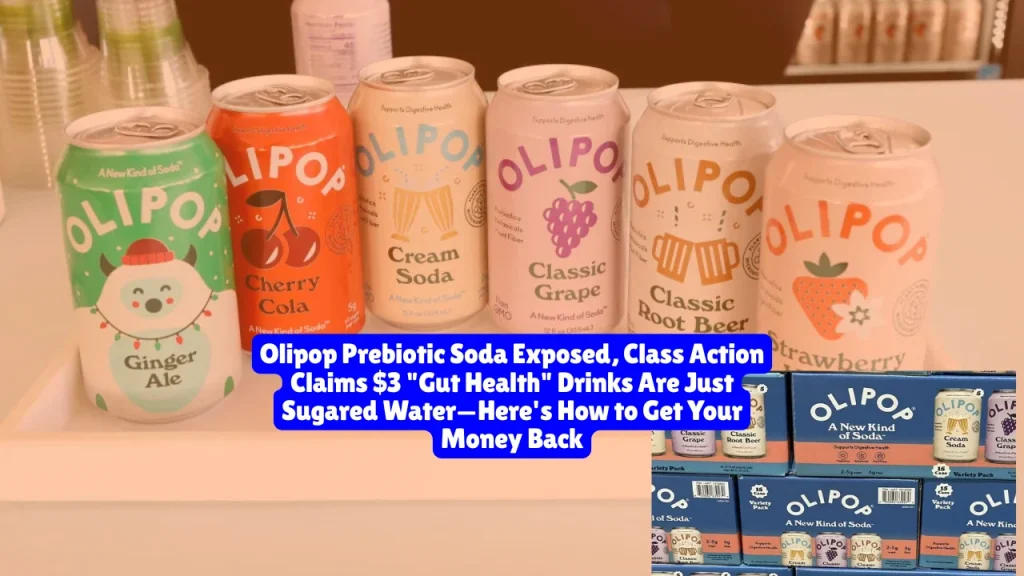
A class action lawsuit filed in California federal court alleges Olipop falsely marketed its prebiotic sodas as delivering significant digestive health benefits when they’re essentially “sugared water” with negligible prebiotic effectiveness. The lawsuit claims consumers paid premium prices ($2-3 per can versus $0.50 for regular soda) for health benefits they never received, potentially qualifying thousands of US buyers for compensation.
Here’s what shocked wellness influencers and health-conscious consumers nationwide: that $2.99 can of Olipop you bought for gut health? A lawsuit claims it delivers no more digestive benefits than regular soda—just with clever marketing and a premium price tag.
What Exactly Does the Olipop Lawsuit Claim?
The lawsuit, filed in the U.S. District Court for the Central District of California, alleges Olipop engaged in deceptive marketing by claiming its beverages provide meaningful prebiotic benefits and support digestive health when scientific evidence suggests otherwise.
The core allegations include:
- Olipop marketed products as containing “prebiotics that support digestive health” without scientific backing for the claimed benefits at the dosages provided
- The company charged premium prices (200-500% more than conventional sodas) based on these unsubstantiated health claims
- Consumers purchased Olipop specifically for digestive health benefits they didn’t receive
- The products contain similar or higher sugar content than regular sodas, contradicting health positioning
The lawsuit challenges Olipop’s fundamental marketing premise—that drinking their soda delivers real, measurable digestive health improvements.
Who Filed the Lawsuit and What Products Are Included?
Lead plaintiffs represent consumers who purchased various Olipop flavors including Vintage Cola, Strawberry Vanilla, Cherry Vanilla, Orange Squeeze, and other varieties marketed with digestive health claims.
The law firms representing plaintiffs specialize in consumer protection and false advertising cases. They’re seeking class action status to include all US consumers who purchased Olipop products during the relevant time period.
Products named in the lawsuit span Olipop’s entire line, particularly those marketed with prominent prebiotic and digestive health claims on packaging and advertising.
The “Sugared Water” Allegation: What’s the Evidence?
The lawsuit cites scientific research suggesting the amounts and types of prebiotics in Olipop aren’t sufficient to provide the marketed digestive benefits.
Key evidence presented includes:
- Scientific studies showing effective prebiotic doses require significantly higher amounts than what’s in a single Olipop serving
- Analysis revealing Olipop’s sugar content (2-5 grams per can) still represents added sugars, despite being lower than conventional sodas
- Expert testimony questioning whether the prebiotic fibers survive the carbonation and preservation process in functional amounts
- Marketing materials analysis showing Olipop emphasized health benefits without adequate scientific substantiation
The lawsuit argues consumers paid premium prices believing they were purchasing a genuine health product, not flavored carbonated water with minimal functional ingredients.
Related article: Nelnet Data Breach Class Action Lawsuit $10M Settlement Pays Up to $5,000 Cash—File Your Claim Before March 5, 2026
What Laws Does the Lawsuit Invoke?
The complaint alleges violations of multiple consumer protection statutes:
California Consumer Legal Remedies Act (CLRA): Prohibits deceptive business practices in consumer transactions
California False Advertising Law (FAL): Forbids misleading advertising claims
California Unfair Competition Law (UCL): Prevents unfair business practices
Breach of Express Warranty: Claims Olipop failed to deliver promised health benefits
Unjust Enrichment: Argues Olipop profited from misleading consumers
These state law claims could apply nationwide if the class is certified, as similar consumer protection laws exist across states.
Who Qualifies for the Class Action?
If the court certifies the class, potential members include:
- Anyone who purchased Olipop products in the United States during the relevant time period (typically several years before filing)
- Consumers who bought Olipop based on its prebiotic and digestive health marketing claims
- Purchasers who paid premium prices compared to conventional sodas
- Both direct purchases and retail purchases may qualify
You don’t need receipts to join—class action lawsuits often use affidavits or credit card statements as proof of purchase.
What Compensation Might Consumers Receive?
While no settlement exists yet, similar false advertising cases against beverage companies provide benchmarks:
Potential compensation includes:
- Refunds for Olipop purchases (full or partial depending on settlement terms)
- Monetary damages for the price premium paid versus comparable products
- Punitive damages if the court finds willful misconduct
- Injunctive relief requiring Olipop to change marketing practices
Based on comparable cases, consumers might receive $5-50 per qualifying purchase, though actual amounts depend on settlement negotiations or trial outcomes.
The lawsuit seeks monetary damages, restitution, corrective advertising, and attorney fees.
How Does Olipop Compare to Similar Lawsuits?
The wellness beverage industry faces increasing scrutiny over health claims:
Vitaminwater Settlement (2014): Coca-Cola paid millions after claims the beverage prevented diseases proved unsubstantiated
Kombucha Lawsuits (2015-2019): Multiple brands settled for overstating probiotic benefits
LaCroix “Natural” Claims (2019): Class action challenged natural flavoring claims
The Olipop lawsuit follows this pattern—premium-priced functional beverages facing challenges over whether health claims match scientific reality.
What Scientific Evidence Challenges Prebiotic Soda Claims?
Research on prebiotic effectiveness reveals important context:
Clinical studies typically use 5-20 grams of prebiotics daily to demonstrate digestive benefits. A single Olipop can contains significantly less.
Prebiotics require consistent consumption over weeks to alter gut microbiome composition. Occasional soda consumption likely produces minimal effect.
Processing and storage can degrade prebiotic fibers, raising questions about whether ingredients remain functional after manufacturing, transportation, and shelf storage.
The lawsuit argues Olipop’s marketing created unrealistic consumer expectations about benefits achievable from drinking carbonated beverages containing small amounts of prebiotic ingredients.
What Has Olipop Said in Response?
Olipop has publicly defended its products and marketing practices, though specific legal responses remain in court filings.
The company has emphasized:
- Its products contain real prebiotic fibers and botanical ingredients
- Formulations were developed with scientific research in mind
- The brand aims to offer healthier alternatives to conventional sodas
- Customer satisfaction and repeat purchases demonstrate product value
Legal defenses likely challenge the lawsuit’s scientific premises and argue Olipop’s marketing claims were truthful and substantiated.
Current Case Status and Timeline
The lawsuit remains in early stages:
Filing occurred in 2024 in California federal court
Class certification motions will determine whether the case proceeds as a class action
Discovery phase involves both sides exchanging documents, scientific evidence, and expert testimony
Settlement discussions may occur before trial, as most consumer class actions settle
Trial dates won’t be set until class certification and discovery complete
Cases like this typically take 1-3 years from filing to resolution, whether through settlement or trial.
What Should Consumers Do Now?
If you purchased Olipop products, consider these steps:
Monitor the case: Check court websites and class action databases for updates
Preserve evidence: Keep receipts, photos of products, or credit card statements showing Olipop purchases
Watch for class notices: If the class is certified, you’ll receive notification about how to file a claim
Decide whether to participate: Class members can opt-in, opt-out, or object to settlement terms
Don’t rush: You typically have months to file claims after settlement approval
You don’t need a lawyer to participate—class action administrators handle claim processing once settlements are approved.
Frequently Asked Questions
Do I need proof of purchase to join the Olipop class action?
Not necessarily. Class actions often accept alternative evidence like affidavits, credit card statements, or loyalty program records. Specific requirements will be detailed in the class notice if the case is certified.
How long do I have to file a claim?
Claim deadlines are set after settlement approval, typically providing 60-120 days. Monitor the case for official notices.
Can I still buy Olipop while the lawsuit is pending?
Yes, though the lawsuit may affect how Olipop markets its products going forward. Current purchases might qualify for compensation if they fall within the claim period.
Will this lawsuit force Olipop out of business?
Unlikely. Most consumer class actions result in settlements where companies pay damages but continue operating, often with revised marketing practices.
How much could I receive from a settlement?
Settlement amounts vary widely. Similar beverage cases have provided $5-50 per purchase, though actual amounts depend on total claims filed and settlement terms.
What if I bought Olipop on subscription services?
Subscription purchases likely qualify. Document your subscription period and approximate number of cases purchased.
Does the lawsuit apply to all Olipop flavors?
The complaint targets products marketed with prebiotic and digestive health claims, which includes most or all Olipop varieties.
Can Olipop reformulate and avoid liability?
Reformulation doesn’t affect past purchases. The lawsuit addresses historical marketing and sales, not future products.
What This Means for Functional Beverage Marketing
The Olipop lawsuit reflects broader scrutiny of wellness product claims:
Consumers increasingly question premium-priced health products promising benefits that may require clinical-level dosages or consistency.
Regulatory agencies face pressure to enforce health claim standards as functional food and beverage markets expand.
Companies may adjust marketing language to avoid definitive health benefit claims without robust clinical evidence.
The outcome could influence how prebiotic, probiotic, and functional beverages market their products industry-wide.
Key Takeaways
The lawsuit alleges Olipop overcharged consumers for digestive health benefits not supported by the product’s prebiotic content.
No settlement exists yet, but consumers who purchased Olipop may eventually qualify for compensation.
Similar cases suggest settlements of $5-50 per purchase are possible, though amounts vary.
Monitor official court websites and class action databases for case updates and claim instructions.
Preserve purchase evidence to streamline claim filing if the case settles.
The legal process will ultimately determine whether Olipop’s marketing crossed the line from optimistic positioning to false advertising—and whether consumers deserve their money back.
Need Legal Help?
If you purchased Olipop and want to understand your rights, visit the Federal Trade Commission’s consumer protection resources or consult with a consumer protection attorney. Class action participation doesn’t require hiring a lawyer—claim administrators handle the process once settlements are approved.
For updates on this case and other consumer protection lawsuits, explore related articles on AllAboutLawyer.com about false advertising claims, class action procedures, and your rights when products don’t deliver promised benefits.
About the Author

Sarah Klein, JD, is a licensed attorney and legal content strategist with over 12 years of experience across civil, criminal, family, and regulatory law. At All About Lawyer, she covers a wide range of legal topics — from high-profile lawsuits and courtroom stories to state traffic laws and everyday legal questions — all with a focus on accuracy, clarity, and public understanding.
Her writing blends real legal insight with plain-English explanations, helping readers stay informed and legally aware.
Read more about Sarah