
Ohio Student Cell Phone Ban, All-Day Prohibition, Jan 1 Deadline, Noisy Lunchrooms Return
What Does Ohio’s Student Cell Phone Ban Require?
Ohio’s new law requires every K-12 public school, charter school, and STEM school to adopt policies prohibiting student cell phone use during the instructional day by January 1, 2026. The ban covers the entire school day—including class time, hallway transitions, lunch periods, and recess. Ohio Revised Code Section 3313.753 took effect September 30, 2025. Exceptions exist for health monitoring (with physician documentation), IEP/504 accommodations, teacher-approved learning activities, and emergencies. Enforcement includes progressive discipline from warnings to device confiscation to parent pickup requirements.
Here’s what happened when schools started enforcing bans early: Fairborn City Schools reported decreased tardies, fewer students skipping class, reduced student conflicts, and increased engagement. Beavercreek schools saw “tremendous increase in peer-to-peer interactions in hallways and lunch.” Director Beth Sizemore told reporters: “We enjoy hearing the ‘buzz’ around the building as students are interacting with one another.” The data backs it up—72% of U.S. high school teachers say cellphone distraction is a major classroom problem, and Ohio students receive nearly 200 alerts per day on their devices.
How Ohio’s Cell Phone Law Evolved
May 2024: House Bill 250
Governor DeWine signed House Bill 250 at Karrer Middle School in Dublin. The law required every school district to create a cell phone policy by July 2025.
DeWine explained: “Our schoolchildren currently face countless distractions every day from the devices in their pockets. By limiting these distractions, we will reestablish the opportunity for students across Ohio to immerse themselves in their classwork.”
The catch? Schools could create their own policies with varying restrictions. Some banned phones entirely. Others only limited use during class time.
June 2025: House Bill 96 Strengthens the Ban
Ohio’s 2025-26 budget (House Bill 96) changed everything. Tucked into the $60 billion operating budget was language requiring schools to prohibit cell phone use during the entire instructional day—not just create policies.
What “instructional day” actually means: Any period students are expected to be in attendance. This includes formal instruction, transitioning between classes, recess, meal periods, and field trips. Basically, if you’re at school during school hours, your phone stays away.
The law took effect September 30, 2025. Schools have until January 1, 2026 to adopt compliant policies.
Why the Push for Stricter Rules?
By December 2024, only 61% of Ohio schools had adopted formal cell phone policies under the original law. DeWine and lawmakers decided voluntary wasn’t working.
State Senator Theresa Gavarone, who sponsored Senate Bill 158 (similar legislation), stated: “The facts are clear, school districts that have restricted student cellphone use during the instructional day have seen a return to noisy classrooms, fostering real face-to-face conversations and relationships.”
Related article: Tennessee Driver’s License Law 2026, Shocking Changes Hit Every Driver January 1 Noncitizen Licenses Get “X” Mark, Bicycle Test Required
What’s Actually Banned Under R.C. 3313.753
Devices Covered
The ban applies to:
- Cell phones (smartphones and basic phones)
- Smartwatches with two-way communication
- Tablets with cellular capability
- Any electronic device that can receive or transmit communications between people
Chromebooks issued by schools for educational purposes are not included—most Ohio districts are one-to-one with student Chromebooks.
When Students Can’t Use Phones
During the entire instructional day, which means:
- During class instruction
- Between classes in hallways
- During lunch periods
- At recess
- During supervised activities
- On field trips
- While transitioning on school property
St. Marys Superintendent Bill Ruane explained: “Most (issues) had more to do with special classes or programs that required communication and sharing of work schedules or verifying hours.”
Where Phones Must Stay
Students can bring phones to school, but devices must remain:
- Silenced and stored in pockets
- In lockers
- In bags or backpacks
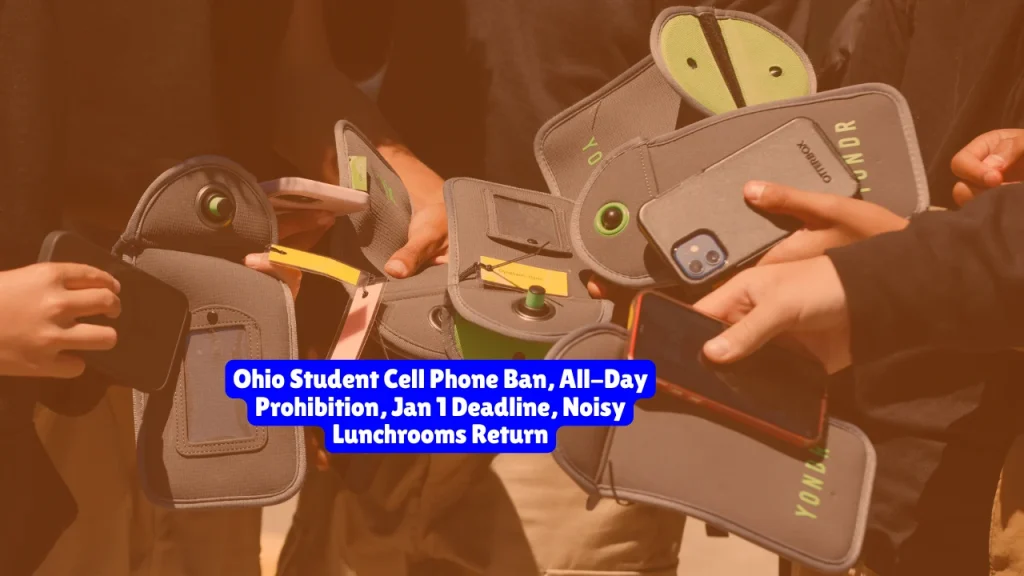
- In designated storage areas (some schools use Yondr pouches)
Schools can also choose to prohibit students from carrying phones on school property at all.
Four Key Exceptions to Ohio’s Phone Ban
1. Health Monitoring
Students can use phones or devices to monitor or address health concerns if they have written documentation from a physician.
Common examples include diabetes monitoring devices, medical alert systems, or health apps prescribed by doctors.
2. IEP and 504 Plans
If a student’s Individualized Education Program (IEP) or Section 504 plan includes phone or device use, schools must permit it.
3. Educational Purposes
School boards can allow students to use phones for learning activities when authorized by teachers or administrators for instructional purposes.
4. Emergencies
Students can use phones during active threats or emergencies, as permitted under each building’s comprehensive emergency management plan.
Students can also use phones to contact emergency services like 911.
How Schools Enforce the Ban
Progressive Discipline Approach
Most districts use escalating consequences:
First violation: Verbal reminder or warning
Second violation: Device confiscated for the period or rest of the day
Continued violations:
- Parent/guardian required to pick up device
- Detention or other disciplinary measures
- Loss of privilege to carry device at school
Olentangy Schools communicated to families: “Enforcement will occur through the student code of conduct using progressive discipline, starting with verbal reminders.”
Different Approaches Across Districts
Yondr pouches: Beavercreek, Fairborn, and other districts use magnetic locking pouches. Students place phones in pouches at the start of the day and unlock them when leaving.
Fairborn Superintendent Amy Gayheart: “Before the use of Yondr pouches, we had a policy that prohibited student use of phones during class times but it was difficult to enforce.”
Locker storage: Some schools require students to store phones in lockers during school hours.
Pocket/bag storage: Other districts allow students to keep phones in pockets or bags as long as they’re silenced and not used.
Real Results from Ohio Schools
Academic and Social Improvements
Beavercreek Director Beth Sizemore reported: “We have found our students to be more focused and engaged in the classroom, and have seen a tremendous increase in peer-to-peer interactions in hallways and lunch.”
Fairborn saw:
- Decreased tardies to class
- Decreased students skipping class
- Decrease in student conflicts
- Increased engagement in instruction
Governor DeWine confirmed in April 2025: “Schools who banned cell phones had noisy lunch rooms, more socialization and better communication between students and teachers. I think the jury has really returned on this issue.”
Student Pushback
Not everyone’s happy. Oakwood High School students (classes of 2025 and 2026) sent a letter to their school board questioning the policy.
Their argument: “Right now, this policy does not equip us for the real world; it shelters us from it. Instead of imposing a blanket ban, I propose a more balanced approach: allow phones during non-instructional periods.”
Coldwater Superintendent Nick Mader responded: “If the law continues to define the restriction as applying to ‘instructional time,’ it allows us to keep classrooms free of distractions while also teaching students moderation.”
FAQ: What Parents Need to Know
Q: Can my child bring their phone to school? Yes. Students can bring phones but must keep them silenced and stored. They cannot use them during the instructional day.
Q: How do I contact my child during school hours? Call the school office. Every school has staff answering phones and every classroom has a phone. Olentangy Schools told parents: “The best way to get in touch with your child during the school day is to call the school office.”
Q: What if my child has diabetes or another medical condition? Get written documentation from your child’s physician. Schools must allow phone/device use for health monitoring when medically necessary.
Q: What happens if my child violates the policy? Progressive discipline: verbal reminder, device confiscation, parent pickup, possible detention, and ultimately loss of the privilege to carry a device at school.
Q: Can teachers allow phones for class activities? Yes. If the school board determines it’s appropriate, teachers can authorize phone use for instructional purposes.
Q: Does this apply during after-school activities? Outside the instructional day (extracurricular activities, sports, events, bus rides), phone use is at the discretion of supervising staff.
Q: Can my child use their phone in an emergency? Yes. Students can use phones during active threats, to call 911, or as permitted in the building’s emergency management plan.
Q: What about smartwatches? Smartwatches with two-way communication capabilities fall under the ban during instructional hours.
Q: Does this apply to private schools? No. The law only applies to public school districts, community schools (charters), STEM schools, and college-preparatory boarding schools.
What Schools Must Do by January 1, 2026
Every Ohio public school, charter school, and STEM school must:
Adopt a written policy prohibiting cell phone use during the instructional day
Include the four exceptions: health monitoring, IEP/504 accommodations, educational purposes, emergencies
Establish enforcement procedures with progressive discipline
Communicate the policy to students and families
Train staff on policy implementation and enforcement
Coldwater Schools Superintendent Mader noted: “We are intentionally holding off on formal adoption until closer to that date to ensure we can respond if the state amends or clarifies its position.”
Resources for Ohio Families
Ohio Revised Code Section 3313.753: codes.ohio.gov/ohio-revised-code/section-3313.753
Ohio Department of Education and Workforce – Cell Phones in Schools: education.ohio.gov/Topics/Student-Supports/School-Wellness/Cell-Phones-in-Ohio-Schools
Your School District’s Policy: Check your district’s website or student handbook for specific implementation details
Ohio School Boards Association: ohioschoolboards.org for policy guidance
What Comes Next
Ohio joins 34 other states restricting student cell phone use in schools. The movement started with Florida in 2023 and spread rapidly as concerns about mental health, learning, and social development grew.
State Senator Catherine Ingram (D-Cincinnati) summed up the bipartisan support: “There are distractions, and we need to make sure that when our children are in school, they are learning.”
The bottom line: By January 1, 2026, every Ohio student will experience a school day without constant phone access. Early results from districts show noisy lunchrooms returning, more face-to-face conversations, better grades, and fewer conflicts. Whether you’re a parent preparing for the change, a teacher ready to reclaim classroom attention, or a student adjusting to a phone-free school day, understanding these requirements is essential for a smooth transition.
This article provides general information about Ohio’s student cell phone ban and is not legal advice. Check your school district’s specific policy for implementation details.
Last updated: January 2026
About the Author

Sarah Klein, JD, is a licensed attorney and legal content strategist with over 12 years of experience across civil, criminal, family, and regulatory law. At All About Lawyer, she covers a wide range of legal topics — from high-profile lawsuits and courtroom stories to state traffic laws and everyday legal questions — all with a focus on accuracy, clarity, and public understanding.
Her writing blends real legal insight with plain-English explanations, helping readers stay informed and legally aware.
Read more about Sarah