
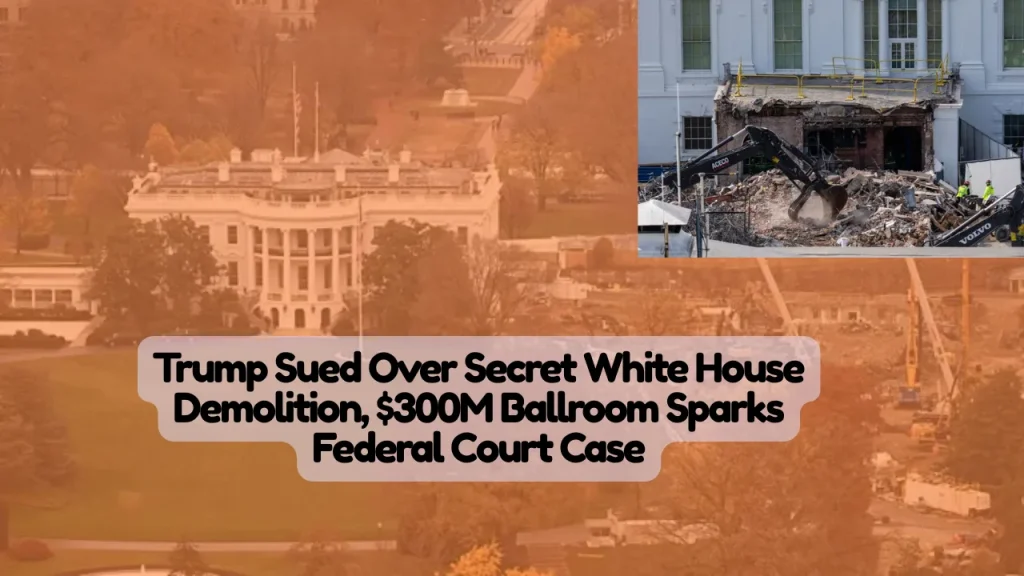
National Trust for Historic Preservation Lawsuit, Trump Sued Over Secret White House Demolition, $300M Ballroom Sparks Federal Court Case
What Is the Latest Update on the National Trust for Historic Preservation Lawsuit?
The National Trust for Historic Preservation filed a federal lawsuit on December 13, 2025, against President Donald Trump and his administration to halt construction of a planned 90,000-square-foot ballroom on the White House grounds. The case has been assigned to U.S. District Judge Richard Leon, a George W. Bush appointee, in the U.S. District Court for the District of Columbia.
The nonprofit organization argues that the project began without filing plans with the National Capital Planning Commission as required by law, without conducting an environmental assessment as mandated by the National Environmental Policy Act, and without congressional authorization. The Trust wrote to federal agencies in October urging cessation of demolition and initiation of review procedures, but received no response.
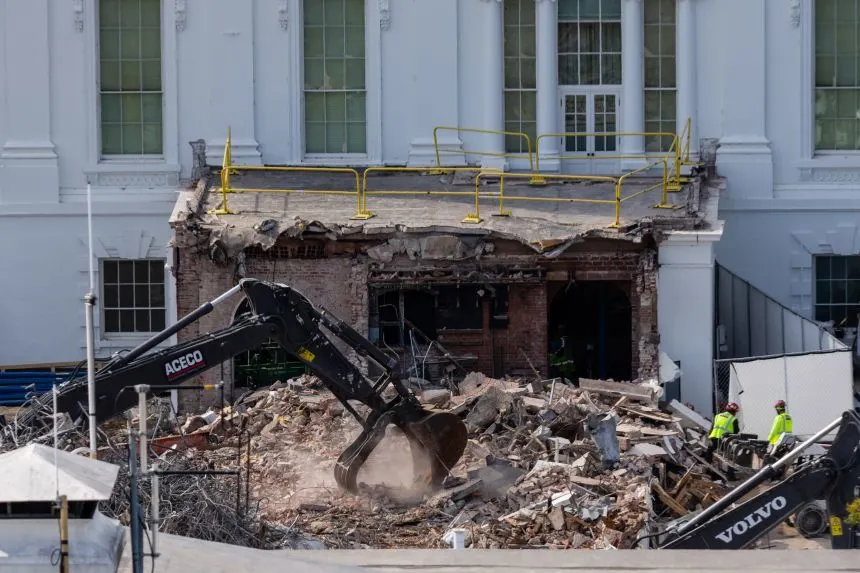
The lawsuit represents the first major legal challenge to Trump’s ballroom project, which involved demolishing the White House East Wing that was completed in 1942.
Case Background: White House Ballroom Project Allegations
President Trump ordered the 123-year-old East Wing demolished to make way for the new ballroom, which he says will cost around $300 million and be funded by private donations. The project, which began in October 2025, has proceeded without undergoing the federal review processes that previous administrations followed for White House modifications.
The trust argues that Trump and administration officials have violated, and continue to violate, the Administrative Procedure Act and National Environmental Policy Act by demolishing the East Wing and moving forward with construction.
Key allegations in the complaint include:
- Failure to submit plans to the National Capital Planning Commission before demolition
- Lack of environmental assessment or impact statement under NEPA
- Absence of congressional authorization for construction on federal property
- Violation of the Property Clause of the Constitution, which reserves to Congress the right to dispose of and make rules regarding federal property
- Deprivation of public right to be informed and provide comment on federal building projects
The trust challenged the White House’s assertion that planning processes aren’t required until “vertical” construction begins, arguing that construction plans for new buildings necessarily include demolition of old structures.
Related article: MGM Resorts Class Action Lawsuit, $75 Breach Payments Are Going Out—Don’t Miss Yours
Who Are the Parties Involved in This Litigation?
Plaintiff:
- National Trust for Historic Preservation – a congressionally chartered nonprofit organization designated by Congress to protect historic sites
Defendants: President Donald Trump, the National Park Service, the Department of the Interior, the General Services Administration, and their respective leaders
Legal Representation: The Trust is represented by Greg Craig, a former White House attorney for Presidents Bill Clinton and Barack Obama, who is working pro bono on the case. Craig also served as Clinton’s lawyer during impeachment proceedings in the late 1990s.
Trust Leadership: Carol Quillen serves as the National Trust’s president and CEO. Quillen stated the lawsuit is a “last resort” to preserve American history, saying “We serve the people, and the people are not being served in this process”.
What Relief Is the National Trust Seeking?
The organization is requesting the federal court to:
- Halt all construction immediately – Stop further work on the ballroom project until required reviews are completed
- Require comprehensive review processes – Mandate submission of plans to the National Capital Planning Commission and Commission of Fine Arts for design review
- Conduct environmental assessments – Complete required environmental impact analysis under NEPA
- Secure congressional authorization – Obtain approval from Congress for construction on federal property
- Allow public comment – Provide opportunity for public input on the proposed changes to White House grounds
- Issue temporary restraining order – Prevent the Trump administration from continuing work while the court reviews the case
The complaint states: “No president is legally allowed to tear down portions of the White House without any review whatsoever — not President Trump, not President Biden, and not anyone else. And no president is legally allowed to construct a ballroom on public property without giving the public the opportunity to weigh in”.
Legal Framework: Federal Statutes at Issue
The lawsuit cites multiple federal laws and constitutional provisions:
National Capital Planning Act: Requires plans to be filed with the National Capital Planning Commission before construction begins on federal property in Washington, D.C.
National Environmental Policy Act (NEPA): Mandates environmental assessments and impact statements before federal agencies undertake major actions affecting the environment
Administrative Procedure Act: Governs the process by which federal agencies develop and issue regulations, requiring notice and opportunity for public comment
Federal Statute on Public Grounds: A statute states: “A building or structure shall not be erected on any reservation, park, or public grounds of the Federal Government in the District of Columbia without express authority of Congress”
Property Clause of U.S. Constitution: Reserves to Congress the right to dispose of and make all rules regarding property belonging to the United States
Distinction from National Historic Preservation Act: While the White House is explicitly exempt from the National Historic Preservation Act (along with the Capitol and Supreme Court Building), there are other procedural requirements that previous administrations have followed when making changes to the White House.
Current Status of the Litigation
Filing Date: December 13, 2025
Court: U.S. District Court for the District of Columbia
Judge: District Judge Richard Leon (George W. Bush appointee)
Case Stage: Initial complaint filed; awaiting court response on temporary restraining order request
Construction Status: Work continues on the former East Wing site despite the lawsuit, with Trump stating that pile drivers are operating “all day, all night”
Expected Plan Submission: At a recent National Capital Planning Commission meeting, Will Scharf (Trump’s White House staff secretary and NCPC chairman) indicated the administration plans to submit ballroom plans to the agency in December 2025. As of the lawsuit filing, plans had not yet been submitted.
White House Response and Defense
The Trump administration has vigorously defended the ballroom project and dismissed the lawsuit’s claims:
White House spokesperson Davis Ingle stated: “President Trump has full legal authority to modernize, renovate, and beautify the White House — just like all of his predecessors did”
Administration’s Legal Position: The White House argues that demolition is distinct from new construction, claiming approval is only needed for “vertical construction” rather than demolition and site preparation
Political Characterization: The White House previously attacked the Trust, stating it is run by “a bunch of loser Democrats and liberal donors who are playing political games”
Presidential Authority Claims: Trump has maintained he is not bound by typical building restrictions, citing conversations with advisers. He stated: “They said, ‘Sir, this is the White House. You’re the president of the United States, you can do anything you want'”
Private Funding Defense: Trump has emphasized the project uses private funding, including his own money, though this would not necessarily change how federal laws and procedures apply to government projects
Ballroom Project Details and Timeline
Project Specifications:
- 90,000 total square feet
- Capacity expanded from original 650 people to nearly 1,000
- Estimated cost: $300 million, funded by private donations
Key Timeline Events:
July 2025: Initial plans released by White House September 2025: According to the White House’s own timeline, construction commenced October 2025: National Trust wrote to federal agencies urging cessation of demolition; East Wing demolition rapidly proceeded November-December 2025: Ongoing construction and site preparation December 13, 2025: Lawsuit filed in U.S. District Court
Previous Trump Administration Compliance: The Trump administration followed procedural steps when it constructed a tennis pavilion during the president’s first term, demonstrating awareness of review requirements
Implications for Federal Building Review Processes
This lawsuit tests critical questions about presidential authority over federal property and the scope of environmental and planning review requirements:
Precedent for Executive Power: The case is poised to test the limits of presidential power over White House grounds and whether any president can bypass established federal review processes
Environmental Review Standards: The outcome could establish whether demolition and site preparation qualify as “major federal actions” requiring environmental impact analysis under NEPA, or whether only “vertical construction” triggers such requirements.
Congressional Authority: The lawsuit raises questions about Congress’s constitutional role in authorizing construction on federal property in Washington, D.C.
Public Participation Rights: The case addresses whether the public has a right to comment on changes to nationally significant federal buildings, particularly “the most recognizable and historically significant building in the country”
Planning Commission Role: The litigation will clarify whether the National Capital Planning Commission and Commission of Fine Arts must review demolition projects or only new construction proposals.
Regulatory and Commission Involvement
National Capital Planning Commission (NCPC): A board that oversees federal building projects in Washington, D.C., now led by Trump allies. Will Scharf, Trump’s former personal lawyer and current White House staff secretary, chairs the commission and indicated plans would be submitted in December.
Commission of Fine Arts: Another federal panel that typically reviews White House construction projects. Trump fired all members in October 2025, leaving the commission without members
National Park Service: Manages White House grounds as part of the President’s Park. Named as defendant in the lawsuit for proceeding without required reviews.
Department of the Interior: Oversees the National Park Service. Also named as defendant in the litigation.
General Services Administration: Federal agency responsible for managing government buildings. Included as defendant for role in the construction project.
National Trust’s History and Standing
The National Trust for Historic Preservation is a congressionally chartered nonprofit organization established to protect and preserve America’s historic places. The organization has specific legal standing to challenge federal projects affecting historic properties.
Congressional Charter: Congress designated the National Trust as a privately funded nonprofit to protect historic sites
Mission and Authority: The nonprofit’s stated mission involves stewarding and revitalizing historic sites
Relationship with Trump Properties: In 1995, Trump donated easements to the National Trust that made his Mar-a-Lago resort in Florida a historic property in exchange for tax breaks. Trust officials subsequently worked with the Trump organization on “collaborative” construction projects at the resort, including its ballroom.
What Happens Next in the Litigation?
Immediate Court Decisions:
The court must first address the National Trust’s request for a temporary restraining order. This emergency relief would immediately halt construction pending fuller briefing and hearings.
Briefing Schedule:
Following the complaint filing, defendants will file responses to the allegations. The court will set a schedule for parties to submit legal arguments supporting their positions.
Preliminary Injunction Hearing:
If the temporary restraining order is granted or denied, the court will then consider whether to issue a preliminary injunction—a longer-term order maintaining the status quo during litigation.
Legal Standard:
To obtain preliminary relief, the National Trust must demonstrate likelihood of success on the merits, irreparable harm without an injunction, balance of equities favoring relief, and that an injunction serves the public interest.
Potential Outcomes:
- Court orders construction halt pending review completion
- Court allows construction to continue during litigation
- Court requires partial compliance (e.g., environmental assessment) before proceeding
- Parties reach settlement requiring specific review procedures
Timeline Considerations:
Trump has rushed to launch the project in hopes of completing it before his term ends in 2029, stating completion would occur “in a very short period of time — like about a year and a half”. Legal proceedings could significantly impact this timeline.
Frequently Asked Questions
What is the National Trust for Historic Preservation lawsuit about?
The lawsuit seeks to stop construction of President Trump’s White House ballroom project until the administration completes federal review processes, including filing plans with the National Capital Planning Commission, conducting environmental assessments under NEPA, and securing congressional authorization.
When was the lawsuit filed?
The National Trust for Historic Preservation filed the complaint on December 13, 2025, in the U.S. District Court for the District of Columbia.
What is President Trump building at the White House?
President Trump is building a 90,000-square-foot ballroom where the East Wing previously stood. The $300 million project, funded by private donations, will accommodate nearly 1,000 people.
What laws does the lawsuit claim were violated?
The complaint alleges violations of the Administrative Procedure Act, the National Environmental Policy Act, the National Capital Planning Act, and the Property Clause of the U.S. Constitution.
Who is representing the National Trust in court?
Greg Craig, former White House counsel to President Barack Obama and attorney for President Bill Clinton during impeachment proceedings, is representing the Trust pro bono.
What does the White House say about the lawsuit?
White House spokesperson Davis Ingle stated that “President Trump has full legal authority to modernize, renovate, and beautify the White House — just like all of his predecessors did”. The administration argues it only needs approval for vertical construction, not demolition.
Has construction stopped because of the lawsuit?
No. As of the lawsuit filing, construction continues on the former East Wing site. The National Trust is seeking emergency court orders to halt work pending review.
What happened to the White House East Wing?
Much of the East Wing was demolished to be renovated and make way for the ballroom project. The East Wing, which dated to 1942, primarily housed office space for the First Lady and staff.
Will this lawsuit delay Trump’s ballroom project?
Potentially. The litigation could significantly impact Trump’s timeline if the court grants injunctive relief halting construction. Trump aims to complete the ballroom before his term ends in 2029, but legal proceedings could extend beyond that timeframe.
What is the National Capital Planning Commission’s role?
The NCPC is a board that oversees federal building projects in Washington, D.C. The National Trust argues projects must be submitted to this commission for review before demolition and construction begin. NCPC chairman Will Scharf indicated the administration plans to submit ballroom plans in December 2025.
This article provides current information about active litigation. Case developments may occur after publication. For the latest updates, monitor federal court filings in the U.S. District Court for the District of Columbia.
Last Updated: December 13, 2025
About the Author

Sarah Klein, JD, is a licensed attorney and legal content strategist with over 12 years of experience across civil, criminal, family, and regulatory law. At All About Lawyer, she covers a wide range of legal topics — from high-profile lawsuits and courtroom stories to state traffic laws and everyday legal questions — all with a focus on accuracy, clarity, and public understanding.
Her writing blends real legal insight with plain-English explanations, helping readers stay informed and legally aware.
Read more about Sarah