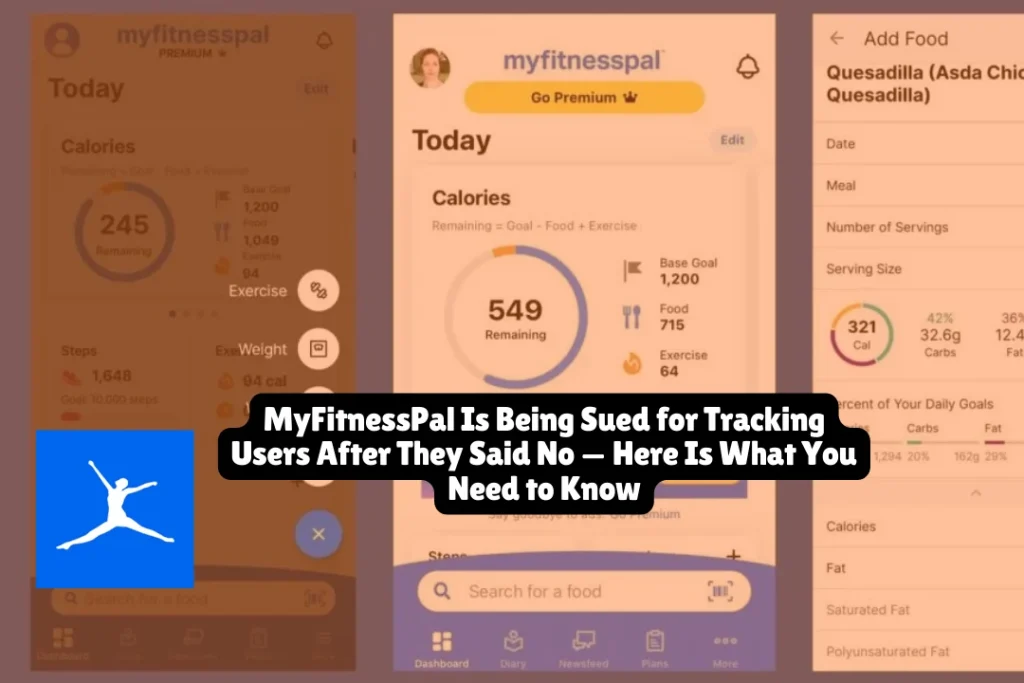
MyFitnessPal Is Being Sued for Tracking Users After They Said No Here Is What You Need to Know
A federal class action lawsuit accuses MyFitnessPal of doing something users were promised would never happen: tracking them with third-party cookies after they specifically clicked to opt out. A federal judge sided with the plaintiffs in January 2026, allowing the case to move forward. There is no settlement and no claim form yet — but if you used MyFitnessPal’s website and were shown a cookie consent banner, this case may eventually affect you. Here is exactly what is alleged, what survived court scrutiny, and what comes next.
Case at a Glance
| Detail | Information |
| Case Name | Shah et al. v. MyFitnessPal, Inc. |
| Case Number | 5:25-cv-04430-PCP |
| Court | U.S. District Court, Northern District of California |
| Judge | Hon. P. Casey Pitts |
| Filed | May 23, 2025 |
| Motion to Dismiss Ruling | January 27, 2026 — partially denied |
| Settlement | None — case is in active litigation |
| Official Settlement Website | None — does not exist yet |
What MyFitnessPal Is Accused of Doing
When you visit MyFitnessPal’s website, a cookie consent banner appears. It offers you a clear choice: allow tracking cookies, or reject them. According to the lawsuit, clicking “reject” did not actually stop the tracking.
Plaintiffs alleged that the fitness app’s website placed third-party tracking cookies on their devices after they had expressly opted out via a cookie consent banner. These cookies allegedly enabled third parties — including major tech and advertising platforms — to collect sensitive information such as browsing history, user interactions, demographic data, and geolocation.
In plain terms: the lawsuit says MyFitnessPal told users one thing and did another. The company allegedly passed user data to outside advertising and analytics companies even after users took the specific step of saying they did not consent.
Why This Matters More Than an Ordinary Privacy Case
MyFitnessPal is not just a shopping app. It is a health and fitness platform where users log their food, weight, exercise habits, medications, and personal wellness goals. The data flowing through the app is significantly more sensitive than browsing history on a typical retail site.
The court emphasized that deceptive conduct — telling users they could opt out, then tracking them anyway — could be considered “highly offensive” and thus actionable. Key factors included the app’s explicit representation that users could opt out of certain cookies, and the sensitive nature of the data collected, including health, fitness, and behavioral information.
That combination — a broken promise about privacy layered on top of sensitive health data — is what gave this case enough weight to survive MyFitnessPal’s attempt to have it dismissed.
What the Plaintiffs Had to Prove Just to Stay in Court
Before any trial or settlement can happen, plaintiffs must clear a threshold called standing — proving they suffered a real, concrete injury that courts can address. MyFitnessPal argued the plaintiffs had not been harmed in any meaningful way.
Judge Pitts disagreed. The court found that plaintiffs had sufficiently alleged a concrete injury for Article III standing. The alleged harm — misrepresentation about data collection and non-consensual sharing of sensitive information — was analogous to privacy invasions recognized at common law.
That is a legally significant ruling. It means the judge found that being lied to about cookie tracking — and having your data shared as a result — is the kind of harm U.S. courts can hear cases about.
Which Claims Survived — and Which Did Not
The January 27, 2026 ruling did not give the plaintiffs everything they asked for. Here is the breakdown:
Claims that survived and are moving forward:
Lead plaintiffs Vishal Shah and Christine Wiley had standing to bring the lawsuit in federal court and adequately pleaded claims of invasion of privacy, intrusion upon seclusion, and unjust enrichment.
Claims that were dismissed — but can be refiled:
A California federal judge cut several wiretap and fraud claims from the proposed class action while allowing the plaintiffs to proceed with invasion of privacy and two other allegations. These dismissed claims were thrown out “without prejudice,” meaning the plaintiffs were given the opportunity to fix the legal deficiencies and bring them again.
Pitts gave them until February 24 to do so. As of the date of this article, that deadline has not yet passed.
How California Privacy Law Strengthens This Case
The California Consumer Privacy Act (CCPA) plays an important supporting role here — even though it does not give consumers a direct private right of action for most violations.
The CCPA’s provisions are highly relevant “customs, practices, and circumstances” because they provide Californians with the reasonable expectation that they will have some control over their data and necessarily shape users’ expectations about their ability to opt out of websites’ collection of data for profit.
In practical terms, the court used the CCPA’s framework to support the finding that MyFitnessPal users had a legitimate expectation of privacy when they clicked “opt out.” The law did not create the lawsuit — but it helped explain why a broken opt-out promise crosses a legal line.
Something You Should Know About One of the Plaintiffs
Accurate reporting requires disclosing something other coverage has not highlighted for general readers.
Plaintiff Shah also filed Shah v. MyFitnessPal, an action raising near-identical factual and legal issues but filed against a different defendant. A defendant in a separate case contended that Shah’s status as a plaintiff in that and several other similar cases demonstrates that Shah is a “tester” — someone who not only expected but sought out sites that would invade his privacy.
Courts have not yet fully resolved how to treat serial privacy plaintiffs like Shah — some judges have allowed their cases to proceed, others have not. This does not mean the underlying claims are invalid. But it is context that matters when evaluating how this case may ultimately play out.
What “Active Litigation” Means for Everyday Users
If you are a MyFitnessPal user reading this and wondering whether you will receive a check anytime soon — the honest answer is no, not yet, and possibly not for years.
Here is what the litigation roadmap typically looks like from this point:
Discovery: Both sides exchange documents, data logs, and internal communications. MyFitnessPal will likely be required to produce records showing exactly what cookies fired and when.
Class Certification: Plaintiffs must convince the court that their claims are common enough across users to proceed as a class action. This is one of the most contested phases of any class action case.
Trial or Settlement: If class certification is granted, the parties may reach a settlement — or the case proceeds to trial. Most class actions settle before trial, but that process alone can take one to three years after certification.
No claim form exists yet. Anyone asking you to submit personal information to file a claim in this case right now should be treated with caution. The Justia federal docket for this case is publicly viewable and shows no settlement filings.
Who Is in the Proposed Class — and Who Might Not Be
Based on the complaint and court filings, the proposed class appears to include people who visited MyFitnessPal’s website, were presented with a cookie consent banner, selected the option to reject tracking cookies, and had tracking cookies placed on their devices anyway. The relevant time period has not yet been formally defined by the court.
The proposed class does not appear to cover people who accepted all cookies, never interacted with the cookie banner, or who only used the MyFitnessPal mobile app without visiting the website directly. These boundaries are not finalized — class definitions are typically argued and refined during the class certification stage.
What You Can Do Right Now
There is no action required — or available — for most users at this stage. But here are practical steps worth taking:
Step 1 — Check your cookie settings. Visit MyFitnessPal’s website and review your current cookie preferences. If you previously opted out, verify whether your settings still reflect that choice.
Step 2 — Document your account history. If you have confirmation emails, account creation records, or screenshots of your cookie preference selections, save them. This information may be relevant if a class is eventually certified.
Step 3 — Monitor the case. The public docket at Justia is updated as new filings are added. You can check for class certification filings, settlement discussions, or amended complaints without any subscription.
Step 4 — Understand your existing rights under CCPA. California residents already have the right to request that businesses stop selling or sharing their personal data. The California Privacy Protection Agency explains how to exercise those rights — regardless of this lawsuit.
Step 5 — Consult an attorney if you have specific legal questions. This article does not evaluate individual situations. A licensed California privacy attorney can assess how this case and the CCPA may apply to your specific circumstances.
Frequently Asked Questions
Is there a MyFitnessPal settlement I can file a claim for right now?
No. There is no settlement, no settlement fund, no claim form, and no official settlement website as of February 2026. The case is in active early litigation. Anyone directing you to file a claim right now should be approached with caution.
Am I part of the lawsuit?
The case is a proposed class action. A class has not been formally certified yet. If and when a class is certified, members would be notified according to court-ordered procedures. You do not need to take any action to be included at this stage.
Do I have to live in California to be affected?
The case is filed in California federal court, and California privacy law features prominently in the surviving claims. Whether non-California users could ultimately be included in any certified class is a legal question that has not been resolved.
What did MyFitnessPal say in its defense?
MyFitnessPal argued that the complaint was too bare-boned to warrant further proceedings and that plaintiffs had “no expectation of privacy in any of the information allegedly collected,” including browsing history and page views. The court rejected those arguments for the surviving claims but accepted them for the wiretapping and fraud counts.
Which claims survived the motion to dismiss?
Invasion of privacy, intrusion upon seclusion, and unjust enrichment survived. Wiretapping, pen register violations, and fraud claims were dismissed — but the plaintiffs were given until February 24, 2026 to file amended versions of those claims.
What if I only used the MyFitnessPal app, not the website?
The lawsuit appears focused on the website’s cookie consent banner and what happened after users interacted with it. App-only users may not fall within the proposed class definition, though this has not been formally determined by the court.
When might I receive any compensation?
There is no way to estimate this honestly. Class certification alone typically takes one to two years. Settlement negotiations or trial would follow. If a settlement is eventually reached, this article will be updated with claim deadlines, payment amounts, and filing instructions.
Where can I follow this case?
The public docket is available at Justia. Full court documents are available through PACER, which requires a free registration.
Last Updated: February 18, 2026
Disclaimer: This article is for informational purposes only and does not constitute legal or tax advice. Settlement terms, eligibility, and payment amounts are subject to court approval and may change. For official information, always refer to the settlement administrator or the official settlement website.
About the Author

Sarah Klein, JD, is a licensed attorney and legal content strategist with over 12 years of experience across civil, criminal, family, and regulatory law. At All About Lawyer, she covers a wide range of legal topics — from high-profile lawsuits and courtroom stories to state traffic laws and everyday legal questions — all with a focus on accuracy, clarity, and public understanding.
Her writing blends real legal insight with plain-English explanations, helping readers stay informed and legally aware.
Read more about Sarah