
Michael Jordan NASCAR Lawsuit Settled, 23XI Racing Wins Permanent Charters 2026
Michael Jordan’s 23XI Racing and NASCAR settled their landmark antitrust lawsuit in December 2025, securing permanent charters for all Cup Series teams after 15 months of litigation. The settlement fundamentally reshapes NASCAR’s business model and team relationships.
Just weeks after the agreement, Tyler Reddick won the Daytona 500 on February 15, 2026—23XI’s first victory in NASCAR’s biggest race. Jordan and NASCAR Chairman Jim France embraced in Victory Lane, marking a powerful reconciliation after their courtroom battle.
What the Michael Jordan NASCAR Lawsuit Alleged
23XI Racing and Front Row Motorsports filed their antitrust lawsuit on October 2, 2024, in the U.S. District Court for the Western District of North Carolina (Case No. 3:24-cv-00886). The teams refused to sign NASCAR’s 2025 charter agreement, alleging it contained unfair and anticompetitive terms that violated federal law.
The complaint alleged violations of Sections 1 and 2 of the Sherman Act—America’s primary antitrust law designed to prevent monopolies and promote competition. According to court filings, NASCAR exercises monopolistic control over premier stock car racing through vertically integrated ownership of sanctioning authority, scheduling, track ownership (17 tracks including 11 on the Cup calendar), media rights, and entry credentials.
After two years of negotiations, NASCAR presented a “take it or leave it” charter offer on September 6, 2024, giving teams just hours to sign before the playoffs began. The central dispute: NASCAR refused to make charters permanent, meaning the sanctioning body could revoke all charters when the agreement expired. Teams also objected to restrictive noncompete provisions and what they characterized as inadequate revenue sharing from NASCAR’s $7.7 billion television deal.
The Parties Involved and Their Legal Claims
Plaintiffs: 23XI Racing is co-owned by NBA legend Michael Jordan (majority owner), three-time Daytona 500 winner Denny Hamlin (40% owner), and Jordan’s business partner Curtis Polk. Front Row Motorsports is owned by entrepreneur Bob Jenkins. Both teams were represented by Jeffrey L. Kessler of Winston & Strawn, a prominent antitrust litigation firm.
Defendants: NASCAR (the National Association for Stock Car Auto Racing) and its Chairman and CEO Jim France. NASCAR is privately owned by the France family through two family trusts.
The Legal Claims: The lawsuit made specific allegations under federal antitrust law. First, teams claimed NASCAR operates as a monopsony—the only buyer of premier stock car racing services—giving it unfair bargaining power. Judge Kenneth D. Bell ruled in the teams’ favor on this market definition, finding that NASCAR controls the market and teams cannot simply race elsewhere.
Second, the complaint challenged NASCAR’s “goodwill provision” requiring that any team owner—even a minority stakeholder with just 10%—cannot invest in competing stock car series. Plaintiffs’ attorney called this an “anti-competitive will” rather than a legitimate business protection.
Third, teams contested NASCAR’s requirement that they sign releases of all existing and future antitrust claims as a condition of participation, arguing this forced waiver prevented legal remedies for anticompetitive conduct.
NASCAR defended its practices as legal business protections, characterizing the lawsuit as “negotiation through litigation” and arguing that exclusivity provisions ensure proper marketing without marketplace confusion.
How the Litigation Unfolded Through Trial
The legal battle proceeded through several critical stages. Initially, Judge Bell granted a preliminary injunction allowing both teams to compete as chartered entries during the 2025 season. However, the Fourth Circuit Court of Appeals vacated this ruling in June 2025, finding the district court abused its discretion.
Both teams then competed as “open” entries without guaranteed race access or full revenue participation—a financially devastating position. Denny Hamlin testified during trial that 23XI’s profit margin was just 2.26% and they were “one sponsor away from having all this profit gone.”
The trial began December 1, 2025, with eight days of testimony from team owners, NASCAR executives, and industry leaders. Financial statements, internal emails, and strategic communications were revealed through discovery. Michael Jordan testified for an hour about his racing passion and belief that NASCAR needed reform, stating he was willing to “fight this to the end for the betterment of the sport.”
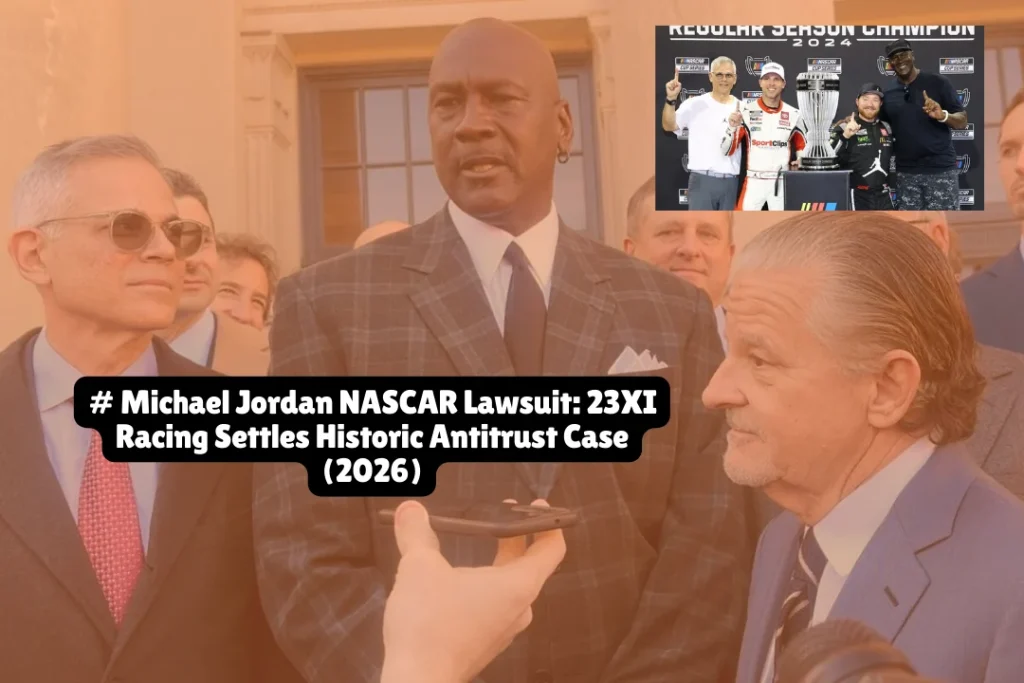
On December 11, 2025, after eight days of trial, both sides reached settlement and the judge dismissed the jury. The parties announced the agreement on the courthouse steps in Charlotte, North Carolina. The case was formally dismissed with prejudice on February 3, 2026.
What the Settlement Delivered to Teams
The December 2025 settlement includes transformative changes. Charters for all teams became permanent, addressing the plaintiffs’ primary demand and providing long-term security teams lacked under the previous seven-year renewable system.
The “Three-Strike Rule” returned and increased to five strikes, allowing teams to vote against five NASCAR proposals that would cost them money. Teams now receive revenue from NASCAR’s international media rights deal and one-third of any new NASCAR deals involving their intellectual property.
NASCAR agreed to pay 23XI Racing and Front Row Motorsports undisclosed monetary damages and compensation for lost income from races they competed in as unchartered teams. Both teams received their charters back for the 2026 season, restoring guaranteed race entry and full revenue participation.
Industry experts estimate charter values skyrocketed following the settlement, with some projecting values upward of $100 million due to the newly permanent status—creating significant asset appreciation for existing team owners.
What This Means for NASCAR and the Racing Industry
The settlement fundamentally reshapes NASCAR’s business model and power dynamics with teams. Michael Jordan emphasized the agreement fosters better communication and creates the “synergy” needed to grow the sport. Teams now have more leverage in future negotiations and greater economic stability.
The case establishes important precedent for professional sports leagues negotiating with teams over revenue sharing, restrictive covenants, and governance structures. The outcome may influence how other sports organizations structure franchise or membership systems.
The permanent charter system makes NASCAR team ownership more attractive to private equity investors seeking long-term stable returns. Several teams have already pursued private equity investments following the settlement, reflecting increased confidence in NASCAR’s business framework.
NASCAR President Steve O’Donnell acknowledged that internal communications they preferred to keep private were revealed during litigation. This transparency may lead to more collaborative governance going forward.
Current Status: Where Things Stand in February 2026
As of February 2026, the lawsuit is fully resolved with both parties moving forward collaboratively. The Daytona 500 victory on February 15, 2026, came just two months after settlement, with the Victory Lane embrace between Jordan and France symbolizing their new partnership.
Jordan told FOX Sports that both sides gained better appreciation through the legal process and that “level heads” ultimately prevailed to create a framework for growing the sport together. In their joint statement, the parties committed to working “alongside all chartered race teams, to deliver world-class events, dynamic sponsorship and partner activation opportunities, and continued growth for generations to come.”
All 15 NASCAR Cup Series teams now operate under the new permanent charter system. The formal charter agreement amendments incorporating settlement terms were finalized in early 2026.
How to Track Future Developments
Court documents are available through PACER (Public Access to Court Electronic Records) at pacer.uscourts.gov by searching Case No. 3:24-cv-00886 in the Western District of North Carolina. Winston & Strawn published settlement information at winston.com.
NASCAR.com provides official statements on charter agreement implementation. 23XI Racing maintains updates at 23xiracing.com while Front Row Motorsports shares news through its official channels. FOX Sports, ESPN, Motorsport.com, and Sports Business Journal offer comprehensive coverage of NASCAR business developments and provide ongoing analysis of the settlement’s implementation.
Understanding the Antitrust Legal Framework
The Sherman Act prohibits monopolization (Section 2) and agreements that unreasonably restrain trade (Section 1). The teams argued NASCAR’s vertically integrated control over tracks, sanctioning authority, and media rights eliminated competition and prevented teams from exploring alternatives.
A monopsony exists when there’s only one buyer in a market. Judge Bell’s ruling that NASCAR controls the premier stock car racing market and teams cannot simply race elsewhere represented a significant legal victory that pressured NASCAR toward settlement.
Under federal antitrust law, successful plaintiffs can recover treble damages—three times their actual damages—plus attorney fees. The settlement’s undisclosed monetary compensation likely reflects negotiation over these potential damages.
The Federal Trade Commission (ftc.gov) and Department of Justice Antitrust Division (justice.gov/atr) offer educational resources about competition law for those interested in understanding these legal principles.
What This Means for the Broader Sports Industry
The settlement may influence other professional sports leagues in their negotiations with teams or franchises over revenue sharing and governance. Issues of restrictive covenants, forced claim waivers, and economic participation affect many sports organizations.
The provision giving teams one-third of intellectual property deals may set precedent for how sports organizations negotiate future media and sponsorship agreements. Industry analysts will watch whether the improved team-NASCAR relationship produces tangible benefits for competitive balance, fan experience, and long-term growth.
Frequently Asked Questions
What is the Michael Jordan NASCAR 23XI Racing lawsuit about?
The lawsuit challenged NASCAR’s antitrust practices, alleging the sanctioning body used monopoly power to impose unfair charter agreements on racing teams. Michael Jordan’s 23XI Racing and Front Row Motorsports sought permanent charters and better business terms through federal antitrust claims under the Sherman Act.
Who are the parties involved in the lawsuit?
Plaintiffs were 23XI Racing (co-owned by Michael Jordan, Denny Hamlin, and Curtis Polk) and Front Row Motorsports (owned by Bob Jenkins), represented by Jeffrey Kessler of Winston & Strawn. Defendants were NASCAR and Chairman/CEO Jim France, with Judge Kenneth D. Bell presiding in the U.S. District Court for the Western District of North Carolina.
When was the lawsuit filed and what is the current status?
The lawsuit was filed October 2, 2024. It settled December 11, 2025, after eight days of trial and was formally dismissed with prejudice February 3, 2026. Both teams now operate under the new permanent charter agreement for the 2026 season.
What did the settlement achieve for racing teams?
The settlement delivered permanent charters to all teams, enhanced voting rights (five-strike rule on cost proposals), revenue from international media rights, one-third participation in intellectual property deals, undisclosed monetary compensation for plaintiffs, and charter restoration for 2026. Charter values potentially reached $100 million.
What does this lawsuit mean for NASCAR and the racing industry?
The settlement forces NASCAR to share more revenue with teams, grant permanent charter security, and provide teams greater governance voice. It establishes precedent for sports league negotiations over revenue sharing and may attract private equity investment to NASCAR team ownership.
Where can I find official court documents?
Access official documents through PACER at pacer.uscourts.gov by searching Case No. 3:24-cv-00886 in the U.S. District Court for the Western District of North Carolina. The complaint, motions, court orders, and settlement dismissal are publicly accessible.
Are there similar cases in sports law?
Sports antitrust litigation includes NFL player restraint cases, MLB monopoly challenges, and NCAA athlete compensation disputes. However, this case uniquely addresses charter/franchise system structure in motorsports and the balance of power between a sanctioning body and competing teams.
Last Updated: February 16, 2026
Disclaimer: This article provides general information about the Michael Jordan NASCAR 23XI Racing antitrust lawsuit and its settlement. It is not legal advice. For specific legal guidance about antitrust matters or sports law, consult a qualified attorney.
Ready to understand more about sports law and business litigation? Stay informed about how professional sports leagues navigate antitrust challenges and team negotiations.
Stay informed, stay protected. — AllAboutLawyer.com
About the Author

Sarah Klein, JD, is a licensed attorney and legal content strategist with over 12 years of experience across civil, criminal, family, and regulatory law. At All About Lawyer, she covers a wide range of legal topics — from high-profile lawsuits and courtroom stories to state traffic laws and everyday legal questions — all with a focus on accuracy, clarity, and public understanding.
Her writing blends real legal insight with plain-English explanations, helping readers stay informed and legally aware.
Read more about Sarah