Menards Rebate Deception Settlement: $4.25M Paid After 10 States Sue Over Misleading Ads Refund Eligibility & Details
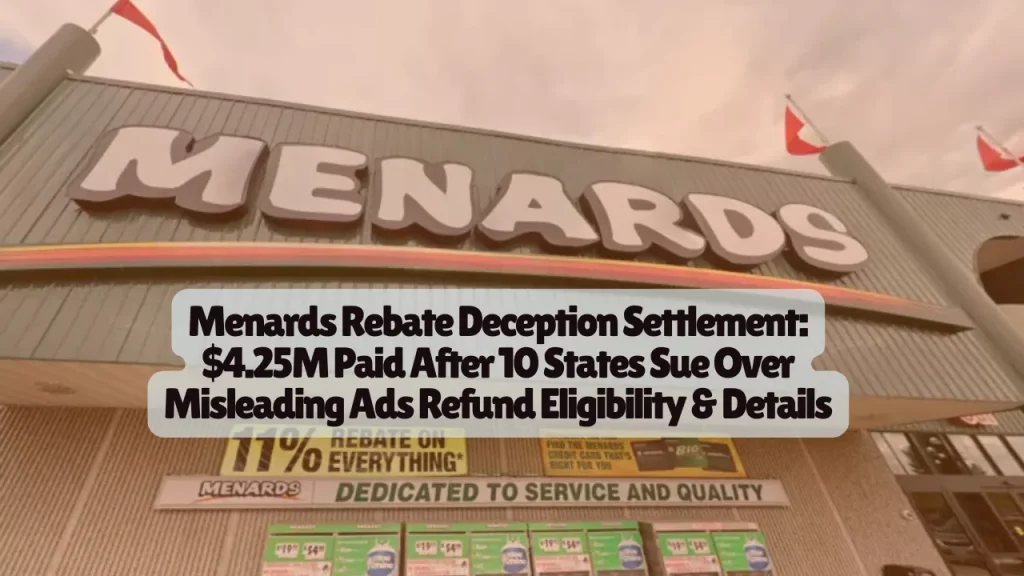
Menards reached a $4.25 million multistate settlement on December 17, 2025, resolving claims that its famous “11% OFF EVERYTHING” rebate program deceived customers and that the company engaged in COVID-19 pandemic price gouging. Ten state attorneys general secured the settlement after investigating deceptive marketing practices that led consumers to believe they were getting immediate discounts when they were actually receiving only store credit for future purchases.
The settlement represents the culmination of a multistate investigation into how Menards marketed its popular rebate program and allegedly inflated prices on essential items during the early pandemic months.
What the Menards Lawsuit Settlement Involves
The settlement resolves allegations that Menards deceptively marketed its merchandise credit check program and engaged in price gouging during the COVID-19 pandemic. State attorneys general from Minnesota, Wisconsin, Illinois, Iowa, Arizona, Kansas, Michigan, Nebraska, Ohio, and South Dakota participated in the investigation and settlement.
The lawsuit centers on two primary legal claims:
Deceptive Rebate Advertising: States alleged the company’s extensive use of “11% OFF” or “11% OFF EVERYTHING” advertising falsely implied point-of-purchase discounts when Menards actually offered only in-store merchandise credit for future purchases.
COVID-19 Price Gouging: Investigators alleged Menards raised prices on essential items including rubbing alcohol, garbage bags, dish soap, and neoprene gloves during the pandemic.
Key Legal Claims in the Settlement
The multistate investigation identified several deceptive practices:
- Menards’ advertised prices reflected an 11% discount, wrongly implying customers could realize savings at purchase time
- The company failed to appropriately disclose material limitations of the rebate program, with disclaimers in small print removed from discount representations
- Menards told customers “Rebates International” was a separate entity responsible for the rebate program when it is actually the same company
- The settlement resolves allegations that Menards raised prices on four-gallon bottles of purified water at stores in Onalaska and Johnson Creek, Wisconsin during the pandemic
Related article: Gmail Lawsuit Claim Form 2025: $700M Google Play Gets Automatic Payments—$425M Privacy Case Still Pending

Settlement Distribution Among States
The $4.25 million settlement distributes funds based on each state’s investigation costs and consumer impact:
- Illinois: $946,633.61
- Wisconsin: $750,000
- Michigan: $637,641.06
- Minnesota: $632,167
- Ohio: $365,173.05
- South Dakota: $100,000
- Arizona, Iowa, Kansas, Nebraska: Remaining portions
Illinois Attorney General Kwame Raoul’s office confirmed settlement funds will go to the state for future consumer protection efforts, not to individual consumers who shopped at Menards.
What Consumer Protection Laws Apply
The Menards settlement involves violations of multiple state consumer protection statutes that prohibit deceptive trade practices and unfair business methods.
State Consumer Protection Acts: Each participating state enforces consumer protection laws prohibiting false advertising and deceptive marketing. Michigan’s Consumer Protection Act specifically prohibits making false or misleading statements about price reductions and representing that consumers will receive rebates without clearly disclosing conditions.
Federal Trade Commission Standards: According to the FTC’s Deception Policy Statement, an advertisement is deceptive if it contains statements or omits information likely to mislead reasonable consumers on matters material to their purchasing decisions.
Price Gouging Statutes: Wisconsin law prohibits excessive price increases during declared emergencies. Wisconsin Secretary of Agriculture Randy Romanski emphasized that deceptive marketing or price gouging during abnormal economic disruption periods violates state consumer protection principles.
Required Changes to Menards Business Practices
Under settlement terms, Menards must implement significant reforms:
Advertising Restrictions:
- Prohibition from advertising or representing that programs offering store credit provide point-of-purchase discounts
- Clear and conspicuous disclosure of material rebate program limitations and all applicable terms and conditions
- Clear disclosure that Menards operates as Rebates International
Rebate Program Improvements:
- Allow consumers at least one year from purchase date to submit rebate claims
- Update online rebate tracker with claim information within 48 hours of application entry into Menards’ system
- Update tracker with additional information including how returns affect rebates
- Investigate whether to offer processes for consumers to safely submit rebate applications and receipts online
- Investigate whether to offer processes for consumers to redeem rebates for online purchases
Price Gouging Prevention:
- Prohibition from engaging in price gouging during periods of abnormal economic disruption
Legal Theories Behind Consumer Protection Claims
The Menards case involved several recognized legal theories:
Consumer Fraud: State consumer protection statutes prohibit deceptive trade practices including false advertising about discount timing and nature, failure to disclose material limitations, and misrepresenting corporate relationships.
Breach of Contract: Allegations claimed Menards failed to honor contractual obligations to provide rebates after customers met all program requirements, with purchasing during promotions and submitting proper documentation creating enforceable contracts.
Unjust Enrichment: Claims alleged Menards retained customer money through rebate complications while advertising discounts that attracted purchases, benefiting from full-price sales while systematically creating barriers to promised rebates.
Separate Class Action Lawsuit Against Menards
Beyond the multistate settlement, Menards faced a separate federal class action lawsuit over online order pickup fees.
In September 2024, the Seventh Circuit Court of Appeals affirmed a district court decision compelling arbitration in Domer v. Menard, Inc., where plaintiff Pilar Domer alleged Menards failed to disclose a $1.40 pickup fee and used it to manipulate prices.
The appellate court held that Menards’ website provided reasonably conspicuous notice of arbitration terms, and Domer’s claims—including consumer protection law violations and unjust enrichment—arose from her purchase contract with Menards.
A private class action case (Childers v. Menard, Case No. 3:20-cv-00107) proceeded separately from the multistate attorney general investigation, though its current status remains unclear as of December 2025.
What Attorneys General Say About the Settlement
State officials emphasized the importance of transparent advertising:
Minnesota Attorney General Keith Ellison stated: “An ad that says ‘11% OFF EVERYTHING’ clearly implies that you can buy goods at an 11% discount, not that you can participate in a limited rebate program or get in-store credit for future purchases”.
Wisconsin Attorney General Josh Kaul noted: “One of the things that we focused on was whether there was a representation that those kinds of discounts were point of sale discounts, as opposed to rebates”.
Illinois Attorney General Raoul emphasized: “Customers deserve to know what they will be charged when they make a purchase, without deceptive deals and fine print”.
Similar Retail Class Action Settlements
The Menards settlement follows a pattern of consumer protection enforcement against major retailers:
Rebate Program Disputes: The FTC has historically taken action against companies that misrepresent rebate terms or fail to deliver rebates promptly. Settlement agreements typically prohibit misrepresenting material rebate terms and require companies to fulfill past-due rebates.
Price Display Requirements: Various states have enacted laws governing how retailers can advertise rebate-related pricing. Connecticut and Rhode Island prohibit retailers from advertising after-rebate prices as final prices unless willing to sell at that net price at point of sale. New York requires actual selling prices to be displayed with clear notice that mail-in rebates are required.
Reward Program Enforcement: The Consumer Financial Protection Bureau issued guidance stating reward program operators may commit unfair or deceptive practices when they materially reduce earned rewards value or inhibit consumers from obtaining promised benefits.
Who Receives Settlement Money
The December 2025 multistate settlement does not include a claims process for individual customers, with settlement funds compensating state governments for investigation costs and consumer protection enforcement.
Wisconsin Attorney General Kaul indicated funds recovered in such cases should support DOJ work protecting residents through public safety and consumer protection efforts.
Individual consumers who experienced rebate problems should document their experiences for potential future legal actions or consumer complaints to state attorneys general consumer protection divisions.
Current Status and Timeline
December 17, 2025: Settlement filed in Ramsey County District Court, Minnesota
December 18-19, 2025: State attorneys general announced settlement terms publicly
Menards has not issued public statements regarding the settlement as of December 18, 2025
Menards did not admit wrongdoing as part of the agreement
How to File Consumer Complaints About Menards
Consumers who believe they were harmed by Menards’ practices can:
Contact State Attorneys General: File complaints with your state attorney general’s consumer protection division. States participating in the settlement have established consumer protection enforcement funds.
Document Rebate Issues: Keep all receipts, rebate forms, correspondence, and documentation of rebate denials or delays for potential future claims.
File FTC Complaints: Report deceptive advertising practices to the Federal Trade Commission at ftc.gov/complaint.
Seek Legal Counsel: Consult with consumer protection attorneys about potential individual claims, particularly if you experienced significant financial harm from rebate denials or misleading advertising.
Legal Precedents and Future Implications
The Menards settlement reinforces several important consumer protection principles:
Clear Disclosure Requirements: Retailers must clearly disclose when advertised savings come from rebates rather than immediate discounts. Fine print disclaimers are insufficient to correct misleading overall impressions.
Material Omissions: Failing to disclose that rebate processing entities are part of the same company constitutes deceptive practice when consumers reasonably believe they’re dealing with independent third parties.
Emergency Price Gouging: States maintain authority to investigate and penalize retailers who exploit declared emergencies by raising prices on essential goods beyond reasonable market increases.
Multi-State Coordination: The settlement demonstrates state attorneys general increasingly coordinate enforcement actions against national retailers, pooling investigative resources and negotiating unified terms.
Frequently Asked Questions
Will I receive money from the Menards settlement?
No. The $4.25 million settlement goes to participating state governments for consumer protection enforcement. Individual consumers do not receive direct payments or rebate credits.
Can I still file a lawsuit against Menards for rebate problems?
The multistate settlement doesn’t preclude individual lawsuits, though arbitration clauses in Menards’ terms of order may require arbitration rather than court litigation based on recent Seventh Circuit precedent.
What legal violations did Menards commit?
Allegations included false advertising by representing rebates as point-of-purchase discounts, failing to clearly disclose rebate limitations, misrepresenting Rebates International as a separate company, and price gouging during the COVID-19 pandemic. Menards did not admit wrongdoing.
How does the settlement change Menards’ rebate program?
Menards must stop advertising store credit programs as immediate discounts, clearly disclose all rebate terms, identify Rebates International as part of Menards, extend rebate submission deadlines to one year, and improve online rebate tracking.
What consumer protection laws apply to rebate programs?
Federal Trade Commission Act Section 5 prohibits unfair or deceptive practices. Each state maintains consumer protection statutes prohibiting false advertising, deceptive trade practices, and material omissions. Rebate advertisements must not mislead reasonable consumers on material facts.
How common are retail rebate lawsuits?
Rebate-related consumer protection enforcement is relatively common. The FTC and state attorneys general regularly investigate retailers and manufacturers who misrepresent rebate terms, fail to deliver rebates promptly, or use rebate programs deceptively.
Can retailers advertise after-rebate prices?
State laws vary. Some states like Connecticut and Rhode Island prohibit advertising after-rebate prices as final prices unless retailers sell at that net price at point of sale. New York permits advertising after-rebate prices with clear disclosure of actual selling price and conspicuous notice that rebates are required.
What is price gouging and when is it illegal?
Price gouging involves charging excessive or unconscionable prices for essential goods during emergencies. Many states prohibit price increases beyond certain thresholds during declared emergencies or periods of abnormal economic disruption. Wisconsin law specifically prohibits such practices.
How can I verify if a rebate company is legitimate?
Check whether the rebate processing company is identified as part of the retailer or manufacturer. Legitimate rebate programs clearly disclose all material terms, processing timelines, and any corporate relationships. Research the company through Better Business Bureau and state attorney general consumer complaint databases.
What should I do if Menards denied my rebate?
Document everything: purchase receipts, rebate forms, submission dates, correspondence, and denial reasons. File complaints with your state attorney general’s consumer protection division. Consider consulting a consumer protection attorney about potential claims.
Resources for Consumer Protection
Federal Trade Commission: www.ftc.gov/complaint – File complaints about deceptive advertising
State Attorneys General: Search “[Your State] Attorney General Consumer Protection” for your state’s complaint process
Consumer Financial Protection Bureau: www.consumerfinance.gov – Information about consumer rights and financial protection
Better Business Bureau: www.bbb.org – Research company complaint histories and file disputes
This article provides legal information about the Menards lawsuit settlement. It does not constitute legal advice. Consumers with specific concerns should consult qualified attorneys in their jurisdictions.
About the Author

Sarah Klein, JD, is a licensed attorney and legal content strategist with over 12 years of experience across civil, criminal, family, and regulatory law. At All About Lawyer, she covers a wide range of legal topics — from high-profile lawsuits and courtroom stories to state traffic laws and everyday legal questions — all with a focus on accuracy, clarity, and public understanding.
Her writing blends real legal insight with plain-English explanations, helping readers stay informed and legally aware.
Read more about Sarah
Probably went to illegal PPP recipients.