
Medical Malpractice vs. Medical Errors, Key Differences
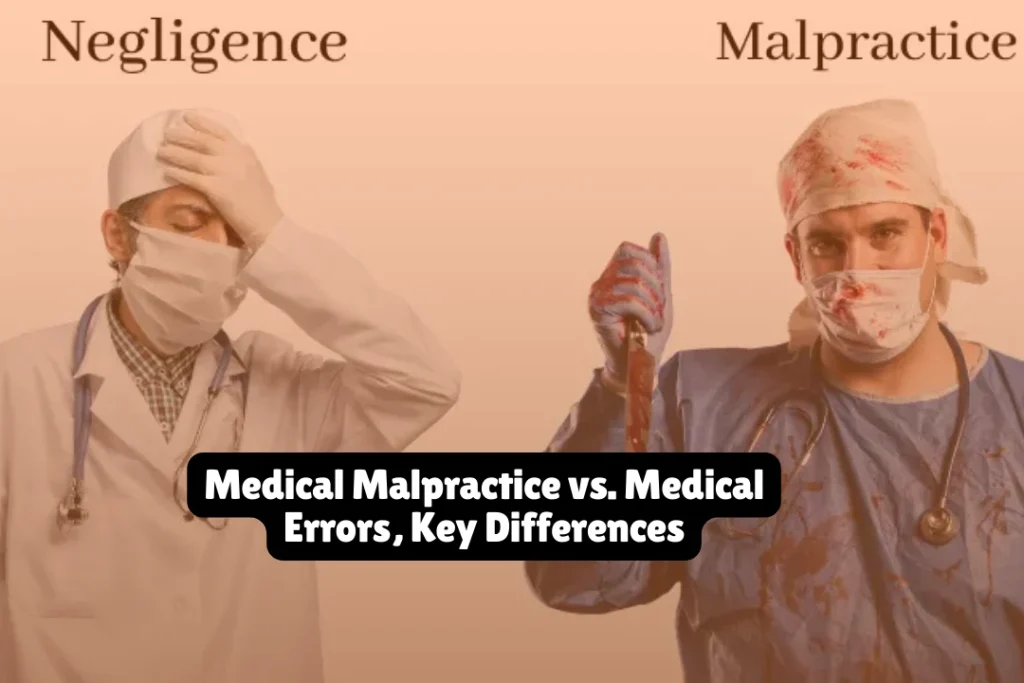
The difference between medical malpractice and medical errors is crucial: medical errors are any mistakes in healthcare delivery, while medical malpractice is a legal claim requiring proof that a healthcare provider’s negligence breached the standard of care and directly caused measurable harm. Not all medical errors constitute malpractice. A nurse who catches a medication error before administering it made a medical error, but no malpractice occurred because no harm resulted.
Understanding this distinction helps patients determine whether they have valid legal claims. Many people assume any medical mistake equals malpractice, but the law requires specific elements proving negligence caused preventable injury.
Quick Comparison Table
| Aspect | Medical Error | Medical Malpractice |
| Definition | Any mistake in healthcare delivery | Legal claim for negligent care causing harm |
| Legal Status | Not necessarily actionable | Actionable legal claim |
| Harm Required | May or may not cause harm | Must cause measurable harm |
| Standard of Care | May meet standard despite error | Breaches accepted standard of care |
| Proof Required | Error documentation | Four elements: duty, breach, causation, damages |
| Examples | Caught medication error, minor bruising | Misdiagnosis causing delayed cancer treatment |
| Legal Action | Usually none possible | Lawsuit for damages possible |
| Provider Liability | Professional discipline possible | Financial liability for damages |
What Are Medical Errors?
Medical errors are mistakes, oversights, or failures in healthcare delivery that may or may not result in patient harm. These errors range from minor documentation mistakes to serious clinical errors affecting patient outcomes.
Types of medical errors include: diagnostic errors (misdiagnosis, delayed diagnosis), treatment errors (wrong medication, incorrect dosage), preventive errors (failing to provide prophylactic treatment), communication failures (miscommunication between providers), and technical errors (equipment malfunction, procedural mistakes).
The Institute of Medicine estimates that medical errors contribute to tens of thousands of deaths annually in US hospitals. However, not all these errors constitute legal malpractice. Many errors occur despite providers following proper protocols and meeting professional standards.
Medical errors can happen even with excellent care. Human factors, system failures, communication breakdowns, and inherent medical uncertainties contribute to errors that don’t necessarily reflect negligence.
When Medical Errors Don’t Constitute Malpractice
Several scenarios illustrate when medical errors occur without creating malpractice liability:
Caught Errors: A pharmacist prepares the wrong medication dosage but catches the error during final verification before dispensing. This is a medical error—a mistake occurred—but no malpractice exists because the error was corrected before causing harm.
Unavoidable Complications: A patient undergoes surgery performed with proper technique, following all protocols. Post-operative bleeding occurs despite appropriate surgical methods. This is a complication (medical error in the broad sense) but not malpractice because the surgeon met the standard of care.
Rare Adverse Reactions: A patient receives a properly prescribed medication after appropriate allergy screening. They suffer a rare, unpredictable allergic reaction occurring in less than 0.01% of patients. The adverse reaction is a medical error affecting patient health, but not malpractice because the provider followed proper protocols.
Diagnostic Uncertainty: A patient presents with vague symptoms that could indicate multiple conditions. The doctor orders appropriate tests, considers differential diagnoses, and makes a reasonable initial diagnosis that proves incorrect. If the diagnostic process followed proper medical reasoning, this error may not constitute malpractice.
These scenarios share common elements: providers followed accepted medical protocols, exercised reasonable judgment, and the outcomes occurred despite—not because of—proper care.
What Is Medical Malpractice?
Medical malpractice is a legal claim alleging that a healthcare provider’s negligence breached the standard of care, directly causing measurable patient harm. Malpractice is a specific type of medical error meeting stringent legal requirements.
Four elements must be proven for medical malpractice claims:
1. Duty of Care: A healthcare provider-patient relationship existed, creating a legal obligation to provide competent care. This is typically the easiest element—simply treating a patient establishes duty.
2. Breach of Duty: The provider failed to meet the standard of care—the level of care a reasonably competent medical professional with similar training would provide under similar circumstances. This requires expert testimony explaining what proper care should have included.
3. Causation: The provider’s breach directly caused the patient’s injury. The harm wouldn’t have occurred with proper care. This is often the most challenging element—proving the provider’s actions (or inactions) directly led to injury.
4. Damages: The patient suffered actual, measurable harm—medical expenses, lost wages, pain, suffering, disability, or other quantifiable losses. Without damages, no valid claim exists even if negligence occurred.
Medical expert testimony is required to establish that the provider breached the standard of care and that this breach caused the injury. Experts must have relevant credentials and experience in the applicable medical specialty.
When Medical Errors Become Medical Malpractice
Certain types of medical errors clearly cross into malpractice territory:
Failure to Diagnose Cancer: A patient presents with suspicious symptoms—unexplained weight loss, persistent cough, and fatigue. The doctor dismisses concerns without ordering appropriate tests. Six months later, advanced lung cancer is diagnosed. Medical experts determine that standard protocols required chest X-rays and CT scans given the symptom presentation. The delay allowed cancer progression from a treatable stage to terminal. This error becomes malpractice because the provider breached standard diagnostic protocols, causing preventable harm.
Wrong-Site Surgery: A surgical team operates on a patient’s left knee instead of the right knee requiring surgery. This violates mandatory safety protocols including surgical site marking, pre-incision verification, and team “time out” procedures. The error causes unnecessary surgery, doubled recovery time, and infection risk. This is malpractice because fundamental protocols were ignored, causing clear harm.
Medication Error Causing Harm: A patient with documented penicillin allergies receives penicillin despite clear allergy documentation. The patient suffers anaphylactic shock requiring emergency intervention and experiences permanent complications. This error becomes malpractice because providers ignored documented allergies, breaching basic medication safety standards and causing preventable harm.
Ignored Fetal Distress: During labor, fetal monitoring shows severe distress for 45 minutes. The obstetrician delays performing a C-section, resulting in the baby suffering brain damage from oxygen deprivation. This error constitutes malpractice because obstetric standards require emergency C-section when persistent fetal distress appears, and the delay directly caused preventable injury.
These scenarios share critical elements: providers deviated from accepted medical standards, better care would have prevented the harm, and measurable injuries resulted directly from the negligence.
Related article: What Is the Most Common Birth Injury?
The Standard of Care Threshold
The standard of care is the dividing line between medical errors and medical malpractice. This legal concept refers to what a reasonably competent healthcare provider with similar training would do under similar circumstances.
The standard of care is not perfection. Providers aren’t expected to never make mistakes or achieve perfect outcomes. They must act as reasonable, competent professionals would act in similar situations.
Standards vary by specialty, location, and circumstances. A rural emergency room physician faces different resource constraints than an urban academic medical center specialist. Courts consider these contextual factors when evaluating whether care met appropriate standards.
Staying current with medical knowledge is part of the standard of care. Providers must keep pace with evolving medical practices, new research, and updated clinical guidelines within their specialties.
Poor outcomes don’t automatically indicate substandard care. Medicine involves inherent uncertainties. Patients can experience complications, adverse reactions, or disease progression despite receiving excellent care meeting all professional standards.
Burden of Proof in Medical Malpractice
Patients claiming medical malpractice bear the burden of proof—they must demonstrate that negligence occurred and caused harm. This differs from criminal cases requiring proof “beyond reasonable doubt.”
Medical malpractice uses the “preponderance of evidence” standard—proving it’s more likely than not (greater than 50% probability) that negligence occurred and caused injury.
Expert witnesses are essential for meeting this burden. Medical professionals in relevant specialties review records and testify whether the defendant’s actions breached professional standards and caused the claimed injuries.
Plaintiffs must prove causation through medical testimony showing that proper care would have prevented or minimized the injury. This is often challenging in cases involving underlying health conditions or multiple contributing factors.
Comprehensive documentation is crucial—medical records, test results, treatment notes, and witness statements all contribute to establishing what happened and whether it constituted negligence.
State-by-State Variations
Medical malpractice laws differ significantly across states:
Statutes of Limitations range from one to six years for filing claims. Many states have “discovery rules” starting the clock when patients discover injuries rather than when they occurred. Some states extend deadlines for minors.
Damage Caps exist in approximately 30 states, limiting non-economic damages (pain and suffering) to amounts ranging from $250,000 to $1 million. Economic damages (medical bills, lost wages) typically have no caps. Some states cap total damages.
Expert Witness Requirements vary—some states require experts practicing in the same specialty, while others allow broader expert qualifications. Most require experts to be licensed physicians.
Certificate of Merit requirements in some states mandate that plaintiffs obtain preliminary medical expert certification before filing lawsuits, demonstrating reasonable basis for claims.
Apology Laws in many states prevent healthcare providers’ apologies or sympathy expressions from being used as evidence of liability, encouraging open communication after adverse events.
Documentation and Reporting
Both medical errors and malpractice involve documentation requirements:
Error Reporting Systems in hospitals track medical errors for quality improvement purposes. These internal reports typically have legal protections preventing use as evidence in malpractice lawsuits, encouraging honest reporting.
Incident Reports document adverse events and near-misses. While created for quality improvement, these reports can sometimes be discovered in litigation depending on state laws.
Medical Records provide the primary evidence in malpractice cases. Complete, accurate documentation is essential for both defending against unfounded claims and proving legitimate ones.
State Medical Boards may investigate errors and malpractice complaints independently from civil lawsuits. Board discipline (license suspension, revocation, conditions) can occur even without successful malpractice lawsuits.
Why the Distinction Matters
Understanding the difference between medical errors and malpractice has practical implications:
For Patients: Not every bad outcome or medical mistake justifies a lawsuit. Understanding legal requirements helps patients evaluate whether pursuing claims makes sense. Valid malpractice claims deserve compensation, but claims lacking required elements won’t succeed and waste resources.
For Healthcare Providers: Distinguishing errors from malpractice helps providers understand liability risks, improve safety systems, and respond appropriately to adverse events. Open error acknowledgment and system improvements can occur without necessarily admitting legal liability.
For Healthcare Systems: Quality improvement programs focus on reducing all medical errors, not just those constituting malpractice. Learning from errors—even those not causing harm—prevents future problems.
For Legal System: Clear standards defining malpractice help courts distinguish between unfortunate but unavoidable complications and negligent care deserving compensation. This prevents both under-compensation of legitimate victims and over-litigation of reasonable medical care.
Frequently Asked Questions
Can you sue for medical errors that didn’t cause harm?
No. Medical malpractice requires proving damages—actual harm resulting from negligence. Without measurable injury requiring treatment, lost wages, or pain and suffering, no valid claim exists even if negligence occurred. However, you can report errors to hospital administration or state medical boards.
If a doctor admits making a mistake, is that proof of malpractice?
Not necessarily. Acknowledging an error doesn’t automatically prove the four required malpractice elements. The error might have occurred despite meeting the standard of care, or it might not have caused the claimed injury. Many states have “apology laws” preventing sympathy expressions from being used as liability admissions.
How do you prove the difference between malpractice and unavoidable complications?
Medical expert testimony is essential. Experts review records, explain what proper care should have included, and testify whether the outcome was an unavoidable complication despite appropriate care or resulted from negligence. Experts compare the actual care to professional standards.
Are all “never events” considered medical malpractice?
“Never events” are serious errors that should never occur with proper protocols—wrong-site surgery, retained surgical instruments, wrong-patient procedures. These typically constitute clear malpractice because they breach fundamental safety standards. However, plaintiffs must still prove all four malpractice elements including causation and damages.
Can healthcare providers be disciplined for errors that aren’t malpractice?
Yes. State medical boards can investigate and discipline providers for errors, ethical violations, or incompetence even without successful malpractice lawsuits. Discipline ranges from additional training requirements to license suspension or revocation depending on severity.
What if medical records show errors but no malpractice claim was filed?
Medical records documenting errors don’t automatically trigger malpractice liability. Many documented errors are caught before causing harm, result from unavoidable complications, or don’t meet legal malpractice requirements. Statutes of limitations eventually bar claims even if negligence occurred.
How do insurance companies determine whether an error is malpractice?
Insurance companies investigate claims by having medical experts review records, assess whether care breached standards, evaluate causation, and calculate potential damages. They consider settlement costs versus trial risks. Claims clearly meeting malpractice elements often settle; questionable claims may proceed to trial.
Can multiple small errors add up to medical malpractice?
Potentially. A pattern of small errors creating cumulative harm might constitute malpractice if they collectively represent a breach of the standard of care. However, each error is evaluated—some may reflect systemic problems while others might not individually or collectively constitute negligence.
What role does informed consent play in distinguishing errors from malpractice?
Performing procedures without proper informed consent can constitute malpractice even if the procedure itself was performed correctly. Patients must understand risks, benefits, and alternatives to make informed decisions. Failing to obtain proper consent is a legal breach regardless of clinical outcomes.
Are there situations where medical errors create criminal liability?
Rarely. Most medical errors result in civil malpractice liability or professional discipline, not criminal charges. Criminal prosecution typically requires proving intentional harm, gross negligence, or reckless disregard for patient safety—standards much higher than civil malpractice.
What to Do Next
If you’ve experienced a medical error and are unsure whether it constitutes malpractice:
1. Request Complete Medical Records: Obtain copies of all medical records, test results, imaging studies, and provider notes related to your treatment. Federal law requires providers to release records within 30 days. These documents are essential for any malpractice evaluation and document what occurred.
2. Seek a Second Medical Opinion: Consult another qualified healthcare provider for evaluation of your condition and treatment options. A second opinion helps determine whether your original treatment met appropriate standards and may provide better ongoing care addressing any errors or complications.
3. Consult a Medical Malpractice Attorney: Schedule a free consultation with an experienced medical malpractice attorney. Attorneys can arrange expert medical review of your records to determine whether the four malpractice elements exist. Early consultation preserves your rights by ensuring you don’t miss statute of limitations deadlines.
Additional Resources
For more information about medical errors, malpractice standards, and patient safety, consult these authoritative sources:
- Agency for Healthcare Research and Quality (AHRQ) – Patient safety research and medical error prevention
- The Joint Commission – Healthcare quality and safety standards
- American Bar Association – Legal resources and attorney referral services
Disclaimer: This article provides general information about the distinction between medical errors and medical malpractice and is not legal advice. Medical malpractice laws vary significantly by state, and each situation is unique. For specific guidance regarding a potential medical malpractice claim, consult with a qualified attorney licensed in your jurisdiction.
Last Updated: February 16, 2026
About the Author

Sarah Klein, JD, is a former civil litigation attorney with over a decade of experience in contract disputes, small claims, and neighbor conflicts. At All About Lawyer, she writes clear, practical guides to help people understand their civil legal rights and confidently handle everyday legal issues.
Read more about Sarah