
McDonald’s McRib Class Action, Customers Say $6 Sandwich Has No Actual Rib Meat
Four consumers filed a class action lawsuit on December 23, 2025, claiming McDonald’s deceived millions of customers by selling the “McRib” at premium prices when the sandwich contains no pork rib meat—only restructured meat from lower-grade pork parts. The case is 1:25-cv-15609 in Illinois federal court and is in very early stages as of January 2026.
What the McDonald’s McRib Lawsuit Claims
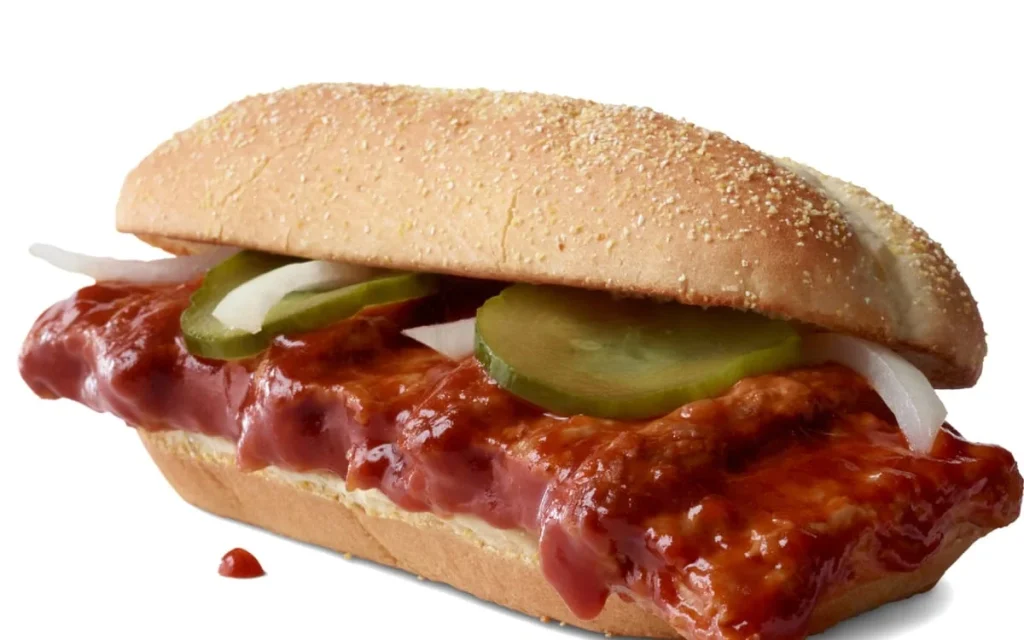
The complaint says McDonald’s used the name “McRib” and shaped the patty to look like ribs, making customers believe they were buying a sandwich with actual pork rib meat. Instead, the McRib patty contains restructured meat from pork shoulder, heart, tripe, and scalded stomach—none of which are rib meat.
Real pork rib meat sold for $152.32 per 100 pounds in November 2025, according to USDA pricing data cited in the lawsuit. Pork shoulder (“butt”) cost only $108.84 and pork loin sold for $85.90 during the same period. This means rib meat commands a 40% to 77% price premium over the cuts actually used in the McRib.
Who Filed the Lawsuit and What They Paid
Four named plaintiffs represent customers from different states:
- Peter Le (California) – Bought a McRib in Baldwin Park
- Charles Lynch (New York) – Purchased in Poughkeepsie
- Dorien Baker (Illinois) – Bought multiple McRibs in Chicago
- Derrick Wilson (District of Columbia) – Purchased around Thanksgiving
All four made their purchases between November and December 2024 when McDonald’s brought the McRib back at an average price of $5.63. Some locations charged up to $7.89, making the McRib more expensive than a Big Mac, which averaged $5.29 during the same period.
What Legal Claims Are Being Made
The lawsuit cites violations of consumer protection laws in California, New York, Illinois, and Washington D.C.:
California:
- Consumer Legal Remedies Act
- False Advertising Law
- Unfair Competition Law
New York:
- General Business Law Section 349 (deceptive acts)
- General Business Law Section 350 (false advertising)
Illinois:
- Consumer Fraud and Deceptive Business Practices Act
District of Columbia:
- Consumer Protection Procedures Act
The plaintiffs claim McDonald’s knowingly misled customers through the product’s name, shape, and marketing while never disclosing the sandwich contains no rib meat.
Related article: LensCrafters Cookie Lawsuit, Sites Tracked Users Who Clicked “Reject” on Cookie Banners
The Consumer Survey Evidence
The plaintiffs commissioned two surveys to support their case:
First Survey (215 Participants): 72% of people shown a McDonald’s menu with the McRib expected the sandwich to contain real rib meat.
Second Survey: 67% of respondents said the presence of rib meat would be an important factor in deciding whether to buy the sandwich.
These surveys aim to prove reasonable consumers were deceived by McDonald’s marketing and product naming.
What McDonald’s Has Said About McRib Ingredients
McDonald’s website describes the McRib as “seasoned boneless pork dipped in a tangy BBQ sauce.” The company has never explicitly stated the sandwich contains pork rib meat, but it also never disclosed that it contains zero rib meat.
The lawsuit argues McDonald’s had “ample opportunity” to clarify the product’s composition through advertising, menus, or packaging but “intentionally chose not to do so.” The company owns exclusive knowledge about what goes into the McRib but systematically concealed this from customers.
How the McRib Patty Is Actually Made
The McRib uses restructured meat technology originally developed by the U.S. Army to provide low-cost protein to troops. Dr. Roger Mandigo at Natick Army Labs refined the process, which involves:
- Taking various pork parts (shoulder, heart, tripe, scalded stomach)
- Grinding them together
- Adding binders and chemicals
- Forming the mixture into a rib-shaped patty
The patty is shaped like a miniature rack of ribs despite containing no rib bones or rib meat. The lawsuit claims this deliberate design choice misleads consumers about the product’s actual composition.
Current Status of the Lawsuit
The case was filed December 23, 2025, in the U.S. District Court for the Northern District of Illinois Eastern Division. McDonald’s headquarters is located in Chicago at 110 North Carpenter Street.
As of January 2026, the lawsuit is brand new. Expected timeline:
- Early 2026: McDonald’s files response to complaint
- Mid 2026: Motions for class certification
- Late 2026-2027: Discovery process
- 2027-2028: Settlement negotiations or trial
Most consumer protection class actions settle before trial.
Who May Be Eligible to Join the Class
If the court certifies the class, eligible members would include:
- Anyone who purchased a McRib in the United States
- During the four years before December 23, 2025 (back to December 2021)
- From any McDonald’s location
- Who paid money for the sandwich
You don’t need proof of purchase to join a class action, though documentation helps if you want to claim reimbursement for specific losses.
What Compensation Might Be Available
No settlement exists yet, so compensation amounts are unknown. Typical outcomes in false advertising food cases:
Cash Refunds:
- Partial or full refund of purchase price
- Usually $3-$10 per McRib purchased
Statutory Damages:
- Some states allow damages beyond the purchase price
- Could range from $50-$500 per person depending on state law
Injunctive Relief:
- McDonald’s could be required to change marketing
- Might need to disclose McRib contains no rib meat
- Could be ordered to rename the product
The McDonald’s french fry case in 2002 settled for $12.5 million after the company failed to disclose beef fat in fries marketed as vegetarian.
How McRib Pricing Compares to Other McDonald’s Items
The lawsuit emphasizes McDonald’s charged premium prices for the McRib:
- McRib: $5.63 average ($7.89 at some locations)
- Big Mac: $5.29 average
- Quarter Pounder: Around $5-$6
- 10-piece McNuggets: Around $4-$5
The complaint argues McDonald’s positioned the McRib as a premium product to justify higher prices based on the false impression customers were getting rib meat.
McDonald’s History of McRib Availability
McDonald’s has sold the McRib periodically since 1981. The company uses limited-time offers to create demand:
- 1981: Original test in Kansas City
- 1985: Removed from menu after poor sales
- 1989-2005: Available year-round in some markets
- 2006-Present: Limited-time offers, usually in fall/winter
- 2024: Marketed as “McRib Farewell Tour”
The lawsuit says McDonald’s sold over 30 million McRibs in a single year at peak popularity. The limited availability creates urgency that pressures consumers to buy quickly without researching ingredients.
Why McDonald’s Created the McRib
Executive chef René Arend invented the McRib in 1979 during a chicken shortage that prevented McDonald’s from meeting Chicken McNugget demand. The company needed a new product for franchises that couldn’t get enough chicken.
“We had to come up with something to give the other franchises as a new product,” Arend explained in a 2009 interview. He shaped the patty “like a slab of ribs” even though round patties would have been cheaper to make.
The lawsuit argues this intentional rib-shaped design was meant to deceive customers about the product’s composition from the very beginning.
What Other Ingredients Are in the McRib
Beyond the restructured pork, the McRib contains numerous additives. While the lawsuit focuses on false advertising about rib meat, the sandwich includes:
- Restructured pork (shoulder, heart, tripe, stomach)
- BBQ sauce with high fructose corn syrup
- Water
- Salt
- Dextrose
- BHA and BHT (preservatives)
- Propyl gallate (preservative)
- Citric acid
- Various chemicals also used in yoga mats and shoe soles
The lawsuit doesn’t challenge whether these ingredients are safe, only whether McDonald’s deceived customers about the type of meat in the sandwich.
Comparing to Other McDonald’s False Advertising Cases
French Fry Lawsuit (2002): McDonald’s settled for $12.5 million after failing to disclose beef flavoring in fries marketed to vegetarians. Plaintiffs claimed they relied on McDonald’s statements that fries were cooked in vegetable oil.
Coffee Lawsuit (1994): Stella Liebeck won $2.9 million (later reduced) after suffering third-degree burns from McDonald’s coffee. The case focused on inadequate warnings about temperature.
Happy Meal Toy Lawsuit (2010): Consumer group sued claiming Happy Meal toys unfairly marketed to children. McDonald’s made small changes to Happy Meal marketing.
The McRib case most closely resembles the french fry lawsuit—both involve allegations McDonald’s misled customers about ingredients in specific products.
What “Reasonable Consumer” Means Legally
Courts decide false advertising cases based on whether a “reasonable consumer” would be misled. The plaintiffs argue:
- Reasonable consumers expect products named “McRib” to contain rib meat
- The rib-shaped patty reinforces this expectation
- McDonald’s marketing emphasizes the rib appearance
- No reasonable disclosure exists that the sandwich contains zero rib meat
McDonald’s will likely argue reasonable consumers know fast food doesn’t always match its name (chicken tenders aren’t actually from the tender, fish sandwiches use various fish species, etc.).
Why Pork Rib Meat Costs More
The lawsuit emphasizes the price gap between rib meat and the cuts actually used:
Why Rib Meat Is Premium:
- Higher fat content creates better flavor
- More marbling throughout the meat
- Preferred texture for barbecue and grilling
- Limited quantity per animal (only 14 ribs)
Why Shoulder/Other Cuts Cost Less:
- More meat available per animal
- Less fat and marbling
- Often used for ground products
- Common in processed foods
The plaintiffs claim they paid premium prices expecting premium rib meat but got lower-grade pork parts instead.
What You Should Do If You Bought a McRib
Save Any Evidence:
- Credit card or bank statements showing McDonald’s purchases
- Receipts if you still have them
- Photos of the sandwich or packaging
- Screenshots of McDonald’s marketing or social media posts about McRib
Don’t Take Action Yet: No claims process exists because there’s no settlement. If the court certifies the class, eligible members will receive notices by mail or email explaining how to participate.
Monitor the Case: The case number is 1:25-cv-15609 in Illinois federal court. You can track filings through the court’s public access system (PACER) or wait for news coverage of major developments.
Do You Need a Lawyer to Participate?
No. If this becomes a certified class action, the class attorneys represent all members automatically. You only need your own lawyer if you want to opt out and file a separate lawsuit, which is rarely worth it for small-value consumer claims.
The law firms representing the plaintiffs work on contingency, taking a percentage of any settlement (typically 25-33%). Class members don’t pay attorney fees directly.
How Long Before Settlement or Trial
Consumer protection class actions typically take 2-4 years from filing to resolution:
2026: Initial motions, class certification battles 2027: Discovery (document requests, depositions) 2027-2028: Settlement negotiations 2028: Final approval and payments (if settlement occurs)
Some cases settle within 18 months if the defendant wants to avoid negative publicity and litigation costs. Others take 5+ years if they go to trial and appeals.
Can McDonald’s Just Change the Name?
Even if McDonald’s renamed the sandwich, the lawsuit covers past purchases when it was called “McRib.” Changing the name now wouldn’t eliminate liability for allegedly deceiving customers who already bought the product.
However, a settlement might require McDonald’s to:
- Rename the sandwich
- Add clear disclosures about ingredients
- Change marketing materials
- Stop using rib-shaped patties
Courts can order “injunctive relief” requiring companies to change deceptive practices going forward.
Why McDonald’s Might Settle Quickly
Several factors could push McDonald’s toward early settlement:
Bad Publicity: Extended litigation keeps the “no rib meat” story in headlines for years, potentially hurting sales.
Discovery Risks: Internal documents might reveal McDonald’s knew customers were confused about ingredients but chose not to clarify.
Legal Precedent: If the plaintiffs win, it could encourage lawsuits about other McDonald’s products with misleading names.
Litigation Costs: Fighting a nationwide class action costs millions in legal fees even if McDonald’s ultimately wins.
What Other Food Companies Face Similar Lawsuits
Many food manufacturers have faced false advertising claims:
Subway (2021): Tuna sandwich allegedly contained no tuna Red Bull (2014): “Gives you wings” wasn’t literal, settled for $13 million Kellogg’s (2011): “Immunity” claims on Rice Krispies POM Wonderful (2010): Exaggerated health benefits claims Nutella (2012): Misleading health claims, $3 million settlement
The food industry faces constant scrutiny over how products are named, marketed, and described.
Frequently Asked Questions About the McRib Lawsuit
Is there a settlement I can claim right now?
No. The lawsuit was just filed in December 2025. No settlement exists yet.
How much money can I get?
Unknown. If a settlement happens, typical food false advertising cases pay $5-$15 per product purchased, though amounts vary widely.
Do I need proof I bought a McRib?
Not necessarily to join the class, but documentation helps if you want reimbursement for specific purchases.
What if I bought McRibs before 2021?
The lawsuit covers the four years before filing (December 2021 to December 2025). Earlier purchases likely aren’t included.
Does this mean McDonald’s lied about ingredients?
The lawsuit claims McDonald’s misled customers through the name and shape, not that they lied about specific ingredients. McDonald’s never explicitly claimed the sandwich contained rib meat.
Will the McRib be discontinued?
Unknown. The lawsuit doesn’t seek to ban the product, only compensation for customers and possible changes to marketing.
How do I know if I’m part of the class?
If a class is certified, anyone who bought a McRib in the U.S. between December 2021 and December 2025 would be automatically included unless they opt out.
Do I have to file anything now?
No. Wait for class certification. If approved, you’ll receive a notice explaining your options.
What if I live outside the states listed in the lawsuit?
The lawsuit was filed on behalf of purchasers nationwide, not just the four states where the named plaintiffs live.
Can I still eat McRibs?
The lawsuit doesn’t claim the McRib is unsafe, only that marketing was misleading. Your dietary choices aren’t affected.
What happens if McDonald’s wins?
If the court dismisses the case or a jury finds for McDonald’s, no compensation would be available.
How long will this take?
Expect 2-4 years minimum from filing to final resolution.
This article provides information about the McDonald’s McRib class action lawsuit based on court filings and public records as of January 2026. It is not legal advice. For questions about your specific situation, consult a qualified consumer protection attorney.
About the Author

Sarah Klein, JD, is a licensed attorney and legal content strategist with over 12 years of experience across civil, criminal, family, and regulatory law. At All About Lawyer, she covers a wide range of legal topics — from high-profile lawsuits and courtroom stories to state traffic laws and everyday legal questions — all with a focus on accuracy, clarity, and public understanding.
Her writing blends real legal insight with plain-English explanations, helping readers stay informed and legally aware.
Read more about Sarah