
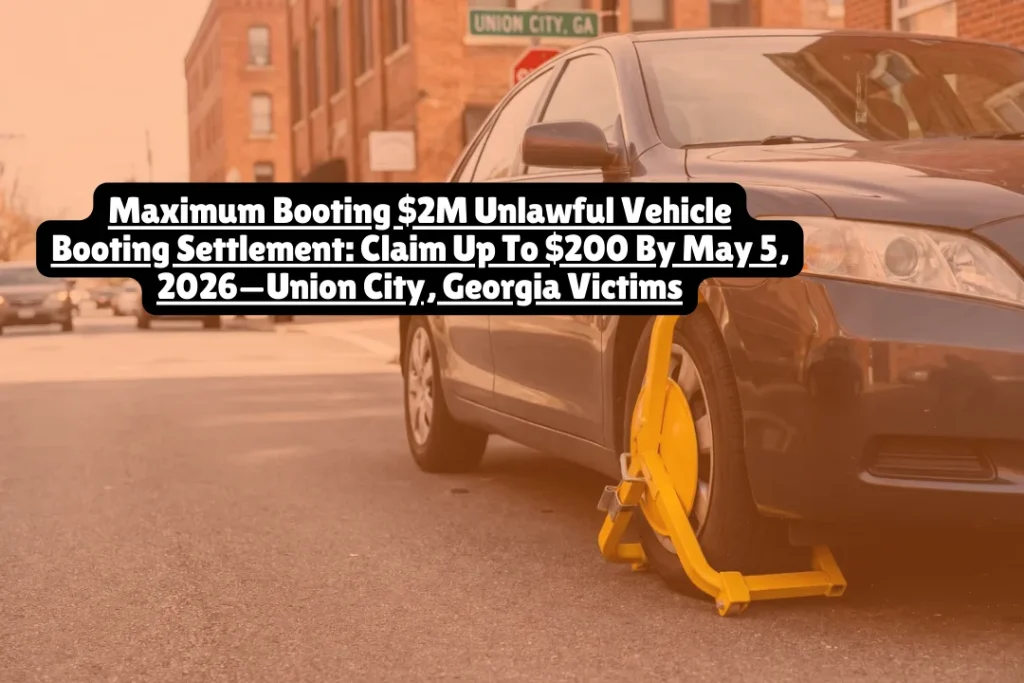
Maximum Booting $2M Unlawful Vehicle Booting Settlement, Claim Up To $200 By May 5, 2026—Union City, Georgia Victims
If your vehicle was booted by Maximum Booting in Union City, Georgia between June 15, 2012 and November 7, 2025, you can claim up to $200 cash from the $2 million class action settlement—but only if you file by May 5, 2026.
The lawsuit Jessy Polson v. Maximum Booting (Case No. 17EV003164) alleges Kenny McElwaney d/b/a Maximum Booting Co. unlawfully immobilized vehicles in parking lots across Union City without proper legal authorization. Maximum Booting denies all wrongdoing but agreed to settle to avoid lengthy litigation costs.
What The Maximum Booting Lawsuit Is About
The class action claims Maximum Booting violated Georgia consumer protection laws by illegally booting vehicles in Union City parking lots for over 13 years. Plaintiffs alleged the company attached immobilization devices—commonly called “boots”—to vehicle wheels without following proper legal procedures required under Georgia law.
According to court filings, Maximum Booting allegedly booted vehicles at properties where signage was inadequate, charged excessive removal fees, and failed to respond promptly to boot removal requests. The lawsuit claims these practices violated state regulations governing private vehicle immobilization.
Similar to the AT&T Class Action Lawsuit Sending $7,500 Settlement Checks After Two Massive Data Breaches Exposed 73 Million Customers’ Most Sensitive Info, this settlement compensates consumers harmed by alleged violations of their legal rights.
Who Can File A Claim In The Maximum Booting Settlement
You qualify if you owned a vehicle booted by Maximum Booting, were in possession or control of a vehicle booted by Maximum Booting, or paid Maximum Booting to remove a boot from a vehicle in Union City, Georgia between June 15, 2012 through November 7, 2025.
You may qualify even if you didn’t own the vehicle, as long as you were driving it when it was booted or personally paid the booting fee. Not more than one award will be issued per boot.
Excluded from the settlement are Maximum Booting’s officers, directors, employees, partners, shareholders, agents, insurers, court personnel, class counsel and their families, and anyone who timely excludes themselves from the class.
How Much Money Can You Receive
Eligible class members can receive up to $200 per claim. The actual payment amount depends on the total number of valid claims submitted.
If claim submissions exceed the available settlement fund after deducting administrative costs, attorney fees, and the class representative award, payments will be reduced proportionally. The $2 million total settlement fund covers all compensation, legal fees, and administration costs.
Attorney fees will not exceed $740,000, with the class representative receiving $5,000. Settlement administration costs are capped at reasonable amounts necessary to process claims and distribute payments.
Timeline Of The Maximum Booting Case
Maximum Booting allegedly engaged in unlawful vehicle booting practices in Union City from June 15, 2012 through November 7, 2025. The exact date when the lawsuit was originally filed as Case No. 17EV003164 indicates litigation began in 2017.
The settlement received preliminary approval from Judge Eric A. Richardson of the State Court of Fulton County, Georgia. The final approval hearing is scheduled for June 4, 2026 at 10:00 a.m. at the Fulton County Courthouse in Atlanta.
Payments will be mailed to eligible class members after final court approval and after any appeals are resolved. Similar settlements typically distribute payments 60-90 days after final approval if no appeals are filed.
What Georgia Law Says About Vehicle Booting
Georgia enacted new vehicle booting regulations that took effect January 2026, setting stricter requirements for private booting companies. The law now caps removal fees at $75 per day for passenger vehicles and requires boot operators to respond within one hour.
Companies must install visible signage at property entrances by February 15, 2026, including company name and 24-hour contact information. The law also prohibits booting companies from paying kickbacks to property owners or managers.
These 2026 reforms came after years of consumer complaints about predatory booting practices across Georgia. The Maximum Booting settlement addresses alleged violations that occurred before these stricter regulations took effect.
How To File Your Claim Before The May 5 Deadline
To receive payment, you must complete and submit a claim form by May 5, 2026. Download the form at www.BootingClassAction.com.
You’ll need to attach documentation showing you owned or drove a vehicle booted by Maximum Booting during the class period, or that you paid to have a boot removed. Acceptable documentation includes receipts showing payment to Maximum Booting, photos of the boot or booting notice, parking lot signage, credit card statements, or other proof the vehicle was booted in Union City between June 15, 2012 and November 7, 2025.
Mail completed claim forms postmarked no later than May 5, 2026 to:
Maximum Booting Settlement
c/o Atticus Administration LLC
PO Box 64053
Saint Paul, MN 55164
What You’re Giving Up By Joining The Settlement
By staying in the class or submitting a claim, you release Maximum Booting from all claims related to the unlawful booting allegations. This means you cannot individually sue Maximum Booting over the same issues covered by this settlement.
If you want to preserve your right to sue Maximum Booting separately, you must exclude yourself by sending a written request postmarked by May 5, 2026 to the settlement administrator. Your exclusion letter must include the case number, your full name, address, telephone number, signature, and a clear statement requesting exclusion.
Excluding yourself means you get no settlement payment but can pursue individual legal action. Most class members should stay in the settlement unless they have substantial individual damages justifying separate litigation.
What Most People Don’t Know About Booting Settlements
Georgia has been the epicenter of vehicle booting class action lawsuits. Similar settlements include Secure Parking Enforcement ($2 million for Atlanta and Union City bootings), Empire Parking Services ($4.5 million for metro Atlanta area), and Buckhead Parking Enforcement (settlement covering multiple Georgia cities).
These cases share common allegations: inadequate signage, excessive fees, and violations of Georgia’s consumer protection laws. Together, these settlements have returned over $10 million to Georgia drivers booted by private companies.
The Wetherington Law Firm, which represents the class in this case, has successfully litigated multiple booting class actions across Georgia. The firm maintains a dedicated website tracking all certified booting class actions at www.BootingClassAction.com.
Steps To Protect Yourself From Future Unlawful Booting
If you park on private property in Georgia, photograph all parking signs before leaving your vehicle. Georgia’s new 2026 law requires visible signage at every property entrance showing the booting company’s name and contact number.
If your vehicle gets booted, immediately photograph the boot, the notice attached to your vehicle, all parking signs in the lot, and your vehicle’s location. Document the exact time and date. Request written proof of the violation before paying any fees.
Under Georgia’s January 2026 regulations, booting companies must respond within one hour. If the operator returns before immobilization is complete, the vehicle must be released without charge. Take photos showing incomplete boot attachment if this occurs.
Frequently Asked Questions
What is the Maximum Booting $2M Unlawful Vehicle Booting Settlement about?
The settlement resolves allegations that Maximum Booting illegally immobilized vehicles in Union City, Georgia parking lots from June 2012 through November 2025. The class action claims the company violated Georgia consumer protection laws through improper booting practices, inadequate signage, and excessive fees.
How many people were affected by Maximum Booting’s alleged unlawful practices?
The exact number isn’t publicly disclosed, but the settlement covers anyone who had a vehicle booted or paid Maximum Booting for boot removal in Union City, Georgia over a 13-year period. Court records indicate thousands of vehicles were potentially affected based on the settlement fund size and maximum per-person payment.
What constitutes unlawful booting under this settlement?
Unlawful booting includes immobilizing vehicles without proper legal authorization, inadequate property signage, excessive removal fees, failure to respond promptly to removal requests, and violations of Georgia consumer protection statutes governing private vehicle immobilization. The lawsuit alleges Maximum Booting engaged in these practices systematically.
How do I know if my vehicle was unlawfully booted by Maximum Booting?
If you paid Maximum Booting to remove a boot from a vehicle in Union City, Georgia between June 15, 2012 and November 7, 2025, you qualify. Check old receipts, credit card statements, or emails for payments to Maximum Booting. If you’re unsure, submit a claim form before May 5, 2026—the administrator will verify eligibility.
What is the deadline to file a claim?
The claim deadline is May 5, 2026. Online and mailed claims must be submitted or postmarked by this date. Missing this deadline forfeits all settlement benefits. There are no extensions.
How much compensation could I receive?
You can receive up to $200 per claim. The actual amount depends on total claims filed. If claims exceed the settlement fund after deducting attorney fees ($740,000), class representative payment ($5,000), and administration costs, payments will be reduced proportionally and distributed equally among valid claimants.
When will I receive my payment?
Payments will be mailed approximately 75 days after the June 4, 2026 final approval hearing, assuming the court approves the settlement and no appeals are filed. If appeals occur, payments may be delayed months or years depending on resolution. Check www.BootingClassAction.com for updates.
Do I need proof my vehicle was booted to file a claim?
Yes. You must submit documentation showing you owned or drove a vehicle booted by Maximum Booting or paid for boot removal in Union City during the class period. Acceptable proof includes receipts, photos of the boot or notice, credit card statements showing charges to Maximum Booting, or other evidence the booting occurred.
Disclaimer: This article provides general information about the Maximum Booting class action settlement and should not be considered legal advice. Settlement terms are based on publicly available court documents. For questions about your specific eligibility or claim, contact the settlement administrator or consult a qualified attorney.
Stay informed, stay protected. — AllAboutLawyer.com
Last Updated: February 7, 2026
About the Author

Sarah Klein, JD, is a licensed attorney and legal content strategist with over 12 years of experience across civil, criminal, family, and regulatory law. At All About Lawyer, she covers a wide range of legal topics — from high-profile lawsuits and courtroom stories to state traffic laws and everyday legal questions — all with a focus on accuracy, clarity, and public understanding.
Her writing blends real legal insight with plain-English explanations, helping readers stay informed and legally aware.
Read more about Sarah