
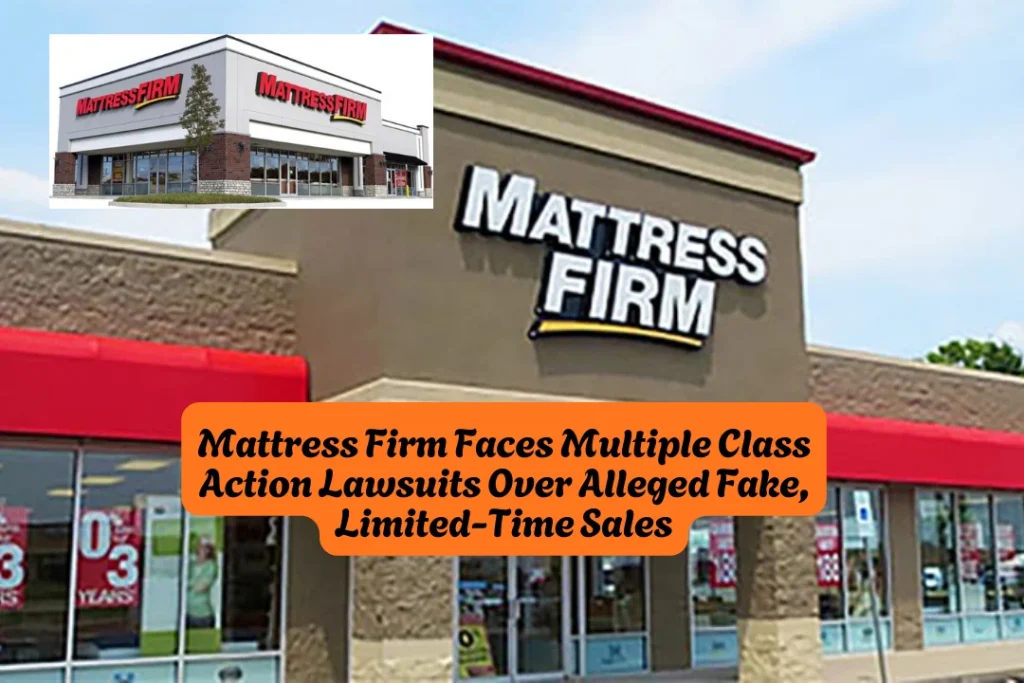
Mattress Firm Faces Multiple Class Action Lawsuits Over Alleged Fake, Limited-Time Sales
Mattress Firm is facing two proposed class action lawsuits alleging the retailer used deceptive pricing practices to mislead consumers into believing they were receiving substantial, limited-time discounts on mattresses and related products. The new lawsuits — filed in 2026 in California and Washington federal courts — come on the heels of a prior $6.4 million settlement resolving nearly identical claims.
That earlier deal, which received preliminary approval on May 16, 2025, covered California consumers who purchased mattresses on MattressFirm.com between August 1, 2020 and July 16, 2024. No settlement has been announced for the newly filed cases, which remain in active litigation.
Quick Facts
- Lawsuit Type: Multiple proposed class actions — no class certified yet on new cases
- Defendant: Mattress Firm Inc.
- Case Names & Numbers:
- Wong v. Mattress Firm Inc., Case No. 3:26-cv-01364 — U.S. District Court, Northern District of California
- Milito v. Mattress Firm Inc. — U.S. District Court, Western District of Washington
- Prior Settled Case: Hampton v. Mattress Firm — $6.4M settlement, final approval hearing October 10, 2025
- Current Status: Active litigation on new cases — class certification pending
- Who May Be Affected (New Cases): U.S. consumers who purchased mattresses from Mattress Firm in-store or online and received deceptive discount pricing or fake limited-time sale emails
- Prior Settlement Amount: $6,411,000 (California online purchasers only — claim deadline passed August 5, 2025)
- New Settlement Amount: None — TBD
- Claim Deadline (New Cases): Not yet established — TBD
- Plaintiff Attorneys:
- Wong: Brandon Brouillette and Zachary M. Crosner, Crosner Legal P.C.
- Milito: M. Anderson Berry, Brook E. Garberding, Gregory Haroutunian and Brandon P. Jack, Emery Reddy P.C.
Current Status & What Happens Next
- Two new proposed class action lawsuits have been filed against Mattress Firm in 2026 alleging deceptive pricing practices and fake limited-time sales. Neither has been certified as a class action yet.
- The prior California case — Hampton v. Mattress Firm — has already been resolved. The final approval hearing for that settlement was scheduled for October 10, 2025, with cash payments to be distributed within 14 days after the settlement administrator received funds, and store credit vouchers issued within 21 days following the deal going into effect.
- The two new cases cover different theories — in-store deceptive reference pricing and deceptive email subject lines — and are likely to proceed independently through discovery and class certification.
- No trial dates have been set on the new cases. Deceptive pricing class actions of this scale typically take one to three years to resolve.
- This article will be updated as the new cases progress.
What the Lawsuits Allege
Lawsuit 1: Fake Reference Prices (Wong v. Mattress Firm)
The Hampton/Wong line of cases claims that Mattress Firm sells items on its website at fake discount prices to dupe consumers into thinking they are getting a bargain. The plaintiff alleges Mattress Firm’s website lists a false “reference price” on products purportedly being sold at a discount, with the item never having been listed at the “regular” price for a substantial time.
The claim accuses the retailer’s false reference pricing of violating the Federal Trade Commission Act’s prohibitions on unfair or deceptive acts or practices in or affecting commerce. The complaint also asserts claims for violation of California’s Unfair Competition Law, False Advertising Law, Consumer Legal Remedies Act, negligent misrepresentation, fraud and unjust enrichment.
In plain terms: Mattress Firm allegedly marks a mattress as “Was $1,299 — Now $799” when the item was never genuinely sold at $1,299 to real consumers. The “regular” price is manufactured to make the discount appear larger than it actually is.
Lawsuit 2: Deceptive Email Subject Lines (Milito v. Mattress Firm)
Plaintiff John Milito argues that Mattress Firm targeted customers by “advertising false and misleading discounts” in email subject lines in violation of Washington’s Commercial Electronic Mail Act (CEMA). “Defendant designs the subject lines of the promotional emails to induce recipients to make a purchase during the supposedly limited-time sales,” the class action states.
This legal theory mirrors the approach taken in the recent Kylie Cosmetics lawsuit — using state commercial email laws to hold brands accountable for misleading subject lines that manufacture false urgency. Under Washington’s CEMA, each qualifying deceptive email can trigger $500 in statutory damages, regardless of whether the consumer suffered any out-of-pocket financial harm.
The Harm to Consumers
The plaintiffs both seek financial restitution, actual or statutory damages — including treble and punitive damages where applicable — and permanent injunctive relief to halt Mattress Firm’s allegedly deceptive pricing practices. The core argument is that consumers paid full price while believing they were receiving a genuine discount — effectively overpaying for every mattress purchased under these marketing conditions.
Who Could Be Included
In the new California lawsuit (Wong):
You may be included if you:
- Purchased a mattress or related product from MattressFirm.com or a Mattress Firm store in California
- The product was advertised at a discounted price from an inflated “original” or “reference” price
- That reference price was not a genuine price at which the product was previously sold for a substantial time
In the new Washington lawsuit (Milito):
You may be included if you:
- Are a Washington State resident
- Received marketing emails from Mattress Firm with subject lines advertising limited-time sales or discounts
- Those subject lines created a false sense of urgency about a time-limited offer that was not genuinely limited
Prior California Settlement (Hampton — deadline passed):
The prior settlement was open only to California residents who purchased between one and four mattresses in a single transaction through MattressFirm.com between August 1, 2020, and July 16, 2024. The claim deadline of August 5, 2025 has passed. If you did not file before that date, you are no longer eligible for that settlement.
Prior Settlement Details — Hampton v. Mattress Firm
This section covers the resolved prior case for historical reference.
Mattress Firm agreed to pay more than $6.4 million to resolve the Hampton class action. The deal, which received preliminary approval on May 16, 2025, covered all individuals in California who purchased up to four mattresses in a single transaction from MattressFirm.com between August 1, 2020 and July 16, 2024. Eligible class members were entitled to receive $40 per qualifying mattress order in the form of either a store credit voucher or cash payout.
Class members who purchased one mattress could receive a $40 payment, two mattresses $80, three mattresses $120, and four mattresses $160. Class members who did not file a claim automatically received store credit instead of cash.
The claim deadline of August 5, 2025 has passed. No new claims are being accepted for this settlement.
The official settlement website was HamptonVMattressFirmLitigation.com. For questions about the status of a previously submitted claim, contact the settlement administrator directly through that site.
Prior Cases & Broader Legal Context
Mattress Firm is not alone. The mattress retail industry has become a focal point for deceptive pricing litigation across the country.
Class action lawsuits have been filed individually against Brooklyn Bedding and Emma Mattress, alleging the companies list their on-sale mattresses with an inflated regular price on their websites to give consumers the impression they are getting a greater discount than they actually are.
A separate lawsuit against Puffy LLC alleges the mattress company advertises fake discounts and regular prices on its mattresses and bedding products, creating a false sense of urgency for consumers to buy.
This pattern is not limited to the mattress industry. Major retailers across categories have faced similar enforcement. The Lowe’s deceptive discount pricing lawsuit — which resulted in a $1 million California settlement and spawned multiple new class actions in 2025 — demonstrates how fake reference pricing schemes can generate legal exposure in multiple states simultaneously.
64.8 percent of all U.S. deceptive pricing cases since 2014 have been filed in California, but enforcement is spreading nationwide as state attorneys general and private plaintiffs’ attorneys recognize the widespread harm from false discount advertising.
For a broader look at how deceptive advertising settlements are structured and paid out, the Menards $4.25M deceptive advertising settlement illustrates how regulators and courts hold major retailers accountable for misleading promotional claims — even when no individual consumer suffers dramatic financial harm.
FAQs
Is this a class action lawsuit?
Yes — both newly filed cases are proposed class actions. However, neither court has certified a class yet. The prior California case (Hampton v. Mattress Firm) was fully resolved with a $6.4 million settlement in 2025.
Has a settlement been approved for the new lawsuits?
No. There is no proposed or approved settlement for the Wong or Milito cases filed in 2026. Only the prior Hampton case has been resolved. This page will be updated if a new settlement is reached.
Can I still file a claim for the prior $6.4 million settlement?
No. The claim deadline was August 5, 2025, and only California residents who purchased one to four mattresses from MattressFirm.com between August 1, 2020 and July 16, 2024 were eligible. That deadline has passed and no new claims are being accepted.
What makes a “reference price” deceptive under the law?
The FTC’s Guides Against Deceptive Pricing require that the original higher price referenced in an ad must have been openly and actively offered for sale. Any former price mentioned in an advertisement must have been offered honestly and in good faith. If a retailer lists a “Was $1,299” price that was never genuinely charged to real consumers, that constitutes a deceptive reference price under federal and state consumer protection law.
What is Washington’s CEMA and why does it matter here?
Washington’s Commercial Electronic Mail Act prohibits commercial emails from containing false or misleading subject lines. It allows recipients to collect $500 per qualifying deceptive email — with no requirement to prove financial harm. The Milito lawsuit uses this law to target Mattress Firm’s email marketing campaigns that allegedly fabricated limited-time urgency.
What should I do if I received these emails or purchased them at a fake sale price?
Do not delete any Mattress Firm marketing emails or receipts. If you are a Washington or California consumer who believes you were misled by deceptive pricing or email promotions, consult a consumer protection attorney to understand whether you may be a potential class member in the newly filed cases.
Where can I find official case filings?
Both new cases are accessible through PACER. Search Wong v. Mattress Firm Inc., Case No. 3:26-cv-01364 (N.D. Cal.) and Milito v. Mattress Firm Inc. (W.D. Wash.) for all publicly available court documents.
Has Mattress Firm admitted any wrongdoing?
Mattress Firm denied any wrongdoing but agreed to the prior settlement to avoid the uncertainty and expense of continued litigation. No response from Mattress Firm on the newly filed 2026 lawsuits has been publicly reported at the time of publication.
Last Updated: March 9, 2026
Disclaimer: This article is for informational purposes only and does not constitute legal advice. Legal claims and outcomes depend on specific facts and applicable law. For advice regarding a particular situation, consult a qualified attorney.
About the Author

Sarah Klein, JD, is a licensed attorney and legal content strategist with over 12 years of experience across civil, criminal, family, and regulatory law. At All About Lawyer, she covers a wide range of legal topics — from high-profile lawsuits and courtroom stories to state traffic laws and everyday legal questions — all with a focus on accuracy, clarity, and public understanding.
Her writing blends real legal insight with plain-English explanations, helping readers stay informed and legally aware.
Read more about Sarah