
Lagos Inc. Sues Coastal Caviar LLC Over Jewelry Trademark Infringement
A Philadelphia-based fine jewelry company has filed a federal lawsuit accusing a boutique jewelry brand of using a name that is too similar to its own registered trademark. The case, filed in January 2026, centers on the word “Caviar” — a term Lagos Inc. has built its entire brand identity around for over four decades. Here is what the lawsuit claims, what the law says about trademark disputes, and what this case means for both companies.
Who Are the Two Companies?
Lagos Inc. is a fine jewelry company founded by designer Steven Lagos in Philadelphia in 1977. Things changed dramatically for Lagos in 1984 when he introduced Caviar to his product line, with a beaded texture that reminded him of the decadent delicacy. The name stuck, and so did the design, whose manufacturing process made it difficult to copy. The element has since become the foundation of every piece of jewelry the company produces.
The signature Caviar pattern is singular to Lagos, meaning that Lagos rings, earrings, necklaces, and bracelets are easily recognizable just by spotting their undulating surface. The brand sells through major retailers including Neiman Marcus, Bloomingdale’s, and Saks Fifth Avenue, and has dressed celebrities including Mandy Moore, Gigi Hadid, and Jennifer Coolidge.
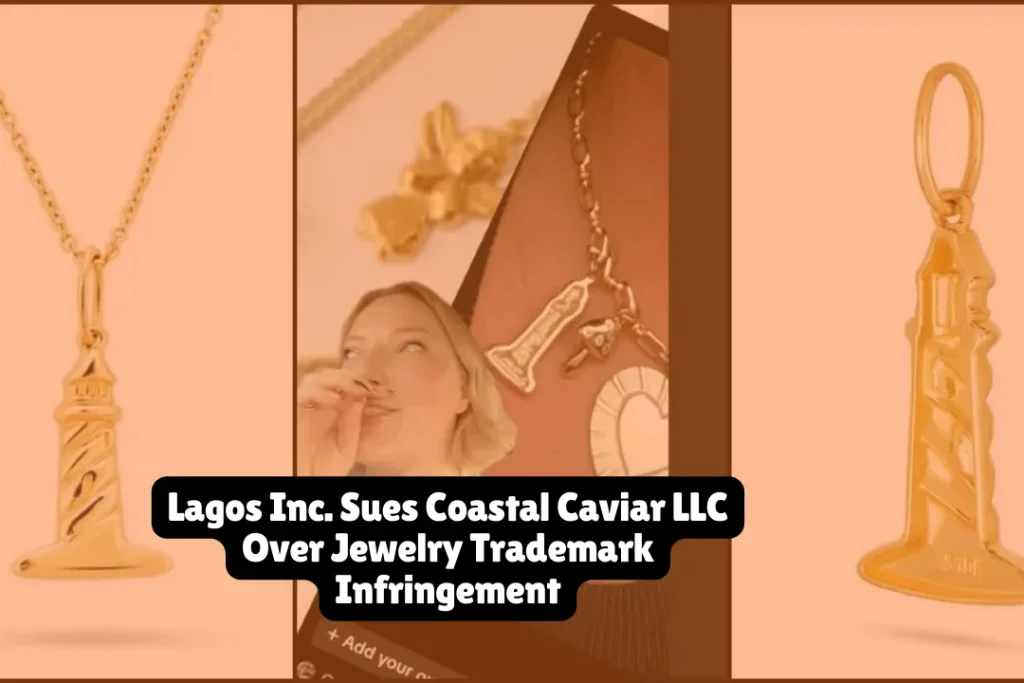
Coastal Caviar LLC is a boutique jewelry brand that gained public attention in November 2025 after its gold lighthouse charm went viral over an unintended design controversy. Coastal Caviar is a boutique-style jewelry store offering unique charm-based pieces. The company operates primarily through its Instagram account, @shopcoastalcaviar, and an e-commerce store.
What Does the Lawsuit Allege?
Coastal Caviar was hit with a trademark infringement lawsuit on January 23, 2026 in Pennsylvania Eastern District Court. The lawsuit, brought by Duane Morris on behalf of Lagos Inc., accuses the defendant of using a confusingly similar mark to the plaintiff’s “Caviar” trademark in connection with competing jewelry products.
The case is filed under the Lanham Act — the federal statute that governs trademark protections in the United States. Trademark law protects a trademark owner’s exclusive right to use a trademark when use of the mark by another would be likely to cause consumer confusion as to the source or origin of goods. Lagos is arguing that consumers seeing the name “Coastal Caviar” in the context of jewelry may believe the brand is affiliated with, endorsed by, or connected to Lagos — when it is not.
What Does “Confusingly Similar” Mean?
The legal standard in most trademark infringement cases is not whether two marks are identical — it is whether they are similar enough to cause consumer confusion. Courts typically weigh several factors, including how similar the marks look and sound, how closely the products compete, the strength of the original trademark, and whether there is evidence of actual consumer confusion.
In this case, Lagos holds a registered trademark specifically for the word “Caviar” in the jewelry category. A federal court previously ruled that “the Caviar trademark is good, valid, incontestable, and enforceable by law and Lagos is the sole proprietor of all right, title, and interest in and to the Caviar trademark.” That prior ruling — from an earlier trademark dispute Lagos won — means the mark carries strong legal standing going into this new case.
The question the court will need to assess is whether the full name “Coastal Caviar,” used in connection with jewelry products, is similar enough to Lagos’ registered “Caviar” mark to create a likelihood of confusion among consumers.
Lagos Has Enforced This Trademark Before
This is not the first time Lagos has taken legal action to protect its Caviar trademark. A federal judge in Philadelphia previously ruled that jewelry designer and manufacturer Michael Dawkins Inc. infringed upon the trademark owned by Lagos. The court ruled through a consent order and permanent injunction that Lagos owns the trademark for the “Caviar” name in jewelry designs and that the defendant must stop using the name in promoting and selling its own jewelry line — specifically rings, pins, bracelets, earrings, necklaces, and watches.
That prior case, which Lagos won, established an important legal precedent: the Caviar trademark in jewelry is enforceable and Lagos has both the standing and willingness to defend it aggressively. The current lawsuit against Coastal Caviar follows the same pattern.
What Is Lagos Asking the Court to Do?
While the full complaint details are not publicly available without a PACER subscription, trademark infringement lawsuits under the Lanham Act typically seek several forms of relief. These generally include a court order — called an injunction — requiring the defendant to stop using the infringing mark immediately, a demand that the defendant destroy or recall any infringing materials, and financial damages which may include the defendant’s profits from sales made under the infringing mark, the plaintiff’s actual damages, and in some cases attorney’s fees if the infringement is found to be willful.
Under the Lanham Act, a plaintiff is not required to show that a defendant willfully infringed its trademark as a precondition to a profits award. This means Lagos does not necessarily need to prove Coastal Caviar intentionally copied the name to recover financial damages — the likelihood of consumer confusion may be sufficient.
What Are Coastal Caviar’s Likely Defenses?
Coastal Caviar has not made any public statement about the lawsuit as of March 2026. In trademark cases like this, defendants commonly raise several arguments. One common defense is that the marks are not actually confusingly similar when considered in full context — arguing that “Coastal Caviar” as a complete phrase is sufficiently different from a single-word “Caviar” mark. Another defense may center on the descriptive nature of the word “caviar,” arguing it is too generic or descriptive to be exclusively owned. However, this argument faces a significant obstacle given the prior federal court ruling that Lagos’ Caviar trademark is “incontestable” — a legal status that limits the grounds on which a mark can be challenged.
A third possible avenue is a coexistence argument — that the two brands operate in sufficiently different market segments, price points, or channels that consumer confusion is unlikely in practice. Coastal Caviar’s focus on viral charm jewelry at accessible price points differs significantly from Lagos’ positioning as an upscale fine jewelry brand sold in major department stores.
What This Case Means for Small Jewelry Brands
The Lagos v. Coastal Caviar case illustrates a broader challenge facing small and emerging jewelry brands in the social media era. A boutique brand can grow rapidly through TikTok and Instagram — as Coastal Caviar did following its viral lighthouse charm moment — without fully researching existing trademark registrations in their product category.
Trademark clearance searches before adopting a brand name are a standard step in launching any product-based business, but they are frequently skipped by small companies focused on moving quickly. When an established brand holds an incontestable trademark in the same product category, the legal exposure can be significant even if the smaller brand had no intent to copy or trade on the larger brand’s reputation.
The case is currently pending before the U.S. District Court for the Eastern District of Pennsylvania. No trial date or settlement has been announced as of March 2026.
FAQs
What is the Lagos v. Coastal Caviar lawsuit about?
The lawsuit accuses Coastal Caviar of using a confusingly similar mark to Lagos’ registered “Caviar” trademark in connection with competing jewelry products. Lagos filed the case in federal court in Pennsylvania in January 2026.
What is Lagos’ “Caviar” trademark?
Lagos introduced the Caviar name and beaded design in 1984. The name and design became the foundation of every piece of jewelry the company produces. Lagos holds a registered, incontestable federal trademark for “Caviar” specifically in the jewelry category.
Has Lagos sued over this trademark before?
Yes. A federal court previously ruled that Lagos owns the trademark for the “Caviar” name in jewelry designs and issued a permanent injunction preventing another jewelry company from using the name. That prior win established strong legal precedent for the current case.
What is Coastal Caviar?
Coastal Caviar is a boutique jewelry brand that became widely known in November 2025 after its gold lighthouse charm went viral due to an unintended design controversy. The company sells charm-based jewelry primarily through social media and e-commerce.
What law governs trademark infringement cases like this one?
Trademark infringement cases in the United States are governed by the Lanham Act, a federal statute. Trademark law protects a trademark owner’s exclusive right to use a mark when use of the mark by another would be likely to cause consumer confusion as to the source or origin of goods.
What could happen if Lagos wins?
If the court rules in Lagos’ favor, Coastal Caviar could be ordered to stop using its current name entirely, destroy any branded materials, and pay financial damages — potentially including Lagos’ lost profits and attorney’s fees.
Is there a settlement in this case?
No settlement has been announced as of March 2026. The case was filed on January 23, 2026, and is in its early stages.
Last Updated: March 3, 2026
Disclaimer: This article is for informational purposes only and does not constitute legal advice. Laws and legal procedures vary by jurisdiction and may change over time. For advice regarding a specific situation, consult a qualified attorney or the appropriate authority.
About the Author

Sarah Klein, JD, is a licensed attorney and legal content strategist with over 12 years of experience across civil, criminal, family, and regulatory law. At All About Lawyer, she covers a wide range of legal topics — from high-profile lawsuits and courtroom stories to state traffic laws and everyday legal questions — all with a focus on accuracy, clarity, and public understanding.
Her writing blends real legal insight with plain-English explanations, helping readers stay informed and legally aware.
Read more about Sarah