
Kylian Mbappé Wins €61 Million PSG Ordered to Pay Unpaid Wages in Historic Labor Court Ruling
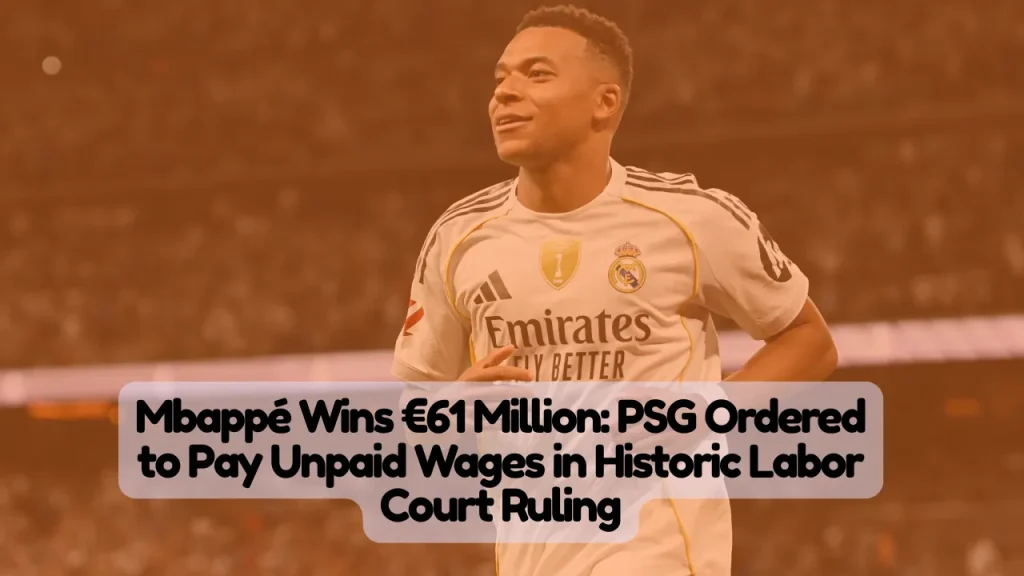
A Paris labor court ruled December 16, 2025 that Paris Saint-Germain must pay Kylian Mbappé approximately €61 million ($71.8 million) in unpaid wages and bonuses. The Conseil de prud’hommes de Paris found that PSG withheld €55 million in unpaid salary and approximately €6 million in holiday payments covering the final three months of Mbappé’s contract before his June 2024 transfer to Real Madrid.
The court ordered provisional enforcement, meaning PSG must pay immediately even if they appeal. PSG must also publish the court’s decision on their website for one month.
What Was the Mbappé Lawsuit About?
The dispute centered on claims that PSG failed to pay wages and bonuses for April, May, and June 2024 — the final months before Mbappé’s contract expired and he joined Real Madrid as a free agent.
The €61 million award breaks down to approximately €40 million for an unpaid signing bonus installment and just over €20 million for wage arrears and an “ethical bonus.”
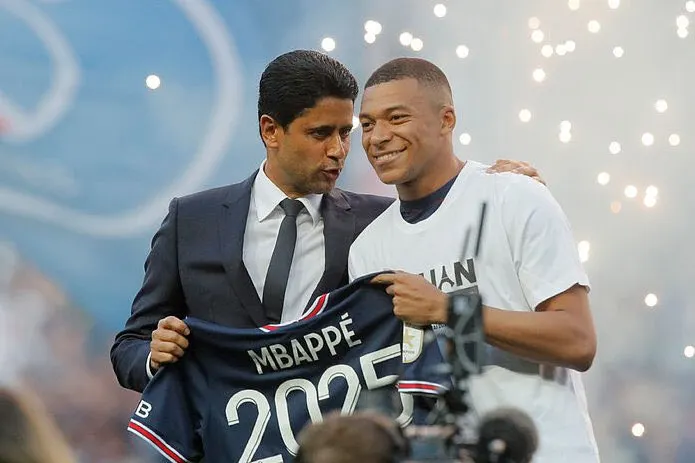
The conflict originated after Mbappé decided in 2023 not to extend his contract, which was set to expire in summer 2024, depriving PSG of a transfer fee despite offering him the most lucrative contract in club history when he signed a new deal in 2022.
The August 2023 Verbal Agreement Dispute
PSG claimed Mbappé backed out of an August 2023 verbal agreement that allegedly included a pay reduction should he leave on a free transfer — an arrangement PSG said was meant to protect the club’s financial stability.
PSG argued Mbappé was sidelined from a preseason tour and forced to train with fringe players before eventually returning to the lineup after discussions with the club — talks that became central to the dispute.
Mbappé’s representatives contested the validity of this commitment, arguing there was no written document. The court considered PSG’s proof of formal waiver of rights insufficient.
What the Court Ruled
The Paris labor court sided with Mbappé on his core claims while rejecting some of his broader demands.
What Mbappé Won:
- €55 million in unpaid salary
- Approximately €6 million in holiday payments
- Provisional enforcement requiring immediate payment
What Mbappé Lost: The court rejected Mbappé’s request to reclassify his fixed-term contracts as a permanent contract (CDI). Mbappé had argued his contract should be reclassified, which would have triggered compensation for unfair dismissal and raised his claim to over €260 million.
What PSG Lost: PSG’s counterclaims — demanding €440 million from Mbappé for damages including reputational harm, loss of opportunity to transfer the player, and alleged bad faith — were completely rejected.
Related article: Jason Killinger Lawsuit, UPS Driver Sues Reno Police Officer R. Jager After AI Face Scan Put Wrong Man in Jail for 11 Hours
French Labor Law Applied to Professional Athletes
Mbappé’s lawyers stated: “It re-establishes a simple truth — even in the professional football industry, labour laws apply to everyone.” The ruling demonstrates that French labor protections extend fully to professional athletes.
Key Legal Principles:
- French labour courts (conseils de prud’hommes) resolve individual disputes arising from employment contracts. The dispute is resolved by judgment only if conciliation cannot be achieved.
- The ruling sets a precedent for strict application of labor standards in high-value football contracts, emphasizing that clubs and players must observe formalities in salary adjustments.
- Written documentation requirements: The dispute highlighted differences between verbal agreements and written contractual obligations, with legal experts pointing to the need for clear documentation in sensitive negotiations.
PSG’s Failed Defense Arguments
PSG mounted several defenses that the court rejected:
The “Verbal Agreement” Defense: PSG claimed Mbappé hid his decision not to extend his contract for nearly 11 months (July 2022 to June 2023), preventing the club from arranging a transfer and causing major financial harm.
The court found insufficient evidence of a valid waiver agreement.
The “Disloyalty” Argument: PSG presented evidence claiming the player acted disloyally by concealing his decision not to extend, thereby depriving the club of any possibility of arranging a transfer.
Mbappé’s advisers countered: “Mbappé scrupulously fulfilled his sporting and contractual obligations for seven years and right up to the final day.”
The “No Harassment” Defense: PSG rejected accusations of harassment, highlighting that Mbappé took part in over 94% of matches in 2023-24 and always worked under conditions compliant with the Professional Football Charter.
The court awarded Mbappé the full unpaid amounts regardless of these arguments.
How Will the Ruling Be Enforced?
The court ordered provisional enforcement, which means the club must pay immediately. Mbappé’s lawyers stated: “Football is not a lawless zone. We hope PSG can comply voluntarily without us having to go through a bailiff; that would be elegant.”
Enforcement Mechanisms:
- Immediate payment required despite any appeal
- PSG must publish the full content of the sentence on its homepage for one month
- Bailiff enforcement available if PSG doesn’t comply voluntarily
- Potential sanctions from French football authorities
What Happens if PSG Doesn’t Pay:
- The LFP’s statutes outline potential fines or recruitment bans in cases of “failure to pay amounts owed by a French professional club.”
- The LFP legal commission previously ruled in favor of Mbappé, and that decision was upheld on appeal in October 2024.
- Additional legal enforcement through French civil courts
Can PSG Appeal?
Tuesday’s decision can be appealed and is unlikely to end the dispute. The club said it respects the ruling and will comply with it, while reserving all rights to appeal.
However, the provisional enforcement order means PSG must pay immediately even if they file an appeal.
What This Means for Professional Sports
This ruling establishes critical precedents for athlete contract enforcement:
Verbal Agreements Are Insufficient: The case attracted international attention and highlighted that clubs and players must observe formalities in salary adjustments — verbal commitments without written documentation are legally unenforceable for contract modifications.
Labor Law Protections Apply Fully: Professional athletes receive the same labor law protections as any other employee under French law, including strict requirements for wage payment.
Contract Reclassification Rejected: The court’s rejection of reclassifying Mbappé’s fixed-term contracts as permanent contracts limits athletes’ ability to challenge standard sports contract structures.
Immediate Enforcement Power: Courts can order provisional enforcement requiring immediate payment, preventing clubs from using appeals to delay obligations.
Context: Mbappé’s Departure from PSG
Mbappé left PSG in June 2024 to join Real Madrid after spending seven seasons at the club, scoring 256 goals in 308 games. His relationship with PSG ended amid deep tensions, as the club felt let down after offering him the most lucrative contract in club history when he signed in 2022.
He was sidelined from a preseason tour and forced to train with fringe players. He missed the opening league game but returned to the lineup after discussions with the club.
Mbappé had been seeking payment of his salaries and bonuses for more than 18 months and even withdrew a harassment complaint in a spirit of conciliation.
Comparison to US Sports Contract Law
US professional sports contracts differ significantly from French labor law applications:
Guaranteed Contracts: Major US leagues (NBA, NFL, MLB) have different guarantee structures. NFL contracts are typically not guaranteed beyond signing bonuses, while NBA and MLB contracts are generally fully guaranteed.
Arbitration Requirements: US collective bargaining agreements typically require disputes to go through league arbitration rather than civil courts.
Salary Cap Implications: US leagues have salary cap systems that limit contracts, unlike European football’s free market approach.
Free Agency Rules: US leagues have structured free agency systems rather than Europe’s contract expiration model that allows players to leave without transfer fees.
What Happens Next
Immediate Timeline:
- PSG must comply with the ruling or face enforcement through bailiffs
- Publication of the ruling on PSG’s website required for one month
- Potential appeal filing by PSG (though payment still required)
Long-Term Implications:
- The ruling may have broader consequences for player contracts and labour law in French soccer.
- Other athletes with similar unpaid wage claims may pursue legal action
- Clubs likely to ensure stricter written documentation for all contract modifications
- Increased scrutiny on verbal agreements in professional sports
Frequently Asked Questions
Why did Mbappé sue PSG for €61 million?
Mbappé claimed PSG failed to pay wages and bonuses for April, May, and June 2024, the final three months of his contract before he left for Real Madrid. The court awarded €55 million in unpaid salary and approximately €6 million in holiday payments.
Did Mbappé get everything he asked for?
No. Mbappé’s lawyers originally claimed PSG owed him more than €260 million, arguing his contract should be reclassified as permanent. The court rejected this claim but awarded the €61 million in direct unpaid compensation.
What was the August 2023 agreement PSG claimed existed?
PSG argued there was a verbal agreement where Mbappé would relinquish bonuses if he left on a free transfer to protect the club’s financial stability. Mbappé’s team denied any such agreement existed in writing, and the court found insufficient evidence to support PSG’s claim.
Must PSG pay immediately or can they delay through appeals?
The court ordered provisional enforcement, meaning PSG must pay immediately even if they appeal. This prevents the club from using the appeals process to delay payment.
How does this affect other athlete contracts?
The ruling sets a precedent for strict application of labor standards in high-value football contracts and emphasizes that clubs and players must observe formalities in salary adjustments. Verbal agreements without written documentation are insufficient to modify contract terms.
What happens if PSG refuses to pay?
Mbappé can pursue enforcement through bailiffs (French court officers who execute judgments), and the LFP’s statutes outline potential fines or recruitment bans for failure to pay amounts owed.
How does this compare to US sports contract disputes?
US professional sports typically handle contract disputes through league arbitration systems established by collective bargaining agreements, rather than through civil labor courts as in France. US contracts also have different guarantee structures and salary cap constraints.
About the Author

Sarah Klein, JD, is a licensed attorney and legal content strategist with over 12 years of experience across civil, criminal, family, and regulatory law. At All About Lawyer, she covers a wide range of legal topics — from high-profile lawsuits and courtroom stories to state traffic laws and everyday legal questions — all with a focus on accuracy, clarity, and public understanding.
Her writing blends real legal insight with plain-English explanations, helping readers stay informed and legally aware.
Read more about Sarah