
Kowalski Lawsuit, How Appeals Court Reversed $208M Netflix ‘Take Care of Maya’ Verdict
A Florida appeals court reversed the $208 million verdict in the Kowalski lawsuit on October 29, 2025, ruling that Johns Hopkins All Children’s Hospital acted in “good faith” when reporting suspected child abuse. The court found the trial judge made multiple errors, but left the door open for Maya Kowalski and her family to retry some claims related to false imprisonment, battery, medical negligence, and emotional distress.
What Is the Kowalski Lawsuit About?
The Kowalski family sued Johns Hopkins All Children’s Hospital after 10-year-old Maya Kowalski was held at the facility for 87 days in 2016-2017, separated from her mother who died by suicide during that time.
Maya suffered from Complex Regional Pain Syndrome (CRPS), a rare and debilitating condition that causes the brain to process normal nerve signals as excruciating pain. Her mother, Beata Kowalski—a registered nurse—had been advocating for Maya to receive high-dose ketamine treatments to manage the severe pain.
When Maya’s symptoms flared in October 2016, her father Jack took her to Johns Hopkins All Children’s Hospital in St. Petersburg, Florida. Hospital staff grew alarmed at the ketamine dosages Maya had been receiving and questioned whether Beata was medically abusing her daughter.
The hospital called Florida’s child abuse hotline. A judge ordered Maya placed in state custody at the hospital with no contact allowed between Maya and her mother. After 87 days without seeing her daughter, Beata committed suicide on January 7, 2017.
Maya was released from the hospital shortly after her mother’s death and returned home to her father and brother.
The $213 Million Verdict That Shocked the Medical Community
The Kowalski family—Maya, her father Jack, her brother Kyle, and Beata’s estate—filed a lawsuit seeking $220 million in damages.
The trial lasted eight weeks in fall 2023. Maya, now a young woman, testified about her experience being held at the hospital. She described nurses verbally attacking her, being denied contact with her mother, and suffering through painful procedures while her pleas for proper pain management were ignored.
One particularly disturbing moment Maya recounted: A nurse verbally accosted her during a bed change, saying “If you don’t move right now or else,” despite Maya explaining she couldn’t walk, stand, or roll due to her condition.
Jack Kowalski testified that he and Beata requested Maya be discharged so they could take her to doctors familiar with CRPS. Instead, hospital officials threatened them with arrest if they tried to remove Maya against medical advice.
On November 9, 2023, the jury found Johns Hopkins All Children’s Hospital liable on multiple counts:
- False imprisonment
- Medical negligence
- Battery
- Fraud
- Intentional infliction of emotional distress
The jury initially awarded $261 million. In January 2024, the trial judge reduced the award to $213.5 million after cutting certain damage items, but he issued a scathing order that compared the hospital’s treatment of Maya to “torture.”
Related article: Michael Oher Lawsuit, What the Blind Side Star Claims the Tuohy Family Did
The Appeals Court Reversal: What Changed
On October 29, 2025, the Florida Second District Court of Appeal issued a nearly 50-page decision that wiped out the entire $213 million verdict.
The three-judge panel found that the trial court made critical errors in how it applied Florida’s immunity laws. Specifically, Chapter 39 of Florida law protects healthcare workers and institutions from liability when they report suspected child abuse in good faith and participate in child protection activities.
The appeals court ruled:
Good Faith Reporting: The hospital acted within its legal rights and duties when it reported suspected child abuse to authorities. Florida law requires mandatory reporters like doctors and nurses to report suspicions of abuse, and they’re protected from civil liability if they do so in good faith.
Misapplication of Immunity: The trial judge should have granted the hospital immunity from most of the claims. The appeals court found that the judge incorrectly interpreted when and how immunity applies.
Intentional Infliction of Emotional Distress: The trial court’s interpretation of this claim was legally flawed. The appeals judges found insufficient evidence that the hospital acted with the “outrageous conduct” required for this tort.
No Punitive Damages: The court ruled there was no “clear and convincing evidence” that Johns Hopkins actively and knowingly engaged in intentional misconduct or gross negligence. Without that evidence, punitive damages shouldn’t have been submitted to the jury.
Directed Verdict Should Have Been Granted: In some instances, the evidence was so lacking that the judge should have overruled the jury and entered a verdict for the hospital.
The court specifically noted that Jack Kowalski presented no evidence of injury from the hospital’s alleged fraudulent billing—one of the claims in the lawsuit.
What Claims Can Still Be Retried?
The appeals court didn’t completely shut the door on the Kowalski family. They identified several claims that could go to a new trial:
Maya’s Emotional Distress Claim: The intentional infliction of emotional distress claim brought specifically on behalf of Maya (not the family generally) can be retried.
False Imprisonment: Claims that the hospital wrongfully confined Maya.
Battery: Allegations that medical procedures were performed without proper consent.
Medical Negligence: Claims that the hospital’s treatment of Maya fell below acceptable medical standards.
However, there’s a major catch: All of these remaining claims must now undergo “rigorous and proper application of Chapter 39 immunity.” That means the hospital will have stronger defenses when the case goes back to trial.
The plaintiffs also cannot pursue punitive damages on any of the remaining claims. The appeals court found insufficient evidence to support punitive damages, which means even if the Kowalskis win at retrial, they can only recover compensatory damages—not the massive punitive awards that inflated the original verdict.
The Role of Dr. Sally Smith
Central to this case is Dr. Sally Smith, a child abuse pediatrician who worked as medical director for the Pinellas County Child Protective Services team.
After the initial child abuse hotline call was screened out and the Department of Children and Families closed its investigation on October 7, 2016, the hospital called Dr. Smith the next day when the Kowalskis requested Maya’s discharge.
According to court documents and testimony, Dr. Smith provided the hospital with specific advice on how to keep Maya at the facility without a court order and how to isolate her from her family. Based on limited information from the hospital’s pain management team—and without possessing psychiatry or psychology credentials—Smith “diagnosed” Beata as a perpetrator of child abuse.
The lawsuit originally included Dr. Smith as a defendant, but she settled with the Kowalski family before trial. The settlement terms were not publicly disclosed.
The Netflix Documentary That Brought National Attention
The Kowalski case became internationally known through “Take Care of Maya,” a Netflix documentary that premiered at the Tribeca Film Festival in June 2023 and was released on the platform June 19, 2023.
The documentary tells Maya’s story through interviews with the family, footage from Maya’s hospitalization, recordings of phone calls between Maya and her mother during their forced separation, and Beata’s suicide notes.
The film was nominated for two News and Documentary Emmy Awards in 2024 for Outstanding Direction and Outstanding Research.
The hospital’s attorneys have criticized the documentary, suggesting it presented a one-sided view that influenced public perception before and during the trial. In their appeal arguments, they contended the Netflix release created an environment that made it impossible for them to get a fair trial.
Ethen Shapiro, the hospital’s attorney, said after the appeals court decision: “The facts and the law have always prioritized protecting children, the most vulnerable among us.”
What the Hospital Says
Johns Hopkins All Children’s Hospital has maintained throughout the litigation that its staff acted appropriately to protect a child they believed was at risk.
The hospital’s position is that when Beata Kowalski insisted on high-dose ketamine treatments that hospital doctors considered dangerous and potentially unnecessary, they had a legal and ethical duty to investigate whether Maya was being medically abused.
After the appeals court reversal, Shapiro called the decision “resounding” and said it sends “a clear and vital message to mandatory reporters in Florida and across the country that their duty to report suspicions of child abuse and, critically, their good faith participation in child protection activities remain protected.”
The hospital emphasized that Maya was alive and her condition improved during her time at the facility—suggesting that removing her from what they viewed as inappropriate treatment may have saved her life.
What the Kowalski Family Says
Nick Whitney, the attorney representing the Kowalski family, released a statement expressing disappointment but determination:
“We’re disappointed by the decision, but the Kowalskis will persevere. Judge Smith’s concurring opinion emphasized Johns Hopkins’ outrageous actions towards Maya, and the next jury will see things just like the first one did.”
Whitney noted that one of the three appeals judges, Judge Smith (not to be confused with Dr. Sally Smith), wrote a concurring opinion that criticized the hospital’s conduct. Whitney argued this shows that even in reversing the verdict on legal grounds, judges recognized the hospital “exploited their position with full knowledge that Maya, a 10-year-old child, would not be able to endure such outrageous conduct.”
The family has not indicated whether they will appeal the Second District’s decision to the Florida Supreme Court or proceed directly to retrial on the remaining claims.
Understanding Chapter 39 Immunity
The legal foundation of the appeals court’s decision rests on Chapter 39 of Florida Statutes, which governs child welfare and protection.
The law serves two purposes: encouraging people to report suspected child abuse without fear of being sued, and protecting those who participate in good faith in child protection investigations.
Under this statute, anyone who reports suspected abuse “in good faith” is immune from civil liability “which might otherwise result by reason of its action.” The law also protects those who participate in good faith in child protection activities ordered by a court.
The appeals court found that the trial judge applied this immunity too narrowly. The hospital wasn’t just reporting suspected abuse—it was participating in a court-ordered child protection activity when Maya was placed in state custody.
This immunity doesn’t mean hospitals can do whatever they want. But it does create a high bar for plaintiffs trying to sue over actions taken during a child protective investigation.
What Complex Regional Pain Syndrome Is
CRPS is the condition at the heart of this entire tragedy.
Complex Regional Pain Syndrome is a chronic pain condition that typically affects one limb (arm, leg, hand, or foot) usually after an injury, surgery, stroke, or heart attack. The pain is out of proportion to the severity of the initial injury.
CRPS causes the nervous system to misfire, making the brain process normal sensations as severe pain. Patients experience burning sensations, sensitivity to touch, swelling, changes in skin temperature and color, and in severe cases like Maya’s, dystonia (abnormal muscle tone and movements).
There’s no cure, and treatment is difficult. Options include physical therapy, medications, nerve blocks, and in severe cases, ketamine infusions.
Ketamine is an anesthetic that, at high doses, can “reset” the nervous system’s pain signals. It’s FDA-approved for anesthesia but is used off-label for CRPS. The treatment is controversial because ketamine is also a drug of abuse (known as “Special K”) and can cause hallucinations and other side effects.
Maya’s treating physician, Dr. Anthony Kirkpatrick, determined that Maya’s CRPS was so severe she needed a ketamine coma—a multi-day medically induced coma using massive doses of ketamine. This treatment, performed in Mexico, initially worked. Maya’s pain dramatically decreased.
When she relapsed in October 2016, her mother wanted doctors at Johns Hopkins to continue the high-dose ketamine protocol. The hospital’s pain management team, unfamiliar with CRPS and alarmed by the ketamine doses, refused.
The Broader Debate: Medical Abuse vs. Advocating for Your Child
The Kowalski case sits at the intersection of two critical issues in pediatric medicine: protecting children from medical abuse and respecting parents’ rights to advocate for their children’s treatment.
Medical Child Abuse (formerly called Munchausen Syndrome by Proxy) is real. Some parents do make children sick, subject them to unnecessary procedures, or demand inappropriate treatments. Doctors have a duty to identify and report these cases.
But overdiagnosis is also real. Parents of children with rare, poorly understood conditions—especially mothers—report being accused of fabricating their child’s illness or causing symptoms when they simply know their child better than doctors who are seeing them for the first time.
Beata Kowalski was a registered nurse. She had medical knowledge. She had watched her daughter go from a healthy, active child to someone in constant, debilitating pain. She had found doctors who diagnosed CRPS and had success with ketamine treatment.
From her perspective, the hospital was endangering Maya by refusing treatment that had previously worked. From the hospital’s perspective, Beata was demanding dangerous levels of a drug that could cause serious harm.
The question at the heart of this case: At what point does aggressive medical advocacy cross into medical abuse? And who gets to decide—the parent who knows the child best, or the hospital staff who see the child for the first time during a crisis?
What Happens Next
The case now returns to the Sarasota County trial court for further proceedings on the remaining claims.
The Kowalski family faces several strategic decisions:
Appeal to Florida Supreme Court: They could ask Florida’s highest court to review the Second District’s decision. The Supreme Court doesn’t have to accept the case, and most appeals are denied.
Proceed to Retrial: They could move forward with a new trial on the claims the appeals court said could be retried—false imprisonment, battery, medical negligence, and Maya’s emotional distress claim.
Settle: With the $213 million verdict erased and punitive damages off the table, both sides might be more motivated to negotiate a settlement.
Any retrial would be significantly different from the first trial. The hospital now has strong immunity defenses to most claims. Punitive damages are gone, which removes the potential for a massive award. And the appeals court decision will influence how the trial judge handles immunity issues.
Legal experts suggest that even if the Kowalskis win at retrial, the damages would likely be far less than the original verdict.
The Impact on Child Protection Reporting
Healthcare providers across Florida—and nationally—have been watching this case closely.
The original $213 million verdict sent shockwaves through the medical community. Hospitals worried that staff might hesitate to report suspected abuse if they feared massive liability.
Mandatory reporting laws exist precisely because children can’t protect themselves. If doctors and nurses second-guess whether to report concerning situations, children at genuine risk could slip through the cracks.
The appeals court reversal reassured healthcare providers that good faith reporting and participation in child protective investigations won’t expose them to crushing liability.
But critics argue the pendulum has swung too far. Families who believe they were wrongly accused—and suffered devastating consequences like the Kowalskis—now face an even higher barrier to holding institutions accountable.
The debate continues: How do we protect children from abuse while also protecting families from false accusations that destroy lives?
Pinellas County’s Child Removal Rates
One disturbing detail that emerged during the litigation: Children in Pinellas County, where Johns Hopkins All Children’s Hospital is located, were almost 2.5 times more likely to be removed from their families compared to the Florida state average.
The Kowalskis’ attorney discovered this statistic during their investigation. It raised questions about whether Dr. Sally Smith and the Suncoast Center—which provided privatized child welfare services to Pinellas County—were too aggressive in identifying abuse.
High removal rates could indicate either that Pinellas County has more child abuse than other counties, or that the system there has a lower threshold for removing children.
Critics of child abuse pediatrics argue that specialists in this field sometimes see abuse where none exists, especially in cases involving rare medical conditions that mimic abuse injuries.
Defenders counter that child abuse pediatricians have specialized training to identify abuse that other doctors might miss, and that removing children from dangerous situations is always better than leaving them at risk.
Maya Kowalski Today
Maya was 10 years old when this ordeal began. She’s now a young adult who has had to relive her trauma through a trial, a documentary, and ongoing litigation.
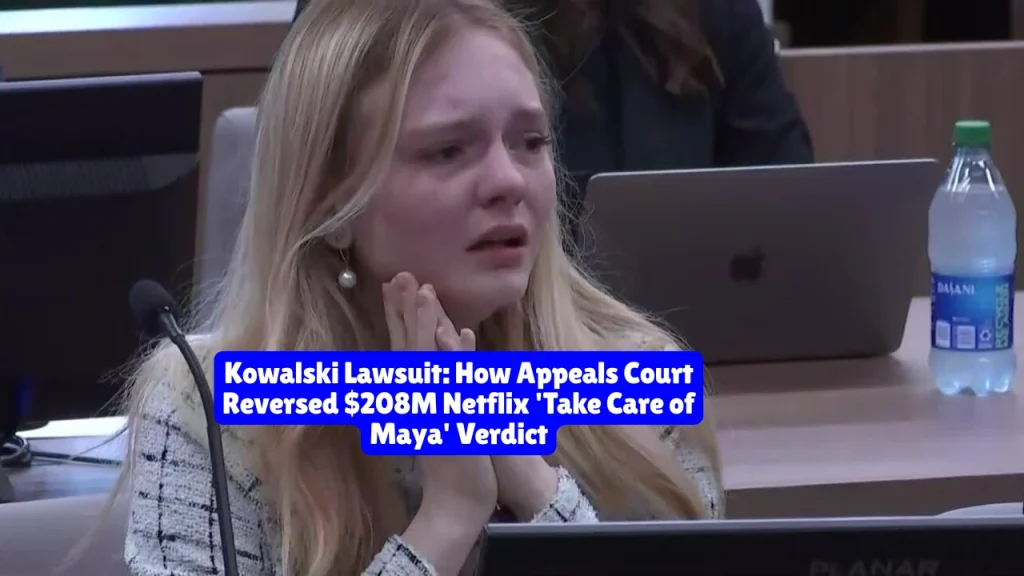
During the 2023 trial, Maya sobbed heavily as the jury delivered its verdict in her favor. Outside the courthouse, she told Court TV that she hoped the case would create change and prevent other families from experiencing what hers had endured.
Days after winning the verdict, Maya filed a criminal complaint alleging sexual assault occurred during her hospitalization. The status of that complaint is not publicly known.
Maya continues to deal with CRPS, though her current treatment regimen and condition have not been publicly disclosed.
Frequently Asked Questions
Q: Is the Kowalski lawsuit over?
A: No. The appeals court reversed the $213 million verdict but said some claims can be retried. The case goes back to the trial court for further proceedings.
Q: Will the Kowalski family get any money?
A: Not from the original verdict—that’s been completely reversed. If they win at a retrial on the remaining claims, they could recover compensatory damages, but not punitive damages.
Q: Can they appeal to the Florida Supreme Court?
A: Yes, but the Supreme Court doesn’t have to accept the case. Most appeals to state supreme courts are denied.
Q: What happened to Dr. Sally Smith?
A: She was originally a defendant but settled with the Kowalski family before trial. Settlement terms were not disclosed.
Q: Was anyone criminally charged?
A: No. This is a civil lawsuit, not a criminal case. No one has been charged with crimes related to Beata’s death or Maya’s treatment.
Q: Is the Netflix documentary accurate?
A: The documentary presents the Kowalski family’s perspective. The hospital has criticized it as one-sided. Courts evaluate evidence differently than documentaries do.
Q: Can hospitals still report suspected child abuse without being sued?
A: Yes. The appeals court decision reinforces that good faith reporting is protected by immunity. This was a central concern in the legal community.
Q: What is Complex Regional Pain Syndrome?
A: CRPS is a chronic pain condition where the nervous system malfunctions, causing severe, disproportionate pain usually in a limb. It’s difficult to treat and poorly understood.
Q: Why was ketamine controversial?
A: Ketamine is an anesthetic that can cause hallucinations and is sometimes abused recreationally. High doses for CRPS treatment are off-label and not universally accepted.
Q: Could this happen to other families?
A: Yes. Cases where hospitals suspect medical child abuse and seek state custody occur regularly. Whether they’re justified depends on the specific facts of each case.
What This Case Teaches Us
The Kowalski lawsuit highlights the tragic consequences when well-meaning systems collide with devastating results.
No one disputes that Maya had a real, severe medical condition. No one disputes that Beata loved her daughter and wanted her to receive proper care. No one disputes that hospital staff have a duty to protect children from harm.
Yet a 10-year-old girl was separated from her mother for 87 days. A mother died by suicide believing she’d never see her daughter again. A family was torn apart.
The legal battle centers on whether the hospital acted in good faith within the boundaries of child protection laws, or whether its actions crossed into conduct so outrageous it should face massive liability.
The appeals court sided with the hospital on most claims. But the fact that some claims can still be retried suggests the judges recognized this wasn’t a simple case of a hospital doing everything right.
For families dealing with rare diseases, the case is a warning: Advocating aggressively for your child’s treatment can be misinterpreted as medical abuse. For hospitals, it’s a reminder that separating families should be a last resort, not a first response to disagreements about treatment.
And for the legal system, it’s a question that remains unresolved: How do we balance protecting children with protecting families from wrongful accusations that destroy lives?
This article provides information about the Kowalski lawsuit based on public court records, news reports, and the Netflix documentary “Take Care of Maya.” For legal questions about your specific situation, consult with an attorney.
About the Author

Sarah Klein, JD, is a licensed attorney and legal content strategist with over 12 years of experience across civil, criminal, family, and regulatory law. At All About Lawyer, she covers a wide range of legal topics — from high-profile lawsuits and courtroom stories to state traffic laws and everyday legal questions — all with a focus on accuracy, clarity, and public understanding.
Her writing blends real legal insight with plain-English explanations, helping readers stay informed and legally aware.
Read more about Sarah
when I tried to check my daughter out of early when she was 12 they said that they would call security and if I tried leaving with her I would be arrested. I said, fine I want an ambulance or a helicopter or airplane to transfer her back to our city hospital right now. The doctor came and released her, right after that.