
$682K Wrongful Death Settlement Worker Died When a St. Marys Building Collapsed His Family Just Received $682,500
An Auglaize County Probate judge approved the settlement for the wrongful death and survival claims against Todd Klosterman’s Klosterman Vested Interests LLC. In the settlement, $682,500 was awarded to the estate of Christopher Brown. The settlement is final — but OSHA fines remain contested, and the Auglaize County prosecutor’s office is still reviewing whether to file criminal charges.
Quick Facts
| Field | Detail |
| Victim Killed | Christopher R. Brown, 41, of St. Marys, Ohio |
| Victim Injured | Kevin Sharp, 56 (multiple fractures / serious injuries) |
| Incident | Building collapse, 305 E. Spring St., St. Marys, Ohio |
| Date of Collapse | July 31, 2025, approximately 10:30 a.m. |
| Defendant | Todd Klosterman / Klosterman Vested Interests LLC |
| Settlement Amount | $682,500 |
| Approved By | Auglaize County Probate Judge Mark Spees |
| Settlement Date | Approved late March 2026 |
| Brown Family’s Attorney | Michael Wright, Wright & Schulte |
| OSHA Fine | $41,706 (contested — case still open) |
| Criminal Charges | None filed as of April 2026 — under review |
What Happened on July 31, 2025
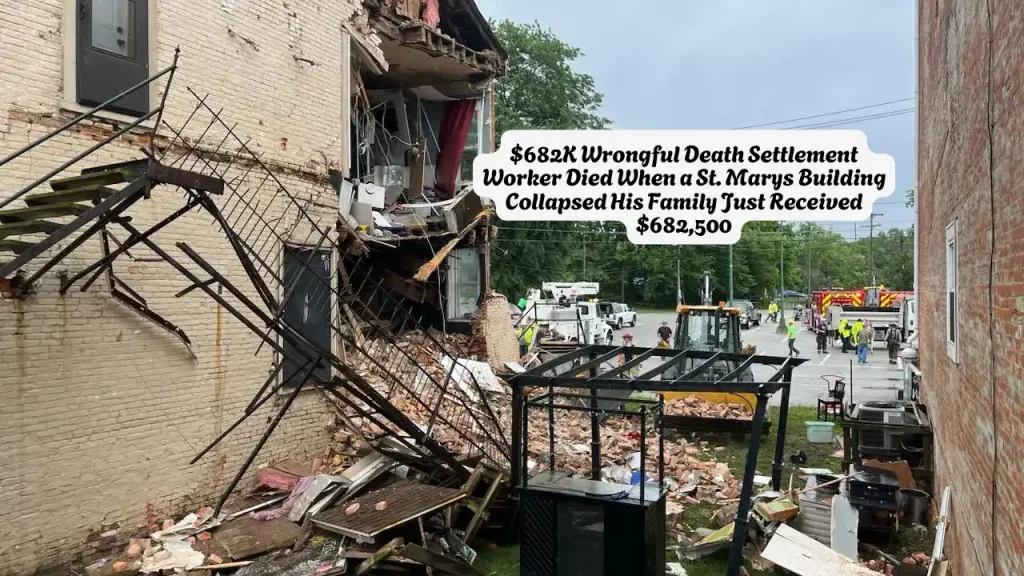
Klosterman owned the building at 305 E. Spring St. in St. Marys that Christopher Brown, 41, and Kevin Sharp, 56, were set to survey at around 10:30 a.m. July 31, 2025, in preparation for an eventual structural remodeling. However, before they got all the way inside of it, the men heard a noise coming from the building and quickly scattered. Brown was killed in the ensuing collapse. Sharp was severely injured. The building was condemned and demolished that night.
One worker was fatally crushed when part of the building’s west exterior wall collapsed, while another suffered fracture injuries. Emergency crews dug both men out of the rubble at the scene.
In addition to being the property owner, Klosterman also owns Pro Fit HVAC LLC, the company that employed Sharp and Brown for the work. That detail matters legally: the same man owned both the building that collapsed and the business whose workers were inside it.
How the $682,500 Is Being Divided
The settlement total is $682,500 — but the amount Christopher Brown’s parents actually take home is significantly less after attorneys’ fees, expenses, and other claims against the estate.
Both Brown’s mother and father will each receive nearly $224,000 in the settlement, according to court documents. Over $227,000 from the settlement will go to Wright & Schulte for attorneys’ fees and case expenses. Nearly $5,000 will go to Brown’s father to reimburse funeral expenses, and just over $2,200 will go to Reeves & Sherrick Co. for a claim against Brown’s estate.
This breakdown is typical for wrongful death probate settlements. Attorneys take their contingency fee from the gross settlement fund, and any outstanding debts tied to the decedent’s estate — in this case a small creditor claim — get paid before the family receives the remainder.
The settlement was the maximum claim they could request from Klosterman Vested’s insurance policy, the family’s attorney Michael Wright said. In other words, the family did not leave money on the table — they recovered every dollar the insurance policy allowed.
Related article: Pinterest Investors Lost Up to 45% Here’s What the Fraud Lawsuit Alleges and What to Do Now
What OSHA Found After a Four-Month Investigation
Federal workplace safety investigators were on the scene during the search and rescue. Their formal findings came four months later.
OSHA cited and fined Klosterman approximately $41,706 for three “serious” safety violations after a four-month investigation. The citations were for preparatory operations, safety training and education, and general safety and health provisions. Each violation carried an identical proposed penalty of $13,902.
OSHA says the employees were not properly trained to recognize and avoid unsafe conditions related to demolition and excavation. The agency also found no engineering survey had been conducted to assess floor, wall, or structural collapse risks.
Federal inspectors said Klosterman allegedly didn’t maintain or establish an accident-prevention program. Employees were not instructed in the means and methods for building and installing a temporary shoring system, in the recognition and avoidance of unsafe conditions related to demolition work, or in monitoring methods for structural stability.
OSHA records indicate the citations represent Pro Fit HVAC’s fourth violation in 2025 and seventh overall. The company previously received a serious citation earlier this year related to a separate incident in New Knoxville, which was later resolved through an informal settlement.
Klosterman Contested the OSHA Fines — And That Case Is Still Open
The civil wrongful death settlement is resolved. The OSHA enforcement case is not.
That business was fined $41,000 following an investigation by OSHA back in December. Klosterman contested those citations and the case remains open. When a company contests OSHA citations, the matter goes before the Occupational Safety and Health Review Commission, a separate federal agency that functions as an independent tribunal. The process can take months or years.
Contesting OSHA fines does not affect the civil settlement. The two proceedings — the wrongful death claim in probate court and the OSHA enforcement action — run on separate tracks with separate outcomes.
Criminal Charges: Still Under Review
The wrongful death settlement closes the civil case. It does not close the door on criminal liability.
County prosecutor Ben Elder told The Daily Standard that his office was still reviewing the incident for possible criminal charges. No criminal charges have been filed against Klosterman at this time in connection with the collapse.
In Ohio, criminal charges related to workplace deaths are relatively rare but legally possible. A prosecutor reviewing a case like this would examine whether the failures that caused Brown’s death — no engineering survey, no safety training, no shoring systems — rise to the level of criminal negligence or reckless conduct under Ohio law. The civil settlement does not resolve or preclude that analysis.
What Kevin Sharp’s Legal Path Looks Like
Kevin Sharp survived the collapse but sustained serious injuries including multiple fractures. Sharp was severely injured in the collapse and was treated at a local hospital. The $682,500 settlement specifically covers Brown’s wrongful death and survival claims. Sharp’s claims, if any, would be handled separately.
Workers in Ohio who are injured on the job generally have access to workers’ compensation coverage. However, because Klosterman owned both the building and the company employing Sharp and Brown, the relationship between workers’ compensation rights and third-party tort claims becomes more complex — a question Sharp’s own legal counsel would need to address.
Why This Settlement Went Through Probate Court — Not Civil Court
Most wrongful death lawsuits people read about are filed in civil court. This one went through probate. The distinction is worth understanding.
In Ohio, wrongful death claims are filed on behalf of a decedent’s estate. When someone dies, their estate is administered through the probate court — which is why the approval in this case came from Auglaize County Probate Judge Mark Spees. The wrongful death claim technically belongs to the estate of Christopher Brown, and the court oversees how the settlement money is distributed to heirs.
This is not unusual. It is standard procedure for Ohio wrongful death settlements. The probate path does not make the settlement any less enforceable or final than a civil court judgment would.
To understand how wrongful death settlements in different contexts are structured and paid out, the TQL wrongful death verdict in 2026 — involving a $22.5 million jury award against a freight company offers a useful comparison of how courts handle employer liability in fatal workplace situations.
Key Dates
| Milestone | Date |
| Building Collapse | July 31, 2025 |
| OSHA Begins Investigation | July 31, 2025 (on scene same day) |
| OSHA Issues Citations | November 13, 2025 |
| Klosterman Contests OSHA Fines | December 2025 |
| Wrongful Death Settlement Approved | Late March 2026 |
| Family Notified of Settlement | April 2026 |
| OSHA Enforcement Case | Ongoing — pending before OSHA Review Commission |
| Criminal Charge Decision | TBD — prosecutor reviewing |
Frequently Asked Questions
Did Todd Klosterman admit fault in the settlement?
The court documents and reporting do not indicate an admission of liability. Civil settlements in wrongful death cases typically do not require the defendant to admit fault. The settlement resolves the financial claims without establishing legal guilt.
Why did the family only get $448,000 after attorneys’ fees on a $682,500 settlement?
The settlement was the maximum claim they could request from Klosterman Vested’s insurance policy. Attorneys who take wrongful death cases on contingency — meaning they are paid only if they win — typically receive one-third of the gross settlement as their fee. Over $227,000 from the settlement went to Wright & Schulte for attorneys’ fees and case expenses. This is standard in wrongful death litigation and does not indicate anything unusual about the Brown case.
What does it mean that the settlement was the insurance policy maximum?
It means the family recovered every dollar available through Klosterman Vested Interests’ insurance coverage. If Brown’s family believed Klosterman had personal assets that could support a larger judgment, they could have pursued a lawsuit beyond the insurance limits — but the family and their attorney chose to settle at the policy maximum rather than extend litigation.
Can the Brown family pursue additional money in the future?
The probate court approval of this settlement closes the civil wrongful death claim against Klosterman Vested Interests LLC. The family would generally not be able to bring a new civil claim over the same death after accepting and receiving the settlement.
Does this settlement affect the OSHA case?
No. Klosterman contested the OSHA citations and the case remains open. OSHA enforcement is a federal regulatory matter handled through the Occupational Safety and Health Review Commission. A civil settlement between private parties has no binding effect on that proceeding.
Could Klosterman still face criminal charges?
Yes. County prosecutor Ben Elder said his office was still reviewing the incident for possible criminal charges. Civil and criminal liability are entirely separate. Paying a civil settlement does not shield someone from criminal prosecution.
What were the specific OSHA safety failures at the site?
The agency reported that employees were not instructed on proper methods for installing temporary shoring systems, monitoring structural stability during demolition, or identifying hazards associated with weakened walls or floors. OSHA also found no engineering survey was conducted before the work began to assess structural collapse risks — a basic requirement before anyone surveys a building in preparation for remodeling.
For context on how Ohio courts handle wrongful death cases involving negligent conduct and institutional liability, the Jaahnavi Kandula $29 million wrongful death settlement against the City of Seattle offers a useful comparison of how wrongful death settlements are structured and approved across different court systems.
Last Updated: April 5, 2026
Disclaimer: This article is for informational purposes only and does not constitute legal advice. Legal claims and outcomes depend on specific facts and applicable law. For advice regarding a particular situation, consult a qualified attorney.
About the Author

Sarah Klein, JD, is a licensed attorney and legal content strategist with over 12 years of experience across civil, criminal, family, and regulatory law. At All About Lawyer, she covers a wide range of legal topics — from high-profile lawsuits and courtroom stories to state traffic laws and everyday legal questions — all with a focus on accuracy, clarity, and public understanding.
Her writing blends real legal insight with plain-English explanations, helping readers stay informed and legally aware.
Read more about Sarah