
Kennedy Center Lawsuit 2025: Congress Challenges Trump Renaming in Federal Court
Rep. Joyce Beatty filed a lawsuit Monday in federal court challenging President Trump’s addition of his name to the Kennedy Center, arguing the board vote violated federal law because only Congress can rename the institution. The suit targets the December 18, 2025 board decision to rebrand the venue as the “Trump-Kennedy Center.”
What the Kennedy Center Lawsuit Involves
The lawsuit contends the board’s renaming action is legally void because Congress designated the center by statute as a living memorial to President John F. Kennedy. Beatty, an ex-officio trustee, alleges she was silenced during the board meeting when she attempted to object to the renaming.
Key allegations include:
- Board exceeded authority granted by Congress
- Violation of 20 U.S.C. § 76h requiring congressional action for name changes
- Improper installation of signage without legal authority
- Breach of trustee obligations under federal law
The complaint also cites federal restrictions prohibiting new memorials or plaques in public areas after 1983, plus a separate limitation on acknowledging private donors on the building’s exterior.
Related article: TurboTax Settlement 2025: How to Claim Your Share of $141 Million
Legal Claims at Stake
Federal statute 20 U.S.C. § 76h establishes the Board of Trustees with the duty to “maintain and administer the John F. Kennedy Center for the Performing Arts and site thereof as the National Center for the Performing Arts, a living memorial to John Fitzgerald Kennedy”.
The lawsuit argues:
Statutory Authority: Congress named the center through legislation signed after President Kennedy’s 1963 assassination. Changing the statutory name requires an act of Congress.
Memorial Restrictions: 20 U.S.C. § 76j mandates that “after December 2, 1983, no additional memorials or plaques in the nature of memorials shall be designated or installed in the public areas of the John F. Kennedy Center for the Performing Arts”.
Ultra Vires Action: The board’s vote exceeded its legal authority by attempting to change the institution’s congressionally established name.
Latest Developments
December 18, 2025: Trump-appointed board voted to rename the center during a virtual meeting. Beatty alleges she was muted after identifying herself and was repeatedly prevented from unmuting during the meeting.
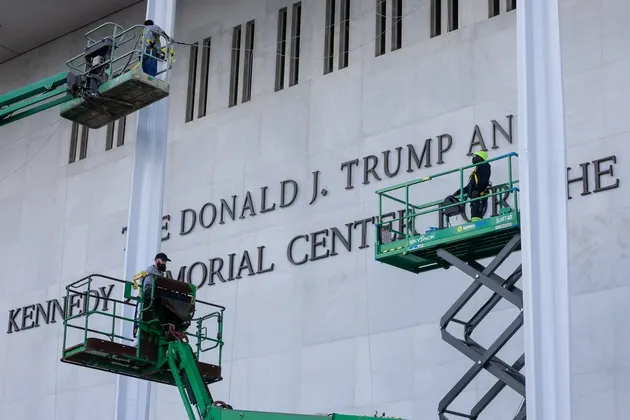
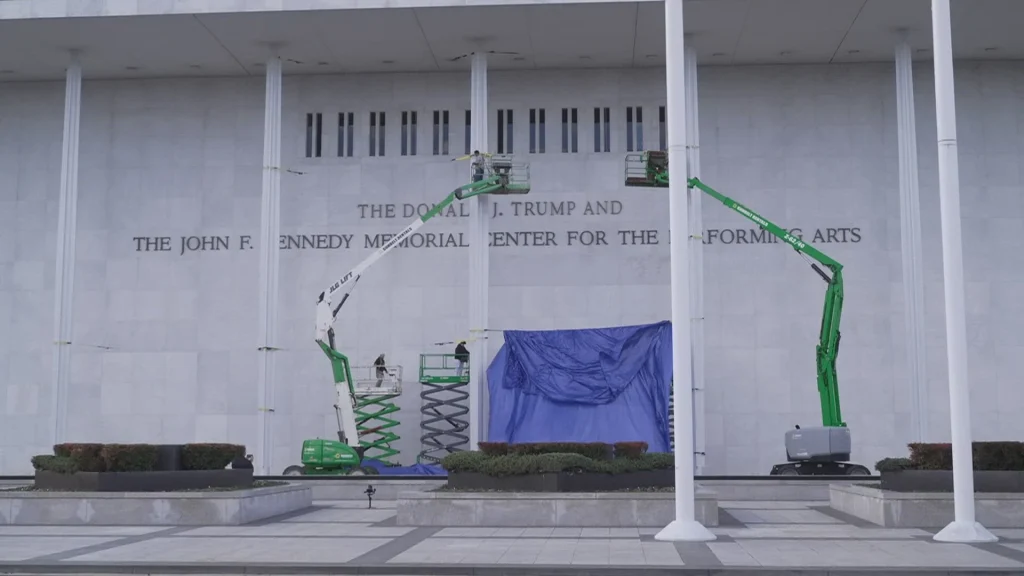
December 19, 2025: Workers rapidly installed new exterior signage reading “The Donald J. Trump and the John F. Kennedy Memorial Center for the Performing Arts”. The website and email branding switched to “The Trump Kennedy Center.”
December 22, 2025: Beatty filed suit in U.S. District Court for the District of Columbia against Trump, Kennedy Center executive director Ric Grenell, and board members.
Who Is Involved
Plaintiff: Rep. Joyce Beatty (D-Ohio), ex-officio Kennedy Center Board trustee
Defendants:
- President Donald Trump (board chairman)
- Ric Grenell (Kennedy Center president)
- Board members appointed by Trump
- Other ex officio members including Secretary Robert Kennedy Jr., House Speaker Mike Johnson, and Senate Majority Leader John Thune
Legal Counsel: Washington Litigation Group and Democracy Defenders Action represent Beatty.
What Triggered the Dispute
Trump earlier in 2025 reshuffled the makeup of the Kennedy Center board, which then elected him board chair. The board subsequently changed programming, effectively canceling some Pride gatherings.
Trump had previously teased renaming the center to include his name. GOP lawmakers had proposed renaming it after First Lady Melania Trump.
Court Proceedings and Legal Relief Sought
The lawsuit requests:
- Declaration that the board violated federal law
- Nullification of the renaming vote
- Court order removing all Trump signage from the building
- Restoration of the lawful name “John F. Kennedy Center for the Performing Arts”
- Injunction blocking future renaming attempts without congressional authorization
- At minimum, a properly conducted board meeting where Beatty can participate
Legal Expert Analysis
Georgetown Law Professor David Super, who specializes in legislation, stated: “There is absolutely no way they can do this legally”.
However, experts note a significant hurdle. While the board’s decision was likely unlawful, it’s unclear whether an individual would have legal standing—the right to challenge the move in court.
Standing requires demonstrating concrete injury. The lawsuit must establish that Beatty, as a board trustee, suffered specific harm from the illegal renaming.
Applicable Federal Law
20 U.S.C. § 76h: Establishes the Kennedy Center as a bureau within the Smithsonian Institution and designates it as a living memorial to President Kennedy.
20 U.S.C. § 76j: Sets forth board duties and the 1983 prohibition on additional memorials in public areas.
20 U.S.C. § 76i: Designates the building as “John F. Kennedy Center for the Performing Arts” by statute.
Section 2 of Public Law 88-260 (1964) provides that “any designation or reference to the National Cultural Center in any other law, map, regulation, document, record, or other paper of the United States shall be held to designate or refer to such Center as the John F. Kennedy Center for the Performing Arts”.
What This Means for Affected Parties
For Beatty: The lawsuit challenges her exclusion from board deliberations and seeks to enforce her trustee rights.
For the Kennedy Family: Members of the Kennedy family and many Democratic lawmakers publicly opposed the renaming and questioned its legality.
For the Public: The case tests whether federal institutions established by Congress can be renamed through executive action without legislative approval.
For Future Cases: The outcome could set precedent for presidential authority over congressionally named federal buildings and memorials.
White House Response
White House spokesperson Liz Huston stated: “After years of neglect by Democrats, President Trump stepped up and saved the old Kennedy Center by strengthening its finances, modernizing the building, and ending divisive woke programming”. The statement characterized the renaming as “a historic move that marks a new era of success, prestige, and restored grandeur.”
Current Status
The lawsuit is pending in the U.S. District Court for the District of Columbia. No hearing dates have been set. The Trump signage remains on the building facade while the legal challenge proceeds.
The case raises fundamental questions about separation of powers and whether the executive branch can unilaterally alter congressional designations.
FAQs
Q: Can the Kennedy Center board legally rename the institution? A: No. Because Congress named the center by statute as a memorial to President Kennedy, changing the name requires an act of Congress.
Q: What law establishes the Kennedy Center’s name? A: 20 U.S.C. § 76h establishes the Board of Trustees and mandates they “maintain and administer the John F. Kennedy Center for the Performing Arts and site thereof as the National Center for the Performing Arts, a living memorial to John Fitzgerald Kennedy”.
Q: Who can challenge the renaming in court? A: Legal experts note that while the board’s decision was likely unlawful, it’s unclear whether someone challenging the move would have the legal “standing” to pursue such a case. Standing requires demonstrating concrete injury from the illegal action.
Q: What happens if the lawsuit succeeds? A: The court would declare the board’s action void, order removal of Trump signage, restore the original name, and potentially prevent future renaming attempts without congressional approval.
Q: When was the Kennedy Center originally named? A: President Lyndon Johnson signed legislation in 1964 designating the National Cultural Center as the John F. Kennedy Center for the Performing Arts.
Q: Who votes on the Kennedy Center board? A: The board includes ex officio representatives from executive and legislative branches plus members appointed by the President. Trump reshuffled the board earlier in 2025 with his appointees.
Q: Can Trump add his name to other federal buildings? A: The renaming is part of a wide-reaching effort by Trump to affix his name to government buildings and initiatives, including most recently a new class of warships. Each situation depends on whether Congress established the name by statute.
Q: What does the complaint call the board meeting? A: The lawsuit refers to the virtual board meeting as a “thinly-veiled sham,” citing Beatty’s allegations that she and others who opposed the change were blocked from unmuting themselves.
For current information about federal statutes governing the Kennedy Center, visit 20 U.S.C. Chapter 3, Subchapter V. For updates on this case, monitor federal court filings in the U.S. District Court for the District of Columbia.
About the Author

Sarah Klein, JD, is a licensed attorney and legal content strategist with over 12 years of experience across civil, criminal, family, and regulatory law. At All About Lawyer, she covers a wide range of legal topics — from high-profile lawsuits and courtroom stories to state traffic laws and everyday legal questions — all with a focus on accuracy, clarity, and public understanding.
Her writing blends real legal insight with plain-English explanations, helping readers stay informed and legally aware.
Read more about Sarah
Still haven’t seen that act of Congress. On the plus side, nothing he does will remain permanent once he is out of office.