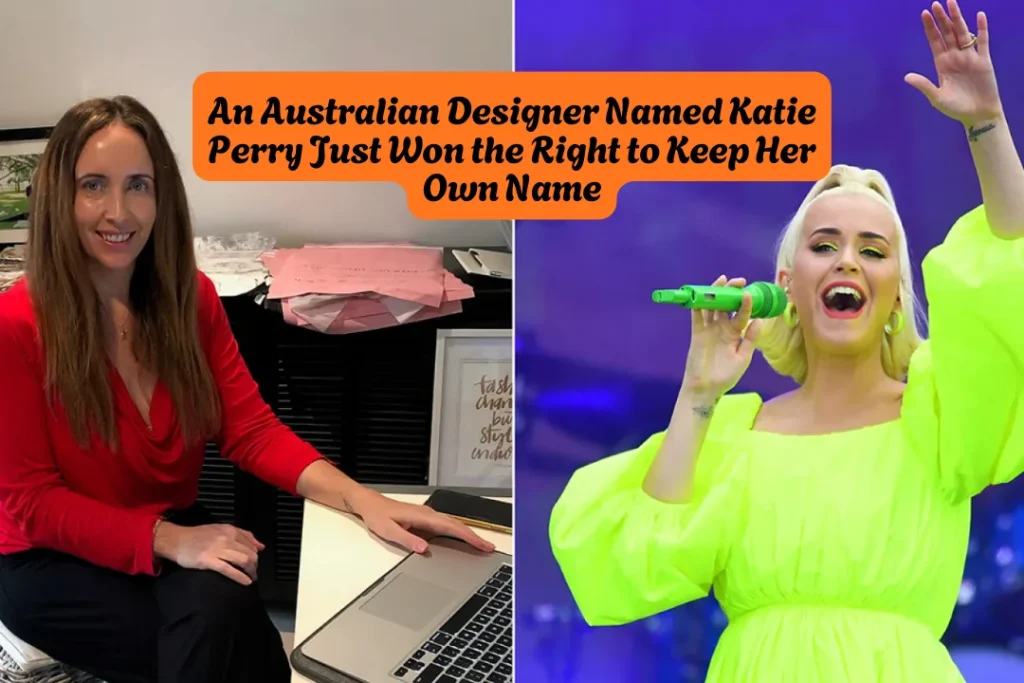
An Australian Designer Named Katie Perry Just Won the Right to Keep Her Own Name
Australia’s High Court ruled on March 11, 2026 that Sydney fashion designer Katie Taylor — born Katie Perry — did not violate trademark laws by selling clothes under the “Katie Perry” name. The ruling ended a legal battle that began in 2009 when the American pop star’s lawyers demanded the designer stop using her own birth name. The case will now return to a lower court to resolve remaining issues, including whether the designer waited too long to bring her infringement claims.
Quick Facts
| Field | Detail |
| Case Name | Taylor v. Killer Queen LLC |
| Case Number | S49/2025 |
| Court | High Court of Australia |
| Judgment Date | March 11, 2026 |
| Appellant (Designer) | Katie Jane Taylor (born Katie Jane Perry) |
| Respondents | Killer Queen LLC; Katy Perry (Katheryn Elizabeth Hudson); associated companies |
| Disputed Trademark | “Katie Perry” — Class 25 (Clothing), registered September 29, 2008 |
| Singer’s Registered Mark | “Katy Perry” — Class 9 (Recording Discs) and Class 41 (Entertainment), registered November 7, 2011 |
| Decision | 3–2 majority in favor of the designer; trademark cancellation overturned |
| Laws Applied | Trade Marks Act 1995 (Cth), ss. 60, 88(2)(a), 88(2)(c) |
| Justices | Gordon ACJ, Steward J, Gleeson J, Jagot J, Beech-Jones J |
| Remaining Issues | Infringement claim remitted to Full Federal Court; laches defense (10-year delay) pending |
| Outcome | Designer retains trademark; case not fully resolved |
What Actually Happened?
Sydney-based designer Katie Taylor launched her fashion label under the name “Katie Perry” in 2007 and registered the business name that year. By 2008, she had begun selling clothing under the Katie Perry label at local markets while promoting her brand through a website and social media platforms. She was born with the name — it was never a stage name or a brand she invented.
In July 2008, Taylor first heard about the American singer when “I Kissed a Girl” came on the radio. She registered the “Katie Perry” clothing trademark in September 2008 — just months after the song’s release. Then came the letter. Ahead of the singer’s first Australian tour in 2009, the pop star’s lawyers sent Taylor a cease and desist letter demanding she withdraw her trademark application and stop selling clothes, stop her website, and stop all advertising.
The two sides attempted to settle but could not agree on terms. The singer amended her own trademark application to cover music and entertainment only, and the legal dispute faded — until 2019, when Taylor sued the singer for trademark infringement over merchandise sold during the singer’s 2014 Australian tour. That filing triggered a decade-long chain of rulings, reversals, and appeals that concluded — for now — at Australia’s highest court.
What Did Each Court Decide?
A court initially ruled in Taylor’s favor in 2023, finding that merchandise sales during the singer’s 2014 Australian tour — including jackets, hoodies, T-shirts, and sweatpants carrying the Katy Perry name — violated her trademark rights.
In 2024, an appellate court overturned that ruling and cancelled the designer’s trademark entirely. The judges concluded that the singer had effectively been using her name as a commercial brand before the clothing business launched.
On March 11, 2026, a 3–2 majority of the High Court allowed Taylor’s appeal and set aside the Full Court’s orders to cancel the Designer’s Mark. The High Court found the appeals court made several legal errors and restored the original trial judge’s findings. The designer keeps her trademark — but the case is not completely over.
What Did the High Court Actually Rule?
The High Court’s majority opinion, written by Justice Jagot (with Justices Steward and Gleeson substantially agreeing), made three key legal findings that will shape Australian trademark law going forward.
First, the majority held that a trademark can only acquire a reputation in Australia in respect of particular goods or services — meaning the singer’s reputation in music and entertainment could not simply be extended to clothing on the basis of a general “common practice” of pop stars selling merchandise. The appeals court’s reasoning on this point was rejected as a legal error.
Second, the majority found the appeals court had wrongly conflated the personal fame of Katy Perry with the reputation of her registered trademark. Being a famous person and having a trademark with a strong commercial reputation in clothing are two different things under Australian law.
Third, the trial judge’s finding that there was no real risk of consumer confusion — supported by a complete absence of any evidence of actual confusion over more than a decade — was not unreasonable and should not have been overturned. The High Court also stated that no ordinary person in Australia, after a moment’s reflection, would believe Katie Perry clothing products were linked to the American singer.
What Laws Applied?
- Trade Marks Act 1995 (Cth), Section 60 — Australian federal law allowing a registered trademark to be cancelled if, at the time of registration, another party’s mark had already acquired a reputation in Australia strong enough that use of the registered mark would likely deceive or confuse consumers. The key legal question was whether this applied to Katy Perry’s reputation in clothing as of September 2008.
- Trade Marks Act 1995 (Cth), Section 88(2)(a) — Allows a court to order the removal of a trademark from the Register if the grounds in Section 60 are established at the time of registration.
- Trade Marks Act 1995 (Cth), Section 88(2)(c) — Allows cancellation of a trademark if, at the time an application for removal is filed, use of the trademark is still likely to deceive or cause confusion — meaning the singer’s legal team argued that even if the trademark was valid in 2008, it should be cancelled based on current circumstances.
- Laches (Equitable Delay Defense) — A legal principle that can bar a claim if a plaintiff waited an unreasonably long time to bring it. Katy Perry’s team argues the designer waited a full decade after the alleged infringement to file her 2019 lawsuit, and says that issue must still be resolved by the Full Federal Court on remand.
What Is Katy Perry Saying?
A representative for the singer said: “Katy Perry has never sought to close down Ms. Taylor’s business or stop her selling clothes under the KATIE PERRY label. Today, by a 3-2 decision, the High Court determined that Ms. Taylor’s trademark can remain on the register. The court sent the case back to the Full Federal Court to determine issues raised by Katy Perry, including Ms. Taylor’s 10-year delay in bringing her case against Katy Perry.”
The singer’s team has consistently maintained that a co-existence agreement was offered to the designer in 2009 and declined. Perry’s legal team also contends that the designer’s failure to sue for nearly a decade — despite knowing about the alleged infringement — should extinguish the infringement claim entirely under the laches doctrine.
The singer has not issued any additional personal statement as of March 12, 2026.
What Is the Designer Saying?
Taylor said in a statement: “This has been an incredibly long and difficult journey. But today confirms what I always believed — that trademarks should protect businesses of all sizes. This case has never just been about a name. It has been about protecting small business in Australia, and standing up for what is right and showing that we all matter.”
Taylor told CNN after reading the ruling: “Honestly, it kind of feels like a dream. I keep thinking, like, oh my god, has this actually happened?” She said she plans to return to selling her garments at The Rocks Market in Sydney on weekends — this time without a lawsuit hanging over her head.
What Happens Next?
- The trademark infringement claim is NOT resolved. The High Court sent the case back to the Full Federal Court to determine the remaining issues, including whether the designer’s 10-year delay in filing her infringement claims bars her from receiving any damages or relief.
- The laches defense is the central remaining issue. Katy Perry’s legal team will argue before the Full Federal Court that the designer waited too long to sue for the 2014 merchandise sales and should receive nothing, even with a valid trademark.
- The designer’s trademark is now secure. The High Court ruling on trademark cancellation is final. The singer cannot challenge the registration of “Katie Perry” in the clothing category again on the same grounds.
- The ruling carries significant implications for trademark owners in Australia, particularly small businesses, and clarifies the law on when a registered trademark can be removed because of the growing fame of a rival mark. Australian trademark attorneys expect this decision to be cited in future cases where a celebrity’s fame is used to challenge a small business’s registered mark.
- No damages have been awarded yet. Whether the designer receives any financial compensation for the alleged 2014 tour merchandise infringement depends entirely on the Full Federal Court’s ruling on the laches question.
This page will be updated as the case develops.
Full Case Timeline
| Milestone | Date |
| Designer launches “Katie Perry” fashion label | 2007 |
| Designer registers “Katie Perry” trademark (clothing, Class 25) | September 29, 2008 |
| Singer’s team sends cease and desist letter | 2009 |
| Settlement negotiations break down | 2009–2011 |
| Singer registers “Katy Perry” trademark (music/entertainment) | November 7, 2011 |
| Singer’s Australian tour sells Katy Perry branded clothing | 2014 |
| Designer files infringement lawsuit | 2019 |
| Federal Court rules in designer’s favor (trial) | 2023 |
| Full Federal Court overturns ruling; cancels designer’s trademark | 2024 |
| Designer appeals to High Court | 2024–2025 |
| High Court rules 3–2 in designer’s favor; trademark restored | March 11, 2026 |
| Full Federal Court to hear remaining infringement claim | TBD |
| Damages decision (if any) | TBD |
Frequently Asked Questions
Did Katie Perry (the designer) win the lawsuit against Katy Perry the singer?
Yes and no. The designer won the most important part: the High Court ruled 3–2 on March 11, 2026 that her “Katie Perry” clothing trademark is valid and cannot be cancelled. However, the case is not completely over. The Full Federal Court must still decide whether the designer waited too long to sue for the 2014 merchandise sales, which could affect any damages she receives.
Can the singer still sell clothing under the Katy Perry name in Australia?
This remains unresolved. The designer’s trademark for clothing in Australia is now confirmed as valid. Whether the singer’s past sales of tour merchandise constituted infringement — and whether the designer can recover damages for those sales — goes back to the Full Federal Court for a final decision.
What does this ruling mean for small businesses in Australia?
The High Court’s decision confirms that a registered trademark in a specific category — such as clothing — is protected even when a much more famous person shares a similar name in a different category, such as music. A celebrity’s general fame cannot automatically override a small business’s validly registered trademark in a different product category.
Was this case about copyright or trademark law?
This was a trademark case, not a copyright case — an important distinction. Copyright protects creative works like songs, books, and art. Trademark law protects brand names and logos used in commerce to identify the source of goods. The entire dispute centered on who had the legal right to use the “Katie Perry” name to sell clothing in Australia.
How is the designer’s name different from the singer’s?
The designer was born Katie Jane Perry and uses “Katie” — spelled with an “ie.” The singer was born Katheryn Elizabeth Hudson and adopted the stage name “Katy” — spelled with a “y.” The High Court found that difference, combined with the absence of any evidence of real-world consumer confusion over more than a decade, supported the designer’s position.
Did the singer try to take the designer’s business away?
The singer’s team says no, stating they never sought to close the designer’s business or stop her selling clothes under the Katie Perry label. The designer, however, says the 2009 cease and desist letter demanded she stop all sales, shut down her website, and pull all advertising. Both parties agree settlement negotiations in 2009 broke down without an agreement.
What was the 2014 tour merchandise dispute about?
During Katy Perry’s 2014 Australian tour, her team sold branded merchandise — including jackets, hoodies, T-shirts, and sweatpants — bearing the Katy Perry name. The designer argued those clothing sales infringed her registered Australian clothing trademark. A trial court agreed, but the appeals court later cancelled the designer’s trademark entirely. Now that the trademark is restored, the infringement claim goes back to court.
Can this ruling affect trademark disputes in other countries?
This ruling applies only to Australian trademark law under the Trade Marks Act 1995. It does not directly affect trademark registrations in the United States, the United Kingdom, or the European Union, where separate proceedings would be needed. However, the legal reasoning — particularly around the limits of celebrity reputation in cross-category trademark disputes — may be cited in comparable international cases.
Sources & References
- Taylor v. Killer Queen LLC, Case No. S49/2025 — High Court of Australia Official Judgment (Primary source — official court record)
- High Court of Australia — Judgment Summary HCA 5/2026 (Official judgment summary)
- CNN: Katie Perry vs. Katy Perry — Australian designer wins trademark, March 11, 2026 (Credible news source)
- Billboard: Katy Perry vs. Katie Perry trademark fight continues, March 11, 2026 (Credible news source)
- Lexology: High Court hands down landmark trade mark decision, March 11, 2026 (Legal industry analysis — Lexology)
Last Updated: March 12, 2026
Disclaimer: This article is for informational purposes only and does not constitute legal advice. Legal claims and outcomes depend on specific facts and applicable law. For advice regarding a particular situation, consult a qualified attorney.
About the Author

Sarah Klein, JD, is a licensed attorney and legal content strategist with over 12 years of experience across civil, criminal, family, and regulatory law. At All About Lawyer, she covers a wide range of legal topics — from high-profile lawsuits and courtroom stories to state traffic laws and everyday legal questions — all with a focus on accuracy, clarity, and public understanding.
Her writing blends real legal insight with plain-English explanations, helping readers stay informed and legally aware.
Read more about Sarah