
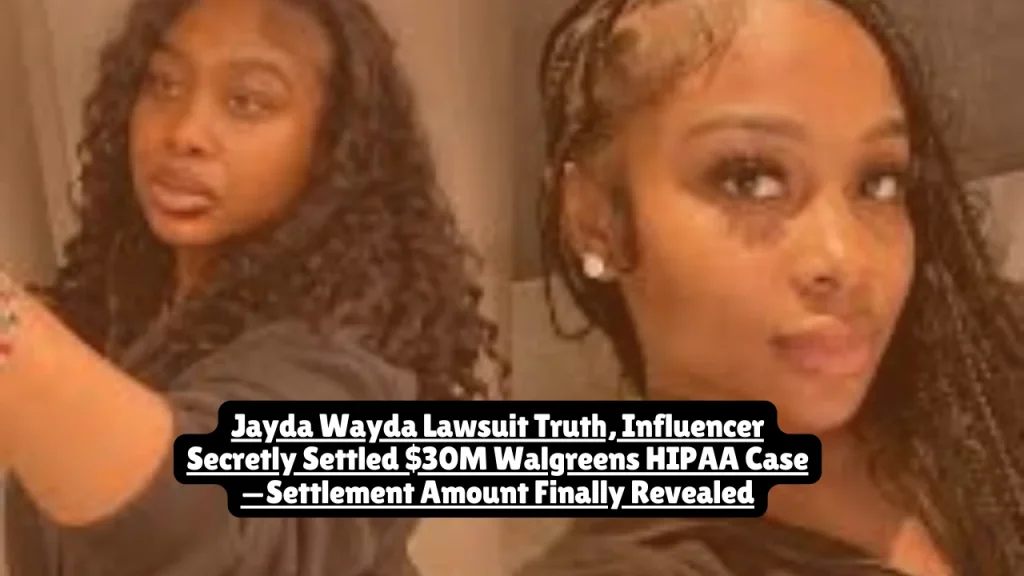
Jayda Wayda Lawsuit Truth, Influencer Secretly Settled $30M Walgreens HIPAA Case—Settlement Amount Finally Revealed
The truth about the Jayda Wayda lawsuit: Social media influencer Jayda Cheaves (known as Jayda Wayda) filed a $30 million lawsuit against Walgreens in June 2019 after pharmacy employees illegally accessed and leaked her private medical records. The case, filed in Georgia Northern District Court, alleged HIPAA violations when Walgreens employees shared her prescription information without authorization, sparking false rumors about her health. While Jayda publicly denied settlement reports for years, court documents reveal the case was settled, though the exact payout amount remains confidential.
Here’s what actually happened and what the settlement means for patient privacy rights.
The Walgreens Medical Records Breach
In 2019, employees at a Walgreens pharmacy in Atlanta improperly accessed Jayda Cheaves’ prescription records and leaked information about her medications to third parties.
The unauthorized disclosure led to widespread social media posts falsely claiming Jayda had a sexually transmitted disease. The leaked information included medication names and personal health details protected under federal privacy law.
Jayda’s complaint, filed as Cheaves v. Walgreen Co. (Case No. 1:19-cv-02970) in U.S. District Court for the Northern District of Georgia, accused Walgreens of violating HIPAA privacy regulations and Georgia state privacy laws.
The lawsuit alleged multiple Walgreens employees “snooped into her medical records” without legitimate business reasons and failed to maintain proper security protocols to protect patient data.
Legal Claims Against Walgreens
Jayda’s $30 million lawsuit included several legal claims beyond HIPAA violations.
Her attorneys argued Walgreens breached its duty to protect patient confidentiality, a responsibility all healthcare providers and pharmacies must uphold under federal and state law.
The complaint claimed invasion of privacy, negligence in safeguarding medical records, and intentional infliction of emotional distress caused by the unauthorized disclosure.
Jayda’s legal team, led by attorneys from Davis Bozeman Law Firm and The Spence Law Firm, argued that Walgreens knew or should have known about the privacy breach but failed to take adequate action to prevent or stop it.
The case highlighted critical gaps in pharmacy data security protocols. Similar HIPAA violation lawsuits have resulted in millions in settlements when healthcare providers fail to protect patient information.
The Settlement and Confidentiality Agreement
Court records show the Jayda Wayda lawsuit against Walgreens was settled, though the exact terms remain confidential under a court-ordered confidentiality agreement.
Social media speculation claimed settlement amounts ranging from $15 million to $50 million, but these figures have never been officially confirmed. Jayda herself has consistently denied discussing settlement details publicly.
In October 2024, documents began circulating suggesting a settlement had been entered into the court system in March of an unspecified year, but Jayda’s representatives dismissed these reports as speculation.
What we know for certain: The case status changed from “open” to resolved, indicating some form of settlement or dismissal occurred. Federal court records confirm the case was filed June 27, 2019, and is no longer actively litigated.
HIPAA Violations and Patient Privacy Law
The Jayda Wayda lawsuit exposed serious violations of the Health Insurance Portability and Accountability Act (HIPAA), the federal law protecting medical privacy.
HIPAA requires healthcare providers, including pharmacies, to implement safeguards preventing unauthorized access to protected health information. Employees may only access patient records when necessary for treatment, payment, or healthcare operations.
Walgreens employees who accessed Jayda’s records without legitimate business reasons violated these core HIPAA principles. The subsequent disclosure to third parties compounded the violation.
While HIPAA doesn’t allow private individuals to sue directly for violations (only the federal government can enforce HIPAA through penalties), patients can pursue civil lawsuits under state privacy laws, negligence claims, and breach of confidentiality theories—exactly what Jayda’s legal team did.
The Department of Health and Human Services’ Office for Civil Rights investigates HIPAA violations and can impose fines up to $1.5 million per violation category per year. Whether federal regulators separately investigated Walgreens over this incident remains unclear.
Impact on Healthcare Privacy and Future Cases
The Jayda Wayda lawsuit represents a growing trend of high-profile privacy litigation against healthcare providers who fail to protect patient data.
In recent years, major healthcare systems have faced similar lawsuits. The Kaiser class action lawsuit resulted in a $47.5 million settlement over sharing patient data with Google and Microsoft, while multiple hospital systems settled MyChart tracking cases for millions.
These settlements send a clear message: Healthcare providers cannot treat patient medical information carelessly, and violations carry serious financial consequences.
For public figures like Jayda, the damage from medical privacy breaches extends beyond personal embarrassment to professional reputation and business opportunities. Social media amplifies the harm exponentially.
Current Status and Jayda’s Response
As of January 2026, Jayda Cheaves has not publicly confirmed settlement details or amounts despite continued social media speculation.
In October 2024, Jayda appeared in a video discussing having received a large sum of money but did not specify the source. Online commentators connected this to the Walgreens settlement, though Jayda never explicitly confirmed the link.
When asked directly about the lawsuit in interviews, Jayda has consistently declined to discuss it, citing legal agreements that likely include non-disclosure provisions typical of settlement agreements.
What’s clear: Jayda has moved forward with her business ventures, launching Waydamin apparel and building her brand as a successful entrepreneur with millions of social media followers.
What This Means for Patients
The Jayda Wayda lawsuit highlights critical patient privacy rights everyone should know.
You have the right to know if healthcare providers access your medical records without authorization. You can request an accounting of disclosures to see who accessed your information.
If you suspect unauthorized access to your medical records, you can file a HIPAA complaint with the Office for Civil Rights at hhs.gov/ocr or call 1-800-368-1019.
You may also have grounds for a civil lawsuit under state privacy laws, depending on your jurisdiction and the circumstances of the breach.
Healthcare providers must train employees on HIPAA compliance, implement access controls limiting who can view patient records, and monitor for unauthorized access attempts.
Frequently Asked Questions
How much did Jayda Wayda get from the Walgreens settlement?
The exact settlement amount remains confidential under court seal. While social media speculation ranges from $15 million to $50 million, Jayda has never publicly confirmed any specific figure, and court documents do not disclose the settlement terms.
Can I sue my pharmacy for violating my medical privacy?
Yes, though you cannot sue directly under HIPAA, you can pursue civil claims under state privacy laws, negligence, breach of confidentiality, and intentional infliction of emotional distress if a pharmacy improperly accesses or shares your medical information without authorization.
What happened to the Walgreens employees who leaked Jayda’s information?
Court documents and public statements have not disclosed whether individual employees faced disciplinary action, termination, or criminal charges. Walgreens has not publicly commented on employee-related consequences from the incident.
Is the Jayda Cheaves Walgreens lawsuit still ongoing?
No, court records indicate the case has been resolved, likely through settlement. The case was filed June 27, 2019 in Georgia Northern District Court and is no longer listed as an active lawsuit.
How can I find out if someone accessed my medical records?
Request an “accounting of disclosures” from your healthcare provider, which lists who accessed your records and when. Under HIPAA, providers must respond to these requests within 60 days, though they may charge a reasonable fee for copies.
What should I do if my pharmacy leaked my medical information?
Document everything, file a HIPAA complaint with the Office for Civil Rights, and consult with a privacy attorney to discuss potential civil claims under state law for invasion of privacy, negligence, or breach of confidentiality.
Did Jayda Wayda really have herpes?
The medical information leaked was never officially confirmed, and speculation about specific diagnoses is both unverified and irrelevant to the legal violation. What matters legally is that Walgreens employees improperly accessed and shared protected health information without authorization.
Last Updated: January 21, 2026
Disclaimer: This article provides informational content only and does not constitute legal advice.
Stay updated on major privacy lawsuits and your rights when healthcare providers mishandle your personal information.
Stay informed, stay protected. — AllAboutLawyer.com
About the Author

Sarah Klein, JD, is a licensed attorney and legal content strategist with over 12 years of experience across civil, criminal, family, and regulatory law. At All About Lawyer, she covers a wide range of legal topics — from high-profile lawsuits and courtroom stories to state traffic laws and everyday legal questions — all with a focus on accuracy, clarity, and public understanding.
Her writing blends real legal insight with plain-English explanations, helping readers stay informed and legally aware.
Read more about Sarah