
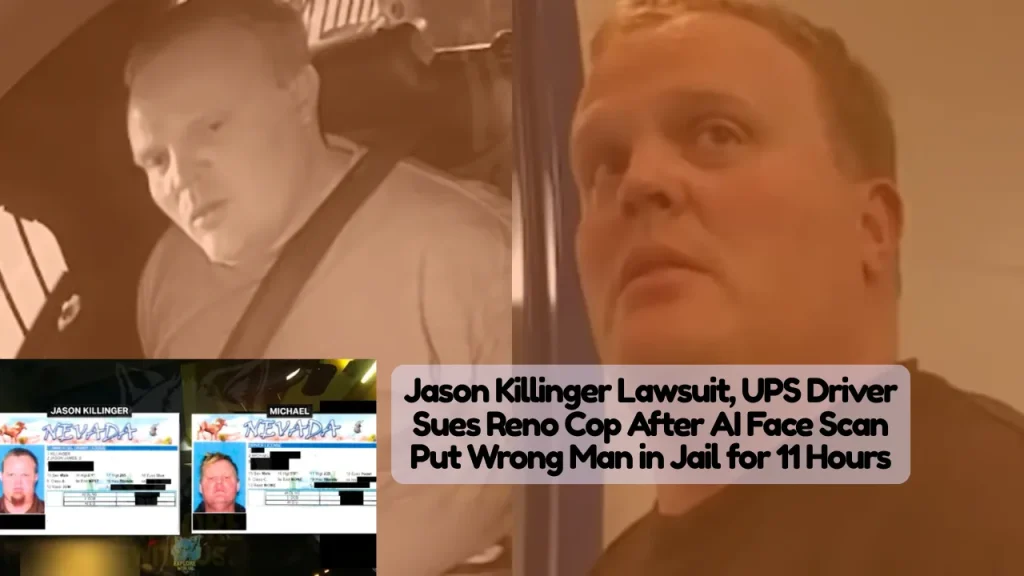
Jason Killinger Lawsuit, UPS Driver Sues Reno Police Officer R. Jager After AI Face Scan Put Wrong Man in Jail for 11 Hours
Jason Killinger filed a federal civil rights lawsuit against Reno Police Officer R. Jager after the officer arrested him based on a casino’s faulty AI facial recognition system that flagged him as a “100% match” for a banned patron. Despite showing multiple valid IDs proving his identity, Killinger was detained for 11 hours and handcuffed for four hours before fingerprints confirmed the casino’s technology was wrong.
The lawsuit, filed July 30, 2025 in U.S. District Court for the District of Nevada (Case No. 3:25-cv-00388), alleges Officer Jager fabricated evidence in police reports and violated Killinger’s Fourteenth Amendment due process rights through malicious prosecution. Killinger has already settled with Peppermill Casino for an undisclosed amount.
The case is scheduled for trial in 2026.
What Is the Jason Killinger Lawsuit About?
On September 17, 2023, Peppermill Casino’s facial recognition system misidentified Killinger as Michael Ellis, a man who had been banned from the casino six months earlier for sleeping on the premises. Security detained Killinger despite his protests and called police.
Officer Jager arrived and reviewed Killinger’s Nevada driver’s license, UPS pay stub, and vehicle registration—all matching his name and physical description. According to court filings, Jager accused Killinger of having a “DMV hook-up” to fabricate documents and arrested him for trespassing.
Killinger was detained for 11 hours total, handcuffed for four hours, suffering bruising and shoulder pain. Fingerprint verification eventually proved his identity, and trespassing charges were dismissed.
The lawsuit now targets Officer Jager specifically for allegedly fabricating evidence in police reports, omitting exculpatory fingerprint results, and violating constitutional rights.
Related article: NEC Lawsuit Formula, Thousands Sue Abbott and Mead Johnson Over Similac and Enfamil Claims
The Facial Recognition Error That Started Everything
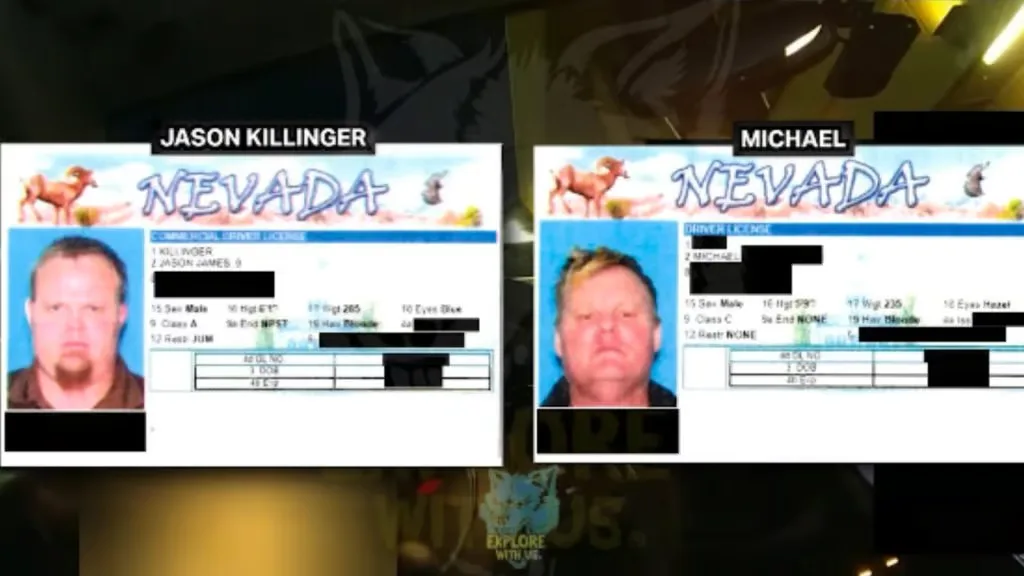
Peppermill Casino’s AI system flagged Killinger as a “100% match” for Michael Ellis, who had been issued a six-month trespass ban in March 2023 for sleeping on casino premises. The ban was set to expire September 26, 2023—nine days after Killinger’s arrest.
Physical Differences Between Killinger and Ellis:
- Height: Killinger is 6’1″, Ellis is 5’9″ (4-inch difference)
- Eyes: Killinger has blue eyes, Ellis has hazel eyes
- Ears: Ellis has noticeably larger ears
- Hair: Different styles documented in driver’s licenses
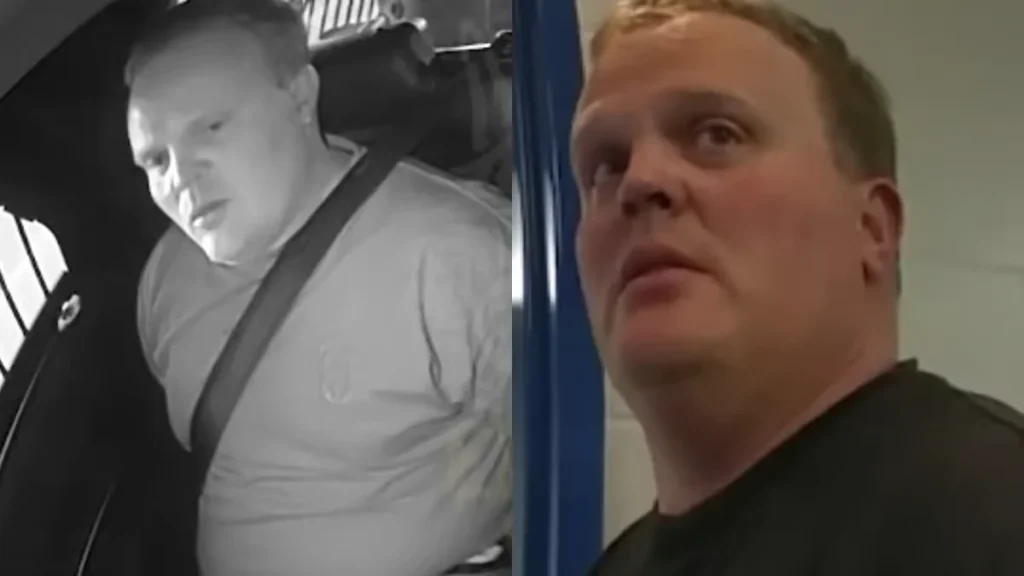
Bodycam footage released by Reno Police shows the officer acknowledged the AI system viewed the two men as a “99.9% match” but still relied on the technology over physical evidence.
Casino security identified Killinger as Ellis and refused to believe his driver’s license showing his true identity. They detained him and called police rather than conducting further verification.
What Legal Claims Were Made Against Officer Jager?
Killinger’s lawsuit asserts multiple federal civil rights violations:
Fourteenth Amendment Due Process Violations: Killinger argues Jager violated his constitutional right to due process by initiating criminal proceedings without probable cause and fabricating evidence to justify the arrest.
Fabrication of Evidence: The complaint alleges Jager “knowingly inserted false statements” into his incident report and arrest declaration, specifically claiming Killinger’s IDs were “conflicting” and “appeared to be fraudulent” despite all documents matching his name and description.
Malicious Prosecution: The lawsuit claims Jager intentionally and wrongfully initiated trespassing charges despite knowing or having reason to know Killinger was not Michael Ellis.
Omission of Exculpatory Evidence: Killinger contends Jager’s reports omitted the fingerprint results that conclusively proved his identity and falsely portrayed him as uncooperative and using conflicting identities.
Fabrication by Concealment: The suit argues these omissions amounted to fabrication through deliberate concealment of evidence that would have exonerated Killinger.
Officer Jager’s Report: What the Police Documents Said
In his police report, Officer Jager wrote that Killinger had “conflicting identification” despite all IDs indicating he was Jason Killinger. Jager stated he “lacked satisfactory evidence to reasonably assure me that he was who he claimed to be.”
According to the lawsuit, Jager told a supervising officer that Killinger “probably has a DMV hook-up,” suggesting access to fake identification without any evidence supporting this claim.
What the Bodycam Footage Reveals: Bodycam video shows Jager reviewing both Killinger’s ID and the casino’s record for Michael Ellis. The officer acknowledged the AI system’s 99.9% match claim and searched police databases to determine whether Killinger was using a fake ID.
“I have a feeling he’s somehow making some fake identification or something,” Jager said on camera.
The footage also shows that after speaking with Killinger, Jager told colleagues he “genuinely kinda believed” Killinger was telling the truth—yet still proceeded with the arrest.
What Employment and Civil Rights Laws Apply?
This case involves federal civil rights law under 42 U.S.C. § 1983, which provides a legal remedy when government officials acting “under color of law” violate constitutional rights.
Fourth Amendment Protections: False arrest claims typically arise under the Fourth Amendment’s protection against unreasonable seizures. The Supreme Court held in Manuel v. City of Joliet (2017) that malicious prosecution claims based on pretrial detention without probable cause fall under Fourth Amendment protections.
Fourteenth Amendment Due Process: Killinger’s lawsuit emphasizes Fourteenth Amendment due process violations, arguing that initiating criminal proceedings without probable cause and with fabricated evidence violates fundamental rights.
Elements of Federal Malicious Prosecution Claims: To succeed on a § 1983 malicious prosecution claim, plaintiffs must prove:
- Criminal prosecution was initiated against them
- The defendant participated in the decision to prosecute
- Lack of probable cause for the prosecution
- Deprivation of liberty beyond the initial seizure
- Favorable termination of criminal proceedings
Killinger’s trespassing charge was dismissed, satisfying the favorable termination requirement.
Why Officer Jager May Not Have Qualified Immunity
Police officers typically receive qualified immunity from civil lawsuits unless they violated “clearly established” constitutional rights. However, courts deny qualified immunity when officers lack probable cause based on readily available exculpatory evidence.
Lack of Probable Cause: Courts have held that qualified immunity does not protect officers who ignore plainly exculpatory evidence. Killinger presented three forms of valid identification, all matching his name and description.
Fabricated Evidence: The Constitution prohibits officers from making perjurious or recklessly false statements in police reports. Courts have denied qualified immunity when officers knowingly insert false information to manufacture probable cause.
Easily Available Exculpatory Information: Physical differences between Killinger and Ellis were readily apparent—a 4-inch height difference, different eye colors, different physical features. Officers had time to review casino video, compare it to Killinger, and verify his claims about being nearby at his cousin’s house.
Precedent for Denying Immunity: In similar cases involving misidentification, courts have ruled officers are not entitled to qualified immunity when they arrest someone despite obvious physical differences and valid documentation proving identity.
What Damages Is Killinger Seeking?
The complaint seeks compensatory, special, and punitive damages but does not specify dollar amounts.
Compensatory Damages: These would cover actual losses including:
- Physical injuries (shoulder pain, bruising from handcuffs)
- Emotional distress from wrongful detention
- Lost wages during 11-hour detention
- Criminal record despite dismissed charges
Special Damages: Specific calculable losses beyond general compensatory damages.
Punitive Damages: Additional damages intended to punish the defendant for egregious conduct and deter similar behavior. Courts award punitive damages when conduct demonstrates reckless disregard for constitutional rights.
Current Case Status and Timeline
September 17, 2023: Killinger arrested at Peppermill Casino after facial recognition misidentification
May 2024: Killinger settles with Peppermill Casino for undisclosed amount
July 30, 2025: Lawsuit filed against Officer R. Jager in U.S. District Court for the District of Nevada
September 26, 2025: Defendant files opposition to plaintiff’s motion for partial summary judgment
October 20, 2025: Extended deadline for plaintiff’s reply to opposition
December 9, 2025: Reno Police Department releases arrest records and bodycam footage
2026: Case expected to go to trial
The lawsuit includes motions for partial summary judgment, indicating both parties are seeking pre-trial rulings on specific legal issues.
Reno Police Department’s Response
The Reno Police Department has denied any wrongdoing. The department has not publicly commented on the specific allegations in Killinger’s lawsuit against Officer Jager.
Peppermill Casino has ignored requests for comment about the incident and the settlement.
Officer Jager’s legal representation has filed opposition briefs to Killinger’s motions, and the case remains in active litigation.
Broader Implications for AI Facial Recognition Technology
Killinger’s case highlights critical problems with facial recognition technology in law enforcement and private security:
Accuracy Concerns: Despite claiming “100% match” accuracy, the system failed to distinguish between two individuals with notable physical differences. Commercial facial recognition systems have documented higher error rates for certain demographics.
Over-Reliance on Technology: Officer Jager trusted the casino’s AI system over physical evidence, multiple valid IDs, and observable differences between Killinger and Ellis. Bodycam footage shows the officer acknowledged doubts but deferred to technology.
Lack of Human Verification: Neither casino security nor Officer Jager conducted adequate verification before detention and arrest, despite easily accessible exculpatory information.
Legal Liability for AI Errors: The case establishes that organizations using facial recognition cannot escape liability by blaming technology. Both the casino (which settled) and the officer (facing lawsuit) bear responsibility for acting on flawed AI results.
Criminal Records from Dismissed Charges: Even after dismissal, Killinger now has a criminal record from being charged with trespassing—a lasting consequence of technological error compounded by inadequate human oversight.
Comparison to Similar Wrongful Arrest Cases
Killinger’s lawsuit follows a pattern of cases where facial recognition errors or mistaken identity led to wrongful arrests:
Detroit Cases: Multiple wrongful arrests in Detroit stemmed from facial recognition misidentifications. Robert Williams was arrested in 2020 after facial recognition incorrectly matched him to a shoplifting suspect. Michael Oliver and Porcha Woodruff were similarly misidentified in separate 2019 and 2023 incidents.
Baltimore AI Gun Detection Error (2025): A 16-year-old student was surrounded by armed officers after an AI gun detection system falsely flagged a Doritos bag as a firearm, illustrating how AI errors escalate into real-world harm.
Common Patterns:
- Technology provides false confidence through percentage matches
- Officers defer to AI results over physical evidence
- Victims repeatedly assert innocence with proof of identity
- Verification occurs only after detention and arrest
- Charges are dismissed but records remain
These cases demonstrate systemic issues with deploying AI surveillance without adequate human oversight and verification protocols.
What Happens Next in the Killinger Case?
Immediate Legal Proceedings: The court will rule on pending motions for partial summary judgment. These motions seek to resolve specific legal issues before trial, potentially narrowing the scope of disputed facts.
Qualified Immunity Determination: The court must decide whether Officer Jager is entitled to qualified immunity. If immunity is denied, the case proceeds to trial on the merits of Killinger’s constitutional claims.
Discovery Process: Both parties continue gathering evidence through depositions, document requests, and expert testimony. Bodycam footage, police reports, casino records, and fingerprint verification documents will be central evidence.
Potential Settlement: Many § 1983 cases settle before trial. Given that Killinger already settled with Peppermill Casino, settlement with Officer Jager remains possible depending on qualified immunity rulings and strength of evidence.
Trial in 2026: If the case proceeds to trial, a jury will determine:
- Whether Officer Jager lacked probable cause for arrest
- Whether Jager fabricated evidence in police reports
- Whether these actions violated clearly established constitutional rights
- What damages Killinger suffered
- Whether punitive damages are warranted
Impact on Police Practices and AI Technology Use
This lawsuit could influence how law enforcement agencies handle AI-generated identifications:
Verification Requirements: Agencies may implement stricter policies requiring independent verification before acting on facial recognition matches, regardless of confidence percentages.
Training on Technology Limitations: Officers need training on AI system error rates, bias issues, and the importance of human judgment over algorithmic outputs.
Documentation Standards: The fabrication allegations highlight the importance of accurate police reporting and the legal consequences of inserting false information to justify arrests.
Liability for Technology Vendors: While this lawsuit targets the officer rather than the facial recognition system vendor, similar cases raise questions about vendor liability for defective AI systems used in criminal justice.
Legislative Response: Cases like Killinger’s fuel legislative efforts to regulate or ban facial recognition use by law enforcement and private entities, with several cities and states considering or enacting restrictions.
Frequently Asked Questions
Why is Jason Killinger suing the police officer instead of just the casino?
Killinger already settled his claims against Peppermill Casino for an undisclosed amount. The lawsuit against Officer Jager targets the officer’s alleged fabrication of evidence in police reports and violation of constitutional rights through malicious prosecution—distinct claims from the casino’s negligent use of facial recognition technology.
What makes this a federal civil rights case rather than just a state law claim?
The lawsuit is filed under 42 U.S.C. § 1983, which provides federal jurisdiction for constitutional violations by government officials acting under color of law. Killinger alleges violations of his Fourteenth Amendment due process rights, making this a federal civil rights matter.
Can Officer Jager claim qualified immunity even though he was wrong?
Qualified immunity protects officers from liability unless they violated “clearly established” constitutional rights. Courts deny immunity when officers ignore readily available exculpatory evidence or fabricate evidence to manufacture probable cause. The court must determine whether a reasonable officer in Jager’s position would have known the arrest violated Killinger’s rights.
What evidence does Killinger have to prove his claims?
Killinger’s evidence includes: (1) three forms of valid identification all matching his name and description, (2) bodycam footage showing the officer’s statements and actions, (3) police reports containing allegedly false statements, (4) fingerprint verification that proved his identity, (5) physical differences between himself and Michael Ellis, (6) dismissed trespassing charges showing favorable termination.
Does Killinger have a criminal record even though charges were dismissed?
Yes. Despite the dismissal, Killinger’s arrest paperwork was changed from “John Doe” to “Jason Killinger,” resulting in him being listed for prosecution on a trespassing charge. This creates a criminal record even though he was never the person who was trespassed from the casino.
How common are wrongful arrests from facial recognition errors?
Documented cases remain relatively rare but are increasing as facial recognition adoption grows. Studies show higher error rates for certain demographics, and documented wrongful arrests have occurred in Detroit, Reno, and other jurisdictions. The actual number of errors may be higher than reported cases.
What would punitive damages punish in this case?
Punitive damages would punish Officer Jager’s alleged deliberate fabrication of evidence in police reports and malicious prosecution despite knowing or having reason to know that Killinger was not Michael Ellis. Courts award punitive damages when conduct demonstrates reckless or callous disregard for constitutional rights.
How does this compare to false arrest cases in other states?
Federal civil rights law (§ 1983) applies nationwide, so the legal framework is similar across states. However, some states like California have enacted specific restrictions on qualified immunity for false arrest claims. Nevada law follows federal standards, meaning Killinger must prove Officer Jager violated clearly established constitutional rights.
About the Author

Sarah Klein, JD, is a licensed attorney and legal content strategist with over 12 years of experience across civil, criminal, family, and regulatory law. At All About Lawyer, she covers a wide range of legal topics — from high-profile lawsuits and courtroom stories to state traffic laws and everyday legal questions — all with a focus on accuracy, clarity, and public understanding.
Her writing blends real legal insight with plain-English explanations, helping readers stay informed and legally aware.
Read more about Sarah