
Jason Killinger Lawsuit Update, Case Heads Toward 2026 Trial After AI Facial Recognition Led to 11-Hour Wrongful Detention
Jason Killinger’s federal civil rights lawsuit against Reno Police Officer R. Jager remains active and is expected to go to trial in 2026, after a casino’s faulty AI facial recognition system flagged him as a “100% match” for a banned patron despite his valid IDs proving otherwise. The UPS truck driver spent 11 hours in custody on September 17, 2023, before fingerprints confirmed what his driver’s license, payslip, and vehicle registration had shown all along—he was not the man the Peppermill Casino had banned months earlier.
What Is the Jason Killinger Lawsuit About?
The lawsuit, filed July 30, 2025, in the U.S. District Court for the District of Nevada (Case No. 3:25-cv-00388), alleges Officer Jager fabricated evidence in police reports and violated Killinger’s Fourteenth Amendment due process rights. Killinger claims Jager “knowingly inserted false statements” into his arrest documents, specifically stating that Killinger’s IDs were “conflicting” and “appeared to be fraudulent” despite all documents matching his name and physical description.
The complaint seeks compensatory, special, and punitive damages, though specific amounts have not been disclosed. Killinger’s attorney is Terri Keyser-Cooper. He has already settled a separate lawsuit against Peppermill Casino for an undisclosed amount.
How Did the Facial Recognition Error Happen?
On September 17, 2023, Peppermill Casino’s AI facial recognition system identified Killinger as Michael Ellis, a man who had been banned (“86’d”) from the venue in March 2023 for sleeping on the premises. The system reported a “100% match” despite notable physical differences between the two men, including height, weight, and eye color.
When casino security confronted Killinger, he immediately presented his Nevada driver’s license showing he was Jason James Killinger. Security didn’t believe him and called police. Officer Jager arrived and Killinger provided additional documentation: a UPS payslip, his Peppermill player’s card, vehicle registration, bank cards, and his union card. All documents matched his identity.
Despite this overwhelming evidence, Jager arrested Killinger for trespassing. According to the lawsuit, Jager told a supervising officer that Killinger “probably has a DMV hook-up” to obtain fraudulent IDs—a claim with no supporting evidence.
What Happened During the 11-Hour Detention?
Killinger was handcuffed for approximately four hours of his 11-hour detention, resulting in bruises and shoulder pain. He was only released after fingerprint analysis conclusively proved he was Jason Killinger, not Michael Ellis.
Even after his identity was confirmed, Killinger was charged with trespassing under his real name—despite only Michael Ellis having been trespassed from the casino. The charge was eventually dismissed, but Killinger now has a criminal record from the arrest.
What Are the Legal Claims in the Lawsuit?
Killinger’s lawsuit alleges several violations of his constitutional rights, similar to other recent civil rights claims after wrongful arrest cases:
Fabrication of Evidence: The complaint alleges Jager deliberately falsified police reports by claiming Killinger’s IDs were conflicting when they all matched.
Malicious Prosecution: The suit claims Jager wrongfully initiated trespassing charges knowing or having reason to know Killinger was not Michael Ellis.
Omission of Exculpatory Evidence: Killinger contends Jager’s reports omitted the fingerprint results that proved his identity and falsely portrayed him as uncooperative.
Fourteenth Amendment Violation: The lawsuit argues these actions violated Killinger’s due process rights under the U.S. Constitution.
What Is the Current Status as of February 2026?
As of February 2026, the case remains in active litigation with trial expected in 2026. Both parties have filed motions for partial summary judgment, seeking pre-trial rulings on specific legal issues. The case docket was last updated on January 25, 2026, according to Justia court records.
The Reno Police Department has denied wrongdoing and has not publicly commented on specific allegations. Officer Jager’s legal team has filed opposition briefs to Killinger’s motions.
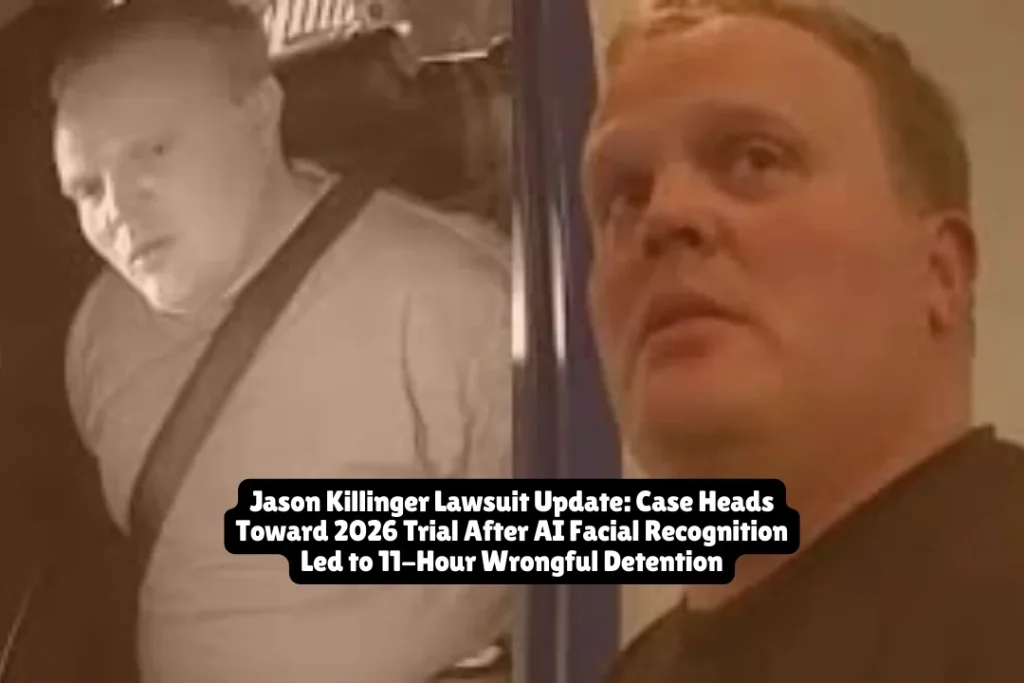
In December 2025, the Reno Police Department released arrest records and bodycam footage from the incident, providing public documentation of the encounter.
What Does This Case Mean for Facial Recognition Technology?
Killinger’s case highlights critical problems with AI facial recognition in law enforcement and private security. Despite the system’s claimed “100% match” accuracy, it failed to distinguish between two individuals with notable physical differences.
The case establishes that organizations using facial recognition cannot escape liability by blaming technology. Both the casino (which settled) and the officer (facing the ongoing lawsuit) bear responsibility for acting on flawed AI results without adequate human verification.
This follows a pattern of facial recognition errors leading to wrongful arrests, particularly in Detroit where multiple individuals were arrested based on misidentifications by similar systems.
Frequently Asked Questions
Has the Jason Killinger lawsuit been settled?
No. As of February 2026, the lawsuit against Officer Jager remains active with trial expected in 2026. Killinger previously settled his separate lawsuit against Peppermill Casino for an undisclosed amount.
How much is Jason Killinger suing for?
The lawsuit seeks compensatory, special, and punitive damages but does not specify exact amounts. Many similar federal civil rights cases settle for amounts ranging from tens of thousands to millions of dollars.
What happened to the trespassing charge against Killinger?
The trespassing charge was dismissed after prosecutors determined it would not be supported by law. However, Killinger still has a criminal record from being charged despite his arrest being based on mistaken identity.
Has Officer Jager faced any disciplinary action?
The Reno Police Department has not publicly disclosed whether Officer Jager faced internal discipline. The department has denied wrongdoing and continues to defend against the lawsuit.
Can you sue police for wrongful arrest based on AI errors?
Yes. Under 42 U.S.C. § 1983, individuals can sue law enforcement officers who violate constitutional rights. Killinger’s case argues the officer fabricated evidence and violated due process, which could overcome qualified immunity protections if proven.
What is qualified immunity and does it protect Officer Jager?
Qualified immunity protects officers from civil liability unless they violated “clearly established” constitutional rights. Killinger’s lawsuit specifically argues Jager’s alleged fabrication of evidence and malicious prosecution violated clearly established Fourth and Fourteenth Amendment protections.
When will the Jason Killinger trial happen?
The case is expected to go to trial sometime in 2026. The exact trial date has not been publicly announced as the case is still in the motion practice and discovery phase.
Last Updated: February 3, 2026
Legal Disclaimer: This article provides general information about the Jason Killinger lawsuit but does not constitute legal advice for specific situations.
Stay informed, stay protected. — AllAboutLawyer.com
About the Author

Sarah Klein, JD, is a licensed attorney and legal content strategist with over 12 years of experience across civil, criminal, family, and regulatory law. At All About Lawyer, she covers a wide range of legal topics — from high-profile lawsuits and courtroom stories to state traffic laws and everyday legal questions — all with a focus on accuracy, clarity, and public understanding.
Her writing blends real legal insight with plain-English explanations, helping readers stay informed and legally aware.
Read more about Sarah