
James Cameron Lawsuit, $500M Copyright Claim Over Avatar, The Way of Water
What Is the James Cameron Lawsuit About?
Animator Eric Ryder filed a $500 million copyright infringement lawsuit on December 15, 2025 against James Cameron, Lightstorm Entertainment, and Disney over Avatar: The Way of Water. Ryder alleges Cameron copied plot elements, character architecture, and specific story devices from his 1990s science fiction story KRZ, particularly the animal-based life-extension substance central to the 2022 sequel. The lawsuit seeks injunctive relief blocking Avatar: Fire and Ash’s December 19, 2025 theatrical release. This marks Ryder’s second attempt after a 2011 lawsuit over the first Avatar was dismissed when courts found Cameron conceived Avatar before Ryder submitted KRZ to Lightstorm.
Latest December 2025 Developments
Lawsuit Filed December 15, 2025
Kasowitz law firm filed the complaint in the United States District Court for the Central District of California on behalf of Ryder against Cameron, Lightstorm Entertainment, The Walt Disney Company, 20th Century Studios, Walt Disney Studios Home Entertainment, and Disney Streaming Services.
Timing and Avatar: Fire and Ash Release
The lawsuit arrives just four days before Avatar: Fire and Ash’s scheduled December 19, 2025 U.S. theatrical release. Ryder seeks an emergency injunction blocking distribution of both The Way of Water and Fire and Ash, claiming continued exploitation of his copyrighted material.
Disney and Cameron Response Discussions
As of December 16, 2025, Disney and James Cameron engaged in discussions about creative ownership in response to the lawsuit. Neither Disney nor Lightstorm had issued formal responses to the complaint as of December 17, 2025. Cameron has historically been emphatic in defending Avatar’s originality, previously stating the film was “my most personal film, drawing upon themes and concepts that I had been exploring for decades.”
Related article: USC Class Action Lawsuits, Key Cases, Outcomes, and Legal Impact

What Makes This Lawsuit Different From the 2011 Case
New Claims Focus on Avatar: The Way of Water
Ryder’s lawsuit explicitly states: “This action is not an attempt to relitigate prior claims. It challenges new acts of copying that occur for the first time in Avatar 2.” The complaint argues Cameron and Lightstorm incorporated KRZ elements blatantly after failed attempts to acquire Ryder’s intellectual property rights.
The Life-Extension Plot Device
The complaint identifies a central plot distinction. Ryder states Avatar: The Way of Water revolves around harvesting an animal-based substance that when refined extends human life—a plot device featured in KRZ but absent from the 2009 Avatar film.
Post-2011 Acquisition Attempts
According to the complaint, after Lightstorm and Cameron won the 2011 lawsuit, they made multiple attempts to acquire Ryder’s underlying intellectual property rights in KRZ. When those attempts failed, Cameron and Lightstorm proceeded to incorporate Ryder’s protected expression into the next Avatar film. Ryder personally disclosed on his KRZ Wiki that Cameron attempted to acquire his copyright to KRZ on May 1, 2018, but Ryder rejected the offer as “wildly insulting.”
Legal Claims Filed
Copyright Infringement
Ryder asserts direct copyright infringement under federal law. The complaint argues Avatar: The Way of Water reproduces Ryder’s creative work at multiple levels:
- Character architecture
- Plot sequencing
- Dramatic gimmicks
- Thematic construction
- Dramatic resolution
The lawsuit emphasizes these are “expressive elements that are newly copied, plainly protectable, and entirely absent from Cameron’s asserted preexisting materials.”
Unfair Competition
The complaint includes unfair competition claims under California law. Ryder argues Cameron’s use of KRZ elements after failed acquisition negotiations constitutes unfair business practices designed to prevent Ryder from developing his own work.
Breach of Contract
Ryder alleges breach of contract stemming from the confidential development relationship between himself and Lightstorm Entertainment in the late 1990s and early 2000s. The original KRZ submission materials included language requiring recipients to maintain confidentiality and not use materials for unauthorized purposes.
Breach of Confidence
The lawsuit asserts breach of confidence claims. Ryder disclosed KRZ materials confidentially to Lightstorm executives including Jay Sanders (Director of Development), Rae Sanchini (Executive Producer of Titanic), and Jon Landau during extensive development work from 2000-2001.
Stakes and Damages Sought
$500 Million in Compensatory Damages
Ryder seeks compensatory damages exceeding $500 million. Avatar: The Way of Water grossed $2.32 billion worldwide, making it the third highest-grossing film of all time. The damages calculation likely considers:
- Box office revenues
- Streaming distribution profits
- Home entertainment sales
- Merchandise and licensing
- Future franchise revenues
Punitive Damages
The complaint requests punitive damages in addition to compensatory damages. Punitive damages in copyright cases require proof of willful infringement—deliberate copying despite knowledge of protected rights. Ryder’s allegations that Cameron attempted to buy KRZ rights after the 2011 lawsuit but then incorporated the material anyway may support willfulness claims.
Injunctive Relief Against Fire and Ash
Ryder seeks a court order prohibiting further exploitation of Avatar: The Way of Water and all future Avatar installments, specifically including Avatar: Fire and Ash. Preliminary injunctions require showing:
- Likelihood of success on the merits
- Irreparable harm without injunction
- Balance of hardships favors plaintiff
- Public interest supports injunction
The December 19, 2025 Fire and Ash release date creates urgency for emergency relief motions, though courts rarely grant injunctions blocking major film releases days before theatrical debuts due to substantial third-party harm.
Evidence Presented in the Complaint
Side-by-Side Comparison Charts
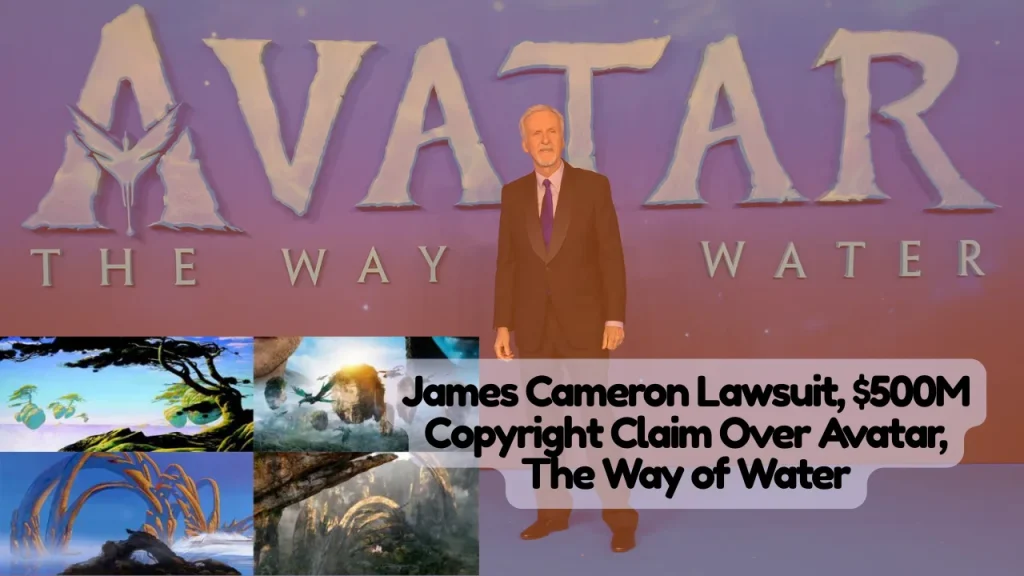
The complaint includes several side-by-side charts matching Ryder’s original KRZ materials to Avatar: The Way of Water’s settings, plot devices, imagery, dialogue, and story arcs. These charts aim to demonstrate what Ryder characterizes as “clear, egregious, and intentional” infringement.
The Animal-Based Life-Extension Substance
The lawsuit emphasizes that Avatar: The Way of Water introduces as a central plot device an animal-based substance that when harvested extends human life—”the very same unique and highly specific narrative mechanism that Ryder conceived and confidentially disclosed years earlier in Ryder’s KRZ works.” The complaint argues this device did not appear in Cameron’s prior work or any preexisting materials and has no independent origin in defendants’ documented development history.
Development Timeline Documentation
Ryder’s materials document extensive collaboration with Lightstorm:
- Late 1990s: Ryder wrote KRZ 2068, a science fiction story set in the distant future involving anthropomorphic beings, oceanic settings, and sinister Earth-based corporations engaging in environmentally harmful mining on the moon of a gas giant planet
- 1998: Ryder began distributing KRZ with proposals containing confidentiality requirements
- Early 2000: KRZ materials reached Jay Sanders, Lightstorm’s development executive
- 2000: Ryder registered KRZ copyright with the Library of Congress
- 2000-2001: Lightstorm worked with Ryder to develop KRZ, encouraging him to write openings, endings, character development, and scenes
- 2001: Lightstorm cancelled the project after telling Ryder no one would be interested in environmentally themed science fiction
Underwater Elements and Volcanic Activity
Ryder alleges underwater settings central to KRZ appear prominently in The Way of Water despite being “effectively non-existent” in the first Avatar. The lawsuit anticipates future Avatar films may incorporate additional KRZ elements including volcanic activity on the ocean floor and hydrothermal vents—elements Ryder developed for KRZ’s oceanic setting on Jupiter’s moon.
The 2011 Lawsuit and Its Dismissal
Original Claims Against First Avatar Film
Ryder sued Cameron and Lightstorm in Los Angeles Superior Court in December 2011, alleging they fraudulently expressed interest in developing KRZ only to use elements in the 2009 Avatar film. The original complaint included six claims:
- Breach of fiduciary duty
- Breach of express contract
- Breach of implied contract
- Promissory fraud
- Fraud and deceit
- Negligent misrepresentation
Independent Creation Defense Prevailed
Los Angeles Superior Court Judge Susan Bryant-Deason granted Cameron’s motion for summary judgment in October 2013. The court found Cameron independently created Avatar based on his 102-page scriptment written in 1995—before Ryder submitted KRZ to Lightstorm in 2000.
Appellate Court Affirmation
Second Appellate District Judge Madeleine Flier affirmed the dismissal in 2016. Judge Flier wrote: “Where defendant owns a prior work containing the same elements, he has no reason, beyond the illicit thrill of copyright infringement, to copy wrongfully from another what he could legally copy from himself.”
The appeals court examined 12 elements Ryder claimed were taken from KRZ and found no considerable similarities. Even if Lightstorm sought to keep KRZ out of the market between 2000-2001, Ryder offered no evidence he could have sold KRZ elsewhere or missed other development opportunities during that period.
Cameron’s Prior Victories in Avatar Copyright Litigation
Cameron successfully defended three separate copyright lawsuits filed within 10 days in late 2011:
- Eric Ryder lawsuit: Dismissed October 2013
- Gerald Morawski lawsuit: Rejected February 2012, alleging Avatar infringed his ideas
- Bryant Moore lawsuit: Denied after federal court found insufficient similarity between Moore’s screenplays Aquatica and The Pollination and Avatar
U.S. District Judge Roger Titus ruled in Moore’s case that Avatar and Moore’s works were “quite different” even at the highest level of generality. Cameron submitted a comprehensive declaration addressing allegations and pointing to past projects and other inspiration sources.
Plaintiff’s Arguments
Express Creative Work Copied, Not Abstract Ideas
The lawsuit distinguishes itself from typical “idea theft” cases by claiming Avatar 2 reproduces Ryder’s “express creative work” rather than merely echoing ideas at a high level of abstraction. The complaint argues copying occurred at specific creative levels:
- Character architecture showing specific trait combinations and relationships
- Plot sequencing detailing narrative structure and event ordering
- Dramatic gimmicks including specific storytelling techniques unique to KRZ
- Thematic construction showing how themes are developed and resolved
- Dramatic resolution demonstrating specific story conclusion methods
New Elements Not Present in Cameron’s Prior Work
Ryder emphasizes the life-extension substance did not appear in Cameron’s 1995 Avatar scriptment or any documented preexisting materials. The complaint argues this demonstrates Cameron could not have independently created this element—it originated in KRZ materials confidentially disclosed to Lightstorm.
Failed Acquisition Attempts Prove Knowledge
The post-2011 acquisition attempts create a unique legal position. Ryder argues Cameron’s efforts to buy KRZ rights after winning the first lawsuit prove:
- Cameron recognized KRZ contained protectable elements he wanted to use
- Cameron knew he lacked rights to those elements
- Cameron’s subsequent incorporation of those elements was deliberate and willful
Pattern of Appropriation After Rejection
The complaint characterizes a pattern: Lightstorm collaborates with independent creators, cancels projects claiming no commercial interest, then incorporates creator’s work into Cameron’s projects. The alleged statement that “no one would be interested in environmentally themed science fiction” followed by Avatar’s environmentally themed $2.9 billion success supports fraud and bad faith claims.
Defense Arguments and Cameron’s Position
Independent Creation Remains Cameron’s Primary Defense
Cameron has consistently maintained Avatar originated entirely from his own creative vision. In his 2013 statement responding to Ryder’s first lawsuit: “Avatar was my most personal film, drawing upon themes and concepts that I had been exploring for decades. Our film was also the product of a team of some of the world’s most creative artists and designers, and it is an insult to all of them when these specious claims are made.”
The 1995 Scriptment as Prior Art
Cameron’s documented 102-page Avatar scriptment from 1995 predates Ryder’s submission of KRZ to Lightstorm by five years. This scriptment established core Avatar elements before Cameron had any exposure to Ryder’s work. The scriptment was circulated around Hollywood to generate interest before Cameron shelved the project due to technological limitations.
Development Timeline Shows No Copying
Defense timeline establishes:
- 1995: Cameron writes Avatar scriptment
- 1996-1998: Ryder writes KRZ
- 2000: Ryder submits KRZ to Lightstorm
- 2005: Cameron revisits Avatar and drafts screenplay
- 2007: Principal photography begins on Avatar
- 2009: Avatar released
Cameron did not attend the meetings where Lightstorm executives reviewed KRZ. Jay Sanders, not Cameron, engaged with Ryder during development discussions. Cameron’s documented work on Avatar continued throughout this period with no evidence of KRZ material incorporation.
Broad Themes Not Protectable Under Copyright Law
Cameron’s legal team argues environmental themes, oceanic settings, corporate exploitation, and indigenous populations facing resource extraction are broad concepts used across science fiction. Copyright protects specific expression, not general ideas or themes. Elements Ryder claims were copied exist throughout science fiction literature and film.
Life-Extension Substances Common in Science Fiction
The defense likely argues life-extension through harvested biological substances appears frequently in science fiction. Examples include numerous works exploring immortality serums, alien substances extending lifespan, and biological compounds with rejuvenating properties. Cameron could cite specific prior works featuring similar concepts to demonstrate independent cultural awareness rather than copying from KRZ.
Applicable Legal Framework
Copyright Act of 1976
Federal copyright law protects original works of authorship fixed in tangible medium. Copyright protection extends to:
- Literary works including screenplays and story treatments
- Audiovisual works including motion pictures
- Derivative works based on preexisting copyrighted material
Copyright holders have exclusive rights to reproduce, distribute, perform, display, and create derivative works. Infringement occurs when someone violates these exclusive rights.
The Idea-Expression Dichotomy
Section 102(b) of the Copyright Act states: “In no case does copyright protection for an original work of authorship extend to any idea, procedure, process, system, method of operation, concept, principle, or discovery.”
Courts apply this principle to distinguish protectable expression from unprotectable ideas. The Ninth Circuit uses the “extrinsic test” to determine whether two works share sufficiently similar protectable expression. This test examines specific expressive elements: plot, themes, dialogue, mood, setting, pace, characters, and sequence of events.
Substantial Similarity Standard
To prove copyright infringement, plaintiffs must establish:
- Ownership of valid copyright: Ryder’s 2000 copyright registration for KRZ creates prima facie evidence of validity
- Copying: Requires proof of access plus substantial similarity, OR striking similarity suggesting copying
- Improper appropriation: The copying amounts to unlawful appropriation of protectable expression
Access and Striking Similarity
Courts recognize two paths to proving copying:
- Access plus probative similarity: Plaintiff shows defendant had reasonable opportunity to view copyrighted work, plus some similarity
- Striking similarity alone: Where works are so strikingly similar that independent creation seems implausible, access can be inferred
Ryder’s documented development relationship with Lightstorm establishes clear access. The question becomes whether Avatar: The Way of Water and KRZ show sufficient similarity in protectable expression.
Merger Doctrine and Scènes à Faire
Two doctrines limit copyright protection:
- Merger doctrine: When an idea can be expressed in only limited ways, idea and expression merge and receive no protection
- Scènes à faire: Stock themes, settings, and character types common to particular genres are not protectable
Cameron’s defense likely invokes these doctrines to argue environmental science fiction necessarily includes certain standard elements that cannot be owned by any single author.
California Breach of Confidence Law
California recognizes claims for breach of confidence when:
- Plaintiff discloses confidential and novel information to defendant
- Disclosure occurs in confidence
- Defendant uses that information to plaintiff’s detriment
Ryder’s KRZ submission materials included explicit confidentiality language. The question becomes whether KRZ contained sufficiently novel information and whether Cameron used that specific information.
Current Status of the Lawsuit
Early Litigation Stage
The lawsuit filed December 15, 2025 is in its earliest stage. Disney and Lightstorm have not yet filed responsive pleadings. Expected procedural timeline:
- Answer or motion to dismiss: Defendants typically have 21 days to respond
- Discovery: If case survives dismissal, parties exchange documents and take depositions
- Summary judgment motions: Defendants may seek dismissal before trial
- Trial: If case proceeds, jury or bench trial determines outcome
Injunction Against Fire and Ash Unlikely
Despite Ryder seeking emergency injunction against Avatar: Fire and Ash’s December 19, 2025 release, courts rarely grant preliminary injunctions blocking major studio releases days before theatrical debuts. Factors working against injunction:
- Substantial harm to Disney, theaters, and distribution partners
- Hundreds of millions in sunk marketing costs
- Third-party contractual obligations
- Public interest in viewing film
- Limited irreparable harm to Ryder (monetary damages adequate)
- Unclean hands doctrine (waiting until days before release suggests strategic rather than urgent concern)
Historical Avatar Litigation Outcomes
Cameron’s track record in Avatar copyright litigation favors defendants. All three 2011 copyright lawsuits were dismissed or decided for Cameron. Courts found insufficient similarity and strong evidence of independent creation. However, this lawsuit differs by focusing on new elements in the sequel rather than relitigating the original Avatar.
Settlement Possibilities
High-profile copyright cases often settle before trial. Settlement considerations:
- Ryder rejected Cameron’s 2018 acquisition offer, suggesting high settlement price expectations
- Disney’s interest in avoiding extended litigation affecting Avatar franchise releases
- Cameron’s documented hostility to copyright claims may resist settlement on principle
- $500 million damages claim sets high negotiation baseline
- Ryder’s 2011 loss weakens settlement leverage but new claims create uncertainty
How This Compares to Similar Entertainment Law Cases
Art Buchwald v. Paramount (Coming to America)
Columnist Art Buchwald sued Paramount Pictures claiming Eddie Murphy’s Coming to America was based on Buchwald’s story treatment. The court found breach of implied contract and awarded substantial damages. The case established entertainment industry creators can prevail against major studios when demonstrating clear development relationships and appropriated material.
Batjac Productions v. Simitar Entertainment (The Longest Day)
John Wayne’s production company successfully sued over unauthorized DVD distribution of The Longest Day. The case demonstrates copyright holders’ rights to control derivative works and new distribution formats even decades after original release.
Gaiman v. McFarlane (Spawn Characters)
Neil Gaiman sued Todd McFarlane over Spawn comic book character rights. Courts found joint authorship and co-ownership despite McFarlane’s claims of sole creation. The case shows collaborative creative relationships can create shared rights even when one party claims complete origination.
Differences in Cameron Litigation
Cameron cases distinguish themselves through:
- Documented pre-existing work (1995 scriptment) predating plaintiff submissions
- Multiple simultaneous copyright claims from different plaintiffs alleging similar copying
- Consistent pattern of courts finding insufficient similarity and strong independent creation evidence
- Cameron’s comprehensive documentation of creative development process
Sheldon v. Metro-Goldwyn (Letty Lynton)
In this landmark 1936 case, Judge Learned Hand found MGM infringed playwright’s copyright despite differences between play and film. Hand articulated the abstraction test: “Upon any work… a great number of patterns of increasing generality will fit equally well, as more and more of the incident is left out.” The test established that protection extends beyond literal copying to encompass detailed patterns and sequences.
Ryder’s lawsuit mirrors Sheldon by arguing Avatar: The Way of Water copies not literal dialogue or scenes but detailed creative patterns, character structures, and plot mechanisms that go beyond abstract ideas to protectable expression.
What This Means for Entertainment Law
Heightened Scrutiny of Development Relationships
The lawsuit highlights risks when studios engage with independent creators during development. Even when projects are cancelled, studios may face claims when subsequent works contain similar elements. Best practices require:
- Comprehensive documentation of independent creation timelines
- Clear written agreements specifying rights in development materials
- Careful segregation of studio and outside creator materials
- Detailed records of creative inspiration sources
Sequel Rights and Prior Dismissals
Ryder’s strategy of pursuing sequel-specific claims after losing litigation over the original film tests whether courts view sequels as separate works or extensions of previously adjudicated disputes. If successful, this approach could encourage plaintiffs to wait for sequels containing new allegedly infringing elements rather than litigating all claims immediately.
Life-Extension Substances as Plot Devices
The specific focus on the life-extension substance as a “unique and highly specific narrative mechanism” may influence how courts evaluate plot device originality. If Ryder proves this element originated in KRZ and was absent from Cameron’s documented materials, it could establish precedent for protecting specific plot mechanisms beyond general themes.
Acquisition Attempts as Evidence of Infringement
Ryder’s argument that Cameron’s 2018 acquisition offer proves recognition of KRZ’s value and Cameron’s lack of rights creates potentially powerful circumstantial evidence. Post-litigation acquisition attempts by alleged infringers could become significant evidence in future copyright cases.
Impact on Hollywood Development Practices
A Ryder victory would likely transform studio development practices:
- Reduced engagement with outside creators during early development
- More formal option agreements before any substantive discussions
- Greater reluctance to pitch rejected projects to other studios
- Enhanced documentation requirements for independent creation claims
Broader Implications and Industry Impact
Timing Strategy and Release Schedules
Filing lawsuits days before major releases has become increasingly common as plaintiffs seek leverage through injunction threats. Studios face difficult choices: settle quickly to avoid release disruption, or fight and risk last-minute injunctions. This lawsuit’s December 15 filing for a December 19 release exemplifies this tactical timing.
AI and Copyright Concerns
The lawsuit arrives as entertainment industry grapples with AI-generated content. Ryder’s emphasis on proving originality and demonstrating clear timelines for creation parallels emerging challenges in AI copyright disputes. As the complaint notes, AI tools can rapidly produce variations on existing themes, making origin questions increasingly complex.
Independent Creator Protection
The case tests whether independent creators can successfully challenge major studios and prominent directors. Ryder’s willingness to file a second lawsuit after losing in 2011 demonstrates persistent belief in his claims despite significant legal expenses and Cameron’s documented victories.
Avatar Franchise Financial Stakes
With Avatar: Fire and Ash’s December 19, 2025 release and additional sequels planned through 2031, the financial stakes extend beyond the $500 million claimed damages. An injunction or finding of infringement could impact the entire remaining franchise, potentially costing billions in projected revenues.
Frequently Asked Questions
Q: Why did Eric Ryder file a new lawsuit if he lost in 2011?
Ryder’s new lawsuit focuses on Avatar: The Way of Water rather than the original Avatar film. The complaint argues it challenges “new acts of copying that occur for the first time in Avatar 2” and is not an attempt to relitigate prior claims. Ryder specifically points to the animal-based life-extension substance as a plot device present in KRZ and The Way of Water but absent from the 2009 Avatar film.
Q: What are the chances the court will block Avatar: Fire and Ash from releasing on December 19, 2025?
Extremely low. Courts rarely grant preliminary injunctions blocking major studio releases days before theatrical debuts due to massive third-party harm, substantial sunk costs, and the availability of monetary damages as adequate remedy. The timing of filing December 15 for a December 19 release also suggests strategic rather than urgent concerns, which courts view unfavorably.
Q: How much is Eric Ryder seeking in damages?
Ryder seeks compensatory damages exceeding $500 million plus punitive damages. Avatar: The Way of Water grossed $2.32 billion worldwide, providing context for the damages calculation. Punitive damages in copyright cases require proof of willful infringement—deliberate copying despite knowledge of protected rights.
Q: Did James Cameron personally see Eric Ryder’s KRZ materials?
According to court documents from the 2011 lawsuit, Cameron did not attend meetings where KRZ was discussed with Lightstorm executives. Jay Sanders, Lightstorm’s development executive, worked with Ryder on KRZ. However, Ryder argues Cameron subsequently had access to KRZ materials through his company and attempted to acquire rights in 2018.
Q: What was the animal-based life-extension substance Eric Ryder claims Cameron copied?
Ryder alleges KRZ featured an animal-based substance that when harvested and refined extends human life. Avatar: The Way of Water centers on the harvesting of tulkun brain enzymes that significantly extend human lifespan. Ryder claims this specific plot device appeared in KRZ but was absent from Cameron’s 1995 Avatar scriptment and the 2009 Avatar film.
Q: Have other people sued James Cameron over Avatar?
Yes. In late 2011, Cameron faced three copyright lawsuits within 10 days: Eric Ryder’s first lawsuit (dismissed 2013), Gerald Morawski’s lawsuit (rejected 2012), and Bryant Moore’s $2.5 billion lawsuit (denied by federal court). Cameron successfully defended all three cases, with courts finding insufficient similarity and strong evidence of independent creation.
Q: What happens next in the lawsuit?
Disney and Lightstorm must file responsive pleadings, typically within 21 days of service. They will likely move to dismiss based on the prior 2011 litigation, arguing claim preclusion (the new claims should have been brought in the original lawsuit) or collateral estoppel (issues already decided cannot be relitigated). If the case survives dismissal, discovery will involve document exchanges and depositions examining Cameron’s creative process and Ryder’s KRZ materials.
Q: Could this lawsuit affect future Avatar sequels?
If Ryder prevails on his claims, the injunction he seeks would prohibit exploitation of all future Avatar installments. Cameron has announced Avatar sequels planned through 2031. A finding of copyright infringement could require substantial plot changes to future films or result in financial settlements giving Ryder a stake in the franchise. However, Cameron’s strong track record defending Avatar copyright claims suggests a defense victory is more likely.
Disclaimer: This information is for educational purposes only and does not constitute legal advice. Copyright infringement claims, damages calculations, and likelihood of success depend on complex legal analysis and specific facts proven at trial. The outcome of pending litigation remains uncertain.
Sources: Information compiled from court filings, Federal court documents, Kasowitz press releases, credible legal reporting from Reuters, Bloomberg Law, Variety, The Hollywood Reporter, Deadline, and official court opinions from prior Avatar litigation including Ryder v. Lightstorm Entertainment appellate decisions.
About the Author

Sarah Klein, JD, is a licensed attorney and legal content strategist with over 12 years of experience across civil, criminal, family, and regulatory law. At All About Lawyer, she covers a wide range of legal topics — from high-profile lawsuits and courtroom stories to state traffic laws and everyday legal questions — all with a focus on accuracy, clarity, and public understanding.
Her writing blends real legal insight with plain-English explanations, helping readers stay informed and legally aware.
Read more about Sarah