
Jameela Jamil Lawsuit, Actress Not Sued But Private Texts Exposed in Blake Lively Court Battle Spark Feminist Backlash
Jameela Jamil is not being sued and faces no legal claims, but her private text messages calling Blake Lively a “suicide bomber” and “villain” were revealed in unsealed court documents on January 22, 2026, as evidence in the ongoing sexual harassment lawsuit between Lively and Justin Baldoni. The British actress shares a publicist with Baldoni, and her August 2024 texts with that publicist, Jennifer Abel, became public during discovery in the federal case set for trial May 18, 2026.
What the Court Documents Actually Reveal
Jameela Jamil Has No Lawsuit Against Her
Let’s be clear from the start: Jameela Jamil is not a party to any lawsuit. She’s not being sued by Blake Lively, Justin Baldoni, or anyone else involved in the “It Ends With Us” legal battle.
Her name appears in the case solely because private text messages she exchanged with publicist Jennifer Abel in August 2024 were included in unsealed court filings as evidence. Abel represented both Jamil and Baldoni at the time these texts were sent.
The texts show Jamil and Abel discussing Blake Lively’s press tour for “It Ends With Us.” They were reacting to a TikTok video criticizing Lively’s promotional approach for a film about domestic violence, which some viewers felt was too lighthearted given the serious subject matter.
What the Private Messages Said
According to court documents unsealed January 22, 2026, Abel texted Jamil: “I want to officially incorporate nightmare c— and demon c— into my vocabulary; UNBELIEVABLE; She’s doing this to herself.”
Jamil responded: “She’s a suicide bomber at this point.” Later adding: “I’ve never seen such a bizarre villain act before. She’s OVER over.”
The exchange also referenced Lively posting a domestic violence hotline link after facing public criticism for her press tour tone. When Abel expressed hatred toward Lively, Jamil agreed and called Lively’s behavior “so sick.”
These texts were private conversations between a celebrity and her publicist, never intended for public consumption. They surfaced because lawyers in the Lively-Baldoni case requested communications from Abel during the discovery process.
The Underlying Lawsuit That Exposed the Texts
The real lawsuit is between Blake Lively and Justin Baldoni. Lively sued Baldoni in December 2024 for sexual harassment and retaliation, alleging he created a hostile work environment on the “It Ends With Us” set and coordinated a smear campaign to destroy her reputation when she reported his conduct.
Baldoni denied the allegations and filed a $400 million countersuit against Lively, her husband Ryan Reynolds, and publicist Leslie Sloane in January 2025. That countersuit was dismissed by Judge Lewis Liman in June 2025, with final judgment entered November 2025.
Justin Baldoni lawsuit dismissed, and Lively’s sexual harassment case against him proceeds to trial May 18, 2026 in Manhattan federal court.
During discovery—the legal process where both sides exchange evidence—Lively’s attorneys obtained text messages and communications from various people connected to the case, including Baldoni’s publicist Jennifer Abel. That’s how Jamil’s private texts became court evidence.
Jameela Jamil’s Response and Feminist Defense
Instagram Statement Addresses Backlash
After her texts made headlines on January 23, 2026, Jamil posted a video to Instagram Stories defending her feminist credentials without directly mentioning Lively or the lawsuit.
“Guys, feminism means fighting for the political, social, and economic equity for women,” Jamil explained. “Just gender equity. It does not mean you have to like every single woman. It doesn’t mean you have to be friends with every single woman.”
She continued: “It means you can actually beef with other women. You can criticize them. You can do whatever you want, as long as you are also fighting for their human right to the same things that men have in this world.”
Jamil concluded: “So if you are fighting for women’s rights but you don’t get along with every single woman, it doesn’t make you a bad feminist. You’re still a feminist; keep fighting for those rights and thank you for fighting for those rights.”
Related Article: Lopez Voice Assistant Settlement, Claim Deadline Passed July 2025, Payments Expected January 2026
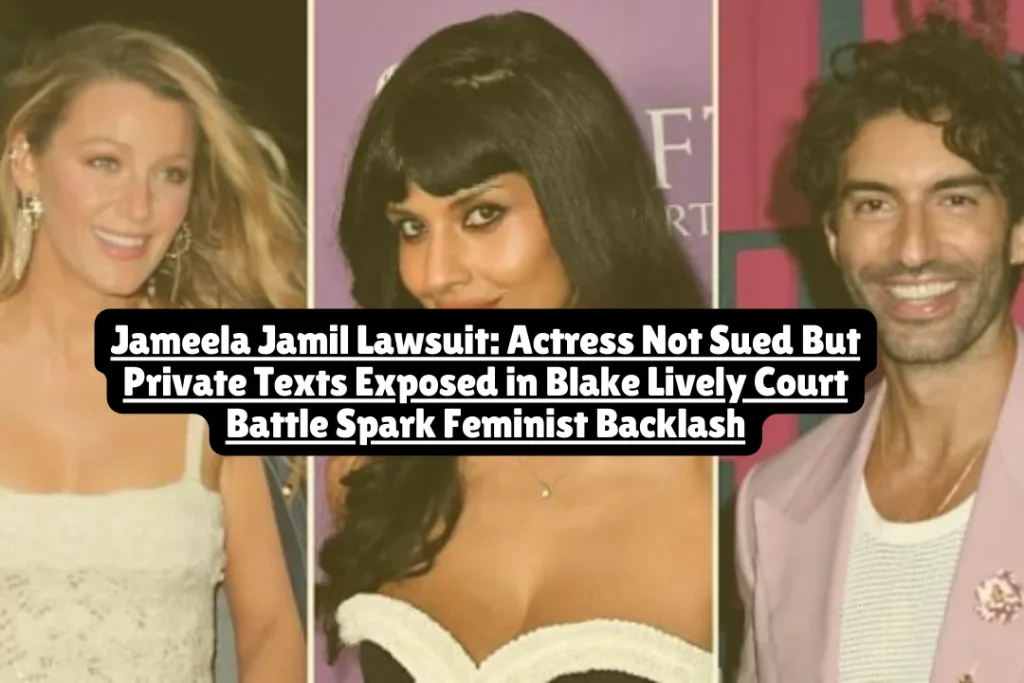
The “Good Place” actress is known for her vocal advocacy on women’s issues, body positivity, and social justice causes. Critics argued the harsh tone of her private texts contradicts her public feminist image.
Why This Became Controversial
The backlash centers on perceived hypocrisy rather than legal liability. Jamil has built her brand around supporting women and calling out toxic behavior, particularly in entertainment industry contexts.
Social media users expressed disappointment that she would use such harsh language about another woman privately, especially one alleging sexual harassment. Some argued that supporting women means not tearing them down behind closed doors, regardless of disagreements about press tour strategies.
Others defended Jamil, noting that private conversations taken out of context during legal discovery don’t reflect someone’s full character or values. Supporters pointed out that Abel was feeding Jamil a particular narrative about Lively’s behavior, and Jamil was responding as a friend supporting what she’d been told.
What This Case Means for Privacy and Discovery
How Private Texts Become Public Evidence
This situation illustrates how legal discovery can expose private communications never intended for public viewing. When lawsuits involve allegations of coordinated campaigns or workplace harassment, attorneys can request communications from third parties who may have relevant information.
Jennifer Abel’s communications became discoverable because Lively’s lawsuit alleges Baldoni’s team, including his publicist, coordinated a smear campaign against her. To prove or disprove those allegations, both sides can request communications that might show coordination, intent, or relevant context.
Once documents are submitted as evidence in federal court, they can be unsealed and become public record. That’s what happened here—private texts between Jamil and Abel became evidence in Lively’s case against Baldoni, then were unsealed for public access.
The timing is notable: these texts were revealed the same day attorneys for both Lively and Baldoni appeared in Manhattan federal court for a hearing regarding Baldoni’s motion for summary judgment, which seeks to dismiss parts of the case before trial.
Other Celebrity Communications Exposed
Jamil’s texts weren’t the only private communications revealed. Court documents also exposed alleged text exchanges between Lively and Taylor Swift, emails between Lively and Ben Affleck, and communications with Anna Wintour and Matt Damon.
In messages to Ben Affleck, Lively allegedly described the “It Ends With Us” production as “the most upsetting experience I’ve ever had on a movie,” comparing it to documentaries about cults and fraudulent events. She claimed she “ended up rewriting and restructuring the entire script” and had to “direct the movie via the chaotic clown ‘director’/actor/producer/financier/studio head at the center.”
These revelations highlight how high-profile litigation can expose intimate details of celebrity relationships and private opinions, creating reputational risks for people not even party to the lawsuits.
What Entertainment Professionals Should Know
Understanding Discovery Scope in Federal Cases
If you work in entertainment and communicate with publicists, managers, or other professionals, understand that those communications could potentially become evidence if your contact becomes involved in litigation.
Federal discovery rules are broad. Attorneys can request “any nonprivileged matter that is relevant to any party’s claim or defense and proportional to the needs of the case.” This means private texts, emails, and other communications can be subpoenaed if they might contain relevant information.
Attorney-client privilege protects communications with your lawyer, but conversations with publicists, managers, agents, and friends have no such protection. If those individuals become subjects of discovery requests, your private messages with them could be revealed.
When to Seek Legal Counsel
If you learn you’re connected to litigation through your professional relationships—even if you’re not being sued—consider consulting with an entertainment attorney. They can explain your rights, whether you can challenge discovery requests, and what communications might be at risk of disclosure.
For situations involving workplace harassment, retaliation, or contract disputes in entertainment contexts, early legal consultation helps protect your interests before problems escalate to litigation.
Monitoring Ongoing Litigation
The Lively-Baldoni trial is scheduled for May 18, 2026 in Manhattan federal court. As discovery continues and trial approaches, more documents and communications may be unsealed, potentially exposing additional private conversations.
Court dockets are publicly accessible through PACER (Public Access to Court Electronic Records). Entertainment industry professionals can monitor case developments by searching for Lively v. Baldoni in the U.S. District Court for the Southern District of New York.
Credible legal news sources like Law360, Bloomberg Law, The Hollywood Reporter, Variety, and Deadline provide verified coverage of entertainment litigation developments.
Frequently Asked Questions
Is Jameela Jamil being sued?
No, Jameela Jamil is not being sued and faces no legal claims. Her private text messages were revealed as evidence in Blake Lively’s sexual harassment lawsuit against Justin Baldoni because Jamil shares a publicist with Baldoni, and those communications were obtained during legal discovery.
What did Jameela Jamil say about Blake Lively?
In private August 2024 text messages with publicist Jennifer Abel, Jamil called Blake Lively a “suicide bomber” and “bizarre villain” while discussing Lively’s press tour for “It Ends With Us.” The texts criticized Lively’s promotional approach for a film about domestic violence as tone-deaf.
Why were Jameela Jamil’s private texts made public?
The texts became public evidence in the ongoing sexual harassment lawsuit between Blake Lively and Justin Baldoni. During legal discovery, Lively’s attorneys requested communications from Jennifer Abel, Baldoni’s publicist who also represented Jamil, leading to the texts being submitted as court evidence and later unsealed.
What is the Blake Lively and Justin Baldoni lawsuit about?
Blake Lively sued Justin Baldoni in December 2024 for sexual harassment and retaliation, alleging he created a hostile work environment on the “It Ends With Us” set and coordinated a smear campaign against her. Baldoni’s $400 million countersuit was dismissed in June 2025, and Lively’s case proceeds to trial May 18, 2026.
Has Jameela Jamil responded to the controversy?
Yes, Jamil posted an Instagram video on January 23, 2026 defending her feminist stance, stating that feminism means fighting for women’s equality but doesn’t require liking or befriending every woman. She didn’t specifically mention Lively or the lawsuit but emphasized that criticizing other women doesn’t make someone anti-feminist.
Can private texts always become public in lawsuits?
Private communications can become public if they’re relevant to legal claims and obtained through proper discovery procedures. Once submitted as evidence in court, documents can be unsealed and become public record. Attorney-client privileged communications are protected, but texts with friends, publicists, or colleagues are not.
What happens next in the Lively-Baldoni case?
The case is scheduled for trial on May 18, 2026 in Manhattan federal court. Discovery continues, meaning more documents and communications could be unsealed before trial. Both parties appeared in court January 23, 2026 for a hearing on Baldoni’s motion for summary judgment seeking dismissal of some claims.
Last Updated: January 24, 2026
Disclaimer: This article provides general information about court proceedings and is not legal advice; individuals should consult qualified entertainment law attorneys for case-specific guidance.
Follow the latest developments in high-profile entertainment litigation and celebrity legal battles.
Stay informed, stay protected. — AllAboutLawyer.com
About the Author

Sarah Klein, JD, is a licensed attorney and legal content strategist with over 12 years of experience across civil, criminal, family, and regulatory law. At All About Lawyer, she covers a wide range of legal topics — from high-profile lawsuits and courtroom stories to state traffic laws and everyday legal questions — all with a focus on accuracy, clarity, and public understanding.
Her writing blends real legal insight with plain-English explanations, helping readers stay informed and legally aware.
Read more about Sarah