
Is Lane Splitting Legal in Ohio? What Every Rider Must Know 2026
No. Lane splitting is not legal in Ohio. Motorcycle riders cannot ride between lanes of traffic or pass vehicles in the same lane. The law in Ohio requires all motorcyclists to follow the same traffic rules as cars and trucks.
But here’s where it gets interesting — there is genuine legal debate about how illegal it is, because the two key statutes never use the words “lane splitting” explicitly. That ambiguity has real consequences if you get cited or end up in an accident. Here’s everything you need to know.
What Is Lane Splitting?
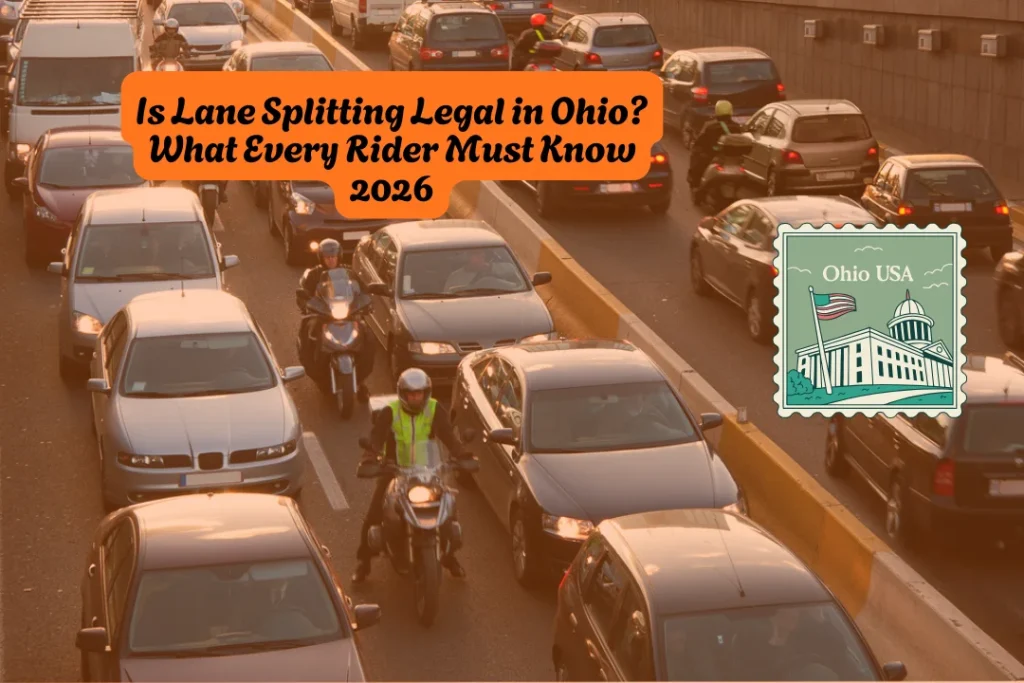
Lane splitting simply implies the practice of a motorcycle rider moving between lanes of slower-moving or stopped traffic, typically during traffic congestion. It is sometimes referred to as “white-lining” or “stripe-riding” because the motorcyclist rides along the painted line between lanes.
It’s important to understand three related terms Ohio law treats differently:
Lane Splitting — riding between two lanes of moving or slow-moving traffic at any speed. Illegal in Ohio.
Lane Filtering — moving a motorcycle forward between stopped vehicles at an intersection or red light. Also illegal in Ohio — Ohio makes no legal exception for filtering or splitting, even if riders believe they are improving safety by avoiding rear-end collisions.
Lane Sharing — two motorcycles riding side-by-side within a single standard lane. This is the only one of these practices that is legal in Ohio. Ohio Revised Code Section 4511.55 permits two motorcycles to operate abreast (side-by-side) within a single lane, provided they do not impede the flow of traffic.
The Ohio Laws That Prohibit It
Two statutes form the legal backbone of Ohio’s lane splitting prohibition:
ORC § 4511.55(B) — The Motorcycle-Specific Rule
This section specifically addresses the rights and responsibilities of motorcyclists and effectively bans lane splitting. It states that motorcyclists must “be operated within a single lane” and are not allowed to “operate a motorcycle between lanes of traffic or between adjacent lines or rows of vehicles.”
ORC § 4511.33 — The General Lane Discipline Rule
This statute requires all vehicles, including motorcycles, to be driven “entirely within a single lane or line of traffic” and prohibits moving from that lane until the driver has ensured the movement can be made with safety.
Together, these provisions confirm that Ohio law prohibits motorcyclists from riding between lanes under any circumstance.
The Legal Gray Area (And Why It Matters)
Here’s the nuance that several attorneys have flagged: Ohio’s laws don’t explicitly ban lane splitting, creating a legal gray area. While the law doesn’t directly prohibit the practice, motorcyclists may still be ticketed if law enforcement views it as unsafe or reckless driving.
No laws in Ohio specifically address lane splitting, lane filtering, lane sharing, and shoulder surfing. The law’s legality depends on how local traffic laws are interpreted.
That ambiguity does not make lane splitting safe or advisable in Ohio. What it means practically is this: if you engage in this practice, you can still be pulled over for unsafe lane changes and failure to maintain your lane. And in an accident, that ambiguity cuts against you — not in your favor.
Penalties for Lane Splitting in Ohio
Violating Ohio Revised Code Section 4511.55 — by making illegal maneuvers such as improper lane usage or failing to obey traffic signs and speed limits — brings traffic citations and is typically a minor misdemeanor. If the offender has one prior traffic offense within a year, the violation becomes a fourth-degree misdemeanor. For two or more prior offenses within a year, it escalates to a third-degree misdemeanor.
Beyond the misdemeanor charge, motorcyclists caught lane splitting may face citations for unsafe lane changes, improper passing, or failure to maintain the same lane, depending on the specific circumstances. These infractions can result in fines, points on a motorcyclist’s driving record, a motorcycle Ohio course for safety, a skills test, and increased insurance rates. Repeated violations may lead to Ohio motorcycle license suspensions or higher penalties.
Lane Splitting and Accident Liability in Ohio
This is where it gets most serious for riders. Because it is not allowed, lane splitting can influence liability if a crash occurs. Under Ohio’s comparative negligence rule in O.R.C. § 2315.33, a rider injured while lane splitting could have their compensation reduced. If a motorcyclist is considered more than 50 percent at fault, they may be barred from recovery altogether.
In other words: even if the other driver caused the accident, your lane splitting could eliminate your ability to recover compensation entirely.
At-fault drivers may exploit this legal ambiguity and attempt to hold you liable for the accident, which can further complicate an already stressful recovery process. Insurance companies use it too — riders from states where lane splitting is legal, such as California, must be especially cautious when entering Ohio. What may be normal back home is a traffic violation here.
For more on how traffic violations affect your legal rights after a crash, see: Best Defense Against a Ticket — Strategies That Actually Work — AllAboutLawyer.com
Is Lane Splitting Actually Dangerous? What the Data Says
The safety debate is more complicated than Ohio’s blanket prohibition suggests.
In California, a state where lane splitting is legal, there are 30% fewer rear-end motorcycle collisions than in Florida and Texas, states with similar weather and large riding populations but no laws permitting lane splitting. A study conducted in May 2015 by researchers at UC Berkeley’s Safe Transportation Research and Education Center discovered that 4.6% of lane-splitting motorcyclists are rear-ended compared to 6% of non-lane-splitting riders. In addition, they were 8% less likely to suffer head injuries, 10% less likely to suffer torso injuries, and 1.8% less likely to die in accidents.
The National Highway Traffic Safety Administration (NHTSA) and the American Motorcycle Association (AMA) both recognize the potential safety benefits of lane splitting under controlled conditions. However, Ohio legislators have yet to adopt these findings into state law.
The counter-argument Ohio relies on: standard lanes are not designed to accommodate two vehicles side by side, increasing the risk of clipping mirrors or handlebars. Motorists may swerve or switch lanes without signaling, giving motorcyclists no time to react. Even minor contact at highway speeds can result in catastrophic injuries for riders.
The Ohio State Highway Patrol reported that 1,045 motorcyclists were killed and 5,770 were seriously injured in traffic accidents in Ohio in 2024. That figure drives the legislative reluctance to loosen lane discipline rules.
Will Ohio Ever Legalize Lane Splitting?
Ohio lawmakers may consider the pros and cons of lane splitting and its variations. There is ongoing advocacy — particularly from the motorcycle community — for a pilot program or lane-filtering exception modeled on states like Arizona and Colorado.
There is legal ambiguity regarding specific instances like slow-moving traffic jams or highway congestion, leading some advocates to push for a pilot program to test controlled lane-splitting conditions in urban areas.
As of March 2026, no such bill has passed or been formally introduced in the Ohio General Assembly. California and Minnesota remain the clearest examples of full lane-splitting legalization in the U.S.
Quick Reference: Ohio Lane Splitting Law (2026)
| Question | Answer |
| Is lane splitting legal in Ohio? | No |
| Is lane filtering legal in Ohio? | No |
| Is lane sharing legal in Ohio? | Yes — two motorcycles max |
| Governing statute | ORC § 4511.55(B); ORC § 4511.33 |
| Penalty | Minor misdemeanor; escalates with repeat offenses |
| Effect on accident liability | Can reduce or bar compensation under comparative negligence |
| Out-of-state riders from CA | Subject to Ohio law regardless of home state rules |
| Is full legalization coming? | No active bill as of 2026 |
Internal Resources on AllAboutLawyer.com
Related posts that may help you understand your rights as a rider or after a traffic incident:
- Best Defense Against a Traffic Ticket — Strategies That Work (2026) — Know how to fight a citation before you pay the fine
- Progressive Insurance Lawsuit — Stacked Coverage Settlement — How insurance companies handle motorcycle and vehicle claims
- Toyota Car Tracking Lawsuit — Privacy Rights and Your Vehicle — Data rights for vehicle owners
- Ask a Lawyer — Get Legal Answers Fast — Submit your motorcycle law question to a qualified attorney
This article is for general informational purposes only and does not constitute legal advice. Ohio traffic laws and enforcement practices are subject to change. If you have been cited or injured in a motorcycle accident, consult a licensed Ohio attorney for advice specific to your situation.
About the Author

Sarah Klein, JD, is a licensed attorney and legal content strategist with over 12 years of experience across civil, criminal, family, and regulatory law. At All About Lawyer, she covers a wide range of legal topics — from high-profile lawsuits and courtroom stories to state traffic laws and everyday legal questions — all with a focus on accuracy, clarity, and public understanding.
Her writing blends real legal insight with plain-English explanations, helping readers stay informed and legally aware.
Read more about Sarah