
Is It Legal to Protest in a Church? First Amendment Rights vs. Property Rights and When You Need Permission
Protesting in a church is legal under the First Amendment when conducted on public property outside the church building or on church property with permission. However, protesting inside a church building without permission may violate trespassing laws, disorderly conduct statutes, or the federal FACE Act. The legality depends on location (public vs. private property), whether you have permission, whether your conduct is peaceful, and applicable federal and state laws.
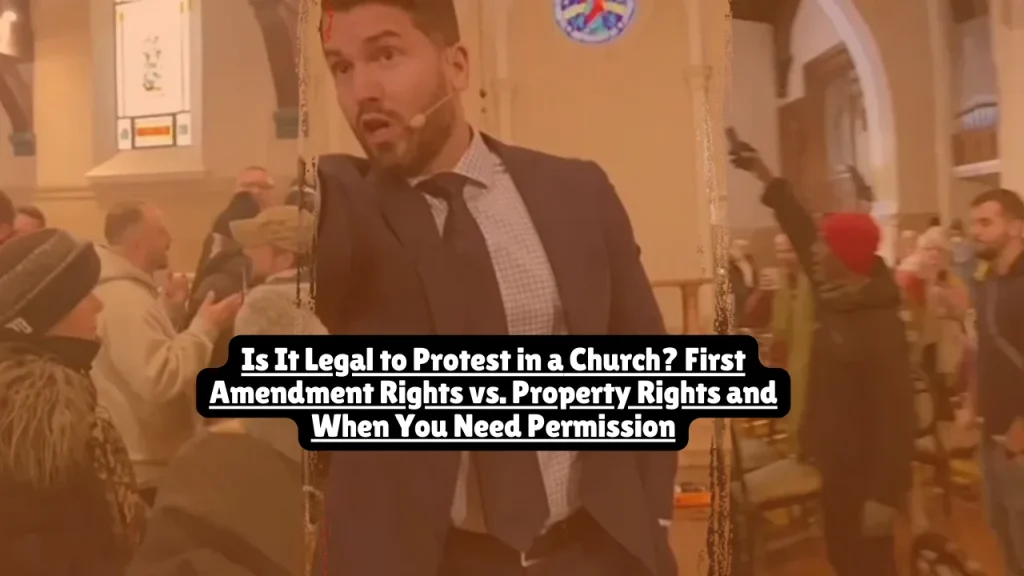
On January 19, 2026, approximately three dozen protesters entered Cities Church in St. Paul, Minnesota, during Sunday service—chanting, approaching the pulpit, and disrupting worship. The Department of Justice announced an investigation into potential federal civil rights violations. This incident highlights why understanding the legal boundaries between constitutional protections and property rights matters.
First Amendment Protections and Limitations
What the First Amendment Protects
The First Amendment—the constitutional protection for freedom of speech and assembly—protects your right to express your views and gather with others. These protections are not absolute.
The Supreme Court has established that reasonable time, place, and manner restrictions on protest are constitutional if they serve a significant government interest and leave open alternative channels for communication.
Understanding what the supreme law of the land means helps you recognize that all laws—including protest restrictions—must comply with constitutional requirements.
Where First Amendment Protections Are Strongest
Protest on public property—sidewalks, streets, and public parks—generally receives stronger First Amendment protection than protest on private property. You can protest on public sidewalks outside a church, carry signs, chant slogans, and distribute literature, provided your conduct is peaceful and complies with local ordinances.
Local governments can impose content-neutral regulations—rules that don’t target specific messages—such as permit requirements, noise restrictions, or designated protest areas. These regulations must be narrowly tailored and leave open alternative ways to communicate your message.
The Distinction Between Public and Private Property
Church Property as Private Property
Churches typically own their buildings and grounds, giving them the right to control access and restrict activities. Private property owners can exclude people from their property and call law enforcement to remove trespassers.
When you enter church property without permission and refuse to leave when asked, you commit trespassing—a criminal offense in all states. This applies even if your purpose is political expression or peaceful protest.
The Freedom of Access to Clinic Entrances Act (FACE Act), 18 U.S.C. § 248, prohibits using force, threats, or physical obstruction to interfere with anyone “lawfully exercising or seeking to exercise the First Amendment right of religious freedom at a place of religious worship.”
Related article: When Does Protesting Become Illegal? Know the Legal Line Between Protected Speech and Criminal Conduct
Physical obstruction under this law means rendering entrance to or exit from a place of worship impassable or making passage unreasonably difficult or hazardous.
Trespassing and Disorderly Conduct Laws
State trespassing laws criminalize entering or remaining on property without permission or against the owner’s wishes. If church staff or law enforcement ask you to leave and you refuse, you can be arrested and charged.
Disorderly conduct statutes prohibit behavior that is loud, threatening, or substantially disruptive. Interrupting worship services, shouting during prayer or preaching, blocking aisles, refusing to leave when asked, or attempting to seize microphones may violate disorderly conduct laws.
In the January 2026 St. Paul church incident, DOJ Assistant Attorney General Harmeet Dhillon stated: “A house of worship is not a public forum for your protest! It is a space protected from exactly such acts by federal criminal and civil laws.”
Protesting Lawfully Outside Churches
Conducting Peaceful Protests on Public Property
If you want to protest outside a church on public property, research local ordinances first. Determine whether you need a permit, whether noise restrictions apply, and whether time limitations exist.
Contact your city or county to obtain required permits. Plan your protest to comply with local requirements. Conduct your protest peacefully and do not block traffic or entrances.
Be prepared to relocate if law enforcement asks you to move for legitimate public safety reasons.
What Happens When You Enter Without Permission
If you enter a church building without permission and disrupt services, you face multiple legal risks. Church staff can ask you to leave immediately. If you refuse, they can call law enforcement.
You may be charged with criminal trespassing, disorderly conduct, or violating the FACE Act. Federal FACE Act violations carry civil penalties up to $10,000 for a first offense and up to $25,000 for subsequent offenses, plus criminal penalties including imprisonment.
Understanding your rights when ICE stops you demonstrates similar principles about when you must comply with law enforcement orders versus when you can refuse.
What People Get Wrong About Church Protests
Many believe the First Amendment protects all speech and assembly without limits. Wrong. Constitutional protections have boundaries, especially on private property.
Others think peaceful protest is always protected, even if disruptive. Disrupting religious services violates multiple laws even if your message is political and your conduct is nonviolent.
Some assume churches cannot restrict protest activity on their property. Churches, as private property owners, have the legal right to exclude protesters and enforce trespassing laws.
Don’t assume you can enter any building to protest. The First Amendment protects speech in public forums, not private spaces where you lack permission to be.
Recent legislative developments strengthen these protections. Georgia’s House Bill 242, introduced in February 2025, specifically criminalizes disorderly or disruptive behavior intended to interfere with religious ceremonies—part of a broader trend of states strengthening protections for religious worship.
What to Do If You Want to Protest
Before Organizing a Protest
Research local ordinances governing protest activity. Contact your city or county about permit requirements, noise restrictions, and designated protest areas.
If you want to protest on church property, contact the church in advance to request permission. If permission is denied, conduct your protest on public property outside the church.
Do not enter the church building without permission. If you are asked to leave by church staff or law enforcement, comply immediately.
When to Consult an Attorney
If you are arrested or charged with trespassing, disorderly conduct, or FACE Act violations related to protest activity, consult an attorney immediately. These charges carry serious criminal and civil penalties.
If you are planning a significant protest and want to understand your legal rights and obligations under local law, legal guidance helps you avoid liability.
Many attorneys offer free initial consultations. Bar associations provide referrals to attorneys who specialize in First Amendment law or civil rights.
Last Updated: January 20, 2026
Disclaimer: This article is for informational purposes only and explains the legal framework governing protest activity in religious settings; consult an attorney for legal advice about your specific situation or rights.
Take Action: Research local ordinances before organizing protests. Contact churches in advance if seeking permission to protest on their property. Understand your First Amendment rights and limitations. Know when to consult an attorney. Most importantly, conduct peaceful, lawful protest activity that respects both constitutional protections and property rights.
Stay informed, stay protected. — AllAboutLawyer.com
Sources:
- U.S. Constitution First Amendment: https://constitution.congress.gov/constitution/amendment-1/
- Freedom of Access to Clinic Entrances Act, 18 U.S.C. § 248: https://www.law.cornell.edu/uscode/text/18/248
- Department of Justice Civil Rights Division: https://www.justice.gov/crt
- Department of Justice FACE Act Enforcement: https://www.justice.gov/crt/freedom-access-clinic-entrances-places-religious-worship
- State Trespassing Laws (New Jersey Example): https://law.justia.com/codes/new-jersey/title-2c/section-2c-18-3/
- State Disorderly Conduct Laws (Wisconsin Example): https://docs.legis.wisconsin.gov/statutes/statutes/947/01
- Georgia House Bill 242 (2025): https://citizenportal.ai/articles/2370671/Georgia/Legislature-enacts-law-against-disruptive-conduct-during-religious-services-and-funerals
- Georgia Religious Freedom Restoration Act (SB 36, 2025): https://www.fox5atlanta.com/news/georgia-legislature-passes-controversial-religious-freedom-bill-amidst-partisan-tensions
About the Author

Sarah Klein, JD, is a licensed attorney and legal content strategist with over 12 years of experience across civil, criminal, family, and regulatory law. At All About Lawyer, she covers a wide range of legal topics — from high-profile lawsuits and courtroom stories to state traffic laws and everyday legal questions — all with a focus on accuracy, clarity, and public understanding.
Her writing blends real legal insight with plain-English explanations, helping readers stay informed and legally aware.
Read more about Sarah