
Is Alcohol Legal in Abu Dhabi? Everything US Travelers Must Know About Drinking Laws
Yes, alcohol is legal in Abu Dhabi, but heavily regulated. Tourists can drink in licensed hotels, restaurants, and bars without permits. Residents need no license to buy alcohol from retail stores like African + Eastern since 2020. You must be 21+, non-Muslim, and follow strict rules: no public drinking, zero-tolerance drunk driving (fines up to AED 100,000), and consumption only in licensed venues or private homes.
Is Alcohol Legal in Abu Dhabi?
Alcohol is fully legal in Abu Dhabi under controlled conditions established by the Department of Culture and Tourism. Since September 2020, Abu Dhabi eliminated personal alcohol licensing requirements that previously restricted non-Muslims.
The legal framework permits alcohol consumption, possession, and purchase for individuals meeting specific criteria. You face no criminal charges for drinking in authorized locations if you’re over 21 and follow local regulations.
Key legal facts:
- Minimum drinking age: 21 years old (strictly enforced)
- Tourists require zero paperwork to consume alcohol in licensed venues
- Residents can purchase from retail stores without licenses since 2020
- All alcohol carries a 30% tax on retail purchases
- Public consumption remains illegal with penalties up to AED 5,000 and six months imprisonment
Can Tourists Drink Alcohol in Abu Dhabi?
Tourists enjoy full access to alcohol without any license requirements. You can drink at any licensed hotel bar, restaurant, or beach club immediately upon arrival.
Licensed venues include virtually all major hotels across Abu Dhabi. You don’t need to stay at a hotel to access its bars or restaurants. Simply present valid ID proving you’re 21+ when ordering.
Tourist drinking privileges:
- Drink at licensed hotel bars, restaurants, and beach clubs without permits
- Purchase from retail stores by declaring tourist status and showing passport
- Import 4 liters of alcohol duty-free through customs (approximately five wine bottles)
- Purchase at Abu Dhabi International Airport duty-free shops
- Zero licensing fees or applications required
Critical restriction: Public intoxication carries severe penalties. Being visibly drunk outside licensed premises can result in arrest, fines up to AED 5,000, six months imprisonment, or deportation. Use taxis (Careem, Uber, Yango) after drinking—they’re abundant and affordable.
Where Can You Buy Alcohol in Abu Dhabi?
Three legal channels exist for purchasing alcohol: licensed retail stores, hotel venues, and airport duty-free.
Licensed Retail Stores
Multiple licensed stores across Abu Dhabi sell beer, wine, and spirits. Tourists show passports; residents use Emirates ID.
Major alcohol retailers:
- African + Eastern: 40+ locations across Abu Dhabi and Al Ain; online ordering with 2-hour delivery; widest selection
- Spinneys Beverages: 10 locations; click-and-collect service available; well-curated wine selections
- Windmill Cellar: 4 Abu Dhabi locations; specializes in premium wines and craft beers; delivery available
- Gray Mackenzie & Partners: 7 stores; curated portfolio with specialty selections
- Peninsula Drinks & Food: Limited locations; impressive craft and independent brands; wine manager consultations available
Pricing: Expect 20-30% higher prices than US due to the 30% alcohol tax. Imported spirits and premium wines cost more than local and regional brands.
Related article: How to Divorce a Military Spouse? Your Complete Legal Guide to Military Divorce Laws
Hotel Bars and Restaurants
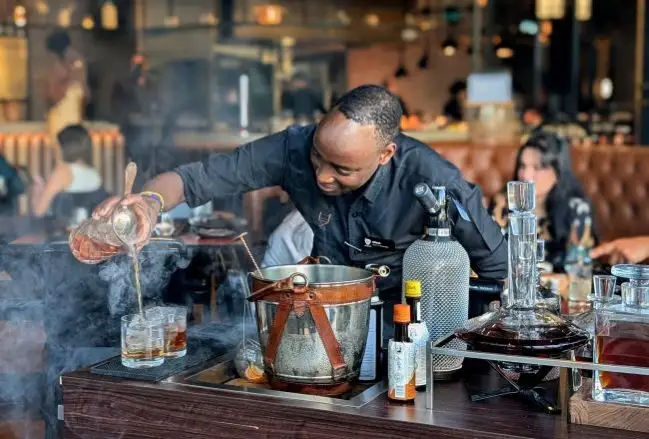
Nearly every major hotel in Abu Dhabi serves alcohol. No license required—just valid ID showing 21+ age.
Popular drinking venues:
- Ray’s Bar (Jumeirah at Etihad Towers, Level 62): Panoramic city views, signature cocktails, upscale atmosphere
- Stars ‘N’ Bars (Yas Marina): Sports bar with 76 HD screens, American fare, live music
- Buddha-Bar Beach (St. Regis Saadiyat Island): Beachfront setting, Asian-fusion dining, sunset views
- Hidden Bar (Rosewood Hotel, Al Maryah Island): Speakeasy-style cocktail lounge, dim sum menu
- Library Bar (Abu Dhabi EDITION): Sophisticated atmosphere, creative cocktails, intimate setting
- Relax@12 (Aloft Abu Dhabi): Rooftop terrace, city skyline views, Asian bites
- Glo (Rosewood Hotel): Pool bar, Mediterranean atmosphere, live DJ events
Most venues offer happy hours (typically 5-8 PM) with 30-50% discounts. Ladies’ nights provide complimentary drinks for women on specific weekdays.
Abu Dhabi International Airport Duty-Free
Purchase alcohol at duty-free shops after clearing passport control. Pre-order online for collection upon arrival.
Duty-free allowances:
- Maximum 4 liters total alcohol per person (any combination)
- Alternatively: 2 cartons of beer (48 cans, 355ml each)
- Must be 21+ to purchase
- For personal consumption only
What Licenses Do Residents Need?
Since September 2020, Abu Dhabi residents require no alcohol license for personal consumption. This revolutionary change eliminated bureaucratic barriers that previously restricted non-Muslims.
The 2020 reform by Abu Dhabi Department of Culture and Tourism removed three key restrictions:
- Eliminated mandatory license applications for residents
- Removed explicit ban preventing Muslims from purchasing (though Islamic law still applies)
- Decriminalized alcohol possession without licenses
Current requirements for residents:
- Must be 21+ years old
- Show Emirates ID at retail stores
- Purchase for personal use only (reselling is illegal)
- Consume in private homes or licensed venues only
No license means:
- Zero application fees (previously ranged from AED 120-270 annually)
- No income requirements (previously AED 3,000+ monthly minimum)
- No employer approval needed
- No waiting periods or renewal processes
Married women previously needed husbands’ No Objection Certificates—this requirement no longer applies.
Where Can You Consume Alcohol Legally?
Abu Dhabi strictly defines where alcohol consumption is permitted. Violating these locations carries serious penalties.
Legal consumption locations:
- Licensed hotel bars, restaurants, and clubs
- Private residences (your home, apartment, or hotel room)
- Licensed beach clubs attached to hotels
- Private clubs with alcohol licenses
Illegal consumption locations (penalties apply):
- Public beaches, parks, or streets
- Vehicles (even as passenger)
- Unlicensed restaurants or cafes
- Shopping malls or public spaces
- Outdoor areas not part of licensed venues
Walking outside with visible alcohol or drinking in parked cars violates public consumption laws. Police enforce these restrictions through patrols and respond to complaints.
During Ramadan: Alcohol availability changes during Islam’s holy month. Most hotel venues continue serving after sunset, though some reduce hours. Public consumption restrictions intensify—respect local customs by avoiding public drinking entirely during daylight hours.
What Are the Legal Restrictions?
Abu Dhabi enforces strict alcohol regulations beyond consumption locations.
Age Restrictions
21 years minimum for purchasing or consuming alcohol. Venues rigorously check ID—carry passport or Emirates ID always. Providing alcohol to minors carries imprisonment and fines from AED 100,000 to AED 500,000.
Public Intoxication
Being visibly drunk in public spaces is illegal. Penalties include:
- Minimum fine: AED 2,000 first offense
- Repeat violation within one year: AED 5,000 minimum
- Up to six months imprisonment
- Potential deportation for non-citizens
“Public” includes streets, parks, beaches, shopping areas—anywhere outside licensed venues or private homes.
Zero-Tolerance Drunk Driving
UAE enforces absolute zero-tolerance for alcohol and driving. Any detectable alcohol in your system while driving triggers:
- Fines: AED 20,000 to AED 100,000
- Imprisonment: Up to three months
- Vehicle impoundment: 30+ days
- License suspension: Up to one year
- Mandatory jail time if accident occurs
Even one drink consumed hours earlier can result in arrest. Always use taxis, Careem, Uber, or designated drivers.
Resale Prohibition
Purchasing alcohol for resale without proper commercial licenses is illegal. Penalties include:
- First offense: AED 100,000 fine
- Second offense: AED 200,000 fine
- Third offense: Business closure
Religious Restrictions
While the 2020 reforms removed explicit bans, Islamic law (Sharia) still considers alcohol consumption haram (forbidden) for Muslims. Enforcement primarily affects Muslim residents rather than tourists.
What Are the Penalties for Violations?
Abu Dhabi imposes substantial penalties for alcohol-related offenses.
Consumption Violations
| Violation | First Offense | Repeat Offense |
| Drinking in unlicensed location | AED 2,000 fine | AED 5,000+ fine (if within one year) |
| Public intoxication | AED 5,000 fine and/or 6 months jail | Enhanced penalties + deportation risk |
| Drinking under 21 | Fine + imprisonment | Fine + imprisonment + deportation |
Sales Violations
| Violation | Penalty |
| Selling to minors (under 21) | First: AED 40,000; Second: AED 60,000; Third: AED 80,000+ |
| Selling without license | First: AED 100,000; Second: AED 200,000; Third: Business closure |
| Advertising alcohol illegally | Warning, then AED 10,000-40,000 progressive fines |
Traffic Violations
| Violation | Penalty |
| Drunk driving | AED 20,000-100,000 fine + up to 3 months jail + license suspension |
| Drunk driving causing injury/death | Extended imprisonment + higher fines + deportation |
Aggravating Factors
Penalties intensify when alcohol consumption combines with other offenses:
- Getting into altercations while drunk can lead to assault charges plus intoxication penalties
- Drunk behavior at workplaces can result in immediate termination without notice
- Alcohol involvement in accidents dramatically increases liability
US travelers should note: These penalties apply equally to tourists. Your US citizenship provides no immunity. Violations can result in:
- Imprisonment in UAE facilities
- Deportation with entry bans
- Criminal records affecting future travel
- No consular intervention for clear violations
Recent Legal Changes (2020-2024)
Abu Dhabi transformed its alcohol regulations through sweeping reforms.
September 2020: License Elimination
The Department of Culture and Tourism issued Circular 15/2020 eliminating personal alcohol license requirements. This groundbreaking change:
- Allowed non-Muslims 21+ to purchase without paperwork
- Removed the explicit ban on Muslims purchasing alcohol
- Decriminalized possession without licenses
- Eliminated annual license fees (previously AED 120-270)
November 2020: Federal Decriminalization
Federal Decree Law No. 15 of 2020 amended the UAE Penal Code (Federal Law No. 3 of 1987), decriminalizing alcohol consumption nationwide when consumed privately or in licensed venues. Article 313 was modified to state: “There shall be no punishment for consuming, possession or trading in alcohol drinks in the situations and at places allowed as per applicable legislations.”
2022: Quality Standards
Abu Dhabi Department of Culture and Tourism introduced strict specifications for alcoholic beverages (Circular 17/2022):
- Products must be free from pathogenic microorganisms and toxic alcohols
- Wine total sulfur dioxide concentration cannot exceed 400 mg/l
- Beer cannot contain artificial sweeteners (except caramel coloring)
- Ensures product safety and high quality across the market
2024: Craft Brewery Authorization
Abu Dhabi became the first UAE emirate to permit local alcohol production. Side Hustle Brews and Spirits opened Abu Dhabi’s first craft brewery, marking a major policy shift. The government created fermentation regulations and permitting processes for micro and craft breweries.
2024-2025: Enhanced Tourism Focus
Recent regulations emphasize tourism development:
- Simplified tourist access to retail stores (passport declaration only)
- Online alcohol delivery services expanded
- Licensed venue proliferation across Yas Island and Saadiyat Island
- Marketing of Abu Dhabi as international hospitality destination
Abu Dhabi vs. Dubai: Key Differences
While both emirates permit alcohol, important distinctions exist.
Licensing Requirements
| Emirate | Residents | Tourists |
| Abu Dhabi | No license required since 2020 | No license required |
| Dubai | Free license required for retail purchases | No license required |
Retail Access
Abu Dhabi: Direct retail purchases without licenses since 2020. Show Emirates ID (residents) or passport (tourists).
Dubai: Residents must obtain free licenses from retailers like African + Eastern or MMI before purchasing. Tourists show passports without licenses.
Venue Availability
Abu Dhabi: Alcohol venues primarily concentrated in hotels, with emerging districts like Yas Bay and Al Maryah Island.
Dubai: More widespread availability including standalone bars, beach clubs, and entertainment districts like Dubai Marina and JBR.
Enforcement
Abu Dhabi: Historically more conservative enforcement, though recent liberalization has narrowed differences.
Dubai: Generally more relaxed enforcement in tourist areas, though zero-tolerance policies remain for drunk driving and public intoxication.
Other Emirates
- Sharjah: Complete alcohol ban—no sales or public consumption
- Ras Al Khaimah, Ajman, Fujairah, Umm Al Quwain: License requirements vary; generally more relaxed than Abu Dhabi/Dubai
What US Travelers Need to Know
Abu Dhabi’s alcohol framework differs substantially from US regulations. Understanding these differences prevents legal complications.
Key Differences from US Law
Age Requirements: US allows alcohol at 21; Abu Dhabi identical age but stricter ID enforcement. Every venue checks identification rigorously.
Public Consumption: Many US cities permit open containers in designated areas. Abu Dhabi prohibits all public alcohol consumption—no beach drinking, no park beers, no street cocktails.
Drunk Driving: US imposes BAC limits (0.08% in most states). UAE enforces absolute zero-tolerance—any detectable alcohol results in arrest.
Purchase Locations: US allows alcohol sales at grocery stores, gas stations, convenience stores (varies by state). Abu Dhabi restricts sales to licensed specialty stores and licensed venues.
Religious Context: US separates church and state. Abu Dhabi operates under Islamic legal framework where alcohol remains religiously forbidden (haram) but legally permitted for non-Muslims.
Practical Tips for US Visitors
Before Arrival:
- Research hotel alcohol policies (some “dry” or “family” hotels serve no alcohol)
- Plan transportation—download Careem, Uber, Yango apps before arrival
- Understand duty-free limits (4 liters total) for arrival
During Your Stay:
- Always carry passport or ID when drinking
- Stick to hotel bars, restaurants, and licensed venues
- Never drink in public spaces, beaches, or parks
- Use taxis or rideshares exclusively after consuming alcohol
- Respect local customs—avoid excessive public intoxication
- During Ramadan, minimize public alcohol consumption and respect daytime fasting
Venue Selection:
- Hotel bars offer safest, most accessible drinking environments
- Beach clubs provide alcohol in controlled settings
- Sports bars show US sporting events (time zones considered)
- Rooftop lounges offer premium experiences with city views
Purchasing Alcohol:
- Visit African + Eastern, Spinneys, or Windmill Cellar for retail purchases
- Declare tourist status and show passport at stores
- Expect higher prices than US due to 30% tax
- Online delivery available through retailer apps
Cultural Sensitivity:
- Abu Dhabi balances Islamic traditions with international tourism
- Dress modestly outside licensed venues
- Avoid public displays of intoxication
- Never discuss alcohol consumption with Muslims unless they initiate
- Show respect for Ramadan and other Islamic observances
Legal Protections and Limitations
What your US citizenship provides:
- Consular assistance if arrested
- Legal representation information
- Communication with family
What your US citizenship does NOT provide:
- Immunity from UAE laws
- Reduced penalties for violations
- Automatic bail or release
- Jurisdiction transfer to US courts
UAE law applies fully to all visitors. Violations result in UAE legal proceedings under UAE penalties. Your rights differ substantially from US constitutional protections.
Frequently Asked Questions
Can I drink alcohol as a tourist in Abu Dhabi?
Yes. Tourists can drink in licensed hotels, restaurants, bars, and beach clubs without any permits or licenses. Simply show ID proving you’re 21+ when ordering.
Do I need an alcohol license to buy from stores in Abu Dhabi?
No. Since September 2020, no licenses are required. Tourists show passports; residents show Emirates ID. Purchase for personal consumption only.
How much does alcohol cost in Abu Dhabi?
Expect 20-30% higher prices than the US due to the 30% alcohol tax. Hotel bars charge AED 40-50 ($11-14) per beer; retail stores offer better prices for take-home purchases.
Can I drink on Abu Dhabi beaches?
Only at licensed beach clubs attached to hotels (like Buddha-Bar Beach at St. Regis Saadiyat Island). Public beaches prohibit alcohol consumption entirely—violations result in fines up to AED 5,000.
What happens if I’m caught drunk in public?
You face minimum AED 2,000 fines, up to six months imprisonment, and potential deportation. “Drunk in public” includes being visibly intoxicated on streets, in malls, or in unlicensed areas.
Can I bring alcohol into Abu Dhabi?
Yes. You can import 4 liters of alcohol duty-free (approximately five wine bottles) or two cartons of beer (48 cans). Must be 21+ and declare at customs.
Are there any completely dry areas in Abu Dhabi?
No dry zones within Abu Dhabi emirate—alcohol is available throughout if you’re in licensed venues. However, neighboring Sharjah emirate maintains complete prohibition.
What’s the best way to get alcohol delivered in Abu Dhabi? African + Eastern offers 2-hour delivery; Spinneys provides click-and-collect; Peninsula and Windmill Cellar deliver to most Abu Dhabi locations. Minimum purchase requirements vary (AED 0-300).
Can Muslims drink alcohol in Abu Dhabi? While the 2020 reforms removed explicit legal bans, Islamic law (Sharia) still prohibits alcohol for Muslims. Enforcement focuses primarily on Muslim residents rather than tourists. Visitors should avoid discussing alcohol with Muslims unless they initiate.
How strict is drunk driving enforcement?
Extremely strict. Zero-tolerance means any detectable alcohol while driving results in arrest, fines of AED 20,000-100,000, vehicle impoundment, imprisonment, and license suspension. Never drive after drinking—even one drink hours earlier can trigger penalties.
Sources:
- Abu Dhabi Department of Culture and Tourism – dct.gov.ae
- UAE Federal Law No. 15 of 2020 (Penal Code amendments)
- Abu Dhabi Circular 15/2020 (Alcohol licensing elimination)
- UAE Federal Decree Law No. 31 of 2021 (Crimes and Penalties Law)
About AllAboutLawyer.com: We provide clear, accurate legal information for Americans traveling internationally. Our content combines expert legal analysis with practical guidance to help you navigate foreign legal systems confidently. Always consult licensed attorneys for specific legal advice regarding your situation.
About the Author

Sarah Klein, JD, is a licensed attorney and legal content strategist with over 12 years of experience across civil, criminal, family, and regulatory law. At All About Lawyer, she covers a wide range of legal topics — from high-profile lawsuits and courtroom stories to state traffic laws and everyday legal questions — all with a focus on accuracy, clarity, and public understanding.
Her writing blends real legal insight with plain-English explanations, helping readers stay informed and legally aware.
Read more about Sarah