
How to Check Your Neighborhood for Registered Sex Offenders 2026?
Every state maintains a free, public sex offender registry you can search online by name, address, or zip code. Visit the National Sex Offender Public Website (NSOPW.gov) to access your state’s registry, enter your address, and view registered offenders within a specified radius. Results show offender names, photos, addresses, and offense details—giving you the information you need to make informed safety decisions.
Why This Information Matters
You’re moving to a new neighborhood. You’re choosing a daycare or school for your kids. You want to know who lives near your home.
Here’s the truth: Sex offender registries exist precisely for this reason—to give you access to public safety information. Over 750,000 registered sex offenders live in the United States, and registry laws require them to keep their information current so you can find it.
Whether you’re a parent, homeowner, renter, or concerned resident, knowing how to check the sex offender registry in your area helps you make informed decisions about where you live, work, and send your children.
How to Access and Search Sex Offender Registries
Start with the National Sex Offender Public Website
The fastest way to find your state’s registry is through NSOPW.gov, the Department of Justice’s national database. This site links to all 50 state registries, U.S. territories, and tribal registries in one place.
You can search across multiple states simultaneously if you’re moving or checking vacation destinations. The site is free, requires no registration, and operates 24/7.
Most state registries offer similar search options: by name (if you’re looking for a specific person), by address (to check your neighborhood), or by city/zip code (for broader area searches).
Understanding Search Results and What They Show
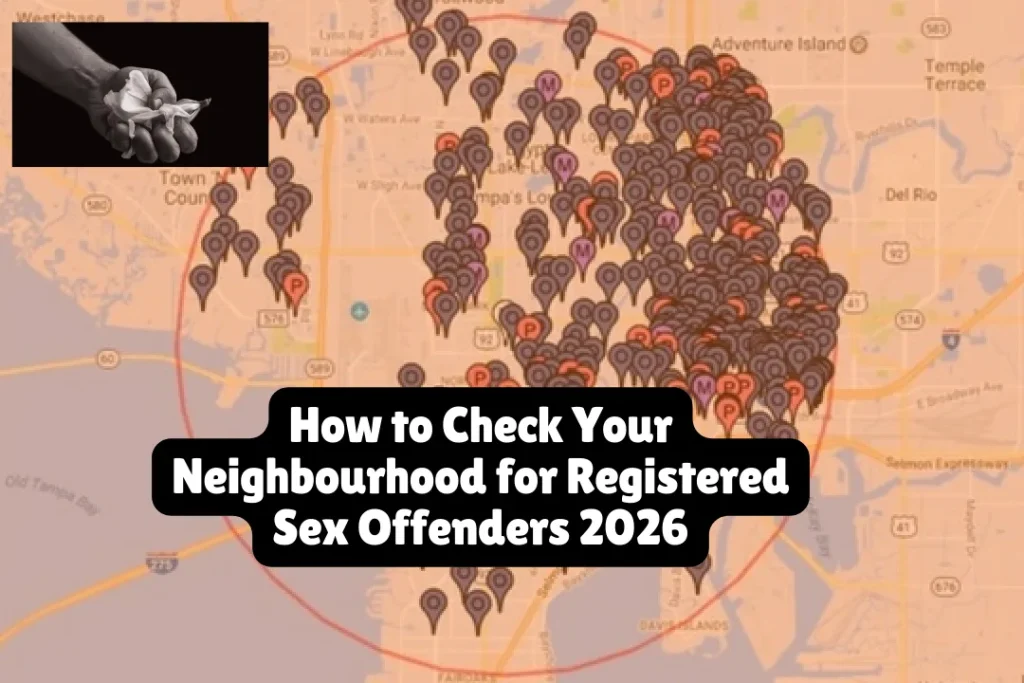
When you search by address, most registries display a map with pins showing registered offenders’ locations. You’ll typically see:
- Offender’s full name and any known aliases
- Current photograph (registries require periodic photo updates)
- Registered address (some states show exact addresses, others show block-level locations)
- Physical description including height, weight, eye color, hair color
- Conviction details including offense type, conviction date, and victim age range
- Registration tier (Tier 1, 2, or 3) and registration requirements
PRO TIP: Don’t rely on a single search. Registry information updates as offenders register, but there’s lag time. Search multiple times using different radius settings—an offender just outside your initial 1-mile radius might appear when you expand to 2 miles. Also, verify exact addresses through your local law enforcement if you have specific concerns. Registries show where offenders should be living, but compliance isn’t perfect. Local police can tell you if an offender is actually compliant with registration requirements.
Bottom line: The more information you have, the better your safety decisions.
State-Specific Registry Differences
While all states maintain registries, interfaces and information vary. California’s Megan’s Law website shows extensive detail. Texas displays risk assessment levels. Some states like Florida show offender employment information; others don’t.
Many states classify offenders into tiers based on offense severity:
- Tier 1 offenders register for 10-15 years minimum
- Tier 2 offenders register for 20-25 years minimum
- Tier 3 offenders register for life
Higher tiers typically involve more serious offenses, repeat offenses, or crimes against young children. This classification helps you understand relative risk levels.
What You Won’t Find on Public Registries
Registries don’t include victim names, detailed case information beyond basic offense type, offenders’ current employment addresses in most states, or Social Security numbers.
Juvenile offenders generally don’t appear unless they were tried as adults. Offenders whose convictions were expunged or sealed won’t show up. And registries only include people convicted of registerable sex offenses—not all sex crimes require registration.
Most sites won’t tell you this, but registry information can be outdated. Offenders who moved recently might still show old addresses until they register at new locations. Some offenders are non-compliant and living at unregistered addresses.
Related article: What State Is Prostitution Legal? Only Nevada (With Major Limits)
What You Must Know
Recent Registry Law Changes (2025-2026)
Several states modified registry requirements last year. California introduced SB 680 expanding registration requirements for certain minor-related offenses. Utah reorganized all registry statutes into Title 53 as of May 2025, consolidating sex offender, child abuse offender, and kidnap offender registries.
The U.S. Sentencing Commission’s 2025 amendments to federal guidelines shifted away from one-size-fits-all approaches for supervised release of federal sex offenders, giving courts more discretion in tailoring requirements.
These changes affect who appears on registries and for how long. What you see today might differ from what you’d have seen last year for the same address.
Registry Limitations You Need to Understand
Registries aren’t real-time. Offenders must update registration periodically (Tier 1 annually, Tier 2 every six months, Tier 3 every three months), but they can move or violate requirements between updates.
Not all sex offenders are registered. Some offenses don’t require registration. Some offenders were convicted before registration laws existed. Some successfully petitioned for removal after meeting time requirements.
Registry information isn’t always accurate. Data entry errors happen. Offenders provide false information. Compliance isn’t perfect. Always verify critical information through local law enforcement.
Your Legal Rights and Limitations
You have the right to access registry information and use it for safety decisions—choosing where to live, which schools to attend, which areas to avoid. This is explicitly why registries exist.
You cannot use registry information to harass, threaten, or discriminate against registered offenders. This is illegal in every state. You can’t organize protests at their homes, interfere with their employment based solely on registry status, or spread false information about them.
Violating these restrictions can result in misdemeanor charges and civil liability.
What to Do Next
Search Your Current and Future Neighborhoods
Visit NSOPW.gov right now. Enter your home address and search within a 1-mile radius. Then expand to 2 miles. Note how many offenders appear, their tiers, and their specific offenses.
If you’re house hunting, search potential neighborhoods before making offers. If you’re choosing schools, search addresses around campus. If you’re selecting daycares, check their immediate vicinity.
Save or screenshot your results. Registry information changes, and documentation helps track updates.
Verify Critical Information Through Local Law Enforcement
If you find concerning registry information—like a Tier 3 offender living directly next door—contact your local police department. They can confirm whether the offender is compliant with registration requirements, provide additional context about their monitoring status, and address specific safety concerns.
Don’t assume registry listings are complete or current. Local law enforcement has access to more detailed information and can verify whether offenders actually live where they’re registered.
Report Registry Violations
If you know an offender isn’t living at their registered address or isn’t complying with registration requirements, report this to local law enforcement immediately. Registry violations are criminal offenses, and authorities rely on community reports to catch non-compliant offenders.
Frequently Asked Questions
How accurate is sex offender registry information?
Registries are generally accurate but not perfect. Offenders must update registration periodically, creating lag time between moves and updates. Some offenders provide false information or fail to register. Verify critical information through local law enforcement.
Can I search sex offender registries for free?
Yes. All state registries are free and publicly accessible. No registration, fees, or subscriptions are required. Beware of commercial sites charging for registry searches—the same information is free through official state sites.
What should I do if I find a registered offender near my home?
First, understand their offense details and tier classification. Higher tiers indicate more serious offenses or higher risk. Contact local law enforcement if you have specific concerns. Don’t confront or harass the offender—this is illegal.
Do sex offender registries include juvenile offenders?
Generally no, unless the juvenile was tried and convicted as an adult. Most states protect juvenile privacy by excluding them from public registries.
How often do offenders update their registry information?
Tier 1 offenders update annually, Tier 2 every six months, Tier 3 every three months. Offenders must also update within days of moving or changing employment.
Can registered sex offenders live anywhere?
No. Many states have residency restrictions preventing offenders from living near schools, daycares, parks, or playgrounds. These restrictions vary by state and offense type.
Final Disclaimer: This article provides general information about sex offender registries and how to access them for educational purposes only. Sex offender registry information varies by state and can change as offenders register, move, or complete registration requirements. AllAboutLawyer.com does not provide legal services and is not affiliated with any government registry or law enforcement agency. For legal questions about registry accuracy, privacy rights, or how to address registry-related legal issues, consult with qualified attorneys familiar with your state’s laws. Always verify registry information through official state sources and local law enforcement before making important safety decisions.
Ready to learn more about community safety and your legal rights? Access the official National Sex Offender Public Website at NSOPW.gov to search registries now.
Stay informed, stay protected. — AllAboutLawyer.com
Last Updated: January 14, 2026 — We keep this current with the latest legal developments
Disclaimer: This article provides general information about accessing sex offender registries and understanding registry information, not legal advice—consult with a qualified attorney regarding how to use registry information or address specific legal concerns.
About the Author

Sarah Klein, JD, is a licensed attorney and legal content strategist with over 12 years of experience across civil, criminal, family, and regulatory law. At All About Lawyer, she covers a wide range of legal topics — from high-profile lawsuits and courtroom stories to state traffic laws and everyday legal questions — all with a focus on accuracy, clarity, and public understanding.
Her writing blends real legal insight with plain-English explanations, helping readers stay informed and legally aware.
Read more about Sarah