
Holmes Nutrition Lawsuit, Lab Tests Show $75 Protein Powder Had Only 3.4g Protein—Company Vanishes After Reddit Exposes Scandal
Why Everyone’s Searching for “Holmes Nutrition Lawsuit”
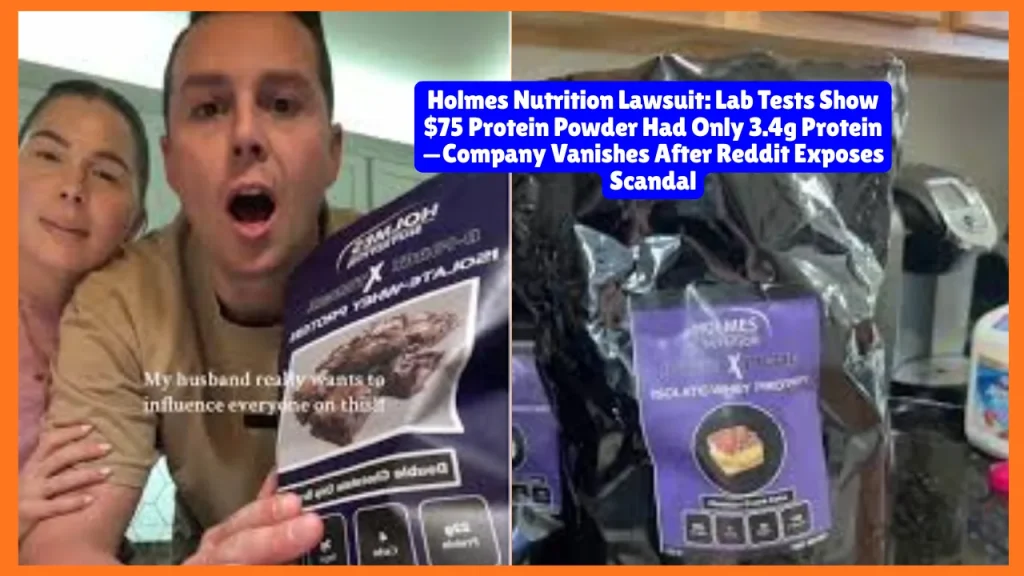
A lawsuit was filed against Holmes Nutrition (formally named The Reshaping and Nutritional Company LLC) on March 12, 2025, in U.S. District Court for the District of Nevada (Case No. 2:25-cv-00442). The case stems from independent laboratory testing that revealed Holmes Nutrition’s protein powder contained drastically less protein than advertised—only 3.4 grams per scoop instead of the labeled 22 grams.
Here’s what’s making this story explode across social media: A concerned consumer spent their own money to send three flavors of Holmes Nutrition protein powder to Certified Laboratories. The results were shocking. What was supposed to be high-protein, low-carb powder actually contained 21 grams of carbohydrates per scoop.
The company pulled all products from their website immediately after the March 2025 Reddit post went viral, citing “manufacturing issues.” They haven’t returned.
If you bought Holmes Nutrition protein powder at $75 per bag, you may have been paying premium prices for what lab tests suggest was essentially cake batter.
The Reddit Investigation That Started Everything
In March 2025, a Reddit user in the fitness community noticed something suspicious about Holmes Nutrition protein powder. The product tasted unusually sweet—like actual cake batter—despite claiming to have only 3 grams of sugar per serving.
They decided to test it. They purchased three flavors (chocolate cake, lemon cake, and cinnamon crumb cake) and sent samples to Certified Laboratories for independent analysis.
The lab results were damning:
What the label claimed:
- 22 grams of protein per scoop
- 3 grams of sugar
- Low carbohydrate content
What the lab actually found:
- 3.4 grams of protein per scoop
- 21 grams of carbohydrates
That’s an 84% discrepancy in protein content and a 600% increase in carbohydrates.
Why This Is More Than Just False Advertising
Many customers bought Holmes Nutrition specifically for medical reasons. According to Reddit posts from affected consumers, people purchased this protein powder for diabetic family members based on the nutrition label showing low sugar and carbs.
Customers reported blood sugar spikes after consuming the product, despite real-time glucose monitoring data showing they should have been safe based on the labeled nutrition information.
When you’re managing diabetes, every gram of carbohydrate matters. These customers trusted the label—and the label was allegedly wrong by a massive margin.
This isn’t about disappointed gym-goers. This is about potentially dangerous mislabeling that could affect people’s health.
The Company’s Disappearing Act
Within days of the Reddit post going viral in March 2025, Holmes Nutrition removed every single product from their website.
The company posted messages blaming “unexpected issues with the manufacturing facility” and “large increase in demand.” They claimed they were searching for their fourth manufacturing partner and would notify customers when products returned.
But here’s what doesn’t add up: If you’re experiencing manufacturing delays or supply issues, you don’t pull every product offline. You run out of stock gradually. You keep taking orders for backorders. You don’t vanish overnight.
The company’s website still exists but shows no products for sale. Their last update says they’re “diligently working on vetting new manufacturers.”
Recent reports indicate Holmes Nutrition may be selling products again through select gyms in the Sacramento area, though this hasn’t been verified.
What Holmes Nutrition Was Charging
Holmes Nutrition sold exclusively through their website at $75 per bag—positioning themselves as a premium protein powder.
The company, founded by Sacramento bodybuilder Bobby Holmes and his wife Nicole, marketed their products as “effective and affordable” with 22 grams of protein per scoop. They claimed Holmes had spent “15 years perfecting his isolate-whey protein lines.”
Customer testimonials on their website (still visible) praised the taste, with many noting it tasted “like cake batter” or “real dessert.” In hindsight, there may have been a reason for that.
The Federal Lawsuit Details
Case Number: 2:25-cv-00442
Court: U.S. District Court for the District of Nevada
Filed: March 12, 2025
Defendant: The Reshaping and Nutritional Company LLC (Holmes Nutrition)
Status: Active litigation; case last updated September 8, 2025
The lawsuit was retrieved from PACER on September 8, 2025, indicating the case is proceeding through federal court.
Specific allegations, damage amounts, and whether this is a class action are not yet publicly available through court records, but the timing aligns perfectly with the Reddit investigation that exposed the lab test results.
How This Fits the Supplement Industry Pattern
Holmes Nutrition isn’t the first protein powder company to face allegations of mislabeling. Similar lawsuits have targeted:
Bomar Nutrition: Alleged protein content discrepancies
Premier Protein: False advertising claims regarding protein amounts
Muscle Milk: Various labeling inaccuracy allegations
The supplement industry faces unique challenges. Quality whey protein is expensive. Supply chain pressures and rising costs create conditions where some companies may be tempted to cut corners.
When protein powder sells for $75 per bag, consumers expect premium ingredients. Lab tests suggesting the product contained a fraction of the advertised protein raise serious questions about what customers actually received.
What the Law Says About Supplement Labeling
The FDA regulates dietary supplements under the Dietary Supplement Health and Education Act (DSHEA). Companies must ensure their products are accurately labeled and contain the ingredients listed.
The Federal Trade Commission (FTC) enforces truth-in-advertising laws. Companies cannot make false or misleading claims about supplement ingredients or nutritional content.
State consumer protection laws also apply. In California (where many Holmes Nutrition customers purchased), false advertising can violate the Consumers Legal Remedies Act, False Advertising Law, and Unfair Competition Law.
If the independent lab tests are accurate, Holmes Nutrition’s labeling could violate multiple federal and state consumer protection statutes.
No Settlement or Class Action Yet
As of January 2026, there is no approved class action settlement for Holmes Nutrition customers.
The March 2025 lawsuit is still in early stages. Class certification hasn’t been granted, and no settlement has been announced.
According to the original Reddit poster who conducted the testing, preliminary investigation into a class action lawsuit suggested Holmes Nutrition lacks sufficient assets to make legal action worthwhile financially.
This is common with smaller supplement companies. Even if you win a lawsuit, collecting damages from a company with limited assets is difficult.
What Affected Customers Can Do
Document everything: Save receipts, order confirmations, credit card statements, and any email communications with Holmes Nutrition.
Keep the product: If you still have unused Holmes Nutrition protein powder, keep it sealed. It could serve as evidence.
File complaints: Report the issue to:
- FDA at https://www.fda.gov/safety/reporting-serious-problems-fda
- FTC at https://reportfraud.ftc.gov
- Your state attorney general’s consumer protection division
Dispute charges: If you paid by credit card, you may be able to dispute the charge as “product not as described.”
Watch for class action notice: If the lawsuit proceeds as a class action, you’ll receive official notice about joining.
Consult an attorney: Contact consumer protection attorneys in your area for advice about individual claims.
Why This Story Matters Beyond One Company
The Holmes Nutrition scandal highlights the risks consumers face in an under-regulated supplement industry.
Unlike prescription drugs, dietary supplements don’t require FDA approval before going to market. Companies are responsible for ensuring their products are safe and accurately labeled—but enforcement relies on complaints and testing after products reach consumers.
Independent testing is expensive. Most consumers don’t have the resources or expertise to verify supplement labels. When someone does test products and finds massive discrepancies, it raises questions about how many other supplements contain inaccurate information.
The fact that Holmes Nutrition immediately pulled all products after the Reddit investigation went public speaks volumes.
Related Consumer Protection Cases
Learn about supplement litigation: V-Shred $4M Settlement
Understand false advertising: Best Buy Class Action
Consumer protection resources: 10 Class Action Settlements
Frequently Asked Questions
Is there a Holmes Nutrition class action settlement I can claim?
Not yet. The lawsuit was filed in March 2025 and is still in early litigation stages. No settlement has been announced or approved.
Can I get my money back if I bought Holmes Nutrition?
You may be able to dispute the charge with your credit card company as “product not as described.” Contact your card issuer’s customer service.
How accurate were the lab tests?
The testing was conducted by Certified Laboratories, an independent facility. The results showed consistent findings across three different product flavors.
Is Holmes Nutrition still selling products?
Their website shows no products for sale as of January 2026. Unconfirmed reports suggest they may be selling through select Sacramento-area gyms.
What if I have health issues from consuming the product?
Document any health issues with your doctor and report them to the FDA’s MedWatch program immediately.
Could this happen with other protein powders?
Yes. Independent testing of supplements has revealed labeling inaccuracies in multiple brands. Look for third-party certification like Informed Sport or NSF Certified for Sport.
The Bottom Line
The Holmes Nutrition lawsuit is trending because it represents every consumer’s worst nightmare: paying premium prices for a health product that allegedly contained a fraction of what was promised on the label.
Lab tests suggesting 22 grams of protein was actually 3.4 grams—and that “low-carb” powder contained 21 grams of carbohydrates—raise serious consumer protection concerns.
The company’s immediate shutdown after the Reddit investigation went public tells you everything you need to know about their confidence in defending these allegations.
As of January 2026, the federal lawsuit is proceeding through District Court in Nevada. Whether affected customers will see compensation remains uncertain, particularly given questions about the company’s assets.
The real lesson? In an industry where companies self-regulate until someone proves otherwise, independent testing may be the only way to know what’s really in that $75 bag of protein powder.
This article provides general information about the Holmes Nutrition lawsuit and should not be considered legal advice. If you purchased Holmes Nutrition products, consult with a qualified consumer protection attorney about your specific situation.
About the Author

Sarah Klein, JD, is a licensed attorney and legal content strategist with over 12 years of experience across civil, criminal, family, and regulatory law. At All About Lawyer, she covers a wide range of legal topics — from high-profile lawsuits and courtroom stories to state traffic laws and everyday legal questions — all with a focus on accuracy, clarity, and public understanding.
Her writing blends real legal insight with plain-English explanations, helping readers stay informed and legally aware.
Read more about Sarah