
Hershey Lawsuit, Reese’s False Advertising Claims & Settlement Status
A proposed class action lawsuit filed in February 2026 alleges that The Hershey Company misled consumers by depicting carved or artistically detailed designs on Reese’s seasonal product packaging — details that were not present on the actual candy. The lawsuit is in its earliest stage. No class has been certified, no settlement has been reached, and no claims process is open. Consumers do not need to take any action right now.
Quick Facts
- Lawsuit type: Proposed class action — false advertising / consumer protection
- Defendant: The Hershey Company
- Current status: Active litigation; early stage — no settlement reached as of February 2026
- Who may be affected: Consumers who purchased Reese’s seasonal/themed products (pumpkins, ghosts, bats, footballs, medals, shapes) in New York, Pennsylvania, Massachusetts, Rhode Island, Oregon, or Washington, D.C.
- Settlement amount: None — no settlement has been announced
- Claim deadline: None — no claims process is open
- Official website: No settlement website exists for this case
Where the Case Stands Right Now
Lane, et al. v. The Hershey Company was filed on February 12, 2026, in the U.S. District Court for the Eastern District of New York (Case No. 1:26-cv-824). Hershey has not yet responded to the complaint, and the court has not scheduled any hearings or ruled on any motions. The case is at the pre-discovery, pre-certification stage — which means it has a long road ahead before any resolution is possible.
This is not the first time these claims have been tested in court. A nearly identical lawsuit was filed in Florida in May 2024, but a federal judge dismissed it without prejudice in September 2025. The court found that the plaintiffs had not demonstrated sufficient economic injury to establish legal standing. The New York filing appears designed to address those standing deficiencies with a broader set of plaintiffs and state consumer protection claims.
What the Lawsuit Alleges
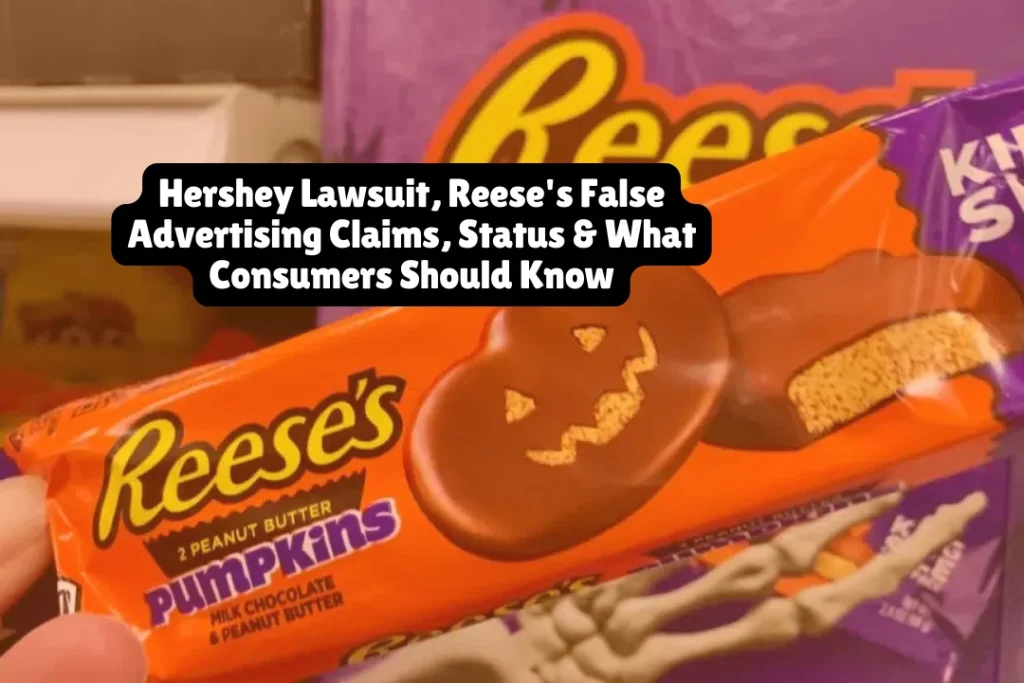
The plaintiffs claim Hershey changed the packaging for its seasonal Reese’s products around 2021 to show detailed carved or artistic designs — jack-o-lantern faces on pumpkins, bat wings, football laces, and similar features — that consumers would reasonably expect to see on the candy itself. When buyers opened the packaging, they found plain, undecorated chocolate shapes with no such detailing.
The lawsuit argues this packaging misrepresentation was intentional and commercially motivated. Because the themed, seasonal products contain less candy by weight than a standard pack of Reese’s Peanut Butter Cups, the plaintiffs argue the decorative designs were a key feature consumers were implicitly paying for. The complaint asserts violations of consumer protection statutes in New York, Pennsylvania, Massachusetts, Rhode Island, Oregon, and Washington, D.C.
Who the Lawsuit Proposes to Include
No class has been certified by a court. At this stage, the lawsuit formally represents only the named plaintiffs. The complaint proposes a class of consumers who purchased Reese’s themed or seasonal products — such as pumpkins, ghosts, bats, footballs, medals, and shapes — and relied on the packaging depictions when making their purchase decision.
The geographic scope covers six states plus Washington, D.C. There is no claim form, no eligibility form, and no deadline for consumers to meet right now. If the case progresses and a class is certified, a separate notice and claims process would be announced at that time.
Related article: American Express Antitrust Settlement $17.5M Eligibility & Claim Deadline
Why the Florida Dismissal Matters
The September 2025 dismissal of the Florida version of this lawsuit provides important context for understanding the legal hurdles ahead. The Florida court sided with Hershey on the standing question, finding that consumers who received edible candy — even without the decorative details shown on packaging — had not demonstrated a concrete economic loss sufficient to bring a federal claim.
Hershey’s defense in that case pointed to two packaging elements: images of undecorated candy on some product sides and a “DECORATION SUGGESTION” disclaimer on the wrapper. The court found those factors meaningful. The new New York plaintiffs will need to argue more specifically how they were economically harmed — likely by showing they paid a premium specifically for the artistic design feature and received something materially less valuable than what was advertised.
Food Labeling Lawsuits: A Broader Pattern
The Hershey case fits into a well-established line of consumer litigation targeting the gap between food product packaging and what’s actually inside. Courts across the country have seen lawsuits over vanilla extract described as “natural” but derived from synthetic sources, images of fruit on packaging when real fruit content is minimal, and portion sizes that don’t reflect what consumers reasonably expect.
These cases have produced mixed results. Some result in multi-million dollar settlements — as happened with several flavored beverage and snack food cases — while others are dismissed early when courts conclude that a reasonable consumer would not have been deceived, or that the plaintiff suffered no measurable financial harm. The Hershey case is likely to turn on that same economic injury question.
Is There a Settlement or Claim Form?
No. There is no settlement, no approved claim form, and no official settlement website connected to the 2026 New York lawsuit or the dismissed 2024 Florida case. Any third-party site currently advertising a claim form or payout for a “Hershey Reese’s settlement” is not an official source and should be treated with caution.
If a settlement is reached and approved in the future, a court-appointed settlement administrator would launch an official claims website and provide direct notice to potential class members. This article will be updated when that occurs. In the meantime, consumers can monitor filings directly at PACER.gov using case number 1:26-cv-824 (Eastern District of New York).
Frequently Asked Questions
Is this a class action lawsuit? It is a proposed class action. The plaintiffs have asked the court to certify a class of affected consumers, but no judge has approved that request yet. Until certification, the case formally represents only the named plaintiffs who filed the complaint.
Has a settlement been approved? No. As of February 2026, no settlement has been proposed, negotiated, or approved in connection with the New York lawsuit or the previously dismissed Florida case. This case is in its earliest litigation stage.
Who may be eligible if a class is certified? Based on the complaint, eligible consumers would likely be those who purchased Reese’s seasonal or themed products — pumpkins, ghosts, bats, footballs, medals, or shapes — in New York, Pennsylvania, Massachusetts, Rhode Island, Oregon, or Washington, D.C. No time period has been formally defined yet.
Is there a claim form I need to complete now? No. There is no claim form or filing deadline at this time. Consumers do not need to take any action. If a settlement is eventually approved, a formal claims process with clear deadlines would be announced.
Where is the official settlement website? No official settlement website exists for this case. Do not submit personal information to any third-party site claiming to offer a claim form for this lawsuit. The only official source for case filings is PACER.gov (Case No. 1:26-cv-824, E.D.N.Y.).
What happens next in this case? Hershey will likely file a motion to dismiss, as it did successfully in the Florida case. If the case survives that motion, the parties would move into discovery and class certification briefing. Any final resolution — whether dismissal or settlement — could take several years.
Last Updated: February 28, 2026
This article is for informational purposes only and does not constitute legal advice. Legal claims and outcomes depend on specific facts and applicable law. For advice regarding a particular situation, consult a qualified attorney.
About the Author

Sarah Klein, JD, is a licensed attorney and legal content strategist with over 12 years of experience across civil, criminal, family, and regulatory law. At All About Lawyer, she covers a wide range of legal topics — from high-profile lawsuits and courtroom stories to state traffic laws and everyday legal questions — all with a focus on accuracy, clarity, and public understanding.
Her writing blends real legal insight with plain-English explanations, helping readers stay informed and legally aware.
Read more about Sarah