
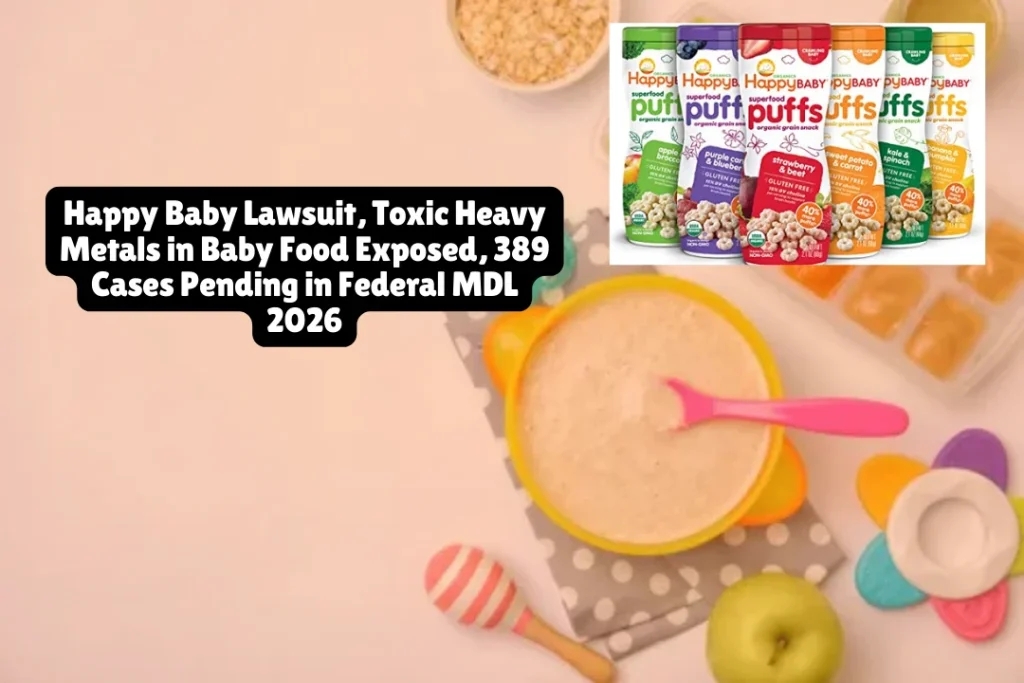
Happy Baby Lawsuit, Toxic Heavy Metals in Baby Food Exposed, 389 Cases Pending in Federal MDL 2026
Parents nationwide are suing Nurture, Inc., manufacturer of Happy Baby and Happy Tots organic baby food products, over allegations that the company knowingly sold baby foods containing dangerous levels of toxic heavy metals—including arsenic, lead, cadmium, and mercury—linked to autism and ADHD in children.
As of December 2025, 389 lawsuits are pending in the multidistrict litigation (MDL 3101) in the Northern District of California, with Judge Jacqueline Scott Corley presiding over four days of expert hearings concluded in December 2025. If your child consumed Happy Baby products and developed neurological issues, you may have legal options.
What the Happy Baby Lawsuit Is About
The lawsuits claim that Nurture knew about dangerously high levels of heavy metals in Happy Baby and Happy Tots foods but failed to warn consumers of the associated risks. The litigation centers on product liability allegations against the company for selling baby food products with toxic metal contamination that parents say caused developmental disorders in their children.
In 2021, the U.S. House Committee on Oversight and Reform revealed that several major baby food manufacturers, including Happy Baby, contained dangerous levels of toxic heavy metals. Internal documents cited in the lawsuit show that some Happy Baby products contained mercury levels as high as ten parts per billion, five times higher than the FDA’s maximum safe limit for bottled water.
Next, congressional investigations uncovered troubling internal communications. Discovery revealed a text message in which staff of one defendant company joked about burying test results showing high levels of heavy metals. The evidence suggests manufacturers prioritized profits over child safety.
Who Is Being Sued in the Happy Baby Litigation
Nurture, Inc., the producer of Happy Baby products, is the primary defendant in these cases. The company markets its products as organic and safe for infant consumption, but plaintiffs argue this marketing was deceptive given the heavy metal content.
MDL-3101 In Re: Baby Food Products Liability Litigation has grown to over 200 pending actions according to the most recent data from the Judicial Panel on Multidistrict Litigation. The MDL also includes lawsuits against other baby food manufacturers like Gerber, Beech-Nut, Earth’s Best Organic, and others facing similar allegations.
Legal Claims Filed Against Happy Baby
Parents filed multiple legal claims against Nurture, Inc. Toxic Baby Food Autism Lawsuits are based on claims of failure to warn, negligence, and breach of warranty.
Here’s what each claim means. Plaintiffs argue that the companies knew or should have known about the toxic substances in their products but did not disclose this information to the public. Negligence claims contend that companies were negligent in sourcing ingredients, manufacturing processes, and quality control measures, leading to contamination with heavy metals.
The lawsuit adopts strict liability, negligence, breach of warranty, fraud, and concealment claims, seeking compensatory damages for lifelong medical and developmental costs. These legal theories allow parents to hold manufacturers accountable without proving intentional wrongdoing in every instance.
Current Status of the Happy Baby Lawsuit in February 2026
Parties are awaiting decisions from Judge Corley about what information will be used in this MDL and if any lawsuits will be dismissed following the December 2025 expert hearings. The litigation shifted from discovery to expert briefing, with Daubert hearings regarding causation starting December 8, 2025.
Then came important regulatory developments. Maryland’s “Rudy’s Law” approved by the Governor in May 2024 requires baby food manufacturers to begin testing representative samples starting January 1, 2025, and to provide links with internal heavy metal testing beginning January 1, 2026. California Assembly Bill 899 approved by the Governor in October 2023 requires baby food manufacturers to test products monthly for heavy metals beginning January 1, 2025, and post test results online.
Independent testing conducted by Reuters in April 2025 showed that several popular baby foods contained lead at higher quantities than allowed by California law, with 102 of 1,757 baby foods tested failing to meet California’s lead safety standard of 0.5 micrograms per day, including products from Happy Baby.
What Damages Parents Are Seeking
Families are seeking compensatory damages for lifelong medical and developmental costs associated with autism and ADHD, along with punitive damages to hold companies accountable. Compensatory damages cover medical treatment, therapy costs, special education needs, and other expenses families face when raising children with developmental disorders.
Punitive damages serve a different purpose—they punish corporations for conduct that courts find particularly egregious and deter similar behavior in the future.
What You Must Know
Understanding Product Liability Standards
Product liability law holds manufacturers responsible when defective products cause harm. In product liability cases, plaintiffs must prove that the product was defective or that the manufacturer failed to provide adequate warnings, and that this defect caused their injury. The Happy Baby cases involve allegations that the products were inherently dangerous due to heavy metal contamination and that warnings were inadequate or absent.
How Heavy Metals Affect Child Development
Heavy metal poisoning is a serious health concern that can have long-term effects on a child’s physical and neurological development. Scientific studies have linked early childhood exposure to toxic metals to increased risk of neurodevelopmental disorders such as autism spectrum disorder and attention-deficit/hyperactivity disorder.
A 2019 meta-analysis conducted by the University of Buffalo linked arsenic exposure in infancy to higher autism rates. Research continues to demonstrate the connection between heavy metal exposure during critical developmental windows and long-term neurological harm.
Eligibility Criteria for Filing
Individuals hoping to file a successful Happy Baby lawsuit must meet specific eligibility criteria, including that the child was born on or after January 1, 2007, and that they were diagnosed with autism before age 14. These criteria help establish the time period when contaminated products were consumed and ensure diagnoses occurred during childhood.
What to Do Next
Access Official Court Documents
The Judicial Panel on Multidistrict Litigation appointed U.S. District Judge Jacqueline Scott Corley to spearhead the Toxic Baby Food MDL (MDL 3101) and ordered the transfer of all related cases to the Northern District of California. You can access case filings through the federal court’s Public Access to Court Electronic Records (PACER) system at pacer.gov.
Monitor Case Developments
Track updates through the court docket system. Set up PACER notifications for MDL 3101 to receive alerts when new filings occur. Legal news outlets covering product liability litigation regularly report on significant developments in the baby food cases.
Consult with Experienced Attorneys
Parents of children diagnosed with autism or ADHD after consuming Happy Baby Organic’s products are encouraged to contact an attorney experienced in toxic exposure lawsuits to determine their legal options. Most product liability lawyers work on contingency fee arrangements, meaning you pay nothing unless they recover compensation for you.
Understand Your Rights Under Consumer Protection Laws
Federal and state consumer protection laws provide avenues for holding manufacturers accountable. The FDA regulates food safety, while state consumer protection statutes address deceptive marketing practices. Understanding these legal protections helps you make informed decisions about pursuing claims.
Frequently Asked Questions
What products are involved in the Happy Baby lawsuit?
The litigation involves Happy Baby and Happy Tots organic baby food products manufactured by Nurture, Inc., including purees, cereals, snacks, and other infant food items sold nationwide.
What legal claims are parents filing against Happy Baby?
Parents are filing claims for failure to warn, negligence, breach of warranty, strict product liability, fraud, and concealment based on allegations that Nurture knew about heavy metal contamination but continued selling products marketed as safe.
Who are the defendants in these cases?
Nurture, Inc., the manufacturer of Happy Baby and Happy Tots products, is the primary defendant, though the broader MDL includes other baby food manufacturers facing similar allegations.
What is the current status of the litigation in February 2026?
The cases are consolidated in federal MDL 3101 in the Northern District of California, with 389 pending lawsuits as of December 2025, awaiting Judge Corley’s decisions on expert testimony admissibility following hearings concluded in December 2025.
Can affected families still file claims?
Yes, families whose children meet the eligibility criteria can still pursue claims, though statutes of limitations vary by state and consulting an attorney promptly is important to preserve legal rights.
What damages are families seeking?
Families seek compensatory damages for medical costs, therapy, special education, and other expenses related to autism and ADHD diagnoses, plus punitive damages to punish egregious corporate conduct.
How do I know if my child was affected?
If your child consumed Happy Baby products between 2007 and the present and was diagnosed with autism before age 14 or ADHD, you may be eligible to file a claim or join the existing litigation.
Last Updated: February 2, 2026
Disclaimer: This information is for educational purposes only and does not constitute legal advice.
Stay informed, stay protected. — AllAboutLawyer.com
Meta Description: Happy Baby lawsuit update: 389 cases pending in federal court over toxic heavy metals in baby food. Learn about the allegations, court status, and your legal rights in February 2026.
About the Author

Sarah Klein, JD, is a licensed attorney and legal content strategist with over 12 years of experience across civil, criminal, family, and regulatory law. At All About Lawyer, she covers a wide range of legal topics — from high-profile lawsuits and courtroom stories to state traffic laws and everyday legal questions — all with a focus on accuracy, clarity, and public understanding.
Her writing blends real legal insight with plain-English explanations, helping readers stay informed and legally aware.
Read more about Sarah