
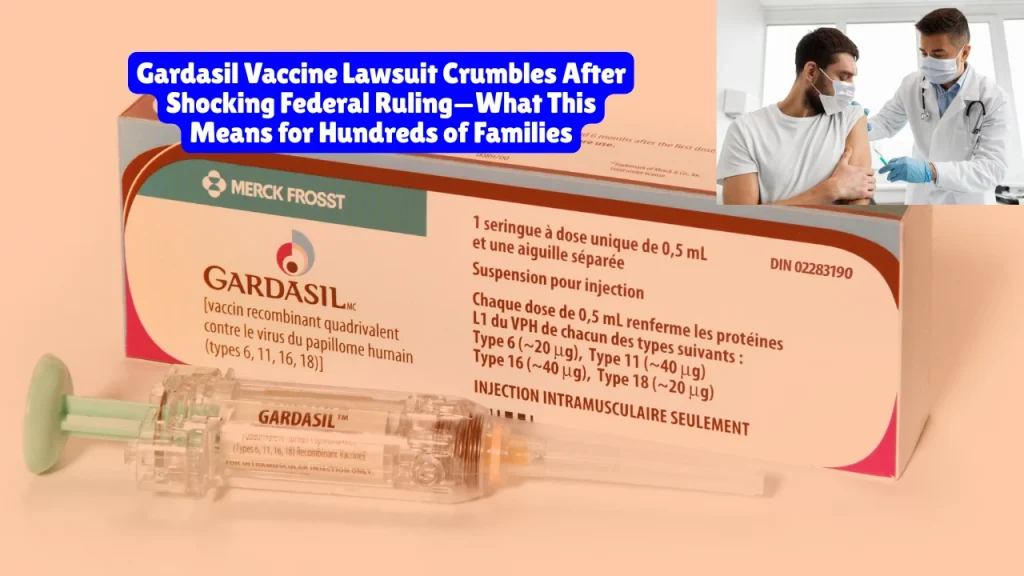
Gardasil HPV Vaccine Lawsuit Crumbles After Shocking Federal Ruling—What This Means for Hundreds of Families
In March 2025, US District Judge Kenneth Bell dismissed the majority of Gardasil vaccine lawsuits in federal court, ruling that the claims were preempted by federal law because Merck couldn’t have legally added stronger safety warnings without sufficient scientific evidence to convince the FDA. The decision affected approximately 200 lawsuits alleging the HPV vaccine caused devastating autoimmune disorders like POTS (postural orthostatic tachycardia syndrome) and primary ovarian insufficiency in young people.
Plaintiffs appealed to the Fourth Circuit Court of Appeals in July 2025, challenging both the dismissal and the exclusion of key expert witnesses. By November 2025, the broader federal litigation had effectively reached an endpoint, with new case filings largely ceasing.
Here’s the thing nobody’s talking about loud enough: these weren’t just faceless legal filings. These were real kids—teens who got the shots at 13, 14 years old—who suddenly couldn’t stand up without fainting, developed chronic pain that wouldn’t quit, or watched their bodies turn against them with autoimmune chaos. And now, most of those families just watched their day in court vanish.
The Backstory: What Were Families Actually Claiming?
Let’s rewind. Gardasil is that HPV vaccine your pediatrician probably recommended when your kid hit middle school. Merck got FDA approval back in 2006 to prevent human papillomavirus infections that can lead to cervical cancer. By 2025, the vaccine had been given over 135 million times in the U.S. alone.
But starting around 2022, lawsuits started piling up. By December 2024, there were 212 federal cases consolidated in what’s called a multidistrict litigation (MDL) in North Carolina. Think of an MDL like gathering all similar lawsuits into one courtroom so they can be handled more efficiently—not a class action, but individual cases managed together.
The allegations? Families claimed Merck manipulated people by “repeatedly stating, representing, urging and implying” it was necessary to take Gardasil to prevent cervical cancer, while hiding the risks. They said the company knew about serious side effects but concealed them.
What Injuries Were People Reporting?
The lawsuits centered on two main conditions:
POTS (Postural Orthostatic Tachycardia Syndrome) – characterized by dizziness and occasional fainting when standing up. Imagine your kid can’t even get out of bed without their heart racing and the room spinning.
Primary Ovarian Insufficiency (POI) – involves lower estrogen or irregular egg release in women under 40. Translation: young women developing premature menopause, potentially losing their chance to have biological children.
Other reported injuries included lupus, Guillain-Barré syndrome, chronic fatigue, and in some cases, death.
The March 2025 Ruling That Changed Everything
Here’s where the story takes a sharp turn. Judge Bell granted Merck’s motion for summary judgment on March 11, 2025, based on “implied federal preemption.”
Let me break that down without the legal jargon: The judge said that even if Merck wanted to add warnings about POTS or POI to Gardasil’s label, federal law wouldn’t have allowed them to do it without convincing scientific evidence that the FDA would accept. And according to the court, that evidence didn’t exist at the time.
The court noted that by 2013, there had been only one published, verified case of POTS and four published case reports of POI linked to Gardasil, plus scattered unverified reports. The judge said that wasn’t enough to justify a warning label change.
The decision stated allowing a warning without substantial evidence “would effectively make the regulatory standard meaningless.”
What Makes This Ruling So Controversial?
Plaintiffs’ attorneys argued they had a “vast body of evidence” showing a causal connection between Gardasil and serious injuries. They submitted expert testimony, medical records, and studies claiming to link the vaccine to these conditions.
But the court wasn’t buying it. Judge Bell emphasized that temporal association (the vaccine and symptoms happening close together in time) doesn’t equal causal association (the vaccine actually causing the symptoms).
The Vaccine Court Complication Nobody Saw Coming
Here’s where things get even messier. In September 2025, the Fourth Circuit Court of Appeals shut down several lawsuits for a completely different reason—these plaintiffs had missed the three-year deadline to file claims in “Vaccine Court” first.
Wait, what’s Vaccine Court? It’s the National Vaccine Injury Compensation Program (VICP), a special federal program where vaccine injury claims must be filed before you can sue the manufacturer in regular court. It was created to protect vaccine makers from being sued out of existence while still compensating injured people.
The catch: You have only three years from your first symptom to file, even if you don’t realize the vaccine caused your problems. The Fourth Circuit ruled that federal courts had no jurisdiction to hear these cases if the Vaccine Court deadline was missed.
So some families lost not because a judge said Merck did nothing wrong, but because they filed paperwork too late—often because they didn’t connect their health problems to the vaccine within three years.
What’s Happening Now with the Appeals?
Plaintiffs filed appeals challenging both Judge Bell’s preemption ruling and the exclusion of their expert witnesses. The Fourth Circuit ordered opening briefs by August 25, 2025, and response briefs by September 24, 2025.
But here’s the reality check: Following the Fourth Circuit’s September ruling on the deadline issue, efforts to revive dismissed Gardasil lawsuits have largely concluded, with the broader federal litigation effectively reaching an endpoint.
As of November 2025, the litigation remains largely dormant following recent procedural rulings. While the appeal on the preemption issue technically continues, the momentum has died down significantly.
Are There Any Cases Still Moving Forward?
State court cases remain unaffected by Judge Bell’s federal ruling. California has ongoing Gardasil trials in state courts that aren’t subject to the same preemption issues.
Nearly 100 plaintiffs allege different autoimmune or neurological injuries beyond POTS and POI. The court hasn’t fully ruled on those yet, though most legal experts think they face similar obstacles.
What Does This Mean If You Think Gardasil Hurt You or Your Child?
Let’s get practical. If you believe Gardasil caused health problems, here’s what you need to know right now:
The Vaccine Court Option Still Exists
You must file a claim with the U.S. Court of Federal Claims under the VICP before filing a civil lawsuit. This is a no-fault system, meaning you don’t have to prove Merck did anything wrong—just that the vaccine caused your injury.
Historically, the VICP has paid out nearly $6 million in compensation for Gardasil-related injuries. That might sound like a lot until you realize millions of doses have been given.
The Three-Year Deadline Is Real and Harsh
You have three years from your first symptom to file in Vaccine Court, even if you don’t know the vaccine caused it. Miss that deadline, and you’re likely out of options for compensation.
Civil Lawsuits Face Massive Hurdles
After the March and September 2025 rulings, getting a civil lawsuit against Merck off the ground is extremely difficult. The court set a high bar requiring plaintiffs to demonstrate precisely when new evidence emerged and why it would have justified a label change.
What Injuries Might Qualify for Compensation?
If you’re within the three-year window and can prove causation, here are conditions that lawsuits have alleged are linked to Gardasil:
- Postural orthostatic tachycardia syndrome (POTS)
- Primary ovarian insufficiency/premature ovarian failure
- Guillain-Barré syndrome
- Chronic inflammatory demyelinating polyneuropathy
- Lupus and other autoimmune disorders
- Complex regional pain syndrome
- Chronic fatigue syndrome
- Myalgia (severe muscle pain)
The Bigger Picture: What This Case Reveals About Vaccine Litigation
This isn’t just about one vaccine or one company. The Gardasil litigation sets a high bar for warning-based lawsuits involving vaccines or other FDA-regulated drugs.
The takeaway: Unless you can tie claims to clear, date-stamped scientific findings that would have convinced the FDA to require a label change, federal preemption will likely sweep away the bulk of these cases.
In August 2025, HHS Secretary Robert F. Kennedy Jr. called for reforms to the Vaccine Injury Compensation Program, arguing it prioritizes protecting a government trust fund over compensating victims. Whether those reforms happen remains to be seen.
What Should Families Do Right Now?
If you’re dealing with health issues after Gardasil vaccination:
- Document everything – Keep detailed medical records connecting symptoms to vaccination dates
- Act fast – That three-year Vaccine Court deadline is unforgiving
- Consult a vaccine injury attorney immediately – These cases require specialized knowledge
- Don’t give up on Vaccine Court – It’s not perfect, but it’s currently your best shot at compensation
- Stay informed – Watch the Fourth Circuit appeal, though expectations should be tempered
The Bottom Line
The Gardasil vaccine lawsuit update for 2025 is this: The federal litigation has effectively concluded with most claims dismissed on procedural and legal grounds. Hundreds of families who believed the HPV vaccine harmed their children have watched their cases crumble under the weight of federal preemption law and strict filing deadlines.
However, state court lawsuits continue, unaffected by the federal ruling. And the Vaccine Court remains an option for those who act within the three-year window.
The shocking part? The courts never got to the heart of whether Gardasil actually causes these conditions—they dismissed cases on legal technicalities about what Merck could have done under federal law, not whether the vaccine is dangerous.
For families living with devastating health problems they believe came from this vaccine, that legal distinction offers little comfort.
Disclaimer: This article is for informational purposes only and does not constitute legal or medical advice. Consult with qualified professionals regarding your specific situation.
About the Author

Sarah Klein, JD, is a licensed attorney and legal content strategist with over 12 years of experience across civil, criminal, family, and regulatory law. At All About Lawyer, she covers a wide range of legal topics — from high-profile lawsuits and courtroom stories to state traffic laws and everyday legal questions — all with a focus on accuracy, clarity, and public understanding.
Her writing blends real legal insight with plain-English explanations, helping readers stay informed and legally aware.
Read more about Sarah