
Gabapentin Lawsuits, What Patients Who Took Neurontin Are Claiming
Pfizer has faced decades of legal action over gabapentin — sold under the brand name Neurontin — first for illegally marketing it for unapproved uses, and more recently over serious side effects the company allegedly failed to adequately warn patients about. No single open settlement exists for patients to claim right now in 2026, but individual lawsuits continue to be filed. If you took gabapentin and suffered serious harm, what follows explains the legal history, what courts have found, and what your options look like today.
| Field | Detail |
| Drug Name | Gabapentin / Neurontin |
| Manufacturer | Pfizer (brand); multiple generics |
| FDA Approval | 1993 (epilepsy and shingles nerve pain) |
| Core Allegations | Off-label marketing, failure to warn, cognitive harm, suicidality |
| Criminal Plea | Pfizer pleaded guilty in 2004; paid $430 million |
| Largest Past Settlement | $325 million (third-party payors, antitrust) |
| Active Litigation Type | Individual product liability suits |
| Open Claim Form | None currently — litigation phase only |
| Statute of Limitations | Varies by state; typically 2–3 years from injury discovery |
Where things stand in 2026:
- The most recent wave of lawsuits, filed in 2025, focuses on patient safety and informed consent rather than corporate marketing practices — specifically the long-term neurological effects of extended gabapentin use.
- An FDA Class II recall earlier in 2025 revealed manufacturing flaws involving contaminants found in gabapentin capsules, adding a separate line of potential product liability claims.
- No new MDL or consolidated federal proceeding has been publicly announced for the current wave of individual side-effect claims as of March 2026.
What Gabapentin Is — and What It Was Actually Being Used For
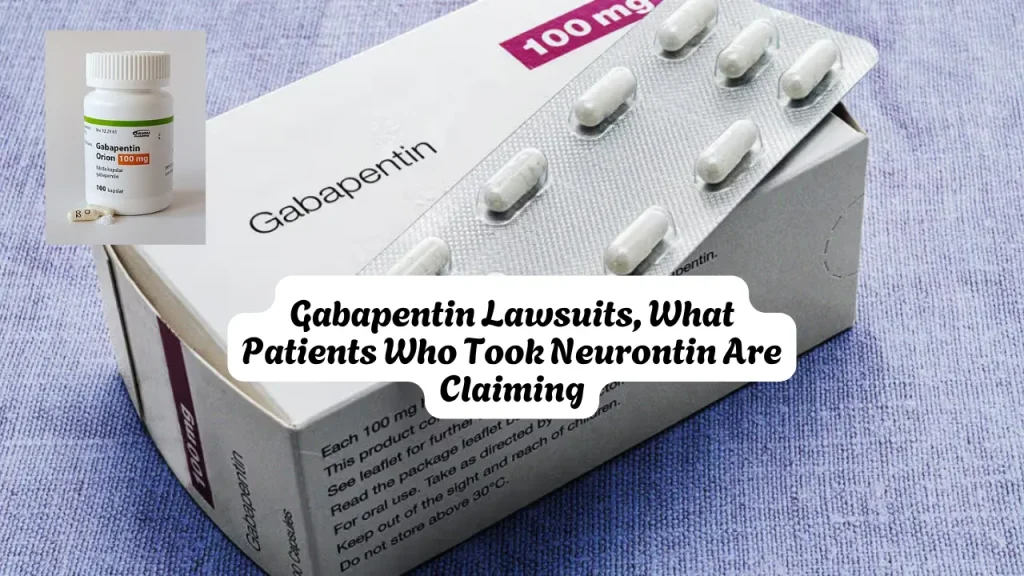
Neurontin is an anticonvulsant prescription drug the FDA approved for treating epilepsy-related partial seizures and postherpetic neuralgia caused by shingles. The brand name drug also goes by the generic name gabapentin. Parke-Davis, a subsidiary of Warner-Lambert, originally marketed Neurontin, and the drug company was later acquired by Pfizer in 2000. Generic versions of gabapentin have been widely prescribed in the U.S. since 2004.
Many doctors prescribe Neurontin for off-label use to treat anxiety disorders, bipolar disorders, and non-neuropathic pain. However, drugmakers cannot legally market these off-label uses. That distinction — between what a doctor can prescribe and what a manufacturer can promote — is at the heart of two decades of Pfizer litigation.
A report published in the Annals of Internal Medicine indicates that the number of individuals prescribed gabapentin nearly tripled between 2010 and 2024. That explosion in prescriptions happened largely because of off-label use for pain, anxiety, and insomnia — conditions the drug was never formally approved to treat.
Related article: Crunchyroll Is Being Sued Again for Sharing Your Viewing Data Here’s What It Means for You
Pfizer’s Criminal Plea and the Original Lawsuits
Pfizer pleaded guilty to numerous civil and criminal charges for illegally promoting the off-label use of gabapentin and agreed to pay a $240 million criminal fine and $152 million to state and federal healthcare programs. That was 2004, and it remains one of the largest pharmaceutical criminal penalties in U.S. history at the time.
A whistleblower lawsuit filed by microbiologist David Franklin detailed how the company suppressed study results, planted people in medical audiences to ask questions intended to put gabapentin in a good light, lavished perks on doctors, used ghostwriters, and gave generous consultation fees to thought leaders. Franklin said off-label uses accounted for more than 90% of the drug’s billions in annual sales.
Direct purchasers filed a class action claiming Pfizer violated federal antitrust laws by illegally delaying the entry of generic versions of Neurontin — keeping cheaper alternatives off the market and forcing consumers to pay inflated prices for longer than they should have. That litigation eventually resulted in a $190 million settlement with consumers and a separate $325 million settlement with third-party payors such as insurance companies and union health plans.
The Newer Claims: Cognitive Decline and Dementia
The current wave of gabapentin lawsuits is different in focus. Rather than targeting the marketing practices that Pfizer already pleaded guilty to, these suits focus on what the drug itself allegedly does to patients over time.
A study published in the journal Regional Anesthesia & Pain Medicine found that people who received six or more prescriptions of gabapentin for lower back pain had a 29% higher risk of developing dementia and an 85% greater chance of being diagnosed with mild cognitive impairment. Researchers also found these risks were more than doubled in adults between the ages of 35 and 49.
The researchers noted that while these findings do not imply direct causation, the association warrants further investigation into the drug’s long-term effects — and that physicians prescribing gabapentin for chronic pain should perform cognitive exams on a regular basis.
Concerns over whether Pfizer had sufficiently informed physicians and patients about long-term neurological risks were rekindled by these findings. What started as doctor-to-physician rumors has grown into a nationwide legal and ethical concern about whether patients were ever adequately warned.
Suicidal Thoughts and Overdose Deaths
Cognitive decline is not the only serious harm at issue. By 2018, over 1,200 plaintiffs had sued Pfizer alleging their medication caused suicidal thoughts and behaviors. Many plaintiffs lost a loved one to suicide due to taking Neurontin.
In January 2008, the FDA issued a warning about an increased risk of suicidal thoughts and behaviors in patients taking antiepileptic drugs. An FDA analysis showed that patients taking antiepileptics were twice as likely to experience suicidal thoughts compared with patients receiving a placebo. Pfizer subsequently changed its prescribing information to list suicide and suicide attempt as adverse events — but plaintiffs argue that warning came too late.
According to a report in the Journal of the American Medical Association, postmortem toxicology tests found gabapentin in nearly 10% of all overdose deaths in the United States in 2019–2020. In half of those cases, gabapentin was identified as a cause of death.
What the FDA Has Warned About
The agency has issued multiple warnings about gabapentin since the drug’s approval. The most significant in recent years involves its combination with opioids.
In December 2019, the FDA issued an urgent Drug Safety Communication warning that severe breathing problems might develop in patients taking gabapentin who have respiratory risk factors — including users of narcotic pain relievers. The FDA received nearly 50 complaints of people experiencing respiratory problems while using gabapentinoids, and 12 of those people died.
In recent years, some groups have called for gabapentin’s classification as a controlled substance, as health experts warn that users often take the medication to enhance the effects of opioids — a form of abuse that can lead to increased rates of addiction and overdose.
Who May Have a Claim Today
There is no open class action settlement or claim form for gabapentin side effects as of March 2026. Current litigation involves individual product liability lawsuits filed by patients who allege they suffered specific, documented harm. An individual claim is typically stronger — and may result in larger compensation — than a class settlement would provide for any single plaintiff.
You may have grounds to speak with an attorney if:
- You took gabapentin (brand or generic) for six months or longer, particularly for an off-label use such as back pain, anxiety, or insomnia
- You developed memory loss, cognitive impairment, or received a dementia diagnosis after extended gabapentin use
- You or a family member experienced suicidal thoughts or behavior while taking gabapentin
- You were not warned by your prescriber about the risk of cognitive decline or dependence
- A loved one died of an overdose in which gabapentin was identified as a contributing cause
Important Dates in the Gabapentin Litigation Timeline
| Milestone | Date |
| FDA Approves Neurontin | 1993 |
| Whistleblower Lawsuit Filed (David Franklin) | 1996 |
| Pfizer Criminal Plea / $430M Fine | 2004 |
| Generic Gabapentin Available | 2004 |
| FDA Suicidality Warning for Antiepileptics | January 2008 |
| FDA Respiratory Risk Warning | December 2019 |
| $325M Third-Party Payor Settlement | 2020 |
| Dementia/Cognitive Risk Study Published (BMJ Group) | July 2025 |
| FDA Class II Recall (Contaminated Capsules) | 2025 |
| New Injury Lawsuits Being Filed | Ongoing — 2025–2026 |
| Active Open Settlement | None as of March 2026 |
Frequently Asked Questions
Is there an active gabapentin lawsuit settlement I can file a claim for right now?
No. As of March 2026, there is no open settlement fund or claim form for gabapentin side-effect injuries. Current cases are individual product liability lawsuits, not a class action. If you believe you were harmed, you need to consult a personal injury or pharmaceutical attorney to evaluate filing your own claim.
What side effects are at the center of the current lawsuits?
The main injuries in current litigation include cognitive decline, memory loss, and dementia linked to long-term use — particularly in patients under 65. Suicidal thoughts and behaviors, respiratory depression (especially when combined with opioids), and drug dependence are also central to ongoing suits.
Do I need a lawyer to pursue a gabapentin injury claim?
Yes. Unlike a class action where you fill out a claim form, individual product liability suits require an attorney to evaluate your medical records, establish a link between the drug and your injury, and file in the correct court. Most pharmaceutical injury lawyers work on contingency — you pay nothing unless they win.
How long do I have to file a gabapentin lawsuit?
The statute of limitations varies by state, but most states allow 2–3 years from the date you discovered — or reasonably should have discovered — that gabapentin caused your injury. If cognitive decline took years to appear, the clock typically starts from the date of diagnosis, not the date you first took the drug. Do not wait — consult an attorney as soon as possible.
Will a gabapentin lawsuit settlement payment affect my taxes?
Compensation for physical injuries is generally not taxable under federal law. However, portions of a settlement that cover lost wages or punitive damages may be taxed differently. Consult a tax professional once any settlement is reached.
Did Pfizer ever admit wrongdoing over gabapentin?
Yes — partially. Pfizer pleaded guilty in 2004 to criminal charges of illegally marketing Neurontin for off-label uses and paid $430 million in fines. However, Pfizer has not admitted that the drug causes the specific physical injuries — such as cognitive decline or suicidal behavior — alleged in current individual lawsuits.
Is gabapentin still prescribed today?
Yes. Gabapentin remains one of the most widely prescribed drugs in the United States. Stopping it without medical supervision can cause serious withdrawal, including seizures. If you have concerns about your prescription, speak with your doctor — do not stop taking it on your own.
Sources & References
- FDA Drug Safety Communication on Gabapentin Respiratory Risk (December 2019): fda.gov
- BMJ Group / Regional Anesthesia & Pain Medicine, dementia risk study (July 2025): bmjgroup.com
- FindLaw overview of Neurontin legal history: findlaw.com
- U.S. DOJ press release on Pfizer’s $430M guilty plea (2004): justice.gov
Last Updated: March 29, 2026
Disclaimer: This article is for informational purposes only and does not constitute legal advice. Legal claims and outcomes depend on specific facts and applicable law. For advice regarding a particular situation, consult a qualified attorney. If you are currently taking gabapentin, do not stop without speaking to your doctor first.
About the Author

Sarah Klein, JD, is a licensed attorney and legal content strategist with over 12 years of experience across civil, criminal, family, and regulatory law. At All About Lawyer, she covers a wide range of legal topics — from high-profile lawsuits and courtroom stories to state traffic laws and everyday legal questions — all with a focus on accuracy, clarity, and public understanding.
Her writing blends real legal insight with plain-English explanations, helping readers stay informed and legally aware.
Read more about Sarah