
FTC Commissioner Removal Lawsuit 2025, Trump Fires Rebecca Slaughter—Supreme Court Hears Constitutional Challenge to Independent Agency Protections
President Trump fired FTC Commissioner Rebecca Slaughter on March 18, 2025, without cause—citing only that her service was “inconsistent with Administration priorities.” Slaughter sued immediately, arguing the removal violated the Federal Trade Commission Act and 90 years of Supreme Court precedent protecting independent agency commissioners from political interference.
On December 8, 2025, conservative Supreme Court justices signaled readiness to overturn Humphrey’s Executor v. United States and grant presidents sweeping power to fire independent agency heads at will—a decision that could reshape federal governance and eliminate protections for dozens of regulatory boards.
The case threatens protections for commissioners at the Federal Reserve, Securities and Exchange Commission, Federal Communications Commission, Consumer Product Safety Commission, and more than 20 other independent agencies designed to operate free from day-to-day presidential control.
What Is the FTC Commissioner Removal Lawsuit About?
The lawsuit centers on whether Congress can restrict a president’s power to fire commissioners at independent agencies like the Federal Trade Commission. Current law allows FTC commissioners to serve seven-year terms and permits removal only for “inefficiency, neglect of duty, or malfeasance in office.”
Trump removed Slaughter—whom he originally appointed in 2018 and Biden reappointed in 2023—along with Commissioner Alvaro Bedoya on March 18, 2025. Neither was accused of misconduct. Bedoya later resigned and withdrew from litigation in June 2025, leaving Slaughter as the sole plaintiff.
The Constitutional Question
The Trump administration argues the president’s Article II authority to execute federal laws requires unrestricted power to remove all officials who wield executive power. Acting Solicitor General Sarah Harris declared the Justice Department will “no longer defend” statutory removal protections for independent agency heads, calling them unconstitutional limitations on presidential authority.
Slaughter counters that Humphrey’s Executor established binding precedent in 1935: presidents cannot remove FTC commissioners without cause. She argues removing this protection would allow any president to stack agencies with political loyalists rather than nonpartisan experts Congress intended.
Related Lawsuit: Royal Caribbean Sued After Passenger Served 33 Drinks Dies—Death Ruled Homicide by Medical Examiner
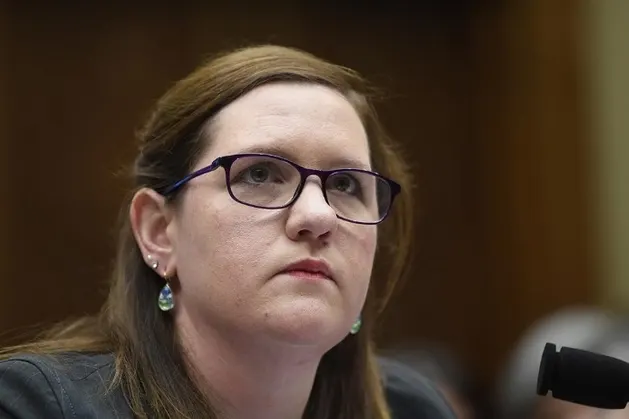
Timeline of the FTC Commissioner Removal Case
March 18, 2025: Trump fires Slaughter and Bedoya via email, stating their continued service is “inconsistent with Administration priorities.” No cause provided as required by FTC Act.
March 27, 2025: Slaughter and Bedoya file lawsuit in U.S. District Court for the District of Columbia challenging their removals as violations of federal law and Supreme Court precedent.
May 22, 2025: Supreme Court grants emergency stay in related cases (Wilcox v. Trump involving NLRB and Harris v. Trump involving MSPB), allowing Trump to remove those commissioners while litigation continues. Conservative majority signals skepticism of removal protections.
June 2025: Bedoya submits formal resignation and withdraws from lawsuit.
July 17, 2025: Federal District Judge Tanya Chutkan reinstates Slaughter, ruling Trump’s removal was a “blatant violation” of the FTC Act. Judge finds no evidence of inefficiency, neglect, or malfeasance justifying removal.
September 8, 2025: Chief Justice John Roberts issues administrative stay allowing Trump to remove Slaughter while Supreme Court considers the case. Three liberal justices dissent.
September 22, 2025: Supreme Court grants certiorari and schedules December oral arguments. Court directs parties to address whether Humphrey’s Executor should be overruled.
December 5, 2025: D.C. Circuit issues decision in related Harris and Wilcox cases, holding removal protections for NLRB and MSPB unconstitutional. Two Trump-appointed judges find agencies wield “considerable executive power” not contemplated in Humphrey’s Executor.
December 8, 2025: Supreme Court hears oral arguments in Trump v. Slaughter. Conservative justices signal alignment with Trump’s position that removal protections violate separation of powers.
Expected June 2026: Supreme Court decision anticipated by end of current term.
The Legal Claims in Trump v. Slaughter
Slaughter’s Constitutional Arguments
Slaughter argues Congress has constitutional authority to structure independent agencies with removal protections. Her brief emphasizes:
Historical Foundation: Multi-member agencies with for-cause removal protections date to the founding. Congress has created approximately two dozen such agencies over 200+ years.
Separation of Powers: Independent agencies serve Congress’s Article I power to structure government efficiently. Removal protections ensure agencies can perform quasi-legislative rulemaking and quasi-judicial adjudication without presidential interference.
Stare Decisis: Overturning Humphrey’s Executor would destabilize institutions “inextricably intertwined with the fabric of American governance.” Modern federal regulation relies on independent agency structure.
Practical Consequences: Without removal protections, presidents could fire Federal Reserve governors before interest rate decisions they disagree with, SEC commissioners investigating political allies, or FTC commissioners blocking mergers supported by campaign donors.
Trump Administration’s Constitutional Arguments
Solicitor General John Sauer argues the Constitution vests all executive power in the president, who must control subordinates executing federal law. Key claims include:
Article II Authority: The Constitution grants presidents broad removal power over executive officers. Congress cannot restrict this authority without violating separation of powers.
Humphrey’s Executor Overreach: The 1935 decision incorrectly characterized FTC powers as “quasi-legislative” and “quasi-judicial” rather than executive. Modern administrative law recognizes agency enforcement, rulemaking, and adjudication as executive functions.
Accountability: Presidents are accountable to voters every four years. Commissioners insulated from removal escape democratic accountability while wielding enormous power over businesses and individuals.
Seila Law Precedent: The Supreme Court’s 2020 decision in Seila Law v. CFPB held a single-director independent agency structure unconstitutional. The reasoning applies equally to multi-member agencies like the FTC.
Supreme Court December 8 Oral Arguments: What Justices Asked
Conservative justices dominated questioning during the 2.5-hour argument session, pressing Slaughter’s attorney on whether Humphrey’s Executor remains viable.
Chief Justice Roberts’ Skepticism
Roberts stated Humphrey’s Executor has “nothing to do with what the FTC looks like today.” He noted the 1935 FTC had “very little, if any executive power,” while today’s FTC issues binding regulations affecting trillions in commerce, brings billion-dollar enforcement actions, and imposes civil penalties—all executive functions.
Justice Gorsuch’s Challenge
Gorsuch questioned why Congress couldn’t restructure Cabinet departments to insulate secretaries from removal if Slaughter’s theory prevails. If removal protections are constitutional for multi-member agencies, what prevents Congress from applying them to single-head departments, effectively neutering presidential control?
Justice Kavanaugh’s Concerns
Kavanaugh emphasized that independent agency commissioners “are not elected—as Congress and the president are—and are exercising massive power over individual liberty and billion-dollar industries.” He suggested democratic accountability requires presidential removal authority.
Liberal Justices’ Defense
Justice Sotomayor led liberal justices in defending agency independence. She warned that allowing at-will removal would enable presidents to pressure Federal Reserve governors, manipulate interest rates for political gain, and stack agencies with unqualified loyalists.
Justice Kagan noted the ruling would “transfer government authority from Congress to the President, and thus reshape the Nation’s separation of powers” contrary to constitutional structure.
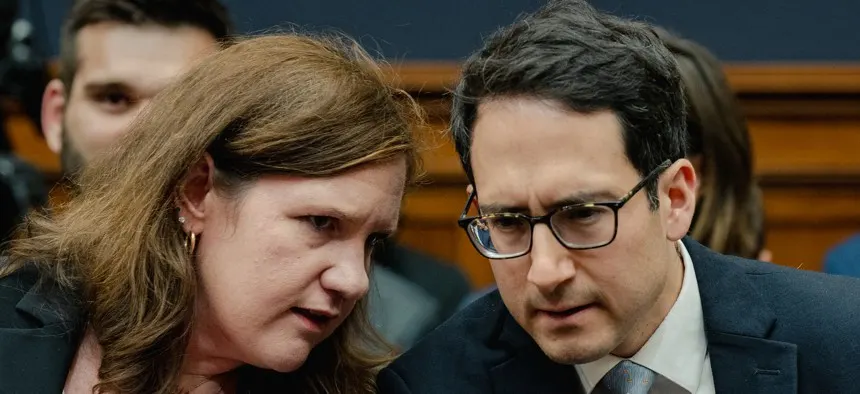
What Court Rulings Have Determined So Far
District Court Victory for Slaughter
Judge Chutkan’s July 17, 2025 decision thoroughly rejected Trump’s removal authority. She found:
- FTC Act clearly limits removal to three specified causes
- Trump provided no evidence of inefficiency, neglect, or malfeasance
- Humphrey’s Executor remains binding precedent
- Political disagreement cannot justify removal under current law
The judge ordered Slaughter reinstated immediately.
D.C. Circuit Reversal in Related Cases
A D.C. Circuit panel ruled 2-1 on December 5, 2025 that removal protections for NLRB and MSPB commissioners are unconstitutional. Judges Gregory Katsas and Neomi Rao (both Trump appointees) concluded:
Modern agencies wield far more executive power than 1935-era agencies. Humphrey’s Executor distinguished agencies performing purely legislative research and judicial adjudication from executive officers. Today’s agencies regulate, enforce, and adjudicate with binding effect—all executive functions subject to presidential control.
Judge Patricia Millett dissented, arguing the majority invented a “maximalist” unitary executive theory inconsistent with constitutional text, history, and precedent.
Supreme Court Emergency Orders
The Court’s May 22 and September 8 emergency stays signaled the conservative majority’s skepticism toward removal protections. The unsigned orders stated removal protections likely violate separation of powers when agencies “exercise considerable executive power.”
Justice Kagan’s dissent accused the majority of effectively repealing Humphrey’s Executor “by fiat” on the emergency docket without full briefing or argument—an inappropriate use of emergency powers to reshape constitutional law.
Understanding Humphrey’s Executor v. United States
The 1935 Precedent
President Franklin Roosevelt fired FTC Commissioner William Humphrey in 1933 because Humphrey opposed New Deal economic policies. Humphrey’s estate sued for back pay, arguing the FTC Act permitted removal only for inefficiency, neglect, or malfeasance.
The Supreme Court ruled unanimously that Roosevelt exceeded his authority. Justice George Sutherland’s opinion established three principles:
- Congressional Authority: Congress can create independent agencies to perform functions requiring expert, nonpartisan judgment.
- Quasi-Functions Exception: Agencies exercising “quasi-legislative” (rulemaking) or “quasi-judicial” (adjudication) powers need independence from presidential control to function properly.
- Separation of Powers: Commissioners serving at presidential pleasure cannot maintain independence necessary for impartial decision-making.
How Humphrey’s Executor Shaped Modern Government
Following Humphrey’s Executor, Congress created dozens of independent agencies with multi-member leadership and for-cause removal protections:
- Federal Communications Commission (1934)
- Securities and Exchange Commission (1934)
- National Labor Relations Board (1935)
- Consumer Product Safety Commission (1972)
- Nuclear Regulatory Commission (1974)
- Federal Election Commission (1974)
These agencies regulate critical aspects of American life—from telecommunications and stock markets to workplace safety and nuclear power—deliberately insulated from day-to-day political interference.
How Seila Law Weakened Independent Agency Protections
The Supreme Court’s 2020 decision in Seila Law LLC v. Consumer Financial Protection Bureau marked a turning point. Chief Justice Roberts’ 5-4 majority opinion held the CFPB’s structure—a single director removable only for cause—violated separation of powers.
Seila Law’s Key Holdings
Single-Director Distinction: The Court emphasized the CFPB’s unusual structure concentrated executive power in one person insulated from presidential control. Multi-member agencies with bipartisan composition present different concerns.
Executive Power Recognition: Roberts noted modern agencies wield substantial executive authority through enforcement, rulemaking, and adjudication—functions Humphrey’s Executor minimized.
Accountability Concerns: The opinion stressed that concentrated power demands political accountability. A single director with a five-year term and removal protection escapes both presidential control and democratic accountability.
What Seila Law Left Unresolved
Roberts’ opinion carefully avoided addressing whether multi-member agencies like the FTC remain constitutional. A footnote stated the Court’s conclusion “that the FTC did not exercise executive power has not withstood the test of time”—signaling skepticism toward Humphrey’s Executor without formally overruling it.
The Trump administration now argues Seila Law‘s reasoning applies equally to multi-member agencies. If a single director’s removal protection is unconstitutional, why should five commissioners’ protections survive?
What This Means for FTC Independence and Consumer Protection
The FTC enforces federal consumer protection and antitrust laws affecting every American. Current functions include:
Consumer Protection: Stopping deceptive advertising, protecting privacy, preventing scams targeting seniors, regulating data security, challenging junk fees, and enforcing children’s online privacy.
Antitrust Enforcement: Reviewing mergers that could harm competition, investigating monopolistic practices, challenging price-fixing schemes, and promoting competitive markets.
Recent High-Profile Actions: Blocking the $25 billion Kroger-Albertsons supermarket merger over competition concerns, investigating tech companies’ AI practices, challenging Meta’s acquisition of Within Unlimited, and proposing nationwide bans on non-compete agreements.
Commissioner Slaughter’s Warning
Slaughter argued that without removal protections, future FTC decisions would reflect political calculations rather than legal analysis and consumer welfare:
“Last year, the FTC blocked the largest grocery store merger in history, even when politicians on both sides wanted it approved. Why? Because it would have raised prices and cut wages. If presidents can fire us for no reason, will future decisions be based on what’s best for the public—or on political donations?”
Commissioner Bedoya’s Perspective
Before resigning, Bedoya framed the stakes broadly:
“This is about economic stability. If the president can break a 90-year-old Supreme Court ruling to fire us for no reason, he can do it to the Federal Reserve, FDIC, and SEC.”
Implications for Other Independent Agencies Beyond FTC
A ruling for Trump would affect approximately 24 independent agencies employing thousands of commissioners and board members:
Financial Regulatory Agencies
Federal Reserve Board: Governors serve 14-year terms with for-cause removal protection. Presidential power to fire governors could politicize interest rate decisions, undermining the Fed’s credibility with markets and threatening economic stability.
Securities and Exchange Commission: Five commissioners regulate $100+ trillion in securities markets. Political pressure on enforcement decisions could favor well-connected companies over market integrity.
Federal Deposit Insurance Corporation: Board members oversee bank safety and deposit insurance. Political interference could compromise financial system stability.
Safety and Communications Agencies
Consumer Product Safety Commission: Commissioners protect Americans from unsafe products—from children’s toys to household appliances. Political pressure could delay recalls of dangerous products.
Federal Communications Commission: Commissioners regulate broadcasting, telecommunications, and internet access. At-will removal could enable presidents to pressure FCC decisions on media ownership, net neutrality, or broadcast licensing.
Nuclear Regulatory Commission: Commissioners oversee nuclear reactor safety. Political interference in safety decisions presents catastrophic risks.
Labor and Employment Agencies
National Labor Relations Board: Already targeted by Trump removals, NLRB protects workers’ rights to organize. Political control could tip labor relations toward employers or unions depending on administration.
Equal Employment Opportunity Commission: Enforces workplace discrimination laws. Several commissioners were fired by Trump in early 2025, foreshadowing broader attacks on independent agencies.
Merit Systems Protection Board: Protects federal civil servants from political retaliation. Trump’s removal of Chair Cathy Harris aimed to eliminate this check on politicizing the federal workforce.
Constitutional Law Framework: Separation of Powers and Removal Authority
Article II Vesting Clause
The Constitution states: “The executive Power shall be vested in a President of the United States of America.” Trump’s legal team argues this grants comprehensive authority to control all executive functions, including unrestricted removal power.
Take Care Clause
Article II commands the president “take Care that the Laws be faithfully executed.” The administration contends faithful execution requires controlling subordinates executing those laws through removal authority.
Congressional Article I Powers
Article I grants Congress broad authority to structure government agencies. Slaughter argues this includes power to insulate agencies performing quasi-legislative and quasi-judicial functions from presidential interference—ensuring they serve statutory purposes rather than presidential preferences.
Myers v. United States Foundation
The 1926 Myers decision held presidents possess inherent constitutional authority to remove executive officers, even without explicit statutory permission. Chief Justice Taft’s opinion emphasized presidential need to control subordinates.
However, Myers involved a postmaster performing purely executive functions. Humphrey’s Executor distinguished independent agencies performing regulatory functions requiring expert, nonpartisan judgment.
Morrison v. Olson Refinement
The 1988 Morrison decision upheld for-cause removal protections for independent counsel investigating executive branch officials. The Court recognized Congress may insulate certain officers with limited, specialized functions from presidential removal.
Conservative justices have since criticized Morrison, with Justice Scalia’s solo dissent predicting it would undermine executive authority becoming canonical among originalist scholars.
What Happens Next: Supreme Court Decision Timeline
Argument Recap and Conference
Following December 8 oral arguments, justices met in private conference to discuss the case and take a preliminary vote. Based on oral argument signals, the conservative majority likely voted to reverse Judge Chutkan’s reinstatement of Slaughter.
Opinion Assignment
Chief Justice Roberts—or the senior justice in the majority—assigned opinion-writing responsibility. Given Roberts’ leadership in Seila Law, he may write the majority opinion himself.
Opinion Drafting Process
The assigned justice will circulate draft majority opinions among justices, incorporating suggestions and responding to dissents. This process typically takes 3-6 months.
Possible Outcomes
Complete Overruling: The Court could explicitly overrule Humphrey’s Executor, declaring all removal protections for principal officers unconstitutional. This maximalist approach would immediately affect all independent agencies.
Narrower Ruling: The Court might distinguish modern FTC’s extensive executive powers from 1935-era limited functions, holding removal protections unconstitutional as applied to agencies wielding substantial enforcement and regulatory authority while preserving protections for purely adjudicatory bodies.
Reaffirmation: Though unlikely given oral arguments, the Court could reaffirm Humphrey’s Executor and hold removal protections constitutional for multi-member expert agencies balancing political representation.
Remand: The Court could remand for further factfinding on whether Slaughter’s removal caused concrete injury, avoiding the constitutional question. This seems improbable given the Court’s willingness to address the issue directly.
Expected Decision Timing
Supreme Court terms conclude in late June. The Court will likely issue this major constitutional decision during the final weeks of June 2026, alongside other high-profile cases.
Implementation Challenges
If the Court rules for Trump, immediate questions arise:
- Do current commissioners automatically lose for-cause protections, or do statutory provisions remain until formally repealed?
- Can presidents immediately fire all commissioners, or must they wait for term expirations?
- How do agencies maintain quorum requirements if commissioners are rapidly replaced?
- Do past agency actions remain valid if undertaken by commissioners whose appointments/removals are now questioned?
Broader Context: Unitary Executive Theory and Project 2025
The Unitary Executive Theory
Conservative legal scholars advance “unitary executive theory”—the president must control all executive branch functions, including independent agencies. Proponents argue:
- The Constitution vests all executive power in the president, not Congress
- Democratic accountability requires a single executive responsible to voters
- Diffusing executive power among unelected commissioners violates separation of powers
Critics respond that:
- The Constitution’s text doesn’t require presidential control over all agencies
- Congress possesses authority to structure agencies serving legislative purposes
- Independent agencies provide expertise and consistency across administrations
- Checks and balances prevent excessive power concentration in any branch
Project 2025 and Agency Reform
The Heritage Foundation’s Project 2025 blueprint called Humphrey’s Executor “ripe for revisiting—and perhaps sooner than later.” The document advocates sweeping reforms to consolidate executive power including:
- Eliminating independent agency protections
- Reclassifying civil servants to enable mass firings
- Restructuring agencies under direct presidential control
- Expanding presidential power to ignore agency recommendations
Trump’s mass firings of independent agency commissioners—FTC, NLRB, MSPB, EEOC—implemented Project 2025 recommendations even before the Supreme Court ruled on their constitutionality.
What Affected Parties Should Know
For Regulated Businesses
Companies subject to FTC, SEC, or other independent agency oversight should anticipate:
Policy Volatility: Agency priorities may shift dramatically with each new administration if commissioners serve at presidential pleasure. Expect frequent reversals of enforcement approaches and regulatory standards.
Reduced Predictability: Long-term compliance planning becomes more difficult when agency direction depends on presidential elections rather than statutory mandates and expert analysis.
Political Considerations: Enforcement decisions may reflect political calculations—benefiting companies with administration connections while targeting political opponents.
For Federal Employees
Civil servants at independent agencies face uncertainty:
Politicization Risk: Agencies may prioritize political loyalty over expertise when hiring and promoting staff.
Mission Changes: Career employees may experience rapid policy reversals as commissioners change with each administration.
Job Security: Employees may face pressure to implement politically motivated decisions conflicting with statutory mandates and professional judgment.
For Consumers and Workers
The lawsuit’s outcome affects everyday Americans:
Consumer Protection Uncertainty: FTC actions protecting consumers from fraud, deceptive practices, and anti-competitive mergers could weaken if commissioners face political pressure.
Financial Market Stability: Fed independence historically insulated monetary policy from political manipulation. Political pressure on interest rates could destabilize markets and trigger inflation or recessions.
Workplace Rights: NLRB protection of organizing rights could erode if commissioners serve at presidential pleasure, tilting labor relations toward whichever side has White House support.
Safety Regulations: CPSC, NRC, and other safety agencies may face pressure to relax standards when industries lobby presidents.
Legal Expert Analysis and Commentary
Constitutional scholars are divided along ideological lines.
Conservative Legal Scholars
Steven Calabresi (Northwestern Law): “The Constitution clearly vests executive power in the president alone. Congress cannot create a headless fourth branch exercising executive functions beyond presidential control.”
John Yoo (Berkeley Law): “Humphrey’s Executor was wrongly decided in 1935 and has caused 90 years of confusion about separation of powers. The Court should correct this error and restore proper constitutional structure.”
James Burnham (Former Trump Administration Attorney): “I don’t think there is such a thing as an independent agency because everything has to be in one of the three branches of government. The removal protections have been unconstitutional from the beginning.”
Progressive Legal Scholars
Gillian Metzger (Columbia Law): “Overturning Humphrey’s Executor would destabilize federal administration and eliminate crucial checks preventing presidential abuse of regulatory power.”
Nicholas Bagley (Michigan Law): “The unitary executive theory is ahistorical. Congress has always possessed authority to structure agencies serving legislative purposes without presidential micromanagement.”
Lisa Marshall Manheim (Washington Law): “Independent agencies aren’t a constitutional anomaly—they’re a deliberate structural choice balancing expertise, accountability, and preventing power concentration.”
Frequently Asked Questions About FTC Commissioner Removal
Can the president fire any federal official?
Not under current law. While presidents can fire Cabinet secretaries and most executive officials at will, approximately two dozen independent agencies have statutory protections limiting removal to specified causes. Whether these protections are constitutional is the question in Trump v. Slaughter.
What does “for cause” removal mean?
The FTC Act permits removal only for “inefficiency, neglect of duty, or malfeasance in office.” This requires evidence of poor performance, failure to fulfill responsibilities, or misconduct—not merely policy disagreements or political differences.
Why did Trump fire Commissioner Slaughter?
Trump stated only that Slaughter’s “continued service on the FTC is inconsistent with [his] Administration’s priorities.” He provided no evidence of inefficiency, neglect, or malfeasance. This political rationale violates current law but Trump argues the law itself is unconstitutional.
When will the Supreme Court decide Trump v. Slaughter?
The Court will likely issue its decision in June 2026, near the end of the current term. Major constitutional cases typically receive the most deliberation time and are announced last.
What happens if Trump wins at the Supreme Court?
Presidents would gain power to fire commissioners at all independent agencies at will. Expect wholesale commissioner replacements with each new administration, dramatic policy shifts, and increased political influence over regulatory decisions affecting trillions in economic activity.
What happens if Slaughter wins at the Supreme Court?
Humphrey’s Executor would be reaffirmed, maintaining current protections for independent agencies. Slaughter would be reinstated as FTC Commissioner through her term ending in 2029. Presidents would continue requiring cause to remove commissioners.
Could Congress respond to a ruling for Trump?
Congress could attempt to restructure agencies or strengthen removal protections, but any such legislation would face the same constitutional objections the Court sustained. Realistically, a Supreme Court ruling striking down removal protections would require either constitutional amendment (extremely difficult) or waiting for future Courts to reverse the decision.
How does this affect the Federal Reserve?
The Federal Reserve’s independence relies on the same constitutional foundation as FTC independence. Fed governors serve 14-year terms with for-cause removal protection. If the Court rules for Trump, presidents could fire governors who resist political pressure on interest rate decisions—potentially devastating the Fed’s credibility and effectiveness.
What about other Trump-fired commissioners?
Trump fired commissioners at NLRB, MSPB, EEOC, and CPSC using identical reasoning. Wilcox v. Trump and Harris v. Trump raised identical legal questions; the D.C. Circuit ruled for Trump in both on December 5, 2025. Those commissioners are awaiting the Trump v. Slaughter Supreme Court decision which will definitively resolve all pending cases.
Is this about Democrats versus Republicans?
The lawsuit has partisan dimensions—Trump fired Democratic commissioners while Republican commissioners endorsed his authority. However, the constitutional question transcends parties: any president (Democrat or Republican) would gain the same removal power. Future Democratic presidents could fire Republican commissioners with equal ease if Trump prevails.
Disclaimer: This article discusses ongoing constitutional litigation where no final decision has been rendered. The legal questions remain unresolved pending Supreme Court ruling expected June 2026. Nothing herein constitutes legal advice. Individuals or businesses affected by independent agency decisions should consult licensed attorneys.
Resources for Further Information:
- Supreme Court Docket and Filings: SCOTUSblog Trump v. Slaughter Coverage
- FTC Information: FTC.gov Commissioner Biographies
- Constitutional Analysis: Congressional Research Service Reports on Removal Power
- Oral Argument Audio: Available at supremecourt.gov
Last Updated: December 9, 2025
This article will be updated as developments emerge in Trump v. Slaughter and related independent agency litigation.
About the Author

Sarah Klein, JD, is a licensed attorney and legal content strategist with over 12 years of experience across civil, criminal, family, and regulatory law. At All About Lawyer, she covers a wide range of legal topics — from high-profile lawsuits and courtroom stories to state traffic laws and everyday legal questions — all with a focus on accuracy, clarity, and public understanding.
Her writing blends real legal insight with plain-English explanations, helping readers stay informed and legally aware.
Read more about Sarah