
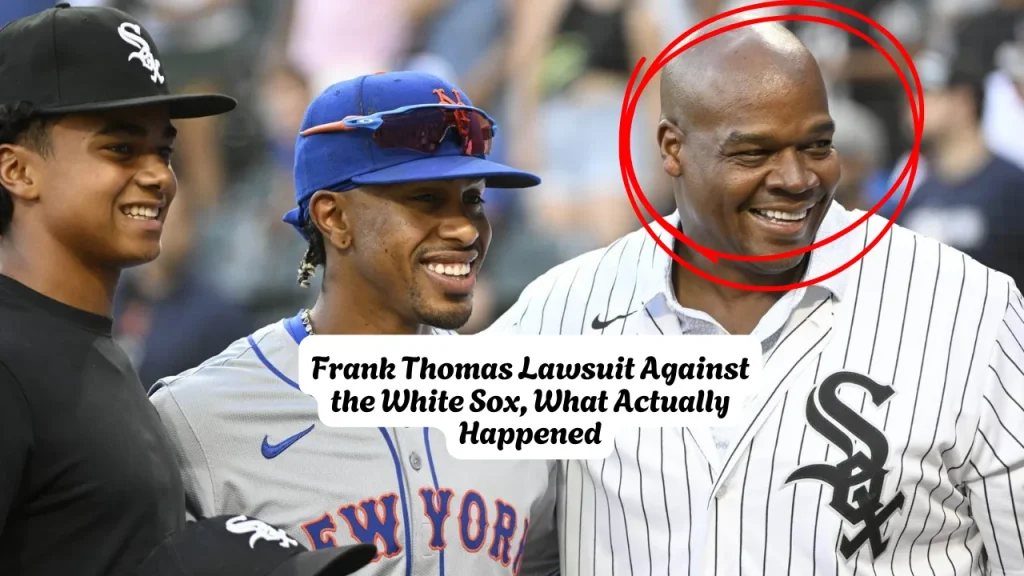
Frank Thomas Lawsuit Against the White Sox, What Actually Happened
Baseball Hall of Famer Frank Thomas filed a civil lawsuit against the Chicago White Sox, Nike, and Fanatics on March 19, 2026, in Cook County Circuit Court, claiming the defendants violated the Illinois Right of Publicity Act by selling City Connect 2.0 jerseys featuring his name and jersey number without his consent or compensation. Thomas spent 16 of his 19 MLB seasons on the South Side and remains the franchise’s all-time leader in home runs, RBI, and several other offensive categories. The case number is 2026L003200.
| Field | Detail |
| Plaintiff | Frank Thomas |
| Defendants | Chicago White Sox, Nike, Fanatics |
| Filed | March 19, 2026 |
| Court | Cook County Circuit Court, Illinois |
| Law Alleged | Illinois Right of Publicity Act |
| Damages Sought | $50,000+ plus attorney fees and punitive damages |
| Jury Trial Demanded | Yes |
| Status | Active litigation — early stage |
Where things stand:
- The White Sox said they do not comment on active litigation when reached for comment.
- Neither Nike nor Fanatics had issued a public response as of late March 2026.
- Thomas’ attorney confirmed Thomas sent a cease and desist letter to the parties to halt production of the jersey — but says it fell on deaf ears.
- The case is in early stages; no trial date has been set.
What the Jerseys Actually Say — and Why Thomas Says That’s the Problem
The red-and-black City Connect 2.0 uniforms were inspired by the Chicago Bulls, unveiled in spring 2025, and quickly became popular among fans. They went on sale around April 28, 2025.
The lawsuit alleges that Nike, Fanatics, and the White Sox used Thomas’ name and likeness to market and sell the City Connect 2.0 jerseys with No. 35 — Thomas’ jersey number with the White Sox — on the front and Thomas’ name and the No. 35 on the back, alongside White Sox trademarks, logos, and Nike branding.
The lawsuit says Thomas received no financial compensation for the use of his name and likeness, which caused him to suffer economic detriment. His attorneys argue the defendants were unjustly enriched while Thomas got nothing.
Related article: Gabapentin Lawsuits, What Patients Who Took Neurontin Are Claiming
The Illinois Law at the Center of This Case
The Illinois Right of Publicity Act is what gives this lawsuit its legal foundation. It protects individuals — celebrities included — from having their identity used commercially without their permission.
The lawsuit relies on this Illinois law, which protects individuals from having their identities used for commercial purposes without consent. In plain terms, this is not just about a jersey existing; it is about whether a company can put a retired icon’s name and number on apparel, market it, and collect money without first making a deal with that icon.
Thomas alleges that Nike, Fanatics, and the White Sox commercially exploited the goodwill associated with his professional baseball career to enhance the marketability of their merchandise. That “goodwill” argument matters — a No. 35 White Sox jersey sells differently because fans associate that number with Thomas specifically.
What Thomas Is Asking the Court to Do
Thomas is seeking payment in excess of $50,000, as well as attorney fees and punitive damages, and the civil complaint states he is demanding a trial by jury.
The $50,000 figure is a floor, not a cap. Thomas’ lawyer said that until an accounting of the jersey sales is done, they won’t know the exact amount they’re seeking. If the City Connect 2.0 jerseys sold in large numbers — which early reports suggested they did — the total damages figure could grow significantly once both sides conduct discovery.
The Bigger Picture: Thomas and the White Sox Have Had a Rocky 2026
This lawsuit didn’t come out of nowhere. On February 1, the first day of Black History Month, the White Sox posted a graphic highlighting momentous firsts for the organization. Thomas was quick to respond publicly, writing: “I Guess the black player who made you rich over there and holds all your records is forgettable! Don’t worry I’m taking Receipts!”
Thomas’ attorney told reporters that Thomas is not personally upset with the White Sox and that this is purely a business lawsuit, adding that fans shouldn’t be upset with Frank — “People shouldn’t slam him for protecting his image, name and hard work.”
Thomas is 57 years old, a two-time AL MVP, and was inducted into the Hall of Fame in 2014. He hit 521 career home runs. The idea that a team could sell a jersey with his name on the back without his knowledge or a licensing agreement is exactly the kind of dispute right-of-publicity law was designed to resolve.
Important Dates
| Milestone | Date |
| City Connect 2.0 Jerseys Go on Sale | ~April 28, 2025 |
| Cease and Desist Letter Sent | TBD (prior to filing) |
| Lawsuit Filed | March 19, 2026 |
| White Sox Response | No public comment as of March 2026 |
| Trial Date | TBD |
| Expected Resolution | TBD |
Frequently Asked Questions
Is Frank Thomas suing the Chicago White Sox over money?
Partly, yes — but his attorney says the bigger issue is control. Thomas argues that any company using his name to sell products owes him a licensing agreement and compensation, regardless of how much money is involved. The damages figure will likely grow once sales numbers are disclosed.
What is the Illinois Right of Publicity Act?
It is an Illinois law that gives individuals the right to control how their name, image, and likeness are used for commercial purposes. It covers celebrities and private individuals alike. Using someone’s identity to sell merchandise without their consent can trigger civil liability under this law.
Did the White Sox have permission to put Thomas’ name on the jersey?
Thomas’ lawsuit says no. He claims he never consented to the use of his name on the City Connect 2.0 jerseys and received no compensation. The White Sox have declined to comment on active litigation.
Do I need a lawyer to follow this case or take any action?
This is a single individual’s lawsuit — there is no claim form for the public to file. If you purchased a City Connect 2.0 jersey and have questions about your own rights, consult a licensed Illinois attorney.
When will this case be resolved?
The lawsuit is in early stages with no trial date set. Cases like this often settle before trial once discovery reveals the full revenue figures from jersey sales. A timeline is TBD.
Could this affect future jersey sales or retired player merchandise?
Potentially. A ruling in Thomas’ favor could push teams, leagues, and apparel companies to revisit how they license retired players’ names and numbers on merchandise — particularly for players whose numbers have not been officially retired.
Sources & References
- Associated Press via WSLS: wsls.com
- ESPN original report: espn.com
- Cook County Circuit Court, Case No. 2026L003200 — Thomas v. Chicago White Sox
- ABC7 Chicago: abc7chicago.com
Last Updated: March 29, 2026
Disclaimer: This article is for informational purposes only and does not constitute legal advice. Legal claims and outcomes depend on specific facts and applicable law. For advice regarding a particular situation, consult a qualified attorney.
About the Author

Sarah Klein, JD, is a licensed attorney and legal content strategist with over 12 years of experience across civil, criminal, family, and regulatory law. At All About Lawyer, she covers a wide range of legal topics — from high-profile lawsuits and courtroom stories to state traffic laws and everyday legal questions — all with a focus on accuracy, clarity, and public understanding.
Her writing blends real legal insight with plain-English explanations, helping readers stay informed and legally aware.
Read more about Sarah