
Florida License Plate Frame Law, What’s Legal, What’s Not, and How to Avoid $500 Fines
Florida’s license plate frame law changed dramatically on October 1, 2025, when House Bill 253 made any obstruction of license plates a criminal offense. Violations now carry up to 60 days in jail or a $500 fine, making Florida one of the strictest states in the nation for license-plate visibility.
The law prohibits anything that blocks, covers, distorts, or obscures any part of your license plate—including frames, covers, and clear shields. Under Florida Statute 320.061, you cannot apply or attach any substance, reflective matter, coating, covering, or material that interferes with the legibility, angular visibility, or detectability of any feature or detail on the license plate.
What changed from a noncriminal traffic infraction to a second-degree misdemeanor can now create a permanent criminal record.
What Is Florida’s License Plate Frame Law?
Florida Statute 320.061 prohibits altering the original appearance of any license plate or applying anything onto or around any license plate which interferes with legibility, angular visibility, or detectability. This applies to any person who knowingly violates this section, making it a misdemeanor of the second degree.
The new law also created Florida Statute 320.262, which defines “license plate obscuring devices” as any manual, electronic, or mechanical device designed to switch between license plates, hide plates by flipping them, cover or obscure primary features including the license plate number or validation sticker, or interfere with the ability to record license plate details.
The legislation took effect October 1, 2025. Governor Ron DeSantis signed the law on May 19, 2025.
Specific Legal Requirements and Restrictions
Florida’s law specifies what you cannot do with your license plate:
Prohibited Items:
- Tinted, smoked, or clear plastic covers
- Decorative frames that cover any letters, numbers, or borders
- Reflective sprays or coatings
- Any device that obscures the word “Florida”
- Frames that cover registration stickers
- Materials that interfere with camera detection
- Any covering that affects angular visibility
License plate numbers and registration stickers must be in clear view at all times. Frames surrounding the information on the license plate are permitted only if they don’t obstruct any details.
What Must Remain Visible:
- All alphanumeric characters (letters and numbers)
- The word “Florida” at the top
- County name (if applicable)
- Registration validation sticker
- Plate borders and design elements
- All identifying features
All identification marks must be clear and distinct, free from obscuring matter, and plainly visible and legible at all times from 100 feet from the vehicle.
Related article: Capital One $425M Settlement REJECTED, Will You Still Get Paid? Latest Dec 2025 Update
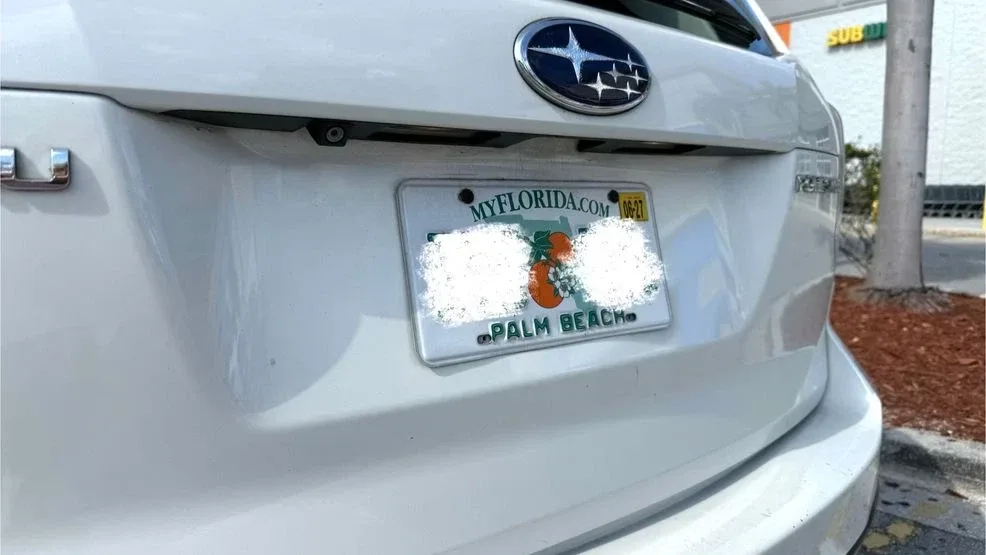
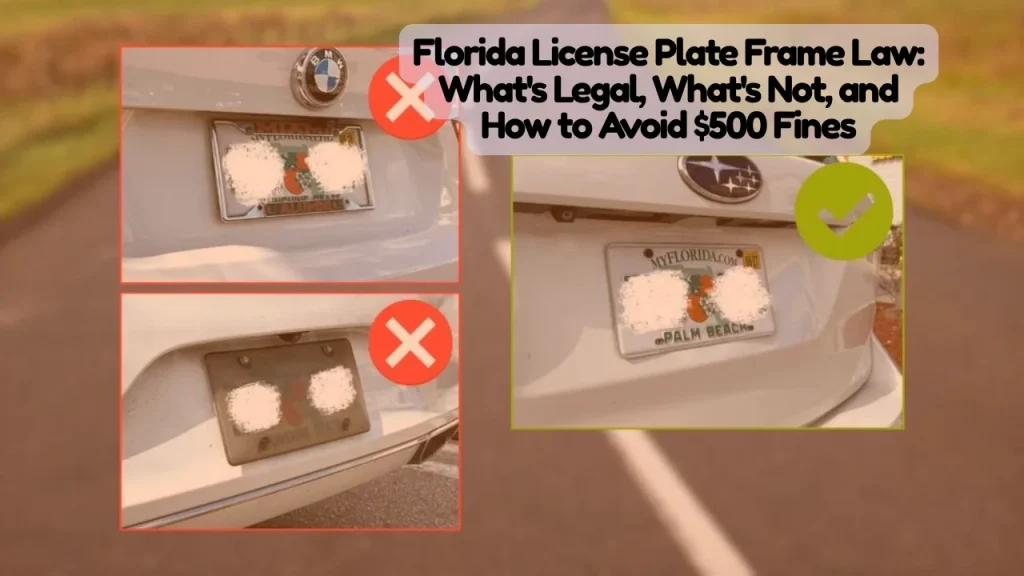
What Frames Are Legal vs. Illegal in Florida?
Legal Frames:
Casselberry Police Department clarified that basic, simple plate frames are permitted when they surround the information without blocking characters or decals. The Florida Sheriffs Association confirmed that their official FSA license plate frames do not violate Florida Statute 320.061 when installed correctly because they are not designed to cover or obscure any part of a license plate.
Legal frames must:
- Border only the white space around the plate
- Leave all numbers and letters fully exposed
- Not cover the registration sticker
- Not obscure “Florida” or county names
- Not touch any printed information on the plate
Illegal Frames:
If a frame overlaps even a sliver of the plate’s design, it is likely illegal. Even clear shields and dealer-installed frames can violate the law if they cover any portion of the plate’s border or state name.
Illegal frames include:
- Any frame covering letters or numbers
- Frames that obscure the top border where “Florida” appears
- Frames blocking the bottom county name
- Covers with any tint, even clear material
- Thick decorative borders that overlap plate edges
- University or sports team frames that cover plate information
Casselberry Police Department stated their focus is on intentional alterations, blocked characters, and unreadable plates or decals, noting it is possible to have cosmetic accessories that stay within the law.
Penalties and Fines for Violations
Florida’s penalties escalate based on the nature of the violation.
Basic Violations – Second-Degree Misdemeanor:
A person who knowingly violates Section 320.061 commits a misdemeanor of the second degree, punishable as provided in Florida Statutes 775.082 or 775.083.
Penalties include:
- Up to 60 days in jail
- Fine up to $500
- Permanent criminal record
- Potential impact on employment opportunities
- Increased insurance premiums
Possession of Obscuring Devices – Second-Degree Misdemeanor:
A person commits a misdemeanor of the second degree if they purchase or possess a license plate obscuring device.
This applies to:
- Electronic plate flippers
- Mechanical hiding devices
- Reflective sprays marketed to defeat cameras
- Any device designed to obscure plates
Manufacturing or Selling Devices – First-Degree Misdemeanor:
A person commits a misdemeanor of the first degree if they manufacture, sell, offer to sell, or otherwise distribute a license plate obscuring device.
Penalties include:
- Up to 1 year in jail
- Fine up to $1,000
Using Devices During Crimes – Third-Degree Felony:
A person commits a felony of the third degree if they use a license plate obscuring device to assist in committing a crime or in escaping from or avoiding detection or arrest in connection with committing such crime.
This felony conviction carries:
- Up to 5 years in prison
- Fine up to $5,000
- Permanent felony record
- Loss of voting rights
- Impact on professional licenses
Prosecutors must prove that a driver intentionally altered or covered their plate to secure a conviction, meaning natural wear from sun damage differs from bolting on a frame that covers county names.
How Florida Enforces the Law
Florida Highway Patrol says the priority for now is educating drivers, not ticketing them, with the first step being public awareness. Troopers are focused on educating the public and expect most drivers to receive warnings for now, though the law can eventually carry full penalties.
Current Enforcement Approach:
Law enforcement agencies across Florida are taking varied approaches:
- Most agencies currently issue warnings
- Traffic stops occur when officers spot violations
- Education campaigns precede citation enforcement
- Long-term compliance expected through gradual enforcement
The law helps law enforcement catch hit-and-run drivers, prevent toll violations, combat fraud and vehicle theft, and ensure automated systems can read license plates properly.
When You Can Be Stopped:
If a license plate frame covers a small section of the plate’s numbers, letters, or decal, it can lead to a traffic stop or violation. Officers have discretion to stop vehicles when they observe:
- Frames blocking any plate information
- Covers affecting visibility
- Altered or defaced plates
- Registration stickers obscured
- Any material interfering with legibility
Evidence and Defense Considerations:
If you are stopped under this law, take a picture of the license plate right after the stop to show your attorney, as when dashcam footage contradicts the officer’s basis for the stop, suppression is appropriate.
The plain meaning of Section 320.262 is your strongest defense when a stop is based on a misunderstanding of the law—if the alphanumeric characters and sticker are unobstructed, the stop may lack reasonable suspicion.
Recent Court Rulings and Legal Developments
Legislative Changes:
House Bill 253 took effect October 1, 2025, changing license plate alterations from a noncriminal traffic infraction to a second-degree misdemeanor. The bill passed through the Florida Legislature earlier in 2025 with the stated purpose of preventing license plate obstruction that interferes with toll collection, traffic enforcement, and criminal investigations.
Representative Bankson filed the bill stating the intention to define and impose penalties on the possession and use of license plate obscuring devices whether in the commitment of a crime or avoiding a traffic ticket.
Recent Law Enforcement Guidance:
The Florida Sheriffs Association clarified on December 9, 2025, that their official license plate frames do not violate the law if installed correctly, as FSA frames are not designed to cover or obscure any part of a license plate.
Casselberry Police Department stated in a Facebook announcement that they will not be arresting people just for having a basic, simple plate frame.
Ongoing Legal Concerns:
New statutes often lead to inconsistent enforcement where some officers may treat any frame as an obstruction even when the number and sticker are plainly visible, though this does not mean officers are acting in bad faith.
Before HB 253, covering a license plate was a minor, non-criminal infraction—under the new law, the same act is now a second-degree misdemeanor punishable by up to 60 days in jail, moving what used to be a nuisance citation into the criminal justice system.
Defense attorneys have noted that stops based on misinterpretation of what constitutes “primary features” may be challenged through suppression motions.
How Florida Compares to Other States
Florida’s Strictness:
With these penalties, Florida now ranks among the strictest states in the nation for license-plate visibility. Lawmakers pushed the measure after years of complaints from law enforcement and tolling agencies who said obscured tags were making it harder to identify vehicles in criminal investigations and everyday enforcement.
Other State Requirements:
California: Vehicle Code Section 5201 requires plates to be clearly visible, making it unlawful to cover a license plate in any manner, even if material is clear.
Texas: Prohibits any coating or apparatus that distorts visibility or detectability, alters or obscures one-half or more of the state name, or alters plate numbers or colors.
New York: Has stricter laws requiring slimmer plate frames and prohibiting any covering that alters license plate appearance.
Colorado: Frames can be used if they do not obstruct year and date tabs or numerals, but covers that obstruct readability are illegal.
Many states allow clear covers or decorative frames as long as they don’t obscure information. Florida’s approach eliminates this distinction—any interference with visibility, legibility, or detectability violates the law regardless of the material used.
Front Plate Requirements:
Florida requires only a rear license plate, unlike California, New York, and Texas which require both front and rear plates. This makes Florida’s single-plate visibility requirement even more critical for law enforcement identification.
Step-by-Step Compliance Guide for Florida Drivers
Immediate Actions:
- Inspect your license plate now
- Check if your frame covers any letters or numbers
- Verify the word “Florida” is fully visible
- Ensure the registration sticker is completely exposed
- Confirm county names aren’t blocked
- Look for any material touching printed information
- Remove problematic items
- Take off tinted or clear covers
- Remove frames that overlap plate edges
- Eliminate any coatings or sprays
- Dispose of electronic obscuring devices
- Install compliant frames (if desired)
- Choose slim frames that border white space only
- Verify no overlap with any plate information
- Test visibility from 100 feet
- Ensure registration sticker remains exposed
Choosing a Legal Frame:
- Select frames labeled as “Florida compliant”
- Look for narrow borders (typically under 0.5 inches)
- Avoid frames with text at top that might cover “Florida”
- Choose frames with cutouts for registration stickers
- Verify frame doesn’t touch plate’s printed border
Maintaining Compliance:
- Keep plate clean and free from dirt or debris
- Ensure illumination light works at night
- Check registration sticker hasn’t peeled or faded
- Inspect frame regularly for shifting or damage
- Replace worn frames that may have moved over time
Documentation:
Take photos of your properly displayed license plate:
- Front view showing full visibility
- Close-up of registration sticker
- Frame positioning
- Keep photos accessible in vehicle
This documentation can be valuable if you’re stopped and need to demonstrate compliance.
Common Violations and How to Avoid Them
Dealership Frames:
Even dealership-installed frames can violate the law if they cover any portion of the plate’s border or state name. Florida Highway Patrol Trooper Kenn Watson noted that some frames and accessories have grown larger in recent years, making it harder for law enforcement to read plates quickly.
Many dealers install promotional frames automatically. Remove these immediately if they obstruct any plate information.
University and Sports Team Frames:
Popular decorative frames often cover borders or text. Check that your team spirit frame doesn’t cost you $500.
Clear Protective Covers:
The law bans clear or tinted covers, stickers, sprays, and decorative frames. Even transparent material violates the law if it interferes with angular visibility or camera detection.
Novelty Frames:
Thick decorative borders, chrome finishes, or ornate designs frequently overlap plate edges. The safest choice is no frame at all.
Registration Sticker Coverage:
As of October 1, 2025, Florida prohibits any item that blocks, covers, distorts, or obscures a license plate, including anything that affects the visibility of registration stickers.
Natural Wear vs. Intentional Obstruction:
Natural wear from sun damage doesn’t constitute a criminal act, as prosecutors must prove intention, but knowingly interfering with visibility creates real danger including permanent criminal records.
Faded plates from age are different from frames or covers you choose to install.
Frequently Asked Questions
Can I use any license plate frame in Florida?
A frame is lawful unless it obstructs primary features—the plate number or the validation sticker. You can use frames that border the white space without touching any printed information, letters, numbers, or the registration sticker.
What if my car came with a dealer frame?
Remove it if it covers any part of your plate. Dealer installation doesn’t make it legal. Many dealer frames have grown larger and now violate the law.
Are clear covers legal if they don’t block anything?
No. The law specifically bans clear shields along with tinted covers and decorative frames. Even transparent material that doesn’t appear to block anything can interfere with angular visibility or camera detection.
Will I get arrested for having an illegal frame?
Casselberry Police stated they will not arrest people just for having a basic, simple plate frame, as their focus is on intentional alterations, blocked characters, and unreadable plates. However, violations are criminal offenses that can result in arrest, especially if combined with other infractions.
How do I know if my frame is legal?
The frame is legal if:
- It borders only white space
- No part touches printed information
- All letters and numbers are fully exposed
- The registration sticker is completely visible
- “Florida” and county names aren’t obscured
- The safest move is to strip the tag bare with no covers, coatings, or tinted shields—only minimalist frames that leave every word, number, and border fully exposed.
What about anti-camera sprays and covers?
Some online dealers advertise sprays to overexpose images taken by red light and speed cameras, but possessing license plate obscuring devices is a second-degree misdemeanor. Using these products during a crime becomes a third-degree felony.
Can I be stopped just for having a frame?
A stop may occur if an officer believes the frame is obstructing the plate, though whether that belief is legally valid becomes the issue for a suppression motion. Take a photo of your plate immediately after any stop.
What’s the penalty for a first offense?
Up to 60 days in jail and a $500 fine for a second-degree misdemeanor. Most agencies are currently issuing warnings, but full penalties can be enforced.
How does this affect toll collection?
Supporters say the law creates statewide consistency and cracks down on devices specifically marketed to evade tolls, red-light cameras, or detection during a crime. Obscured plates interfere with automated toll systems and camera enforcement.
Can I get my license suspended?
While the statute itself doesn’t impose license points, unpaid fines or repeat violations can lead to suspended licenses. Criminal convictions may also affect your driving record.
What should I do if I’m cited?
Contact a traffic defense attorney immediately. A criminal charge on your record can affect job applications, background checks, and driver’s license status, making private legal representation important even for minor charges. Do not admit fault without legal counsel.
Additional Resources:
- Florida Statutes: Florida Statute 320.061
- Florida Legislature: House Bill 253 Full Text
- Florida Highway Safety and Motor Vehicles: Official DHSMV Website
- Consumer Protection: FTC Consumer Information
About the Author

Sarah Klein, JD, is a licensed attorney and legal content strategist with over 12 years of experience across civil, criminal, family, and regulatory law. At All About Lawyer, she covers a wide range of legal topics — from high-profile lawsuits and courtroom stories to state traffic laws and everyday legal questions — all with a focus on accuracy, clarity, and public understanding.
Her writing blends real legal insight with plain-English explanations, helping readers stay informed and legally aware.
Read more about Sarah