
Fatal Private Jet Crash at Iredell County Airport, Multiple Dead as Cessna Citation Bursts Into Flames
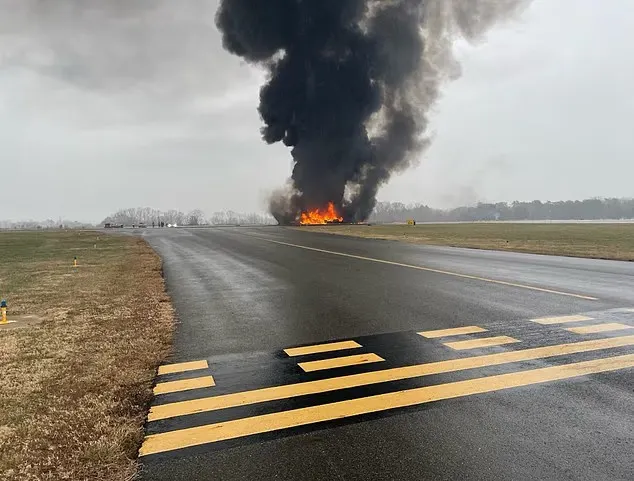
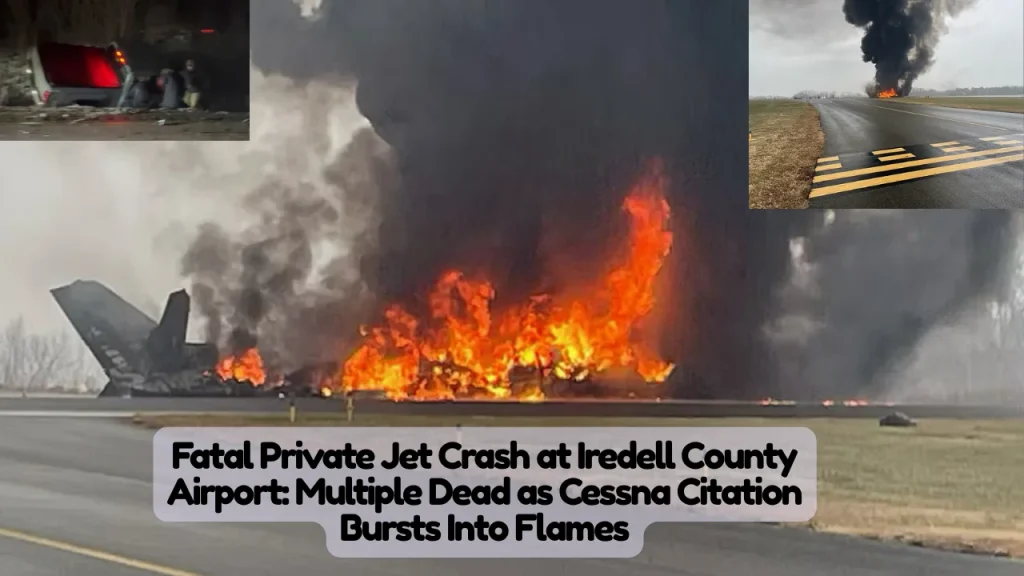
A Cessna C550 Citation II business jet crashed and burst into flames while attempting to land at Statesville Regional Airport in Iredell County, North Carolina, at approximately 10:20 a.m. Thursday morning, December 18, 2025. The Iredell County Sheriff confirmed multiple fatalities, though the exact number of victims has not been released. Photos from the scene showed the aircraft engulfed in a massive ball of flames with debris scattered across the runway as first responders rushed to the wreckage.
The National Transportation Safety Board (NTSB) and Federal Aviation Administration (FAA) are investigating the crash. This article examines what happened, the investigation timeline, legal liability for private jet crashes, and what compensation options exist for victims’ families.
What Happened at Statesville Regional Airport?
The incident occurred around 10:15-10:20 a.m. EST when the Cessna C550 crashed while attempting to land at the corporate airport facility. Witnesses reported seeing the plane erupt in flames immediately after impact.
Multiple emergency response teams from Iredell County, Statesville Fire Department, and other agencies responded to the scene. Photos and videos from the runway showed heavy flames and black smoke rising from the wreckage.
The airport confirmed the “aircraft incident” in a Facebook post and stated that federal investigators were en route. The airport suspended operations immediately following the crash to allow emergency crews access and to preserve the crash site for investigation.
Related article: Menards Rebate Lawsuit Alert, $4.25M Settlement Reached—What Shoppers Need to Know Now
Details About the Aircraft
The Cessna Citation II (Model 550) is a twin-engine light business jet that has been in service since 1978. The aircraft involved in Thursday’s crash was manufactured decades ago, though specific details about this particular plane’s age, owner, operator, and maintenance history have not yet been released by authorities.
Cessna C550 Citation II Specifications
The Citation II is a popular corporate jet with the following characteristics:
- Capacity: Typically seats 8-10 passengers plus 2 crew members
- Engines: Two Pratt & Whitney JT15D turbofan engines
- Cruise Speed: Approximately 400 knots (460 mph)
- Range: About 1,500 nautical miles
- First Flight: January 31, 1977
- Production: 1,184 of all Citation II variants delivered before production ceased in 2006
The Citation II series has been used extensively as a corporate jet, with the airport’s website noting it serves Fortune 500 companies and NASCAR teams.
About Statesville Regional Airport
Statesville Regional Airport is a city-owned facility that provides corporate aviation services for Fortune 500 companies and several NASCAR teams. The airport is located approximately 45 miles north of Charlotte, near the I-77/I-40 interchange, about 10 minutes from downtown Statesville.
The airport caters primarily to business aviation and private jets rather than commercial passenger service. Its clientele includes corporate executives, racing teams, and high-profile business travelers who use the facility for its proximity to Charlotte and the I-77 corridor.
Investigation Status: What We Know
The FAA stated that both the FAA and NTSB will investigate, with the NTSB leading the investigation and providing updates. As of Thursday afternoon, federal investigators were either on scene or en route to begin their examination of the wreckage.
NTSB Investigation Process
The NTSB follows a methodical investigation process for all aviation accidents:
Immediate Response (Days 1-3):
- Document crash site
- Photograph wreckage position
- Interview witnesses
- Examine weather conditions
- Review flight data and maintenance records
- Secure cockpit voice recorder and flight data recorder if equipped
Preliminary Report (2-4 Weeks):
- Release initial factual findings
- Describe sequence of events
- No probable cause determination yet
Final Report (12-24 Months):
- Determine probable cause
- Issue safety recommendations
- Provide detailed analysis of all factors
Based on similar Citation II crashes, investigators will examine pilot actions, mechanical failures, weather conditions, airport equipment, and maintenance records.
Who Can Be Held Legally Liable?
When a private jet crashes, multiple parties may face legal liability depending on what caused the accident. Aviation law recognizes several potential defendants in wrongful death and injury claims.
Potential Liable Parties
Aircraft Owner/Operator: If negligence in maintenance, pilot training, or operational decisions contributed to the crash, the owner or operating company can be held liable under federal aviation regulations and state tort law.
Aircraft Manufacturer (Cessna/Textron Aviation): Product liability claims may arise if a manufacturing defect, design flaw, or failure to warn about known risks caused or contributed to the crash. However, the General Aviation Revitalization Act (GARA) of 1994 generally limits manufacturer liability for aircraft over 18 years old unless specific exceptions apply.
Maintenance Provider: If faulty maintenance, improper inspections, or failure to identify mechanical problems led to the crash, the maintenance organization can face liability for negligence.
Pilot/Flight Crew: If pilot error caused the crash, the pilot’s estate or employer may be liable. However, victims’ families typically pursue claims against parties with greater financial resources.
Airport Authority: If unsafe runway conditions, equipment failures, or inadequate air traffic control contributed to the accident, the airport operator may share liability.
Parts Manufacturers: If a defective component caused a mechanical failure, the parts manufacturer can be sued under product liability theories.
Federal Aviation Regulations (FARs)
Private jets like the Cessna C550 typically operate under 14 CFR Part 91 (general aviation) or Part 135 (commercial operations). These regulations impose strict standards for:
- Pilot certification and training requirements
- Aircraft maintenance schedules
- Pre-flight inspections
- Weather minimums for landing
- Operational procedures
Violations of FARs can establish negligence per se in civil litigation, making it easier for victims’ families to prove liability.
What Wrongful Death Claims Can Families File?
North Carolina wrongful death law allows specific family members to file claims when a loved one dies due to another party’s negligence or wrongful act.
Who Can File in North Carolina
Under N.C. Gen. Stat. § 28A-18-2, only the personal representative of the deceased’s estate can file a wrongful death lawsuit. The representative brings the claim on behalf of:
- Surviving spouse
- Children
- Parents
- Next of kin entitled to inherit under intestacy laws
Damages Available in Aviation Wrongful Death Cases
North Carolina law allows recovery of both economic and non-economic damages:
Economic Damages:
- Medical expenses before death
- Funeral and burial costs
- Lost income and future earnings
- Lost benefits (pension, insurance, etc.)
- Value of services the deceased provided
Non-Economic Damages:
- Loss of companionship and consortium
- Loss of guidance and counsel
- Mental anguish and emotional distress
- Loss of love and affection
Punitive Damages: May be awarded if the defendant’s conduct was willful, wanton, or demonstrated reckless indifference to human life. These damages punish egregious conduct and deter future misconduct.
Statute of Limitations
In North Carolina, wrongful death claims must typically be filed within two years of the date of death (N.C. Gen. Stat. § 1-53). Missing this deadline generally bars the claim forever, with limited exceptions.
Compensation Options for Victims’ Families
Families of aviation accident victims have several potential avenues for compensation beyond wrongful death lawsuits.
Life Insurance Policies
Many business travelers and corporate executives carry life insurance policies. Families should immediately contact insurance companies to initiate claims. Accidental death policies may provide additional benefits.
Workers’ Compensation
If victims were traveling for work purposes, workers’ compensation benefits may be available. However, North Carolina workers’ compensation provides limited death benefits compared to wrongful death damages, and families may pursue both remedies in some circumstances.
Aviation Insurance Claims
Most private jets carry substantial liability insurance policies. The aircraft owner’s insurer may offer settlement negotiations before litigation.
Corporate Responsibility
If victims were employees traveling on company business, their employer may have liability insurance or may negotiate compassionate settlements separate from legal liability.
Similar Cessna Citation Crashes and Legal Precedents
The Cessna Citation II has been involved in multiple fatal crashes that provide context for understanding potential causes and legal outcomes.
Murrieta, California Crash (July 2023)
Six people died when a Cessna 550 Citation II crashed near an airport in Murrieta, California. The NTSB investigation focused on pilot actions and whether a missed approach was properly executed. Families retained aviation law firms to pursue wrongful death claims against multiple parties.
San Diego Murphy Canyon Crash (May 2025)
All six occupants died when a Citation S/II struck a power line during approach to Montgomery-Gibbs Executive Airport, causing the aircraft to crash into a residential neighborhood. The crash occurred during early morning hours when the control tower was closed. Families filed wrongful death lawsuits alleging negligent operation and inadequate safety procedures.
Legal Outcomes
While specific settlement amounts are often confidential, aviation wrongful death cases involving business jets typically settle for substantial sums when liability is clear. Jury verdicts in similar cases have ranged from several million to tens of millions of dollars per victim depending on:
- The victim’s age and earning capacity
- Number of dependents
- Degree of negligence
- Whether punitive damages apply
What Aviation Laws Apply to This Crash?
Multiple layers of federal and state law govern aviation accidents and resulting legal claims.
Federal Aviation Act
The Federal Aviation Act establishes FAA authority to regulate aviation safety and investigate accidents. The Act preempts some state laws but does not prevent state wrongful death and personal injury claims.
Federal Tort Claims Act (FTCA)
If government negligence contributed to the crash (such as air traffic controller error), the FTCA provides the exclusive remedy against the United States, with specific limitations on damages and procedures.
General Aviation Revitalization Act (GARA)
GARA limits product liability claims against aircraft manufacturers for planes over 18 years old. However, exceptions exist for defective replacement parts, improper maintenance, or fraud.
North Carolina State Law
State law governs wrongful death claims, negligence standards, damages, and statutes of limitations. North Carolina follows a contributory negligence rule, meaning if the victim was even 1% at fault, it can bar recovery (though this rarely applies to passengers).
Next Steps for Affected Families
Families impacted by this tragedy should take several immediate steps:
1. Contact an Aviation Attorney Immediately
Aviation law is highly specialized. Families should retain experienced aviation accident lawyers who understand:
- NTSB investigation procedures
- Federal aviation regulations
- Complex liability issues
- How to preserve evidence
- Strategies for maximizing compensation
2. Preserve Evidence
Do not discard any belongings, travel documents, employment records, or communications related to the flight. These may be critical evidence.
3. Document Financial Impact
Begin gathering records of income, benefits, household services, and other economic losses. This documentation supports damage calculations.
4. Avoid Premature Settlements
Insurance companies may offer quick settlements before families understand the full extent of their losses. Consult with an attorney before accepting any offers.
5. File Insurance Claims
Notify life insurance carriers, accidental death policies, and any travel insurance providers immediately.
6. Seek Counseling and Support
The emotional trauma of losing a loved one in a sudden aviation disaster is profound. Professional counseling and support groups can help families cope with grief while navigating legal processes.
What Happens Next in the Investigation?
The NTSB will take the lead in determining what caused this crash. Based on typical investigation timelines:
Short Term (Next 2 Weeks):
- Investigators will document the wreckage
- Interview witnesses and first responders
- Examine weather data and air traffic control communications
- Review the aircraft’s maintenance records
- Attempt to recover and analyze any flight data recorders
Medium Term (2-4 Weeks):
- NTSB will issue a preliminary report with factual findings
- The report will describe what happened but will not determine probable cause
Long Term (12-24 Months):
- Complete analysis of all evidence
- Public hearing may be held for significant accidents
- Final report issued with probable cause determination
- Safety recommendations issued to prevent future crashes
Families’ attorneys can participate in the investigation by submitting questions and reviewing factual reports, though the NTSB process is independent of civil litigation.
Current Status and Updates
As of Thursday afternoon, December 18, 2025:
- The exact number of fatalities has not been officially released
- No victims’ identities have been made public pending family notification
- The NTSB investigation is in its earliest stages
- The airport remained closed to other traffic as of late Thursday
- No preliminary information about the cause has been released
This is a developing story. Updates will be provided as federal investigators release new information about the crash investigation, victims’ identities, and potential causes.
Frequently Asked Questions
How many people died in the Iredell County plane crash?
The Iredell County Sheriff confirmed multiple fatalities, but authorities have not released the exact number of victims as of Thursday afternoon. The Cessna C550 Citation II typically carries 2 crew members and 6-10 passengers.
What type of plane crashed at Statesville Regional Airport?
The aircraft was a Cessna C550 Citation II, a twin-engine business jet commonly used for corporate aviation. The Citation II was manufactured between 1977 and 2006 and is popular among Fortune 500 companies.
What caused the Cessna Citation crash?
The cause has not been determined. The NTSB is leading the investigation and will provide updates. Investigators will examine pilot error, mechanical failure, weather conditions, and other potential factors. A preliminary report is expected in 2-4 weeks.
Can families sue after a private jet crash?
Yes. Families can file wrongful death lawsuits against any party whose negligence caused or contributed to the crash, including the aircraft owner, operator, manufacturer, maintenance provider, or pilot. North Carolina law allows recovery of economic and non-economic damages.
How long do families have to file wrongful death claims?
Under North Carolina law (N.C. Gen. Stat. § 1-53), wrongful death claims must typically be filed within two years of the date of death. Families should consult with an aviation attorney immediately to protect their legal rights.
What compensation can families receive after an aviation accident?
Families may recover damages for medical expenses, funeral costs, lost income and future earnings, lost benefits, loss of companionship, emotional distress, and loss of guidance. Punitive damages may be available if the defendant’s conduct was willful or reckless. Aviation wrongful death settlements often reach millions of dollars per victim.
Who investigates private jet crashes?
The National Transportation Safety Board (NTSB) leads investigations of all civil aviation accidents in the United States, with assistance from the FAA. The NTSB issues a final report determining the probable cause, typically 12-24 months after the crash.
Legal Disclaimer:
This article is provided for informational purposes only and does not constitute legal advice. The information presented is based on publicly available news reports and general aviation law principles current as of the publication date. Every aviation accident case is unique, and legal rights and remedies depend on specific facts and circumstances. The investigation is ongoing and new information may emerge that affects liability determinations. If you or your family has been affected by an aviation accident, please consult immediately with a qualified aviation attorney licensed in your jurisdiction who can evaluate your specific situation and protect your legal rights. AllAboutLawyer.com is not a law firm and does not provide legal representation or advice. Time limits apply to wrongful death claims, so prompt consultation with an attorney is essential.
About the Author

Sarah Klein, JD, is a licensed attorney and legal content strategist with over 12 years of experience across civil, criminal, family, and regulatory law. At All About Lawyer, she covers a wide range of legal topics — from high-profile lawsuits and courtroom stories to state traffic laws and everyday legal questions — all with a focus on accuracy, clarity, and public understanding.
Her writing blends real legal insight with plain-English explanations, helping readers stay informed and legally aware.
Read more about Sarah