
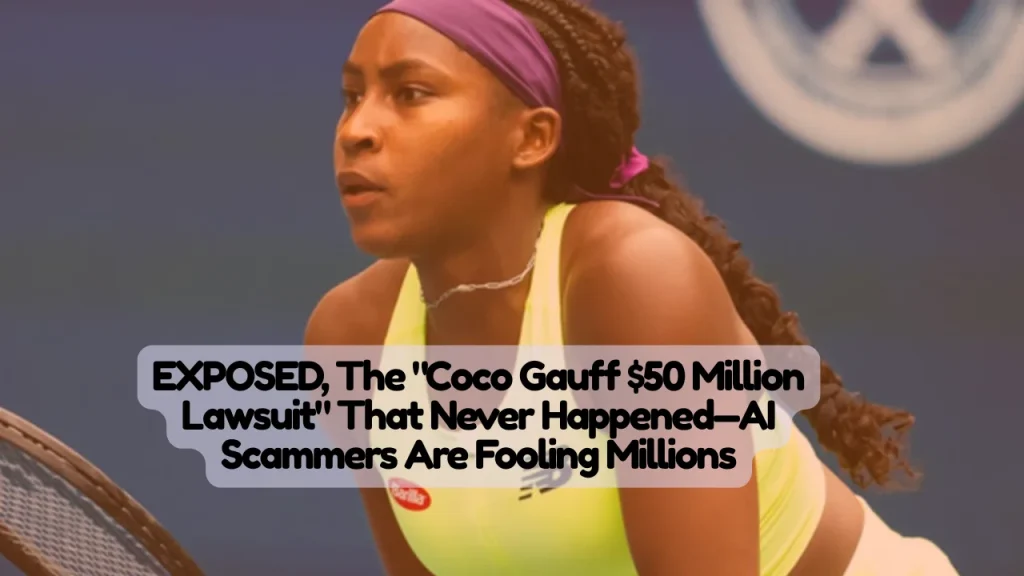
EXPOSED, The “Coco Gauff $50 Million Lawsuit” That Never Happened—AI Scammers Are Fooling Millions
There is no Coco Gauff lawsuit. The stories claiming tennis star Coco Gauff sued Karoline Leavitt, Fox News, or any media network for $50 million are completely fabricated. Multiple fact-checking organizations have confirmed these stories are AI-generated misinformation designed to get clicks and spread false information.
What’s Actually Happening
If you’ve seen headlines like “Coco Gauff Sues Karoline Leavitt for $50 Million After Shocking On-Air Attack,” you’ve encountered a coordinated misinformation campaign. Here’s what Canadian readers need to know:
No court filings exist. Legal experts and fact-checkers searched court databases across the United States. There are no docket entries, no legal documents, and no verified records of any lawsuit involving Coco Gauff and Karoline Leavitt.
No credible news coverage exists. Major news organizations like ESPN, Reuters, The New York Times, and Canadian outlets like CBC and The Globe and Mail have not reported on this lawsuit because it doesn’t exist. Real celebrity lawsuits get immediate coverage from legitimate media.
The quotes are made up. Claims that Gauff said things like “This isn’t about money, it’s about accountability” or that Serena Williams tweeted support have no basis in reality. These quotes don’t appear on verified social media accounts or in any legitimate interviews.
Who’s Spreading These Fake Stories?
The false lawsuit claims come from low-quality websites using AI tools to generate fake news articles. Here’s how it works:
AI content farms create entire fake news sites in minutes. Sites like “allfortoday.net” (registered in Nigeria in June 2025) use artificial intelligence to write articles that look real but contain completely fabricated information.
Template recycling means the same fake story gets reused with different names. Fact-checkers found identical articles claiming John Legend, Jordan Love, Jimmy Kimmel, and other celebrities sued Karoline Leavitt. The sites just swap out names and photos.
Clickbait headlines use emotional language and dramatic claims to get people to click and share. Words like “SHOCKING,” “DEVASTATING,” and “$50 MILLION” are designed to trigger reactions before people verify the information.
Red Flags That Spotted the Fake News
Multiple warning signs revealed these stories were fabricated:
The websites have suspicious origins. Domain registration records show many of these sites were created recently by anonymous people or organizations in countries known for content farms. They exist solely to generate ad revenue from fake stories.
The writing has telltale AI patterns. The articles use repetitive phrases, dramatic language that sounds scripted, and include contradictory details that a human editor would catch.
Related articles on the same sites are obvious fakes. Sites publishing the Gauff story also feature other debunked claims like fake celebrity donations to disaster relief or fabricated political scandals.
No legitimate sources confirm anything. Searches for “Coco Gauff lawsuit” on court databases, news archives, and Gauff’s verified social media accounts turn up nothing supporting these claims.

What Coco Gauff Actually Said About Lawsuits
The only real legal topic involving Coco Gauff recently is the PTPA (Professional Tennis Players Association) lawsuit against tennis governing bodies filed in March 2025. But Gauff is not a plaintiff in that case.
When asked about the PTPA lawsuit, Gauff told reporters she learned about it when everyone else did and doesn’t have detailed information. She mentioned supporting players getting a higher percentage of tournament revenue but made clear she’s not directly involved in the legal action.
How These Fake Stories Harm People
AI-generated misinformation like the fake Gauff lawsuit causes real damage:
It wastes people’s time and attention. Millions of people see these stories, believe them, share them with friends and family, and spend emotional energy on events that never happened.
It damages reputations. Both Coco Gauff and Karoline Leavitt are real people whose names are being used in fabricated controversies they had nothing to do with.
It erodes trust in real news. When people can’t tell what’s real anymore, they stop trusting legitimate journalism and become more vulnerable to manipulation.
It makes money for scammers. These fake news sites profit from advertising revenue every time someone clicks on their manufactured stories.
The Bigger Picture: AI-Generated Fake News Is Exploding
The Coco Gauff lawsuit hoax is part of a massive problem:
Numbers are shocking. Research shows AI-powered fake news sites now outnumber real local newspapers in the United States. In May 2023, watchdog organizations found 49 fake news sites. By February 2024, that number jumped to over 700.
Technology makes it easy. AI tools can now create an entire fake news website—including fake reporters, logos, articles, and photos—in just minutes. What used to take teams of people days now happens instantly.
Social media spreads it fast. Fake stories get shared thousands of times before fact-checkers can debunk them. The algorithms on platforms like Facebook, X (Twitter), and TikTok often promote sensational content regardless of accuracy.
How to Protect Yourself From Fake News
Canadian readers can avoid falling for AI-generated misinformation:
Check multiple sources. If a story seems shocking, search for it on CBC, CTV, Global News, or other established Canadian news outlets. Real news gets reported everywhere.
Look at the website carefully. Check when the domain was registered (use whois.com). Look for contact information, “About” pages, and other articles on the site. Fake news sites often have generic names, recent registration dates, and bizarre unrelated articles.
Watch for emotional manipulation. If a headline makes you feel intense anger, shock, or outrage, pause before sharing. Fake news relies on triggering emotional reactions that bypass critical thinking.
Verify quotes and images. Copy suspicious quotes into Google with quotation marks. Use reverse image search for photos. Real quotes appear in multiple legitimate sources.
Check the person’s official accounts. Celebrities and public figures use verified social media accounts (blue checkmarks). If they’re involved in a major lawsuit, they or their representatives will usually address it there.
What Experts Say About This Problem
Media literacy educators warn that AI-generated content is getting harder to spot. As the technology improves, fake articles, images, and videos look increasingly real.
Fact-checking organizations are overwhelmed. Groups like Snopes, Lead Stories, and PolitiFact work to debunk false claims, but new fake stories appear faster than they can verify them.
Legal protections are limited. While defamation laws exist, prosecuting the people behind fake news sites is difficult when they operate anonymously from other countries.
The Real Story Canadians Should Know
Coco Gauff is a 21-year-old tennis champion known for her skill on the court and her poise off it. She has not filed any defamation lawsuit against anyone. The viral stories claiming otherwise are completely fabricated.
Karoline Leavitt is the White House Press Secretary in the Trump administration. While she’s a public figure who makes controversial statements, she never appeared on a television segment attacking Coco Gauff.
The “interview that went wrong” never happened. The “on-air confrontation” is fiction. The “$50 million lawsuit” doesn’t exist.
What You Can Do
Stop sharing unverified stories. Before you share something shocking on social media, take 30 seconds to verify it. If you can’t find it on legitimate news sites, don’t spread it.
Report fake news when you see it. Social media platforms have reporting tools for misinformation. Use them.
Educate others. When you see friends or family sharing fake stories, gently let them know and point them to fact-checking sources.
Support real journalism. Subscribe to legitimate Canadian news outlets. Quality journalism requires resources to verify information and investigate stories properly.
Related article: Canada Dry Faces Three Lawsuits Over False Advertising—Here’s What You Need to Know in 2025
Frequently Asked Questions
Is there any lawsuit involving Coco Gauff right now?
No. Coco Gauff has not filed or been named in any defamation lawsuit. The only legal matter she’s been associated with is the PTPA lawsuit against tennis governing bodies, but she’s not a plaintiff in that case.
Where did these fake lawsuit stories come from?
AI-generated content farms created them. Low-quality websites use artificial intelligence to write fake articles that look real but contain completely fabricated information. The same story template gets reused with different celebrity names.
How can I tell if a news story is fake?
Check if legitimate news organizations are reporting it. Look at the website’s domain registration and history. Search for quotes on Google. Verify images with reverse image search. If you can’t find the story on established news sites, it’s likely fake.
Did Karoline Leavitt say anything about Coco Gauff?
No. Searches of White House briefing transcripts, press conferences, and Leavitt’s social media accounts show no mentions of Coco Gauff at all.
Why do people create fake news stories?
Money. These websites make advertising revenue from clicks. Sensational fake stories get shared widely, driving traffic and generating profits for the site operators.
What should I do if I shared a fake story?
Delete or correct your post. Let people know you shared misinformation. We all make mistakes—what matters is correcting them when we learn the truth.
Are AI-generated fake news stories illegal?
It depends. Defamation laws exist, but enforcing them against anonymous website operators in other countries is extremely difficult. The legal system hasn’t caught up with this technology yet.
The bottom line: The “Coco Gauff lawsuit” is fake news created by AI content farms. No lawsuit exists. The stories are designed to manipulate your emotions and generate clicks. Before sharing shocking news, verify it through legitimate sources. Don’t let AI-generated misinformation fool you.
About the Author

Sarah Klein, JD, is a licensed attorney and legal content strategist with over 12 years of experience across civil, criminal, family, and regulatory law. At All About Lawyer, she covers a wide range of legal topics — from high-profile lawsuits and courtroom stories to state traffic laws and everyday legal questions — all with a focus on accuracy, clarity, and public understanding.
Her writing blends real legal insight with plain-English explanations, helping readers stay informed and legally aware.
Read more about Sarah
“The Bigger Picture: AI-Generated Fake News Is Exploding.” “Social media spreads it fast.”
Hmm, this page could be AI-generated too. To someone ignorant like me to this Artificial Intelligence anything is plausible, we all potentially will just believe what we want to believe. Well, Homer Simpson make an interesting point and I like Homer, I’ll go with what he said.
The future is grim in terms of media putting out stories.